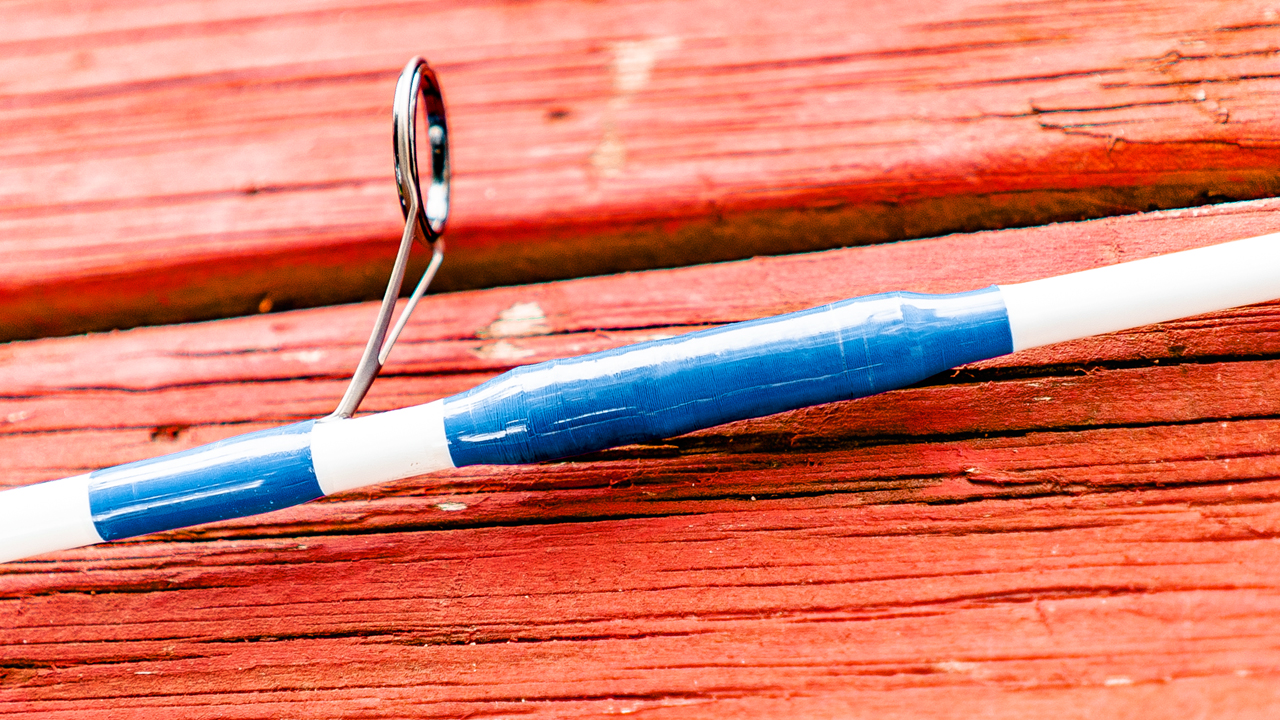
One of the nice things about staying at a place with a dock is that you have the ability to fish right out front – which is PERFECT for little ones. After a large storm passed we took the wee ones out fishing, and in the evening we took the boat out to look for smallmouth and walleye – and test Dad’s new custom rod (that replaced the old, broken one).
Time to fish.
Click the banner to jump to The Minimalist Fisherman on YouTube.
Let me know if you have any suggestions for improving, or a pond or creek to fish, or just want to say hey in the comments or on social media. I’m always trying to improve and appreciate your input. Thanks much!
It’s a grim reminder that another dark, dreary winter is coming; but there is still more work to do. You throw a thick hoodie over your head that matches your jeans and hiking boots, then grab a face shield – no – not a ‘Rona mask – something that will protect you from the wind.
While it’s not the end of the world, in some ways it certainly feels like it.
Winter is coming…
Water Level
While conditions heading into fall and winter are traditionally stable, the water is definitely cooling. Much like our warming trend in spring, except the pendulum is swinging back in the opposite direction.
In reservoirs that are part of a flood management system, the water levels are declining to what is called “winter pool”. Winter pool is when the water level is lowered. This can reduce ice damage to dams and shoreline structures, and allow for additional flood storage which will be necessary during the upcoming spring rains. Water fluctuations also discourage beavers and muskrats from creating shoreline habitat.
Before the water reaches it’s lowest point, shad will start to migrate to the backs of coves. If the water actually starts to rise, it can push bass further back into these coves as well – or scatter them. Many anglers turn to topwater this time of year, and suggest that flipping a jig becomes less effective.
Make sure you also spend some time working with jerkbaits, spinnerbaits and swimbaits.
Slowly falling water won’t cause a dramatic change, but quick drops can move fish out onto flats, to the outer edges of weedbeds, or the ends of laydowns. They can even suspend out over deep water. If this is the case and the fish have moved out, fish the same presentations – but deeper.
Water Temperature
Even though the water temps are on a downward trend, most anglers would agree that this decline in water temperature has little effect on patterns or presentations.
Watch for extreme changes though – from 5°F to 10°F – or harsh weather conditions that can turn the fish off. Like we said before – slow down, downsize, and try finesse if the baits they were chewing on previously stop working.
Water Clarity
What baits do you have confidence in?
Use them.
This time of year the fish will be feeding up getting ready for winter. Clearer water conditions mean turning to more natural colors and shad-imitating presentations.
If inclement weather causes the water to muddy up, turn back to shallow cover and more obnoxious options. Try baits that are loud, brightly colored, or that kick off a lot of vibration. Fish tight to cover and if you don’t get bit, consider whether you are able to leave the area and find clearer water elsewhere on the lake.
In some cases, moving will be your best option.
Check out our Top 10 Swim Jigs that Perfectly Pair with Big, Thumpy Trailers
Moving Forward
A quick look online proves most of your angling buddies are hanging it up for the season. They’re saying things like “well it was fun while it lasted!”, and “come on spring!” – or worse… “it’s a shame that it’s cooling off and the fish stopped biting…”
Some are trading their time on the water for time in a tree stand. Some are prepping snowmobiles. Others… they’ve just had enough of the wind and the cold and the rain that seem to pierce layers of clothing like a hot knife thru butter.
But you know better.
Fewer anglers means less pressure, more freedom to fish where you want when you want, and most importantly… peace. Many days you find yourself on the water alone.
Alone with your thoughts. Your goals. Your Creator.
Perhaps this time of year isn’t so much an end as it is a beginning?
The faint smell of campfire hits your nostrils as you place your cap back upon your head. Some of the smoke from last nights fire has decided to linger – but you don’t mind. It’s the perfect compliment to the cup of black coffee you just poured yourself.
It’s summer… and we better get moving if we want to catch the morning bite.
Snap… Crackle… Pop.
Water Level
In summer the weather is more stable. Many bass have moved offshore to deeper structures, and they are less affected by the whims of Mother Nature.
As water rises and settles, the bass that have remained shallow move even further into shore. Starting with frogs, walking baits or buzzbaits can help you fish through this flooded cover.
Boat docks are a prime summer location, especially those with planks that sit closer to the water. Larger docks that offer extensive protection can attract more fish, especially if they are the last in a series of docks and the closest to deep water. Cast towards the outside edge, skip plastics up underneath, or run a swim jig right along the edge.
(Check out our Top 10 Swim Jigs if you’re looking for new gear.)
If the water recedes, fish will pull back offshore to the next available cover or suspend. A drop in depth of a foot or more is a good indicator that it’s time to look for deeper fish. Current is usually associated with a rise or fall in water levels, and current also has an impact on the position of fish.
Water Temperature
In summer changes in water temperature are rarely an issue. For the most part this is a stable period. Be mindful of huge swings – say 5°F to 10°F – or aggressive stormy weather that might “turn fish off”. When you’re able to get back out fish what was working previously, and if you don’t get bit – slow down, downsize, and try finesse.
Water Clarity
It takes a fair amount of time for shallow water to clear up in different parts of the country. As visibility increases, think stealth. Think natural colors. Think finesse for those fish that remain shallow.
If the water muddies up again, the fish can get displaced – even those that are deep-structure oriented. Muddy water means it’s time to focus on shallow cover.
Fish brighter. Fish tighter.
Grab a high-contrast spinnerbait with orange or chartreuse blades, a vibrating jig, squarebill crankbait or some jigs and soft plastics. In addition to the high-contrast colors, experiment with dark colors like black & blue. Dark colors can be more visible in dirty water.
Chocolate milk? Get in tight.
Moving Forward
As the day comes to a close it’s time to tie the boat up for the evening. You notice a different smell as you wipe the sweat from your brow. It’s a bit fishy, but subtle – it smells like hard work. Like success.
You crack a smile.
Some men shy away from such a smell, but you pause for just a brief moment to relish in it as the sun starts to dip lower towards the horizon.
The lake glistens with a toasty orange haze and you turn back towards camp.
Finally. It’s the end of the suck. Winter is dying. The water temperatures are coming back up, and the bass… well, the bass are moving shallow again to spawn.
Away with you, Old Man Winter…
This move won’t happen overnight. It takes time. It’s incremental. Therefore, it requires you the angler to explore and experiment to find the most effective depth to fish at.
It’s calm on the water.
But rest assured – the bass are moving beneath the surface.
Water Level
We’ve discussed how fish move shallow when the water rises (see Fluctuating Water Levels: Learning to Fish Rivers & Streams), and how they move out when the water falls. When the water is high, it’s not uncommon to see professional anglers working the first available cover that lies between shallow and deep water.
If you are in open water, turn towards a jerkbait or a lipless crankbait. Spinnerbaits are a great option in heavier cover, and don’t be afraid to try swim jigs. (If you have never tried this technique, check out this helpful guide: Learn How to Fish a Swim Jig or if you’re ready for some new gear, take a peek at our Top 10 Swim Jig Picks.)
All 4 of these presentations will help you cover a fair amount of water. This is a great way to find fish – but once you’ve found them, take some time to slow down and work the area over by pitching jigs and soft plastics into cover. Slower techniques can be fished more deliberately and help you dissect an area.
If the water is falling, bass are usually triggered into moving out from shore. They will leave shallow cover and spawning flats to head for the first drop outside of the spawning area, where the water is deeper. They may relate to a breakline (meaning a distinct drop or edge) or a creek channel, and they can set up at multiple depths within the water column.
This means that bottom-hugging presentations may work – but if the fish are suspended, something like a jerkbait can really shine.
A good way to search for fish during low water would be to start with the ends of laydowns and docks, steep banks, or any cover that protrudes out from shore into deeper water. Work the ends of these structures, searching for fish and work your way out fishing from top to bottom.
Water Temperature
On most bodies of water the temperature will fluctuate daily. High sun and bright skies can warm the water during the day, but cold nights can drop temps back down. Still, throughout the prespawn period there is definitely an upward trend in water warmth.
A good rule of thumb: don’t worry too much if the temperature swings 4°F or less from day to day. Usually – usually – temperature changes of this amount won’t have a major impact on the fish or their location. They’ll stay put. That said, if the fish are in very shallow water, they might move out.
If the cooling water has had an effect on the fish – start with the same presentations that were working the day before, move out to the next available cover or structure. Adjust your cadence. Slow down.
Water Clarity
Bass like to spawn in clear water.
Clear water means better visibility – for both you, and the fish.
Stealth mode: activate.
Start by fishing your confidence baits in natural colors. Shad colors, green pumpkins, finesse presentations and maybe even faster lure speeds. Faster lure speeds can trigger reaction strikes. The fish won’t get a great look at the bait, and they may attack out of pure instinct.
Try burning a swim jig in clear water conditions. The curly tail grub trailer mimics a fleeing baitfish and kicks off small, frantic vibrations.
Shade can come into play, so make sure to explore shady areas throughout the day.
Depending on the conditions, clear water can turn muddy overnight. If the water muddies up and visibility drops, fish will hold tighter to cover and tend to stay in the area. You’ll need to fish up close to (or in) cover.
This is a good time to look to baits that will silhouette well like a black & blue jig, or something that stands out like an orange or chartreuse spinnerbait. Baits with more thump or appendages can come into play, as well as baits with more scent.
Fish brighter. Fish tighter.
When visibility drops – think about all of the senses of the bass and make it easier for them to find your offering. More contrast. More flash. More vibration. More scent.
Experiment with those adjustments in mind.
Moving Forward
Here in the Midwest, little changes in the weather around this time of year are extremely exciting. The days get longer. The air gets warmer. The bitter chill of winter starts to fade, giving way to small green buds on the trees and the reassuring sounds of songbirds.
Woodpeckers peck, peepers peep, and bulbs bloom.
The fish are on the move. It’s time for us to exit hibernation, venture forth from our winter haunts, and go visit our little green friends…
… even though they probably don’t miss us as much as we miss them.
Lakes, rivers and reservoirs. So plentiful. So full of fish. But so different.
Which of these 3 bodies of water would you say is most susceptible to change due to rain, snowmelt or other environmental factors?
It’s debatable – but one thing is for sure – reservoirs are a very unique animal.
Seasonal Changes
Natural lakes go through a series of changes throughout the year. They warm, they cool, they freeze, then depending on the water clarity (which may change based on algae blooms, wind etc.) different kinds of vegetation will grow or die, or be replaced with other aquatic species altogether. The changes are constant, but also consistent and usually not dramatic. This is important to understand, because unlike lakes, large reservoirs are more prone to swift and substantial changes to water level, temperature, and overall turbidity.
(Streams and rivers go through changes as well, which we have covered extensively in this series of articles: Learn How to Fish Rivers & Streams.)
Largemouth, smallmouth and spotted bass, like the natural lakes in which they live, go through a series of yearly changes as the seasons come and go. In spring, they move shallow to spawn before seeking out areas where they can feed consistently, and effectively. Then they eat, eat and eat – and finally move to wintering areas as the water cools.
The anglers that take the most fish are the ones that have learned to recognize the cues on their body of water that suggest prespawn, spawn, postspawn, warm water and cooling periods – and then take the time to learn what habitat bass will use during these times.
Dynamic Changes in Reservoirs
So what causes the dramatic reservoir changes that have an impact on the fish and their habitat? One factor is watersheds.
A watershed is a large area or ridge of land that separates waters flowing to different rivers, reservoirs or basins. The land drains things like streams, rainfall and melting slow into a common outlet.
This incoming water can have a significant impact on water level, turbidity (the level of suspended matter in the water, affecting clarity) and temperature. All three of these can have an impact on the behavior of bass!
Local weather conditions and cloud cover, wind – all of these things can have an impact on fish behavior, but the dynamic nature of reservoirs can completely demolish reliable seasonal patterns.
So… how do you find the fish?
We’ll focus on finding largemouth bass in this and the next several articles. Like I mentioned in Fishing New Kinds of Water – change is on the horizon. The Lake of 5’s awaits, and while I can’t wait to catch a Kentucky (spotted bass) or a 5 pound smallmouth out of this giant reservoir – I’m going to focus on what I know best, first.
‘ol bucketmouth.
Some anglers swear there are always a handful of bass up shallow – and that may be true… but that isn’t always where most of the bass will be. So let’s establish some simple rules that we can follow to fine-tune our approach based on the changes in temperature, water level and clarity. We’ll tie these in with the different seasons (spring, summer, fall) and phases (prespawn and beyond) to work up a rough outline to make sure we can get started with confidence under any conditions.
Moving Forward
If you have questions or suggestions on ways that we can all improve, I would be most appreciative if you’d email me and share them. We have a lot to learn…
I can’t think of a better time to get started than right now.
Today we’re going to go over a secret Ned Rig modification that I came across while puttering about on YouTube. The modification video was posted by Randy Blaukat, and his channel is simply called: Intuitive Angling With Randy Blaukat
Please make sure to give him a follow! I’ve enjoyed several of his videos since this one was suggested in my feed, and (if he gives me his approval) I’ll be sharing a handful of his helpful videos – and testing his techniques very soon!
A Secret Ned Rig Modification w/ Randy Blaukat
He starts off by saying that Z-Man products are not his favorite. I believe he is using a Z-Man Ned Jig in this video based on the light wire hook and the shape of the jighead, but the plastics he picks are where the magic happens.
The heavy salt in the Zlinky is key. By cutting the tail of the bait down to about 2 to 2.5 inches, Randy is able to rub the bait between his fingers and rough it up, bringing salt to the surface and creating a less shiny appearance.
Many anglers have told me that plastics can work better after they catch a few fish and start to get ripped up; they believe this is because it brings more salt & scent to the surface of the bait. This would be right in line with the modification.
Then, the tail is cut straight up to the hook with scissors, and the collar of the bait, near the jighead is trimmed flush. This gives the bait a unique look, and it also allows even more surface area to come into contact with the water and the mouth of the fish.
Finally, chartreuse or orange dye may be added to the tip of the tail, depending on the conditions. Check out Spike–It Dip-N-Glo for starters, to add scent and color.
Moving Forward
It’s amazing how such a small bait can be so effective. It’s also amazing just how many modifications there are for such a tiny delivery system. While Z-Man is famous for marketing the Ned Rig name, adding some sort of small jigworm to your arsenal will definitely help you land more bass – especially under tough conditions.
Pick the jig & plastic that look good to you – and get fishing.
Stacking up smallmouth bass on a Ned Rig in tough, hot conditions.
In fact, change is the only thing that’s consistent.
Two years ago when I started this website, my intent was to simply get better at fishing while reducing the amount of clutter I had accumulated. (Banjo Minnow, anyone?)
If you would have told me that certain changes to my behavior (which we have outlined in Thursday Night Fishing) would have resulted in a total increase of 10x in bass caught last season over the one before it – I wouldn’t have believed you.
Thankfully it happened.
Now, I find myself staring down a new challenge that I bet many of you can relate to. That is the challenge of facing new kinds of water.
To date all of my productive fishing has been done in lakes (both large and small) all throughout the Midwest, from Illinois to Wisconsin. It wasn’t that long ago we did a video focusing specifically on Illinois Fishing:
We followed this with a few videos on Fishing in Wisconsin:
Click the banner to jump to The Minimalist Fisherman on YouTube.
Very productive… but now… no we’re looking south. We’re looking at property in Arkansas very seriously. We’re even looking at land and considering the possibility of buying a few acres and building over the next 2 years. This would mean spending most of my time fishing rivers, streams and reservoirs as opposed to my beloved natural lakes.
I’m sure some lakes are present, but when you look up Arkansas, you see things like Bull Shoals Reservoir, and The White River that flows beneath the dam – famous for year round trout fishing due to the cool, deep water flowing from Bull Shoals. You’ll see Norfork Lake, another man-made reservoir, and countless hiking trails and streams.
In one sense, this is like a dream come true. A guide I spoke with last week said they call Bull Shoals “The Lake of 5’s“, because you can catch a 5lb largemouth, smallmouth and spotted (“Kentucky”) bass all in the same day. There appears to be more water here than one person could ever cover in a lifetime – and this is only scratching the surface.
On the other hand… I have no idea how to fish for bass in deep water reservoirs, or streams or rivers. I have never targeted trout, or hiked a stream in search of panfish.
So while I am excited… I’m also a bit overwhelmed.
Fortunately, this has also pushed me to develop a few new behaviors that have been very productive – and also helped calm my nerves a bit. I started to spend some time every morning (literally 15 – 25 minutes) researching things like river and stream fishing. I started to dig deeper into the presentations that had worked to help me 10x my overall catch count last year, and this week I’m going to start to dig into seasonal movements of bass based on water temperatures in reservoirs.
I am also sharing all of my notes with you – absolutely free – so please take a look and share them with others if you like what you read:
So is this an exciting time? Absolutely. Is it also overwhelming? Absolutely.
You combine moving with building a home or buying land with re-learning everything you know about fishing and it can make your head spin. But even though all of these changes are uncomfortable, being uncomfortable is a great way to help force you to improve yourself.
So let’s do that.
If you find the notes I am sharing with you helpful, please share them with others. If you have questions let me know – and if you have suggestions from experience regarding ways that we can all improve, I would be most appreciative if you’d email me and share them.
The first bass from last season… let’s get that counter going again ASAP!
Over the past several articles we have discussed the history of the swim jig, how and where to use it, different jigs, trailers and techniques. Here, I’ll lay out just a few additional pointers I came across while I was researching this bait. There is no doubt, they’ll help all of us become better swim jig fishermen.
Swim Jigs actually developed as tournament anglers were burning their flippin’ and pitchin’ jigs back to the boat to make another cast. They noticed the baits would get clobbered at high speeds, and this “secret” was closely guarded for a time. In fact there was a period where the only way to get a swim jig similar to the ones we’re familiar with today, was to have a friend that made custom baits!
As with most baits – it was possible to keep the secret… until the camera crews started climbing in the tournament boats. In fact – if memory serves there was a very similar incident with Kevin VanDam and a hair jig he was using to smack bass while everyone else was having a rough time not that long ago…
The primary benefit of the swim jig is the fact that they allow you to cover a lot of water (especially shallow) looking for aggressive fish and then yank them out of all sorts of heavy weeds and timber.
Looks good – start swimmin’
The wedge shaped head and the angle of the hook eye have a lot to do with preventing hangups. Usually an angle of about 30 degrees is preferred. These features combined help the bait slide up and over cover easier and avoid getting pinned or snagged. This combines with the skirt and the trailer so that the overall package tracks flat and straight.
If the head of the jig is too heavy or poorly made (very common in the early days when it was hard to find a hook to fit a bullet head at the right angle) it will make the bait nose-heavy, it will swim poorly and it will not deflect off of cover properly or get back on plane right away. It might even flop sideways and get tangled up.
This is bad news and defeats the purpose of using a swim jig in the first place.
Brovarney Baits Blue Crab Swim Jig – a Prime Example of Proper Components
You want a stout hook. A reasonable diameter needle point with a round bend made out of nickel steel (or so I’m told) that comes out of the jig cleanly with minimal catch points.
The skirt on a swim jig is extremely important if you want it to look lifelike in the water. A skirt of about 30 to 50 strands is a good place to live. Other jigs can have somewhere in the neighborhood of 60 to 80 strand skirts, which will not more in the water, or flare on a pause or when deflecting off of cover. Fewer strands means more freedom of movement. If you want to take it a step further, look for a bait maker that offers hand-tied skirts instead of using cheap rubber bands that can catch or allow the skirt to slide down the jig on a fast retrieve or in heavy cover.
Typically the skirts are made up of tinsel (or mylar), living rubber or silicone. You want loud and obnoxious? Silicone offers a ton of color options. Flakes. Two-tones. Patterns. Tinsel adds flash to highlight your silicone or living rubber skirt. Living rubber pulses more in the water. It is also a bit heavier, but it comes in fewer colors than silicone.
A combination of all 3 is not uncommon.
When it comes to the head of the jig and the eyes, better quality swim jigs will have some combination of both. The jighead can be a solid color, two-toned, crackled or swirled with or without glitter. Eyes can be painted on (usually yellow with a black dot for baitfish imitators, red with a black dot for crayfish patterns) or some sort of fancy “3D Eye”. Jigs can be powder coated and baked for maximum durability. Some manufacturers advertise “triple coating” their jigs in epoxy or some hard finishing resin.
However they do it – it needs to be durable.
My Dobyn’s swimbait head showing a bit of wear & tear…
A weedguard is usually present, although like the skirt, it is typically thinner or more flexible that what you might find on a traditional flippin’ or pitchin’ jig. In some cases they are about 50% the size of their counterparts. Some are made of fibers, others thick fluorocarbon – but whatever the material, a good swim jig will have a weedguard that is straight (it acts as a keel in a sense); one that compresses without a ton of effort for solid hookups, but also helps the bait deflect off of cover when necessary.
The trailer can have a massive effect on how the swim jig rides in the water column, although these are usually added by the angler to match the conditions, not included with the jig out of the package. Large trailers with big paddle tails offer much more lift that a curly tail grub. The larger tails also thump more rhythmically and produce a slight rolling action, while grubs imitate frantic, fleeing baitfish and kick off a ton of smaller vibrations. They also track in a straight line. When rigged with the tail down, it can add some lift and help the swim jig plane out easier on the retrieve.
Experiment.
Sizes? Typically 1/8 ounce to 7/8ths – and everything in between. 1/4 ounce is an extremely popular size, especially for grass, timber, brush, and general shallow sparse cover. Most people at least start with a 1/4 ounce swim jig, then fine-tune from there.
As far as a rod and reel, you don’t need anything extra fast, but a good medium-heavy to heavy action rod with a lot of backbone will help you load up and launch the bait a long distance when you need to huck it a country mile. Personally I like a heavy action and a rod length from 6′ 10″ to 7′ on the button. I use a somewhat fast baitcast reel (anywhere from 6:1 thru 6.4:1), although by some standards these could be seen as “moderate” retrieve ratios.
I spool up with straight 30 to 50 lb braid (Power Pro, Sufix Y6 and Berkley X5 have all worked well for me) aside from a 2 to 6 foot fluorocarbon leader (14 to 20 pound Berkley Vanish) connected with a back-to-back uni knot, that is then tied to the bait. Fluoro sinks, braid floats – so a larger leader will be both more abrasion resistant and sink more, which can help get your bait down – you’ll need to work with this and find the combination that works best for you.
Just make sure you watch out when using braid if you’re rubbing against rocks, branches and pilings – it will fray and break. Fluoro usually won’t, however it tends to jump off the spool a bit more, especially on windy days. Mono isn’t a bad choice if it’s on the heavier side and you look for a brand with low stretch.
As with almost every presentation in fishing – the ultimate rod, reel and line combination will be the one YOU are most comfortable with. You decide what works and then run with it!
Moving Forward
So get out there with your favorite combination and start chunking a swim jig anywhere you’d usually throw a spinnerbait, wakebait or shallow running crank. Try a nice steady retrieve often, then try burning it, and feel free to add a few twitches to flare the skirt and drop the jig a touch.
Now that we’ve gone over what a swim jig is, why swim jigs are unique, when and where to use them – along with our Top 10 Picks for Jigs, Top 5 Picks for Trailers, customized options and tips from the pros – I’d like to show you how I plan to rig up this spring using 3 killer little packages. These will definitely come into play around the spawn in the shallows (and probably through fall around heavier cover as well).
Yes… you probably noticed that technically the last one is a swimbait… how very astute of you!
A Swim Jig will be my primary power presentation around the spawn when fishing from shore – especially if we get a bit of wind and cloud cover.
I haven’t decided on finesse yet, but remember: we are always trying to cover as much water and offer a few different looks without taking 50 rods with us. 1 rod for power, 1 rod for finesse. Then we beat feet. Reducing the amount of gear you carry will help you focus on the task at hand; it will help you fish the bait, cover more water and catch more fish. I will take a few alternate power presentations with me just in case, but I don’t plan to switch before giving these swim jigs adequate time to succeed or fail.
These 3 presentations will allow me to present 3 distinct looks for picky fish.
Option #1 – All-Terrain Tackle Swim Jig w/ Powerbait Milky Salt ‘n Pepper 4″ Curly Tail Grub
The All-Terrain Tackle Swim Jig comes with an interesting, semi-planed jighead and a soft fiber weedguard. It also includes a rubber piece that you can place over your plastic to keep it in place better – they call this their Trail-R-Loc System.
I’ve paired the 1/2 ounce jig with a 4″ Powerbait Curly Tail Grub in Milky Salt n’ Pepper to perfectly compliment the “Golden Shiner” skirt – so this is white with gold glitter – which doesn’t necessarily match the local forage… why, you ask?
Because I plan to burn this swim jig along, and the white & gold will be very visible in my clear water lakes. I want them to see this coming from a mile away while the curly tail flaps wildly, kicking off vibrations that feel like a fleeing baitfish.
The tail of the grub is pointing down (it’s folded up in the pictures, but it is rigged riding down) to give the bait extra lift, which combined with the unique jighead shape will skim over the top of weeds and wood alike.
Option #2 – Strike King Tour Grade Swim Jig w/ Strike King Swim-N-Shiner Paddle Tail
When it’s time to slow down a bit, we’ll lighten things up and switch to a 1/4 ounce swim jig in a more natural color and select a trailer that will come thumping along at a deliberate, steady pace. The Strike King Tour Grade Swim Jig has been a staple for me for a while now, and last year the Strike King Swim-N-Shiner put more swim jig fish in the boat than any other trailer.
One great feature about this trailer is the tail. The tail thumps well at very low speeds. This, combined with the lighter jighead, allows me to cover shallower water more methodically than I could using the heavier All-Terrain Swim Jig mentioned above (Option #1).
The weedguard on the bait is a bit more rigid than a fiber or fluorocarbon guard, so we’ve trimmed it down a bit to prevent some missed hookups while still keeping it weedless.
A Clipped-Down Weedguard for Easier Hookups
The darker color (green pumpkin shirt and jighead, green pimpkin and pearl belly trailer) will also come into play in darker water where we need the swim jig to silhouette better, and the slower speed and methodical thumping of the paddle-tail trailer will make the bait easy to track.
Ok you caught me… Option #3 isn’t a swim jig… but we need something that can still cover a lot of water on bright clear days, or when conditions dictate an ultra-natural presentation. This is very similar to a swim jig… but there’s no skirt and the jighead isn’t quite as wedge-shaped.
The 4″ Z-Man DieZel minnow is made out of ElaZtech material and actually closer to 3″, so the overall package is smaller and more compact than Option #2 with the 4″ Swim-N-Shiner (which is actually 4″), and the 1/4 ounce Dobyn’s jighead is a bit banged up from bouncing off cover last year.
I had just started to test this bait when everything froze over.
You’ll also notice the addition of a little willow leaf spinner:
A side-by-side showing Options #1, #2 and #3
The Harmony Fishing Tail Spinners can be found on Amazon, and they allow you to add a bit more flash and vibration to your presentation. More importantly – they can be adjusted on the fly, so if you want to add or remove a small spinner to your bait without retying, this item will make you even more versatile.
Quickly add a bit more flash and vibration – or take it away. Very cool.
A Word of Caution: ElaZtech is amazing stuff, but if it comes into contact with other plastic baits or certain finishes (like those on Daredevle spoons) it will cause a weird reaction and essentially “melt” together – check this video out if you’d like to see some examples of that.
The minnow shown is “Smelt” colored, and the Dobyn’s jighead is “Shad”. The willow leaf is silver, and they offer a gold option as well. Of our 3 options, this is the most natural and “baitfish-like” – almost like a power-finesse presentation when compared to the other two swim jigs.
The Swim Jig Arsenal – Keep it Simple
Moving Forward
The only thing left to do is fish. I’ve mentioned already it is very cold as I write this – there is still snow on the ground and smaller ponds remain frozen. But the sun is out. The icicles are dripping at a steady pace. The rhythmic tap-tap-tap of the droplets quickens the pitter-patter of my own heart as I imagine setting the hook on bass after bass in just a few short months… maybe even weeks.
I don’t know that I will start with a swim jig, but around the spawn and when the time is right – these 3 little beauties will be put into heavy rotation. I’ll be able to move fast and look for reaction strikes skimming logs and cover (Option #1), slow down and give the fish a better look in shallow water and a steady pulse to zero in on (Option #2), or go finesse with just a tiny bit of flash to coax cold bass with lockjaw on bright clear days (Option #3).
Either way – I’m excited. If these presentations helped you, or if you have a few lures you plan to start with – let me know.
We can all use a little help from our friends… or… from professional bass anglers.
The following quotes were something I came across in a recent issue of In-Fisherman. If you’re not already subscribed, please consider supporting this publication by heading over to: https://www.in-fisherman.com/
(I do not have any sort of affiliation with them, but it’s important that we keep quality magazines alive for as long as we can – so be a part of that with me!)
There is no doubt that money has been made using swim jigs. The following quotes explain why this presentation has become somewhat standardized and constant for the pros – especially in spring and early summer.
I pay a lot of attention to the skirt. Color and material are both important. And skirts with fewer strands produce more action. I like ones that are hand tied and wrapped with wire.
Tom Monsoor, La Crosse, WI
* Skirts that are not as dense appear to “breathe” more underwater, and the different materials (usually living rubber, mylar, hair or tinsel) all react differently on the retrieve. Jigs can also appear to “pulse” when paused if the skirt is not too thick. It’s common to see “30 strand skirts” on swim jigs, as opposed to 50 or 60 like we might find on standard bass jigs.
I use a swimbait as a trailer when shad are spawning along shorelines, docks, or other shoreline cover, then switch to craw styles with pulsing claws when they’re feeding on crawfish or bluegills.
John Cox, DeBary, FL
I prefer an Arkie-style head for fishing around brush and docks, and I keep my rod tip high and add quick hops to the lure. But in vegetation, a steady retrieve with a more bullet-shaped jig works better.
Shane LeHew, Catawha, NC
* Notice both of these pros are giving some insight into when and where to tie on a swim jig, when (in their opinion) they have the best chance to excel, and where they are the best tool for the job.
I fish swim jigs in the thickest cover you can find, so I use 40-pound braid on a flippin’ stick and a reel with a 6.2:1 gear ratio. That slower speed keeps me from retrieving too fast.
Randall Tharp, Port St. Joe, FL
I adjust the weedguard to match the thickness of the cover, leaving it fuller and thicker for the thick stuff, and trimming the fibers around sparse vegetation or even cutting them all off.
Darrell Davis, Dover, FL
* If you’re ready to experiment with some swim jig modifications, grab a few extra off of our Top 10 Swim Jigs List, or run a few ideas past some custom jig makers.
On deeper structure, say 10 or 15 feet, I sometimes swim a 1-ounce football head with a bulky 3-inch paddle tail, keeping it a couple feet above bottom.
Fred Roumbanis, London, AR
It’s a great shallow technique so I keep the jig high in the water column to make it easily visible to bass. Adjust jig weight and retrieve to match their mood, but moderate speed usually works best.
James Niggenmeyer, Van, TX
I rely almost entirely on three colors – black/blue, white and green pumpkin; it’s important to keep changing colors if the bite slows, it can make a big difference in a swim jig.
I fish them around docks, especially near the mouths of spawning coves where prespawn and postspawn bass hold as they transition from deep to shallow water. Keep a high rod and reel at a moderate, steady speed, with the occasional twitch and pause to let the jig fall a bit.
Scott Suggs, Alexander, AR
I fish swim jigs in rivers in early spring , but in lakes they seem to work best once the water reaches around 60°F and all the way through fall. I retrieve steadily. Up North, if you twitch them, pike strike them too much.
Seth Feider, Bloomington, MN
Canadian Pike Caught on a Big Swim Jig
I fish swim jigs around any shallow cover – grass, lily pads, stumps, laydowns, and standing timber. Back home, we have a lot of ‘gator grass, and they’re deadly in that stuff.
Greg Vinson, Wetumpka, AL
Moving Forward
With all of the advice floating around out there, it’s a good idea to cross-reference the “tips & tricks” you come across online with what the pros have to say. I know that throughout this process of re-researching this presentation, I’ve picked up a few extra ideas that will get put into practice in the coming months.
I hope you found them useful as well.
It’s almost time to get back to work…
Next, I’ll show you the 3 jig-and-trailer combinations that I will be starting with this year to begin the season.
I am very excited to get back to stickin’ bass – tight lines!
After you’ve selected a few of the more common swim jigs to try out (see our Top 10 Swim Jigs for some great options you’ll love) you may find yourself in a position where you’d like to dial in even further. Perhaps you’d like something custom made to better match the local forage – or maybe you’d like to ask for advice from people who have spent their lives fishing swim jigs.
Enter Brovarney Baits.
Brovarney Baits Freak Nasty Swim Jig
Brovarney Baits
I first heard about Broverney Baits while flipping through the pages of In-Fisherman (Volume 46 // NO.1). Steve Quinn mentioned Dan Brovarney of Wauwatosa, Wisconsin, and states that he is a leader in the swim jig field with over 20 years of experience.
I get requests from across the country for jigs to mimic a particular baitfish or crawfish, as well as some tied with combinations of color, weight and skirt material they favor. No order is too weird… on East Coast tidal rivers, for example, bass feed on small blue crabs, and my “Blue Crab” color, with blue and pumpkinseed strands in the skirt and a big pumpkinseed grub, is real popular there.
Brovarney Baits Blue Crab Swim Jig
Folks use an incredible variety of soft plastics. Single-tail grubs were one of the first swim jig trailers and remain solid choices, as the rippling tails imitate the subtle tail flicks of small baitfish. Rig them tail down to give the bait more lift to slide over wood.
This is good advice. To date, I have been enamored with thumping paddle-tail trailers. They have worked well for me, but I’ll have to experiment this year because when someone like Steve Quinn or Dan Brovarney mention that something works – it probably stinkin’ works.
Double-tail grubs are another option for trailers. These can stabilize the bait a bit, and also kick off more thump when slow-rolled in the shallows early spring when you’re looking for prespawn females. Dan mentions that a larger, thumping trailer can also cause the bait to roll back and forth a bit. This can be desirable depending on the location or when trolling, but too much rocking leads to more snags.
Seasonal Swim Jig Color Changes
Brovarney also says that certain colors work better during certain seasonal periods.
In spring in big rivers, sapphire blue is hard to beat. Later in the season, orange strands in the jig skirt and an orange trailer can be magic if the water is murky.
Some of their other popular colors include:
Brovarney Baits Super Blue Swim JigBrovarney Baits Bad 2 The Bone Swim JigBrovarney Baits Gringo Swim Jig
You can visit the Brovarney Baits website and view all of their products, options and contact them by clicking here: https://brovarneybaits.com/
Moving Forward
A quick internet search will reveal that there is no shortage of “custom bait makers” out there – but how do you find the good ones? Well, for starters you ask for recommendations or see who pops up in the pages of a magazine you trust.
The same can be said for advice. How do you know if you’re getting good advice or bad advice? Well… you don’t, unless there is a bit of proof that the advice has been put into practice. As I continue to learn more about fishing, I’ll keep sharing it – and post videos like the one in the following section to show what actually worked!
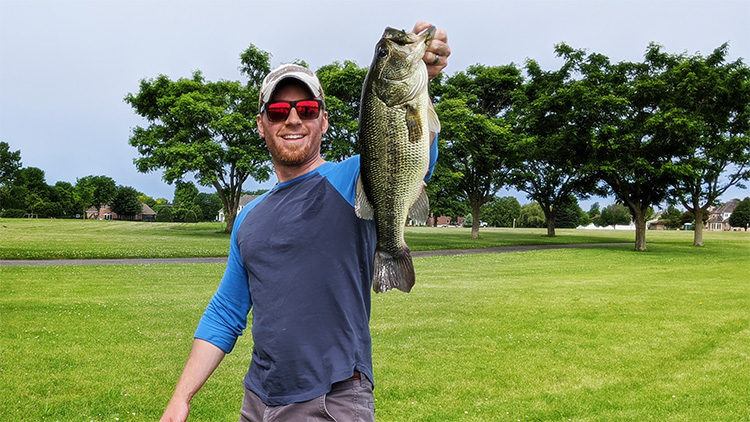
A gorgeous largemouth bass that hammered my swim jig.
Now that we’ve spent some time reviewing how we can all get better at using a swim jig, covering new jigs, trailer options – and more – I figured today would be a good time to pull together a few clips that show my favorite swim jig strikes from last season. These clips are taken directly from videos that were posted on the YouTube channel – so make sure to subscribe if you’d like to see the new stuff coming down the pike!
(Yes – there will probably be some pike coming down the pike… sorry, Dad joke. Couldn’t resist.)
Click the banner to jump to The Minimalist Fisherman on YouTube.
These fish were all taken while fishing from shore on a small lake. Less than 20 acres, in fact. So if you were on the fence thinking swim jigs wouldn’t work in your smaller body of water… it might be worth reconsidering that assumption.
Notice the weather is a bit windy and there is at least some cloud cover with all of these strikes – that’s no coincidence. Only one of these fish was less than 2 pounds – a couple of them were well over 3.
What was the magic jig-and-trailer combination, you ask?
Absolutely deadly working the shoreline and shallow water (all of these areas were less than 6 feet deep).
The rod I used was a 7 foot Bionic Blade from Bass Pro, heavy action, extra fast, and I paired that with a Bass Pro Shops Pro Qualifier baitcaster spooled up with 30 pound braid with a 4 foot fluorocarbon leader tied straight to the jig with a uni-knot. The fluorocarbon was Berkley Vanish – 14 pound test.
A healthy, fat largemouth taken on a swim jig in shallow water.
I can’t tell you how bad this makes want to go fish right now… but it’s currently 5 degrees and everything is frozen… 🙁
So… soon we fish. Until then… we prep. Tight lines!
Even though we just took the time to list out the Top 10 Swim Jigs – the trailer that you pair with your selection is what will seal the deal.
In dirty water with low visibility or in very thick cover, it might be best to go with a darker color and something with multiple, thumping appendages so the fish can easily find your bait. Dark colors are said to “silhouette” better in low-visibility conditions.
If you’re fishing a shoreline with sparse cover or high-visibility due to clear water, it might be best to go with a natural looking trailer with a slender profile to match the forage. If the fish can inspect your offering, you’ll want it to look as natural as possible.
With that in mind, let’s look at the Top 5 Swim Jig Trailers!
Day in and day out, the Strike King Swim-N-Shiner has put more swim jig fish in the boat for me than any other trailer. The tail “kicks” very well at both slow and fast speeds, and comes in both 4 and 5 inch options. This is a very natural, slender profile that is better suited for clear water, and the green pumpkin / pearl belly combo is fantastic – but the other colors can be great choices as well.
This is the original swim jig trailer and it still catches fish! There are a ton of curly tail grubs to choose from. One of the most popular is the Zoom Fat Albert Grub, which comes in multiple colors and a 3″ length. If you rig your swim jig with a curly tail, make sure the tail rides down. This will help provide your bait with extra lift as it comes through the water.
Twin Tail Grubs have been around for quite a while as well. While you have probably seen these used on standard flipping or Arkie-style jigheads, they also make a great swim jig trailer when you want something that is a bit more frantic than a singular curly tail grub (or a smaller paddle tail).
Another slender option that is getting a lot of use is the Z-Man DieZel Minnow. This bait comes in sizes ranging from 4 to 7 inches, and they’re made of ElaZtech – which is extremely tough stuff. There are a ton of great color options, and even though the DieZel Minnow isn’t my top pick – it’s still a very versatile, resilient little swim jig trailer. Throw it with confidence.
Need to bulk up your offering to displace more water? Look to the ribbed body of the Strike King Rage Swimmer. This bait comes in several great colors to pair perfectly with your swim jigs, and sizes range from 2.75 to 5.75 inches. Of these first three trailers, this is what I would tie on when fishing dirty water (unless I wanted multiple appendages).
Finally, one of the most versatile soft plastics on the market today: the Strike King Rage Tail Craw. If you had this bait in your bag you could use it as a trailer, you could Texas rig it, Carolina rig it, put it on a jighead or even an upsized drop-shot rig. The cupped claws go crazy on the retrieve – even at slower speeds they pulse violently – this bait makes an awesome swim jig trailer if you want multiple thumping appendages that move a lot of water, and get a lot of attention!
Moving Forward
With all of the options available today, it’s important to avoid overwhelm and just select a few trailers from the list above to get you started. It would take years to cover all of the trailers on the market; simply begin by matching the color of the trailer to the color of your jig as best you can – and get to casting.
Over time you will discover what you prefer, and (more importantly?) what the fish prefer as well.
Start casting my friend – fish of all sizes love swim jigs.
Next, we’ll look at some custom swim jig options that may be flying under your radar.
In the previous article we talked about when and where to use a swim jig. It’s a great way to get started and absorbing this basic knowledge will make you a better angler – but today we’re going to look at 10 rock-solid swim jig options for anglers of every skill level.
The Strike King Tour Grade Swim Jig is a great all-around option for many different applications. Start with a quarter ounce offering and take a look at all of the available patterns.
The 6th Sense Divine Swim Jig looks absolutely killer – featuring detailed eye sockets, gill plates, and realistic 3-D eyes paired with a super-sharp 5/0 black-nickel hook with a screw-lock baitkeeper along the shank; this jig is an absolute workhorse.
The Lunkerhunt Natural Skirted Swim Jig comes in a few different patterns and adds a level of realism that mimics baitfish with a lifelike finish. This swim jig weighs in at 3/8 oz, features a silicone skirt and a 60 degree premium 4/0 black nickel hook.
If you want to add a bit more movement and vibration without changing your presentation completely, give the Strike King Tour Grade Swinging Swim Jig a try. The black nickel hook is larger and swings freely on the jighead, making it a prime choice for sparse cover conditions.
The All-Terrain Swim-Jig is a beefy little option for working around many different kinds of cover. It includes a fiber weed guard that keeps you away from snags – but compresses easily when taken by a fish.
When you’re looking to pull that kicker-bass out of thick cover, tie on a Terminator Heavy Duty Swim Jig and throw into cover other swim jigs wouldn’t dare go. Check out the excellent color options and rest easy knowing you won’t bend the VMC Hybrid 5/0 Wide Gap Hook during rock-solid hooksets.
If you are looking for a heavier weight in a smaller package, look no further than the no-nonsense Reaction Tackle Tungsten Swim Jig. Tungsten weighs more than lead, and the smaller size means you can fish in tighter areas with fewer hang-ups. You can also use this bait in locations with lead restrictions.
If you are looking for a flatter profile to glide over the top of weeds & grass, check out this goofy little bugger: the Z-Man David Walker’s Crosseyez Snakehead Swim Jig – molded after – you guessed it – an actual snake head. The shape of the head helps the jig plane upwards and features a 4/0 heavy wire VMC hook.
Stanley Hand-Tied SwimMax Swim Jig
Stanley SwimMax Hand Tied Swim Jig
The Stanley Hand-Tied SwimMax Jig features a wedge-head design, coupled with a stout hook and a V-Lock Keeper for securing your trailer of choice. Many patterns are available in this affordable, weedless little package.
Finally, we’ll round out our list with the unique jighead design of the Booyah Swim’n Jig Swim Jig. One of the most weedless jigs available today, the arrowhead design helps the bait to plane upwards, while the durable paint, silicone skirt, loud red rattles (2) and Excalibur Tx3 point triple cutting edge hook round out the package. Cast it shallow, burn it back – then hang on and be ready to hammer it home!
Moving Forward
At the end of the day, the best swim jig is the one you have the most confidence in. The one that you are not afraid to tie on, the one that you are not afraid to lose, and the one that you believe fish will bite. The only way to gain this confidence it to get out, make some casts, and see what works for you.
Next we’ll go over some of the various trailer options that are available today. Spoiler alert – there are a LOT. But have no fear – we’ll help you weed through the clutter and zero in on some of the best trailers to pair with your swim jigs.
A nice largemouth bass prowling the rip-rap shoreline taken by a swim jig.
Possibly the greatest fish catching contraption of all time.
In it’s simplest form, it’s a hook with some lead attached for weight… then just add a bit of meat. A crawler, a leech or a minnow. Jigs can be used to bump bottom and entice bites with a simple raise-lower retrieve that many of us learned to utilize as our first step beyond the bobber.
But jigs have evolved. Some jigs are still for meat, but some are for pitching plastics, and some are for swimming.
Over the past 20 years or so, swim jigging has become a refined art. We’re no longer just swimming ballhead jigs with curlytail grubs (although some swear by this presentation for smallmouth bass); instead, we have access to countless jig-and-trailer combinations. Often, matching the right jig to the right skirt to the right trailer is critical if you want to get bit.
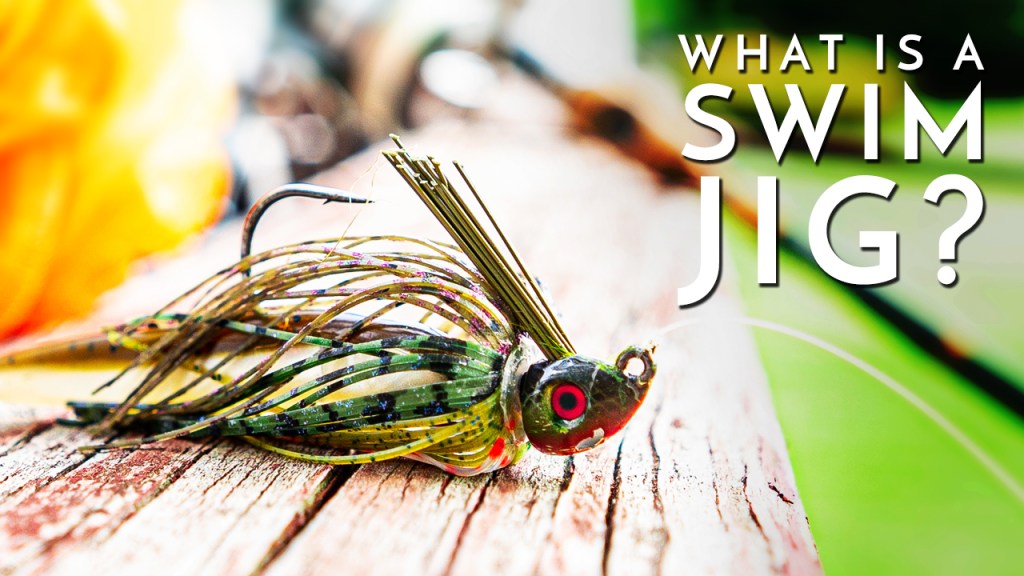
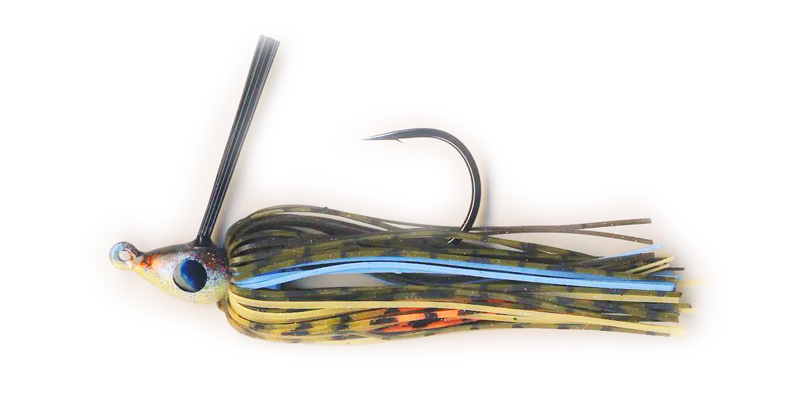
The swim jig itself usually has a tapered or streamlined head to slip through grass, weeds and timber better than other jighead styles. The skirt can be thick or sparse – allowing anglers to make the proper selection based on cover, conditions and local forage, and colors combinations are all across the board. The hook is usually some sort of heavy gauge offering unless you are using a “finesse jig”. Swim jig trailers come in all shapes and sizes.
These jigs are tailor-made for working around heavy cover and horsing monster bass from the depths!
Where Did Swim Jigs Come From?
According to In-Fisherman Field Editor Steve Quinn:
… zipping a jig through the shallows can cover more water and entice bass that rarely see such a look… [this] terrain has been the home of the spinnerbait or more recently, the bladed jig. Swimming a jig was considered off-beat when a few river experts began using it over 20 years ago. It’s a technique that may seem too simple to work well, but the results speak for themselves.
That’s certainly one thing we have learned in our quest to minify – in most cases; the simpler, the better.
The Swim Jig is believed to have gained popularity on river systems, as anglers soon realized they were potent on largemouth and smallmouth bass alike. Many tried the technique on clear lakes with vegetation, but found few situations where the bait worked as well as it did on the river… that is, until they started using them earlier in the season…
When Should I Use a Swim Jig?
As with most presentations, there is not a “right or wrong” time to throw this bait. However, certain conditions do seem to increase its overall effectiveness.
When bass are holding shallow around the spawn or in early summer – particularly when there is a slight breeze, earlier in the day or under cloudy conditions – it is very possible for a swim jig to outfish finesse presentations like stickbaits or flukes. Prespawn bass can also be taken on swim jigs, as these fish start to push shallow to feed and warm their bodies before looking for spawning areas.
Usually after spawning these fish will seek deeper water, however in some bodies of water this shift or transition never takes place.
In both of these instances one of the main benefits of the swim jig is the ability to cover a lot of water at a medium to fast tempo. Use long casts and a straight, steady retrieve to start. Work the shallows, then fan cast an area. Add in pops and hops by twitching the rod tip if you’d like to speed up and slow down the jig. Keep in mind some anglers say this is a good way to get bit-off by pike up north… but still, it’s worth experimenting – just be sure to add a wire or fluorocarbon (40lb+) leader to avoid losing jigs!
Swim jigs can work most of the season – from early spring and deep into fall.
How Do I use a Swim Jig?
Retrieve speed and cadence are very important when it comes to swim-jigging – as with most techniques. In some instances slow-rolling your jig through stickups and vertical, emergent vegetation (bulrushes, lily pads) is the ticket. At other times, working it quickly along piers and hard edges, or along the side of boat docks can work well. This is especially popular in large reservoirs in summer. Swim jigs are also surprisingly weedless, so don’t be afraid to explore standing timber, toss your bait straight into submerged brush, or work down a rip-rap shoreline poking into pockets and irregularities.
See what I mean? There really isn’t a “wrong way”… to swim jig.
Bites can come unexpectedly – and often violently. Swim jigs have a reputation for generating above-average aggression in largemouth and smallmouth bass for some reason. Hits may come on the straight retrieve, but they will also come as your bait makes contact with other objects. If your jig skims over a log or bounces off of a boulder, stick or stem it can look like something is wrong and signify an easy meal (much the same as a crankbait bouncing off of objects).
Finally, don’t be afraid to work the bait both high and low in the water column. Remember that the top is actually an “edge” that fish use to trap baitfish and other delicious looking forage. Keeping your swim jig high in the water column makes it very visible and an easy-looking meal for active fish.
Moving Forward
Next, we’re going to go over some of the more popular swim jig options that are available today. Then we’ll dive into trailers and even some tips from the pros. We’ll pick out a few new swim jigs to try this season, because where I live the ice and snow are just starting to melt… and you can bet a swim jig is going to be one of the very first lures I tie on this spring.
Last year I became a believer.
One of my first fish from last year on – you guessed it – a swim jig. Another pig on a swim jig.
Try one out – I bet you’ll become a believer too. Tight lines!
Over the past two weeks we’ve pulled together a plethora of information to explain the makeup of rivers & streams; how they change, how fish in these systems position themselves, where the food comes from – and all of this came from the note-gathering process as we prepare to explore new streams and rivers this coming year.
The possibilities in this winding stream are endless…
As those exploration videos are posted, we’ll be able to see what holds true, and today we’re going to discuss the Top 5 Baits for Streams and Rivers based on the information we’ve gathered so far.
What fish are you hunting?
It would be impossible to select 5 baits that would always be the top 5 options in every situation for every species of fish. Different fish respond to different presentations based on the local forage, weather conditions, even the time of year.
I’ll be looking for largemouth bass, smallmouth bass, and aggressive panfish.
Keep it Simple
The last thing we want to do is take way too much stuff with us. That can cause us to overthink, and if the stuff is heavy it can lead to early exhaustion as we hike upstream. We’re going to do whatever we can to keep things minimal and as light and straightforward as possible.
A quick note on live bait: live bait is always, always, always an option. Red wigglers on a split-shot rig, minnows under a bobber, crayfish on the bottom – but this list assumes we are focused on exploring new areas, and that means we want to focus on the exploration portion, not keeping live bait… well… alive.
The first thing we will want to do is cover as much water as possible. As much as I love throwing jig worms and wacky rigs, those finesse presentations are best suited for slowly working an area over after you have found some fish and picked off the aggressive biters.
This Rebel 4-Pack is a great option for most of us, and it even includes a topwater popper if you feel like testing the upper edge. These smaller-sized baits will appeal to a wide range of gamefish, and imitate bugs, crayfish & minnows.
If timber and weeds are a concern, look to a searchbait that is much more weedless. One of my absolute favorites is the Strike King Tour Grade Swim Jig. This bait can be paired with all sorts of trailers, comes in multiple weights and sizes, and it is an effective way to work many depths in the water column quickly to help you find active biters.
If you have more confidence in a spinnerbait – go for it. I use spinnerbaits in many of the same areas that I would throw a swim jig if it’s overcast, or if I’m looking for a bit more flash or a faster vibration.
Stickbaits are extremely versatile, and Senko has become a household name – for good reason. I like to use a slightly smaller 4″ or 5″ Strike King Ocho in my area (because of local forage). There are many colors to choose from. A good rule of thumb if you’re not sure what color to use is to select one that is close to the color of the bottom.
This is a good way to work over a likely spot, or to slow down after you have found fish with one of your faster moving searchbaits. If you rig your stickbait weightless you can slow-sink it right in the face of a hesitant fish, or cast upstream so the current brings the bait tumbling back like a minnow in distress.
Smaller jigs account for a lot of fish in streams and rivers. If the stickbait doesn’t work, tie on something that will allow you to make contact with the bottom. Ned Rig jigheads come in many different styles and sizes – select one that will help you touch the bottom, and pair it with one of the many Elaztech trailers out there.
Popular options include the Z-Man TRD or the Z-Man Hula StickZ, and both can be used to imitate smaller forage like baitfish or insects rooting around for food on the bottom.
One of the YouTube channels that I have been enjoying this winter is Creek Fishing Adventures (this actually played a large role in my increased desire to explore some new creeks and rivers). One of John’s favorite baits is the Nikko Hellgrammite – and many, many fish are taken on this lure. It can be rigged on a jig, weightless Texas style, on a Carolina rig – you name it.
While this is similar to the presentation above, it deserves to be mentioned and tested – because there is a chance that this bait will “match the hatch” better than a simple jig-worm.
Try it out!
Moving Forward
These recommendations are what I’ll be using while I search for new fish in new locations this year. Again, live bait is always an option – but personally, when it comes time to explore I want to be able to focus 100% on that aspect of my trip, and pay very close attention to my surroundings – not be worried about my bait getting too hot and dying.
If you have any suggestions or adjustments, feel free to share.
Your support directly funds the creation of weekly articles and videos that promote the development of better anglers and better men. Our country (and our kids) need both. Please share this site, and consider a monthly, weekly, or one-time donation. You are helping us make a difference!
Before you load up the ‘ol kayak and attack a river – make sure you do some research to see if you can find information explaining the level of difficulty of its rapids. In an effort to standardize the terminology surrounding rapids, The International Scale of River Difficulty was developed.
Keep in mind that the water stage (whether the water is high and fast or low and slow) may have an impact on the difficulty level. For instance, high water can turn Class 2 rapids into Class 3 – or even 4 in some circumstances. If you have any hesitation or uneasy feelings about a section of river or certain rapids, do what you can to scout ahead from shore before attempting to make a run.
Class 1: Easy rapids with small standing waves and few obstructions. Under high water conditions they may disappear completely.
Class 1 Rapids Example
Class 2: Standing waves that may reach a height of 3 feet. Some maneuvering is required for safe passage. As a general rule of thumb – anglers in small fishing boats should avoid any rapids greater than Class 2.
Class 2 Rapids Example
Class 3: High, standing waves are capable of swamping an open canoe or small boat. Extensive maneuvering may be required to follow narrow chutes between boulders or turbulent areas.
Class 3 Rapids Example
Class 4: High, irregular standing waves along with constricted passages and blind drops require a rubber raft, decked canoe, kayak, a maneuverable deep-sided boat or jet boat.
Class 4 Rapids Example
Class 5: Hazardous to life because of long, violent rapids and steep drops or falls, which may require a complex route to navigate. These rapids are runnable only by experts with a raft or fully decked boat.
Class 5 Rapids Example
Class 6: The same hazards that are present in Class 5 rapids, but more severe. Even whitewater experts consider Class 6 rapids nearly impossible to navigate. These torrents pose a great risk to life.
Class 6 Rapids Example
Moving Forward
This summer, I will not be taking my jon boat out to try to navigate any rapids. We might do a bit of kayaking, but the goal will be to hike and explore as many winding streams as possible. Still… this is very important knowledge to have, even if it is just put into play from a research perspective.
It’s cold outside as I write this… but soon… we fish… tight lines!
Your support directly funds the creation of weekly articles and videos that promote the development of better anglers and better men. Our country (and our kids) need both. Please share this site, and consider a monthly, weekly, or one-time donation. You are helping us make a difference!
Any river you fish can have hazards that you would be wise to look out for. On every body of water there are certain things we need to be mindful of, or avoid – rivers of course have the added element of moving water. Current is no joke, and all sorts of goodies can be carried along into areas that were previously clear of obstructions.
A Quick Note on Safety
Before we talk about any hazards – allow me to take a moment to suggest you get some sort of personal flotation device. Life jackets are very important (especially if you are alone) so let’s start there. If you are in a boat there are some other safety items you’ll want to grab: extra rope, possibly other flotation devices like cushions, maybe some sort of flare gun, lights… but for now – let’s just start with a nice PFD:
One of the most common (and dangerous) river hazards is a submerged deadhead. These water-soaked logs can float just beneath the surface, or poke out just a bit. If you hit a deadhead at a high speed, you will damage your boat, rip off your lower unit – you could even capsize.
Deadheads are most common when the water is rising. As the river swells up, logs and other objects are lifted away from the shoreline and the current can carry them downstream. Under higher-water conditions, boaters should be careful, reduce their speed and watch the water ahead for any sort of surface disturbance.
Wing Dams
Submerged wing dams are bad news for boaters that are brave enough to venture out of the main channel. Wing dams are usually made up of chunk rock (think boulders, busted concrete, rip-rap…), and the rocky structures can live just a foot or so below the surface. This makes them just about perfect for propeller or lower unit damage.
A series of wing dams viewed from above.
To spot wing dams, look for lines of ripples that extend out from the shore at a right angle to the direction of the current or flow.
Barges
Barges are just like trains in the fact that they can’t come to a complete stop quickly. Fortunately for us… they’re not hard to see.
Always be on the lookout for the wake of a barge or other large vessels, like houseboats, cruisers, etc. Instead of crashing through the wake in a small boat, slow down and ride it out like a bobber. If you hit a large wake at high speed, the bow could dip into the water. Pay attention to your surroundings when fishing – especially on windy days when these larger boats can creep up on you without the sound of their motors reaching your ears before it’s too late.
An example of a large barge in the river… not exactly small…
When crossing paths with a barge or a much larger ship, circle behind or wait for it to pass. There is always a chance that if you cross in front of the barge your motor could stall, and the large vessel will not be able to stop – or… they might not even see you. There’s no swimming away from one of these… be careful.
Dams
This one is simple – stay back. Boaters that approach a dam run the risk of getting sucked into the heavy current, especially if the water is high. Strong eddies below the dam create turbulence that can trap a boat or suck it under completely.
A boater too close to a dam.
Stay away from the fast moving water below dams.
Proper Anchoring
Anchoring in fast current is not the best idea. That said, if you must anchor, attach your rope to the bow eye up front:
Bow eye in front of a boat
Do not attach your rope to the gunwale (side) or stern (back) of the boat:
Gunwale and stern anchor tie location examples
If you anchor sideways, the current could flip your boat. If you anchor from the stern, the current could push water up and over the transom.
Lock-Through Procedures
If you have locks that are able passable on your river, you may want to keep these tips in mind.
Start by looking for directions or instructions that are posted for boaters before you enter a lock. Check them – then, while approaching a lock, look for a pull rope about 1,000 feet from the lockmaster. The rope typically rings a bell that lets them know you would like to lock through.
Boaters waiting to “Lock Through”
Usually a red signal light will flash when the lock is being prepared for entry. This light should turn green when they are ready for you to move ahead. Proceed to slowly motor into the lock.
When you are inside the lock, the gate will close and the water will rise or fall, depending on which direction you are heading. There may be ropes (one may be tossed to you) or some other method to hold your boat in place and avoid drifting – but do not tie anything to your boat! When the water drops the rope could tighten, keeping you in place and causing damage to you or the vessel – or flipping you over.
When they are ready for you to leave, the red signal should again turn green, meaning you can slowly motor or paddle out.
Moving Forward
As you can see, it’s very important to be mindful and pay attention when you are on the water. Many of these rules and hazards apply to lakes as well – but in rivers the addition of a current makes things a bit more complex. Next, we’ll talk a bit more about the International Scale of River Difficulty – a rating system that tells us how easy or difficult a stretch of rapids will be to navigate.
Your support directly funds the creation of weekly articles and videos that promote the development of better anglers and better men. Our country (and our kids) need both. Please share this site, and consider a monthly, weekly, or one-time donation. You are helping us make a difference!
If you drive, you are probably (hopefully?) familiar with the “rules of the road”. But how many of us are familiar with the rules of the river, lake or stream?
Ever had someone pass you too close in a faster boat? Ever have someone throw a huge wake in your direction while you were anchored up fishing?
Rude.
Let’s make sure we’re not “that guy”… What is the process for passing other boats? How do I pass through a lock? What do all of the buoys, signs and signals mean? What hazards should I watch out for?
If you are unfamiliar with these rules, then this article is as much for you as it is for me. I need to learn more on this topic, and I’m referencing Dick Sternberg’s book: The Freshwater Angler™: Fishing Rivers & Streams again for this section.
Boating Rules for Rivers & Streams
When you are approaching another boat head-on, steer to the right (as if you were on an actual road) to pass each other and avoid a collision. However, if your boats are far enough away from each other on the left, there is no need to alter your course.
When another boat moving the same direction as you attempts to pass you, make sure that you maintain the same direction and speed. If you are the one that is attempting to pass another boat moving in the same direction, make sure you put enough distance between your two vessels so that your wake does not endanger them.
If two boats approach each other at a right angle, the boat on the right has the right-of-way (similar to a stop sign). Canoes, kayaks and other non-motorized boats have the right-of-way over motorized boats. Make sure to pay attention and give these smaller boats enough space.
When crossing paths with a barge or a much larger ship, circle behind or wait for it to pass. There is always a chance that if you cross in front of the barge your motor could stall, and the large vessel will not be able to stop – or… they might not even see you. There’s no swimming away from one of these… be careful.
Always yield right-of-way to any emergency craft displaying red or blue flashing lights.
What Buoys & Markers Mean
Channel Markers: usually large, red, or green – channel markers are used to designate the edges of the channel. When you are heading upstream you will see red on the right, and green on the left. An easy way to remember this is with The Three Rs: Red-Right-Return.
Mile Markers: these can be found along the navigation channel of major rivers. An example of these would be the mile markers present on the Mississippi River, which give the distance in miles above the mouth of the Ohio River.
Now that we know a bit more about how to operate our boat, how to interact with other boats, and what some of the most common signs and markers mean, we’ll take a look into other hazards on the river, and also how to interact with certain locks that are passable (with lock-through procedures).
Your support directly funds the creation of weekly articles and videos that promote the development of better anglers and better men. Our country (and our kids) need both. Please share this site, and consider a monthly, weekly, or one-time donation. You are helping us make a difference!
Fishermen care about the environment. The same could be said for hunters and many outdoor enthusiasts. We all appreciate and understand that we need to take care of the animals we chase and the environments in which they live. This is contrary to what many “activists” would have you believe… but it’s true. The best way to convince others that we are a source of good is to expand and share our own personal knowledge of the things that have an impact on the outdoors.
First, let’s be honest: man’s activities have destroyed a large amount of fish habitat in rivers & streams. Water that passes through cities or agricultural areas face the worst problems. We hear the most about pollution in the press, but sometimes other less startling problems can create more havoc for the fish.
Bank Erosion
One issue is bank erosion. Bank erosion is something that we are all aware of (if you’ve ever been on a large natural lake you’ve probably come across “no wake” zones), but this is also one of the most difficult problems to solve. Near streams, many farmers allow livestock to graze right to the edge of the water, which can remove the vegetation that stabilizes the bank during a flood.
If the protective vegetation is removed, the banks will actually crumble during high water, which will cause mud to cover or blanket the rock and gravel below. This change can lead to the stream holding fewer gamefish. Why? Remember when we were discussing Cover & Current Breaks [Part 1], we pointed out that small rock holds baitfish and other forage:
“… it’s natural that fish living in current would seek out anything that might prevent them from being swept away. The moment they hatch new fry are small, weak swimmers – and food for larger predators – but fortunately, they can find cover and concealment behind pebbles and gravel… to start.”
No baitfish means no gamefish, and streams with severely eroded banks typically don’t hold great populations of the latter.
Streams can be fenced off near farmland to prevent this to an extent, but sometimes that is a tall order and not fair to ask of the farmers. Not to mention this isn’t a practical solution for larger streams… and even on smaller ones fences can be damaged by flooding or the same livestock they are supposed to ward off. This means they require frequent maintenance (which again is not fair to the farmer that has more than enough work to do already).
Channelization
Another threat to be mindful of is channelization, which is the straightening of stream and river channels. This is done to reduce flooding, because a straight channel can funnel off water much faster than a meandering one. However this can have a very negative impact on the fish population, and in one Missouri study tracking the channelization of the Chariton River, a section that had been channelized produced 83 percent fewer pounds of fish per acre than another section of the river that was untouched.
Channelization can also worsen flooding downstream, which harms the fish population there as well. Overall channelization reduces the total length of the stream (because there are no winding bends) and much of the cover, spawning areas and food sources are destroyed.
Dewatering
Dewatering is the pumping of stream or river water to irrigation systems to help maintain fertile farmland during drought years. The advantage of course is fertile farmland… the disadvantage is that it reduces already low water levels in rivers and streams. This can reduce streamflow by 90 percent or more – in some cases streams have even been pumped dry.
This change forces fish into deep holes where food may be very scarce. Slower water also heats up faster, which can stress or kill the fish.
Dredging
On large rivers like the Mississippi, a minimum depth of 9 feet must be maintained to allow barge traffic to freely pass through. The U.S. Army Corps of Engineers dredges the river – which means they clean the bed of weeds, muck and rubbish using some sort of scoop or suction. This sounds good, but in reality the dredge spoil is made up of about 90 percent water, and when it is deposited on the river bank it doesn’t pile neatly – much of the spoil runs back to the river or nearby waterways.
This spoil can ruin prime areas for both fish and wildlife.
Pollution & Sewage
These days, there are much stricter rules and laws regarding pollution and sewage. Poorly treated municipal sewage and waste from feedlots can still be a problem though. This waster actually increases the fertility of the stream, which results in large algae blooms that consume dissolved oxygen and cause periodic fish kills.
Algae blooms are a common thing here in Illinois – especially as the weather gets warmer and warmer on the smaller lakes that we fish on a regular basis. However, the algae never gets so thick that it kills off the largemouth bass we’re hunting… who will actually use these thick mats for cover at times.
Herbicide runoff can also cause fish kills. If the chemicals are applied right before a heavy rain, they may actually wash into nearby streams or rivers. This can kill fish and invertebrate life as well.
Moving Forward
We need to take care of our hunting & fishing areas so that we can pass down a clean, amazing earth to our children and grandchildren. However, we need to work with farmers and the Army Corps of Engineers – these people are not “the bad guys” by any means, and there are reasons that they do what they do.
By understanding the dangers to our fisheries, we can continue to work towards compromises and improvements that benefit everyone.
Me, my brothers and Dad returning from a ride on the lake in WI. Pass on the goodness of the outdoors.
Next, we’ll touch on river navigation. Fun fact: it is currently -6 degrees with about 3 feet of snow piled up outside. Everything is frozen… Lord help me, I can’t wait for spring.
If you’re able to fish today – go do it right now – tight lines!
Your support directly funds the creation of weekly articles and videos that promote the development of better anglers and better men. Our country (and our kids) need both. Please share this site, and consider a monthly, weekly, or one-time donation. You are helping us make a difference!
Within just a few hours of a heavy rain, water levels in a stream can rise as much as 10 feet, the current speed may triple, and water that is normally clear can turn a nice, appetizing chocolate brown! Of course, this depends on the size of the stream, and some other factors – but the moral of the story is that water levels are going to fluctuate.
A few years back my local stream went way, way up after heavy rain, flooding roads and washing out nearby woodland areas.
Physical changes of this magnitude can make life difficult for fishermen – and fish. Fish will take up different positions during high water to avoid the fast, muddy water.
As water rises, fish tend to move shallower. The shallowest water available is usually near the advancing waterline, right against the bank. It can be a bit more clear, and baitfish and insects will be here as well – not midstream.
Fishing During High Water
At the first sign of the water dropping back down, fish will move to steep banks and drop-offs, or deep holes. All kinds of fish – including baitfish – move out of the shallows. This is because fish possess an acute sense for changing water levels in their environment. If they did not, many would be trapped in small pools or puddles as the water recedes.
Good stream fishermen understand this behavior and pay close attention to water levels so they know where to look for fish. This can be done using water gauges on bridges or dams, by looking at in-stream objects like logs and boulders, or using a tool like the Deeper Pro+ Sonar, which is a castable depth finder we have talked about many times.
Even a drop as small as an inch or two can cause fish to move back out of the shallows.Freshly deposited silt by weeds, trees and rocks on the shoreline signal the water is falling and fish will move deeper as a result. When the water level is dropping streams will carry little floating debris.
Pay close attention to the clarity of the water following a heavy rain. Large clouds of mud rolling downstream usually mean bad fishing because the fish can’t see your presentation. Again, if you are going to try to fish these conditions, work close to the bank where the water can potentially be a bit clearer. You can also move upstream if muddy water is flowing into your fishing area from a tributary, as seen below.
Chocolate milk? No thanks.
Some fishermen believe that rain washes all sorts of insects off the shoreline, temporarily changing the feeding behavior of the fish. Keep this in mind when you are selecting your presentation. A spinnerbait could be effective, or some sort of swim jig with a large trailer that brings with it a lot of thump and vibration to the table (I would opt for a darker color in muddy water, maybe with some chartreuse). If the water isn’t too fast and there is some visibility you could tie on a smaller crankbait to match anything that is getting washed off the shore, like the Rebel Tiny Crank Collection:
When the water starts to clear up, fishing will improve because the fish will start to feed heavily. The speed at which these streams clear up depends greatly on the size of the drainage area. The larger the drainage area, the longer it takes. In fact, smaller streams fed primarily by springflow can cloud up much less and be a great choice when larger streams and rivers are too muddy to fish. The springflow can also maintain the water lever if there is a drought, making them more consistent throughout the entire year.
Moving Forward
Now that we know more about fluctuating water levels in streams and rivers, we can adjust out location and presentation accordingly. We mentioned early on that change in streams & rivers is constant which makes fishing challenging, even intimidating for many anglers – but if we’re going to explore these areas extensively this year – and yes, we are – then we need to absorb this knowledge and start off on the right foot.
Research is important but it’s time to put it into action!
Come on warm summer mornings…
It’s exciting and I can’t wait for the snow to melt… tight lines!
Your support directly funds the creation of weekly articles and videos that promote the development of better anglers and better men. Our country (and our kids) need both. Please share this site, and consider a monthly, weekly, or one-time donation. You are helping us make a difference!
Have you ever returned to a river or stream – heck, even a lake – after say a long winter or a few seasons away, only to find that things are much different than you remember?
Mother Nature… she doesn’t sit still!
When it comes to running water, the cutting force of current keeps all streams in a constant state of flux. New sandbars are formed as sediment is carried along and deposited in new areas, new holes are cut by swirling current, erosion causes bends to move s-l-o-w-l-y downstream and as water washes against the bank the soil on the downstream bend is slowly washed away – the looser the soil and faster the current, the faster the movement.
Even waterfalls may move (pause and consider that for a second – natural forces in our world are incredible). When water spills over the falls, erosion at the base undercuts the crest which will eventually collapse. This causes the falls to creep upstream. If the crest of the falls erode at a pace faster than the base, they will eventually collapse or convert into a series of rapids.
Severe flooding may change the course of a stream altogether. Floodwaters may cut across a major bend, rather than flow around it. The bend (now separated from the stream) can become what is called an oxbow lake. These narrow, horseshoe shaped lakes may become completely separated from the main channel.
Floodwaters may also cut across bridges and roads. Several years back a local stream flooded right outside my neighborhood. These (awful cell phone) pictures show just how high this normally tiny stream was!
Flooded Road in IllinoisFlooded Stream in IllinoisFlooded Bridge in Illinois
You’ll notice that the surrounding woodland in these photos is also completely flooded. It is not uncommon in situations like this for floods to carry logs, brush or other debris along, only to be hung up in narrow areas, creating logjams. Some logjams block so much of the flow that the stream is forced to make a new channel on one side or the other. Silt is also deposited where the new logjam is located (because the current is slowed in this area) and a new island may eventually be formed here as well.
Even beavers can cause major changes in a small, low-gradient stream. A large beaver dam can back up water for hundreds of yards, creating a fair sized lake. Then with the slower current, the silt can settle out, filling the streambed. This creates a wider, shallower area that warms more quickly, in some cases up to 10 degrees.
DAM!
This change in temperature can be severe enough to have an impact on the species of fish that would use this stretch of the stream. (Check back to Preferred Temperature Ranges of Warmwater Gamefish for reference.)
If you are visiting an area regularly make sure to check the water temperature on a routine basis using tools like the Deeper Pro+ Sonar. This data can be logged automatically so you have a record. If you notice some major changes in the stream flow or path, check again and compare your data to see if you can understand why your favorite fish may have moved.
Streams with braided channels change the most. Their bottoms are constantly shifting, and even a minor flood can cut several new channels and fill in some old ones. Braided channels are most common in streams that flow over loose material. There are usually two or more channels that act independent of one another, often crossing upstream and downstream of islands.
Example of a Braided Stream
High altitude photos allow channel changes to be seen easily. Below, the present channel is shown in blue, and the old channel is in red. This image comes from: The Freshwater Angler™: Fishing Rivers & Streams. The photo also shows many other channel changes that have occurred throughout the years.
Large Detailed Aerial Photo of a Braided Stream
Moving Forward
We now know a bit more about how streams can change. Next we will talk a bit more about how stream and river water levels fluctuate, along with some of the signs of that fluctuation. Remember that lake water can change too (depth, clarity, etc) – but the changes in rivers and streams are constant.
Changes mean new cover. New cover means new fish will move in. Stay alert.
Your support directly funds the creation of weekly articles and videos that promote the development of better anglers and better men. Our country (and our kids) need both. Please share this site, and consider a monthly, weekly, or one-time donation. You are helping us make a difference!
If you’re like me and you want to catch more fish, and it’s a good idea for us to study the mouse instead of the owl. What are all of the different kinds of food that could be available to fish in a system? Remember… these are predators we’re talking about here!
Common Stream & River Forage
Insects (Grasshoppers, Flies, Spiders)
Insect Larvae
Wind-Blown Morsels (?… use your imagination…)
Aquatic Invertebrates
Crustaceans
Baitfish & Minnows
The Availability of Food Matters
On a windy day, species like smallmouth bass may feed heavily on grasshoppers and other insects blown into the stream or river. Fish can simply wait in the shallows along the bank and wait for wind-blown morsels to come along. But these same fish that live in the stream, can’t rely solely on food that comes from outside the stream. This would be too unpredictable (or even seasonal) to support a healthy fish population.
Therefore the stream itself must be able of producing ample food. (This is why our list above is a mix of both external and internal food sources – both are very important and will change throughout the season.)
How to Tell if a Stream Will Produce
Water fertility has a big impact when it comes to the amount of food and forage that a stream or river can produce. The more food, the more fish… and if there is adequate food and cover, the more large fish could potentially be present. Take a look at this picture from The Freshwater Angler™: Fishing Rivers & Streams. Just as in lakes, water with a high concentration of dissolved minerals will typically produce more pounds of fish per acre than water with a low level.
Mmmmm… you can smell all the… fertility…
Fertile water contains an abundance of plankton (definition: the small and microscopic organisms drifting or floating in the sea or fresh water, consisting chiefly of diatoms, protozoans, small crustaceans, and the eggs and larval stages of larger animals) and this is the most basic link in the aquatic food chain. Young gamefish feed directly on plankton; older ones on insects and other organisms that eat the plankton.
Smaller creatures are a staple on the menu, and when it comes to imitating smaller creatures in a fertile stream, Rebel has produced some of the most iconic, recognizable options for years – especially when it comes to downsized versions:
The Rebel 4 Pack: The Teeny Pop-R, Crickhopper, Teeny Wee-Crawfish and a Super Teen Wee-R
Later this year we will be doing a Rebel Rundown where we go through and test a good handful of their most popular lures – so make sure to sign up for alerts on our YouTube channel to you get notifications when those tests are released!
Where to Look for Forage
If you’d like to learn more about the forage in your stream or river, then it’s time to get your hands a little dirty! The bottom of rocks, gravel – or better yet a mixture of the two – make a great habitat for aquatic invertebrates and minnows alike. These creatures can quickly and easily find cover under the rocks or in the spaces between them – even in the gravel itself.
Ah… the perfect hiding place. “Put us back!”
When the bottom silts over or sediment is carried in with the current and settles, the spaces between rocks and gravel disappear. The food disappears with them. No cover… no food.
A firm muck bottom will produce some food, like the larvae of burrowing insects, such as mayflies. (Many avid smallmouth and walleye fishermen up north are all too familiar with “mayfly hatches”.) However, a clean, sandy bottom produces practically no food. The sand will shift with the current, and provide little cover for invertebrates or anything else.
A steady flow is the final ingredient. If a stream is too shallow, the gravel beds may dry up during periods of low water, or they may freeze completely resulting in a winter kill… ending life for any and all organisms in the area. When the water comes back, the stream looks normal… but the food is gone, and the fish will follow.
Streams of this type typically do not support a healthy population of gamefish.
Your support directly funds the creation of weekly articles and videos that promote the development of better anglers and better men. Our country (and our kids) need both. Please share this site, and consider a monthly, weekly, or one-time donation. You are helping us make a difference!
Yesterday, we took a look at some of the different water temperatures that fish prefer (with a focus on warmwater species). Today, we’re going to look at a range of elements that can have an impact on the temperature in a river or stream.
What’s a Good Way to Check the Water Temperature?
One tool that I keep with me whether I’m on foot fishing from the bank, or in a small boat, is my Deeper Pro+ Sonar. This is my preferred model because it allows me to check the temperature close to where I’m standing or on the opposite shore (if a cast can reach that far). It allows me to create and store my own topographic maps, it’s GPS enabled and syncs up with my phone to provide a depth finder & info on bottom composition:
Understanding what causes the temperature to change in rivers and streams can have a big impact on your fishing success. Take into consideration the time of year: in early spring for example, fish will typically be looking for areas with warmer water, but in midsummer, cooler water can be key. If you have the tools and the know-how to find pockets of cooler and warmer water, you can enjoy some spectacular fishing year round. Even a difference of just a few degrees can have a big impact on fish location.
The following pictures come from a book that my grandfather gave me a few years back titled The Freshwater Angler™: Fishing Rivers & Streams, but before we jump into that let’s quickly discuss temperature differences in the pool-riffle-run configuration we first explained while discussing current.
Fast-flowing water is completely churned and has less time to absorb sunlight. This means it will retain a cooler temperature longer, especially if the section in question is shaded from the sun. (Think riffles and certain faster-moving runs.)
Slow-moving water may also remain churned (remember river and streams do not normally stratify like a lake does), but slow-moving water has a longer time to soak up sunlight and heat. In especially slow-moving sections of a stream with no shade cover, the water can warm rapidly. (Think slower-moving runs and pools.)
Incoming feeder stream with cool, shaded, fast moving water.
This is why spring-fed tributaries are so important. These – along with other incoming sources of cooler water – are what allow streams to stay cool enough to maintain healthy populations of northern pike, walleye, or any fish that prefer (and thrives in) cooler temperatures. Without these, streams could only maintain a population of fish that could tolerate very high water temperatures – like largemouth bass, catfish or redbreast sunfish.
*Note: Some streams located in the north or in higher altitudes are not as susceptible to this because their summertime water temperatures remain moderate.
Key Areas to Look For
Narrow, shaded portions of a stream will warm slowly because little water is exposed to direct sunlight.Steep sections within a stream with fast-flowing water will warm slowly because the moving water absorbs little heat.Flat portions of a stream with slower-moving water will warm faster (especially if there is no shade present) because the water has more time to absorb heat.Surface-draw dams spread out the water and slow the overall flow, which increases the stream temperature.Incoming springs can reduce the temperature of a stream in a small area below the entry point.Wide, unshaded stream areas (like pools) warm rapidly because much of the water is exposed to the sun.Coldwater tributaries (which are much larger than the incoming springs pictured above) cool a large area below the entry point.Coldwater draws reduce the stream or river temperature by draining water from the cold depths of an upstream lake.
Moving Forward
Now that we understand what species of fish prefer what water temperatures, and the factors that can help determine that temperature in a stretch of river or stream, let’s look at some common food and forage options that these fish will be keyed in on. This will help when it comes time to select the right baits and presentations as we explore new streams this year.
Be calm. Be patient. The more we learn… the more we can help them be successful.
Your support directly funds the creation of weekly articles and videos that promote the development of better anglers and better men. Our country (and our kids) need both. Please share this site, and consider a monthly, weekly, or one-time donation. You are helping us make a difference!
Different species of fish prefer different water temperatures. The fish you have access to in your local stream or river will depend on the temperature and cover – and even though many warmwater fish can survive over a wider range of temperatures than coldwater fish, there are still ideal conditions for the species you are hunting.
How can I quickly & accurately test water temps?
Testing the water temperature when you’re fishing is a good idea in general, and one of the tools that I usually take with me is a Deeper Pro+ Sonar. There are multiple models available at different price points.
Create your own topographic maps, get water temperature and down-imaging-style fish finder features right on your phone. Use from shore or in a boat (with the appropriate mount).
The added benefit is that you can tie this unit to your fishing line and cast it to inspect the opposite shoreline, deep holes or underwater structure. (Personally, I use mine to create useful topographic maps when I am fishing from the jon boat, and occasionally when fishing from shore. The maps are great for reviewing after I get back from a trip to learn even more about the area.)
Preference by Species
Most anglers know that trout need cold water, and largemouth bass prefer warmer water, but what they don’t realize is that there are considerable differences in preference even among warmwater fish. The chart below shows the preferred temperature ranges of common warmwater species – notice that the range covered is more than 30 degrees.
A nice topwater largemouth taken on a hot, sticky summer morning. Not a trout in sight.
Even though many warmwater fish CAN survive over a wider range of of temperatures than coldwater fish, there is still an ideal temperature range required for every species to thrive. For example, a warmwater fish could survive in a trout stream, but the water temps would be too low for optimal feeding and growth, making it difficult to compete with the trout or grow to the size we’d like to catch.
The temperature of a stream depends mainly on it’s primary source of water. To support a diverse population of fish, additional springflow is usually necessary. Springflow helps the water stay cooler in the summer, and warmer in the winter (preventing freezing, and allowing fish to feed throughout winter instead of going dormant).
Other factors like shade, the course of the stream, the shape of the channel and the gradient of the streambed all impact the temperature as well. Different sections of the same stream can be different temperatures. For example, a shaded stream can run 5 to 10 degrees cooler than a similar stream in direct sunlight. A shaded run can also be several degrees cooler than an unshaded run in the same stream.
Water in narrow, deep channels tends to stay cooler than water in wide, shallow channels because less of the water comes into contact with the air.
Some streams or rivers also contain lakes along their course. Some are natural, others are the result of a dam. In either case, the stream temperature below a lake will be several degrees warmer than the stream temperature above the lake (unless the lake has a coldwater draw, which we will talk about in the next section in this series). The lake water may also stratify into different layers, however this does not happen in streams or rivers – the water stays turbulent and completely mixed – which means the surface temperature is darn close to the temperature right above the streambed (unless the water is very deep).
Now that we know what species typically prefer what water temperatures, we’re going to look into some other factors that can impact the overall temperature of a stream or river. This is yet another piece of the puzzle that we are putting together to get ready for some new exploration this coming year.
Your support directly funds the creation of weekly articles and videos that promote the development of better anglers and better men. Our country (and our kids) need both. Please share this site, and consider a monthly, weekly, or one-time donation. You are helping us make a difference!