Now that we have gone over some of the different kinds of cover, where the most cover can be found, and areas that fish consider to be prime real estate – fish magnets – let’s look at some visual examples so that we have a better idea of what to actually look for when fishing a river or stream.
All of these images have been scanned and taken from an awesome reference titled The Freshwater Angler™: Fishing Rivers & Streams. I’m not going to place the photo link / credit after every picture because there will be quite a few – but make sure to try to get a copy of this book. (My grandpa gave this copy to me and it’s nice to have!)
We’ll start with a definition of a word that gets thrown around a lot…
What is an “Eddy” in a river or stream?
An eddy is an area in a river or stream where the water actually flows against the main current. This is the result of something disrupting the main current flow, like shoreline that extends into the channel, or a rock or log. Eddies typically form on the lower side of the obstruction, but they can also form on the side facing into the current, and in either case they usually create some sort of slack-water area.
How to Identify Eddies & Slack-Water Areas
Streamlined Boulders have an eddy on the downstream side only. This is because water can flow smoothly over the front. (As opposed to non-streamlined boulders, which can actually have an eddy on the downstream side AND the upstream side – don’t overlook the upstream eddies as they are potential fish-holding areas!)Boils can form when water deflects off of a submerged object, like a boulder. An eddy can form below the boulder, several feet upstream of the boil.Point-Bars form along inside bends in areas where the current slows slightly, allowing sediment to settle out. The eddies located below point-bars are prime fish holding locations in many streams.Points or Sharp Bends in a river system can create major eddies. The larger the point or the sharper the bend, the larger the eddy that will form.Bridge Pilings have eddies that form on both the upstream and downstream sides – just like large boulders (that are not streamlined). As a bonus this cover is usually even better than it looks because of rip-rap piled at the base to prevent erosion.Notches in the Shoreline of the mainland or an island can cause slack-water pockets that often go unnoticed. Logjams can sometimes block the entire channel of a river, causing a large eddy to form downstream, or even deflect enough water to cause a new channel to be cut out to the side.Wing Dams are man-made current deflectors, and they create eddies on both the upstream and downstream sides. There can even be deep holes created off the ends as the current swirls around them.Channel Markers – especially those built on rock piles – can be excellent fishing spots. These areas not only form eddies, but the rocks can attract minnows, crayfish and other forage for larger predators to chomp.Dunes can often develop on bottoms with shifting sand. The current will brush the dune peaks, but a slack-water pocket will also form right below each one.Tributary Junctions can be great fishing spots because the delta of the incoming stream creates an eddy downstream from the entry point.Pools are areas below riffles & runs that look darker when viewed from above. These areas are slow-moving with a slick surface.Weedbeds can create all sorts of interesting current patterns. Fish will hold in the slow water of the beds themselves, then dart out to grab food that comes drifting through channels within the same beds.Rooted Weed Clumps can develop a mound of sediment around their base. This allows an eddy to form downstream, and can carve out a hole.Tailwater Eddies form along the sides of the fast current below a dam. Sometimes the reverse current in these eddies can be as strong as the mainstream current.Dugouts that form below waterfalls can be surprisingly deep. The eddying action of the water can undercut the base of the falls, providing fish with an ideal hiding spot.Islands will often have large eddies on the downstream side. Depending on their shape, they may have a smaller eddy on the upstream side as well. If the sides are irregular (like the notches we mentioned above) even more eddies may form.
Additional Overhead Cover to Look For
Remember that the best spots to hide not only include slack-water – but overhead cover as well – these areas are especially attractive to larger fish!
Floating Leaf Vegetation like lily pads will grow in slack water. These areas will attract fish like sunfish, crappie, largemouth bass and northern pike.Undercut Banks usually form along outside bends where the current erodes away shoreline materials. This creates an overhang which can provide shelter to many different kinds of gamefish.Docks can be great fish-holding areas. Larger docks provide both overhead cover and eddies on the front and back sides of the posts (if they are large enough). Smaller docks will offer some shade, but larger docks with canopies will offer the best protection and therefore be more attractive to gamefish.Freshly Fallen Trees will have many branches both large and small that will break the current and create a large eddy that can hold crappie or other fish that prefer slow current. However, over time (a year or two) the small branches will rot away – but the tree may still hold fish that tolerate faster current.
Next, we’ll take a look at what species of fish prefer what water temperatures. We’ll also discuss what can cause that temperature to change in rivers & streams. This will come in handy as we start to explore new water this year – so make sure to stay tuned for those videos as we report on both success and failure.
Your support directly funds the creation of weekly articles and videos that promote the development of better anglers and better men. Our country (and our kids) need both. Please share this site, and consider a monthly, weekly, or one-time donation. You are helping us make a difference!
If you think about it, it’s natural that fish living in current would seek out anything that might prevent them from being swept away. The moment they hatch new fry are small, weak swimmers – and food for larger predators – but fortunately, they can find cover and concealment behind pebbles and gravel… to start.
As fish grow, they will need to find larger types of cover to both shade and hide themselves. It is common for the largest fish in a system to set up near the largest boulders, or near logs or banks with the deepest undercuts. Streams & rivers without cover like this will probably not hold as many large fish.
In the previous article we discussed the different species of fish found in currents of varying strength and their general tolerance to that current. Fish like smallmouth bass have a higher tolerance and so in an area with more current, a single boulder or even a branch can provide enough cover to hold a quality fish – but crappie and largemouth (fish that prefer slower current like what we could expect in a pool or low-gradient area) would probably require more substantial cover to block faster current enough to hold in that stretch of water.
Streams that wind and meander typically have more structure, cuts and cover than those that are straight. Remember too that smaller streams make it easier to see the pool-riffle-run pattern that changes the bottom composition and strength of the current, as the same amount of water has to move through narrow and wide areas – ultimately leading to many deep holes and undercut banks. Straight streams can be more uniform, and therefore offer less cover, meaning fewer adult fish will be present.
The best cover will not only offer a break in the current, but provide overhead protection (from the sun and predators) as well. This means that fish may well prefer the slack water of an undercut bank to say, slack water behind a boulder. The undercut bank offers more robust protection – but both can hold fish.
Whether you are fishing a lake or a stream, most bodies of water have some prime real estate. Areas of cover (either visible or submerged) that are just “fish magnets”. A good spot is a good spot, and when the largest and most dominant fish that set up in these areas are caught, they will either return upon release, or another fish of similar size will move into the area. Pay attention to areas that are productive and revisit them to test this concept.
Over time you will start to recognize visual cues that mean there is cover present. At first, you will miss many of these spots – but that’s good for two reasons. First, other less experienced fishermen will miss them as well, and second, the more you practice, the more cover you will be able to identify, and the more cover you can identify, the more fish you will catch as you continue to develop as an angler.
Moving Forward
Now that we know more about cover and current breaks in a river or stream – and why they are important – let’s go ahead and put together a list of common slack-water areas that you can look for which may very well hold gamefish.
The combination of these concepts & targets will help us zero in on success.
Your support directly funds the creation of weekly articles and videos that promote the development of better anglers and better men. Our country (and our kids) need both. Please share this site, and consider a monthly, weekly, or one-time donation. You are helping us make a difference!
Recently, we discussed what a channel within a river or stream is and where it is located. This knowledge will help you find the deepest, fastest water without the aid of electronics. But are there other factors that come into play and impact how fast your body of water is moving?
Yes.
Does the speed of the current help determine what fish are present as well?
Yes.
Let’s take a look at what can increase or decrease current speed, and how fish behave in these different conditions.
What is current?
A current in a river or stream is the flow of water primarily influenced by gravity as the water moves downhill. Over time, this flow can lose its potential energy. The rate of movement, speed and direction are all important factors.
Current is the force of flowing water, typically discussed in terms of “speed”. This speed is usually determined by the slope – or gradient – of the streambed, the shape of the channel, and the amount of flow.
A high-gradient stream is one that drops rapidly in elevation. One that slopes slowly would be considered low-gradient. A stream can also contain both high and low gradient areas. The gradient is typically highest near the source, and it slows as it flows along, especially as sediment is deposited (this gradually flattens the streambed, slowing current). Usually the slowest current speed can be found near the mouth, where the flowing water enters another body of water. (Note that in some cases the water flow will slow and spread before connecting with another body of water, simply soaking into the ground.)
If the flow increases, the current will generally increase as well. A narrow passage or shallow area can also increase current, because the same amount of water is forced through a smaller area.
What are pools, riffles & runs?
When the current increases, it can excavate a deep pool. In this pool, the current is much slower and the sediment carried here settles out. As the sediment builds up though, it can cause the water to get shallower – and remember when water gets shallower it causes the current to speed up because the same amount of water is forced through a smaller area – this increased current is called a riffle. Riffles are shallower, faster moving areas of a stream, and their fast water starts to dig the channel deeper, creating a run. This run is usually characterized with a more moderate current and it will continue until reaching the next pool where the process repeats.
This is what leads to the typical pool-riffle-run configuration, which is very noticeable in smaller streams, but can be harder to identify in larger bodies of water.
Pools also look calmer on top, because the sediment that settles in the slow current consists of fine materials: sand, silt or muck. In riffles and runs where the water moves faster, sediment washes away and the gravel, rocks and boulders that remain can deflect the current and produce more turbulent waters.
How does current impact fish behavior?
Fish behave differently in fast current versus slower current. For example, fish in faster water are conditioned to grab food quickly without much examination. If they didn’t the current would simply sweep their meal away! This means that fish in faster water are quicker to hit a lure when compared to those in slower water. Fish are also easier to locate as they are typically confined to slack water areas where they can avoid fast current – as opposed to being scattered all throughout an area.
The deepest, fastest water always follows the outside bends along a channel, and expert stream fishermen can quickly spot these deep zones at a glance. They also know that most stream species hang out in or alongside these areas.
If you are targeting a specific species of fish, it helps to know which fish prefer high-gradient areas, medium-gradient areas and low-gradient areas. Let’s take another peek at one of our references: The Freshwater Angler™: Fishing Rivers & Streams:
From left to right we can see high, medium and low gradient areas in a stream or river and the types of fish that frequent these areas. While this is not always the case, it can help you target more productive water if you are looking for a specific species. [Photo Credit: The Freshwater Angler™: Fishing Rivers & Streams]
High-Gradient areas are favored by species like smallmouth bass and steelhead. The higher the gradient, the more the fish hug the bottom to escape the current. These areas typically hold the largest rocks and boulders.
Medium-Gradient areas are favored by everything from walleye to channel catfish, sauger, muskie, spotted bass, sturgeon, striped bass, wipers and shad. These areas have a more moderate current which means the fish don’t have to hug the bottom quite as tight, and there are usually fewer boulders but a good mix of rocks and gravel.
Low-Gradient areas are favored by largemouth bass, pike, blue & flathead catfish, white & black crappie, bluegill and redear sunfish. The slower current means silt and muck can settle, resulting in a smooth streambed and fish cruising further off the bottom.
* These “speeds” are relative. There are usually no fish found in the absolute fastest water.
Moving Forward
Next, we’ll spend a little time discussing cover and current breaks. If you need a refresher, make sure to bounce back to review what a channel is – all of this knowledge we are amassing is important as we get ready to explore new streams and rivers this coming year!
Last year we had good luck in small lakes… this year, we have our work cut out for us.
Your support directly funds the creation of weekly articles and videos that promote the development of better anglers and better men. Our country (and our kids) need both. Please share this site, and consider a monthly, weekly, or one-time donation. You are helping us make a difference!
To the angler that does most of their fishing in lakes and reservoirs, approaching streams and rivers can seem quite foreign. (I’m speaking as someone who is currently intimidated by these winding bodies of rolling water.) The fish behave differently, they use different locations, respond to different presentations, conditions can change constantly… things are just… well, different.
However, a 30 second internet search will reveal the truth: there are many stream & river fishing opportunities that we are missing.
Question is… how do we fix that? Where do we start?
Answer?
Right here, right now.
Let’s discuss what a channel is, and where the deepest water in a river or stream is typically located.
What is a channel?
A channel is typically a narrow, fluid body of moving shallow water that provides a path for sediment flowing within the stream (or river) banks. Vegetation, sediment load, slope and flow can lead to constant changes that affect both aquatic & terrestrial life.
Because the water is moving, the fish in these areas can be slightly more resilient to changing weather conditions like cold fronts, cloud cover and changes in air temperature. If you have the option to fish either a small lake or a stream after a cold front – it might be a good idea to pick the stream!
It is also important to note that many sources seem to refer to the channel as something that is actually within the stream or river itself. The channel is part of a river or stream. Look back at our definition above, the channel provides “a path… flowing within the stream (or river) banks”.
Where is the channel actually located?
Next, it’s important that we understand the general underwater makeup of these channels, especially since most of us will not have access to our depth finders or the electronics we’re used to relying on when we’re fishing lakes. To understand where the channel itself is located (along with the deepest water) let’s look at a cross-section provided by The Freshwater Angler™: Fishing Rivers & Streams:
In a straight section of a river / stream?
This image displays a straight section of this river / stream. The cross section inset shows the channel located dead center. The deepest water in this stretch of water is located right in the center of the stream / river. [Photo Credit: The Freshwater Angler™: Fishing Rivers & Streams]
Along an outside bend of a river / stream?
This image displays an outside bend section of this river / stream. The cross section inset shows the channel actually shifts to the outside edge of the bend. The deepest water in this stretch is located there, and the fastest moving water is indicated by the dark blue area. Current is slower on the surface, bottom and along the sides because of friction with the air and streambed. [Photo Credit: The Freshwater Angler™: Fishing Rivers & Streams]
Along an inside bend of a river / stream?
This image displays an inside bend section of this river / stream. The cross section inset shows the channel actually shifts to the outside edge of the bend – just like the previous image but in the opposite direction. Again, the deepest water is located there, and the fastest moving water is indicated by the dark blue area. Current is slower in areas of friction. [Photo Credit: The Freshwater Angler™: Fishing Rivers & Streams]
Last year, it was important to take some bad habits and turn them into good behaviors. These behaviors resulted in a whole bunch of awesome fish – now this year, it’s time to repeat that process and catch more fish from more bodies of water.
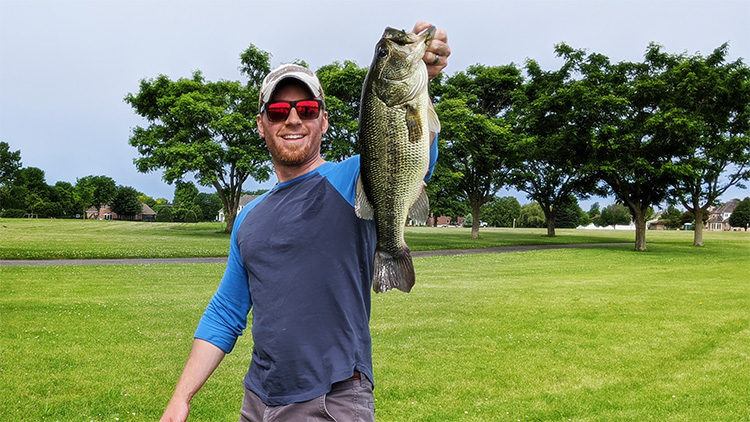
A 3.5 lb bass taken from a small local lake. The result of better behaviors.
Your support directly funds the creation of weekly articles and videos that promote the development of better anglers and better men. Our country (and our kids) need both. Please share this site, and consider a monthly, weekly, or one-time donation. You are helping us make a difference!
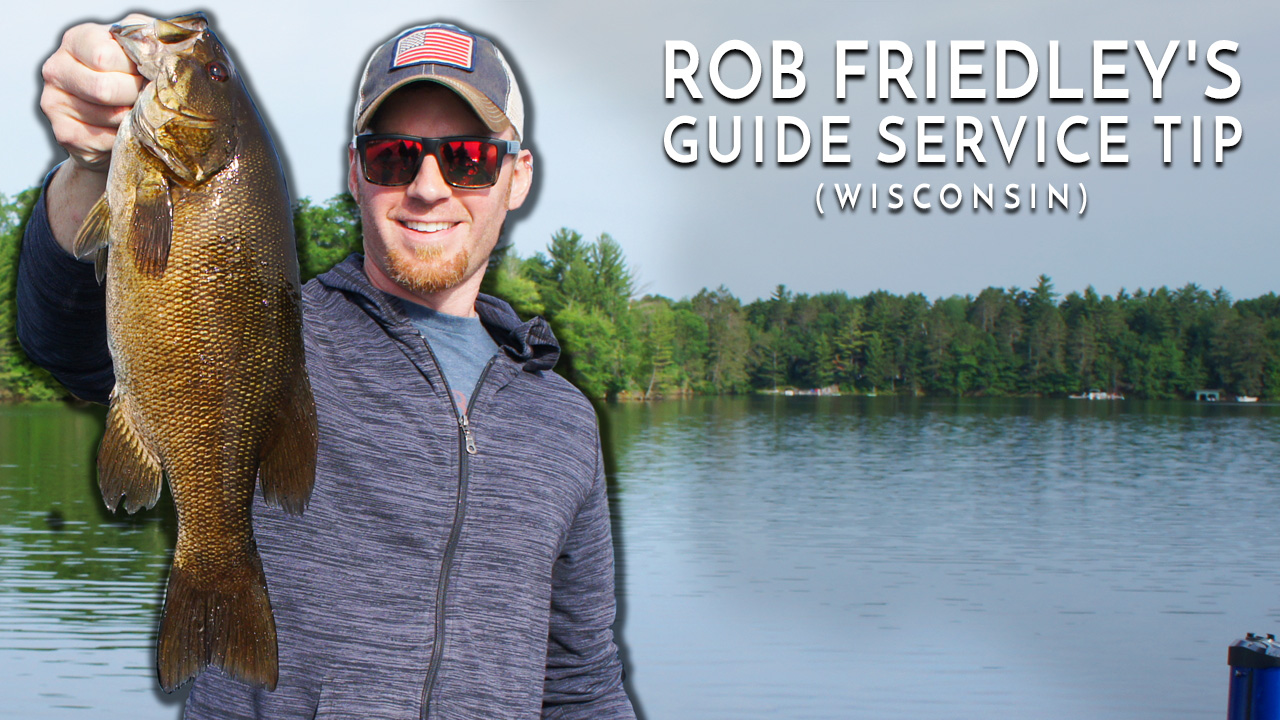
In Wisconsin this year we had a chance to book some time with Manitowish fishing guide Rob Friedley. If you are considering hiring him, I suggest you do so – he is extremely helpful and accommodating, and he has been fishing the waters of Vilas, Iron, and Onedia Counties since he was a child.
I booked a day with him so that I could take my father walleye fishing, hoping that we would also learn a thing or two and be able to replicate our success throughout the remainder of our trip. We were not disappointed, and in this video I’ll share a few things I learned from Rob.
Click the banner to jump to The Minimalist Fisherman on YouTube.
Let me know if you have any suggestions for improving, or a pond or creek to fish, or just want to say hey in the comments or on social media. I’m always trying to improve and appreciate your input. Thanks much!
Fishing tips for Minocqua Wisconsin – that’s what we’re talking about today. My family makes the time every year to head up north and fish the great state of Wisconsin on and around the waters of Minocqua and Vilas County. We typically load up on supplies at Townline Sports (5198 US-51, Manitowish Waters, WI 54545) before we head out on the lake in my Dad’s boat.
On this trip we decided to start by looking for new spots while fishing presentations that would appeal to many different species while we were exploring. Some of you already know what I’m talking about…
Plus – I got to fish with my wife for two days. Awesome!
Time to fish.
Click the banner to jump to The Minimalist Fisherman on YouTube.
Let me know if you have any suggestions for improving, or a pond or creek to fish, or just want to say hey in the comments or on social media. I’m always trying to improve and appreciate your input. Thanks much!
Illinois fishing can be difficult at times. However, with the proper tools and presentations (based on the area you are fishing – the cover, the bottom color and composition, water clarity and local forage etc.) you can have some really successful days. Even if you are stuck fishing the bank like we were today – and yes… even if you are stuck fishing small city lakes… like we were today… and even if you are fishing pressured waters… like we were today… you can still have a great time.
DO WHAT YOU CAN WITH WHAT YOU GOT!
Now tie on a power presentation, a finesse presentation, start bankin’ and get to work!
Time to fish.
Click the banner to jump to The Minimalist Fisherman on YouTube.
Let me know if you have any suggestions for improving, or a pond or creek to fish, or just want to say hey in the comments or on social media. I’m always trying to improve and appreciate your input. Thanks much!
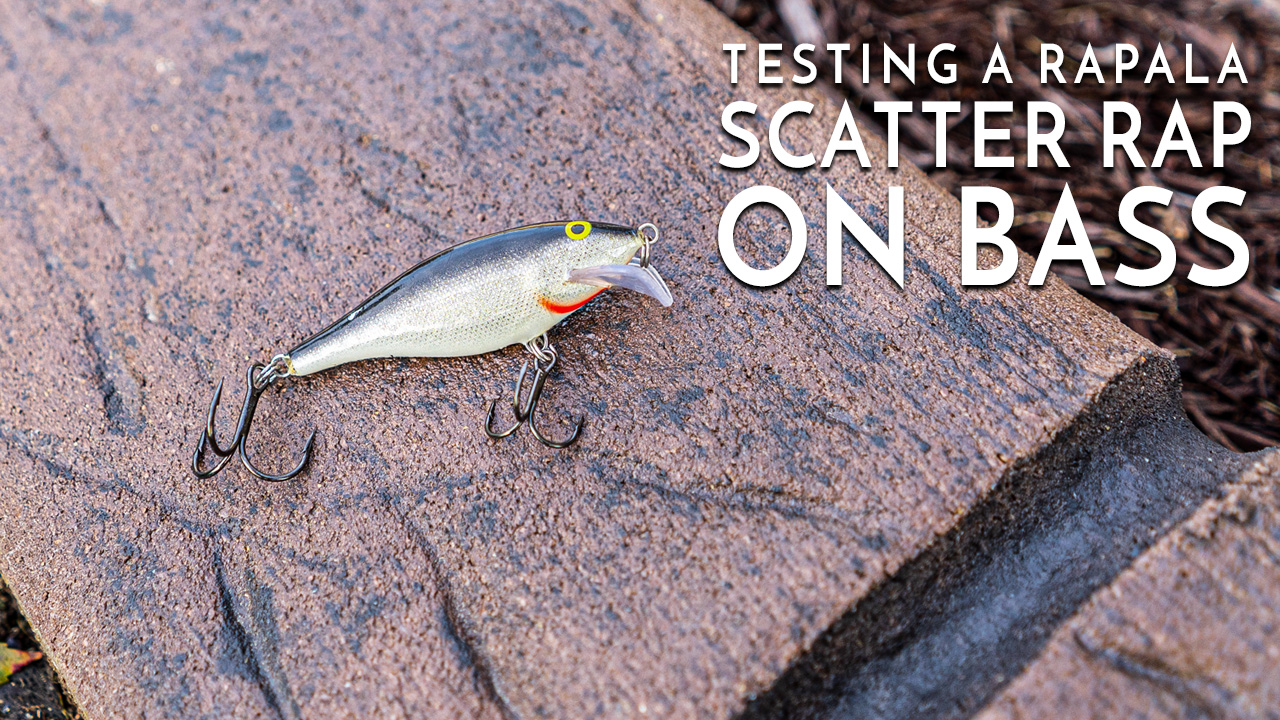
The Rapala Scatter Rap is a unique little hard bait that incorporates an oddly shaped lip that causes the lure to wiggle back and forth erratically on the retrieve. Since I didn’t have a lot of experience working crankbaits, I decided to tie this one on hoping it would “do some of the work” for me.
This was not because of laziness… it was simply due to my lack of confidence.
Fortunately, I got some good fish, some good casts and some good experience – and that’s what it’s all about! Getting better. This was the beginning of “Crankbaits 101” for me, something that has paid big dividends throughout the remainder of the season. I definitely had a lot to learn though… and this was only the beginning.
Time to fish.
Click the banner to jump to The Minimalist Fisherman on YouTube.
Let me know if you have any suggestions for improving, or a pond or creek to fish, or just want to say hey in the comments or on social media. I’m always trying to improve and appreciate your input. Thanks much!
Jig worms are one of the easiest presentations to use when it comes to targeting bass, especially if you are new to fishing or want to get your kids using something that is a bit more active than a bobber. They have the potential to catch numbers of fish – or a monster. Largemouth and smallmouth bass love these little bite-sized morsels. They look like an easy meal.
A minnow. A leech. A little snake. Who knows? Food. Easy food. That’s what matters.
You can fish them from the shore just as easily as you can fish them from a boat. Skip them under docks, work rip-rap shorelines, pick apart underwater timber, points and cuts, or other familiar structure where fish set up shop.
Remember to be mindful of that exposed hook.
Over the years I have caught bass ranging from bite-sized themselves to just under 4 pounds on a simple plastic worm less than 4 or 5 inches in length on a small jig head. I’ve used many brands… but the brand is less important than the size and color which should be selected based on the local forage and bottom composition (at least as a starting point).
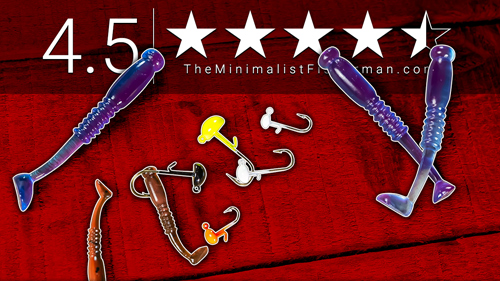
In this video we’ll use Hula Sticks, a Z-Man product that floats – which means the worms stand straight up off the bottom when they are at rest – on an Eagle Claw / Trokar jig head that weighs in at 1/16 oz. My son used a Gopher Tackle Mushroom Head Jig in the same weight. This is perfect because the local forage is small baitfish – not shad, but minnow-shaped… small… well… minnows. I’m not sure what species, but they’re slender!
Wind was not a factor, and the water was no deeper than 7 feet at any point.
Time to fish.
Click the banner to jump to The Minimalist Fisherman on YouTube.
Let me know if you have any suggestions for improving, or a pond or creek to fish, or just want to say hey in the comments or on social media. I’m always trying to improve and appreciate your input. Thanks much!
One time I wanted to fish a frog for largemouth bass, but I lost my black frog a few days earlier and all I had left was a bright orange and chartreuse monstrosity (Sebile Pivot Frog). I wanted a more natural color… so I spray painted it.
It was ugly – but it worked.
I also wanted to fish a Strike King Ocho (stickbait), but the one I had been using was ripped after very little use. I figured there was more life in the bait… so I melted it with a lighter and stuck it back together.
It was shiny – but it worked.
Then my friend Leslie came to the lake with her poles and decided to make a few casts. She had not done so since her husband passed 3 years earlier. We got to fish together.
What a good day. Interesting – no doubt – but a good day.
Sometimes the good Lord puts you where you are supposed to be.
Click the banner to jump to The Minimalist Fisherman on YouTube.
Let me know if you have any suggestions for improving, or a pond or creek to fish, or just want to say hey in the comments or on social media. I’m always trying to improve and appreciate your input. Thanks much!
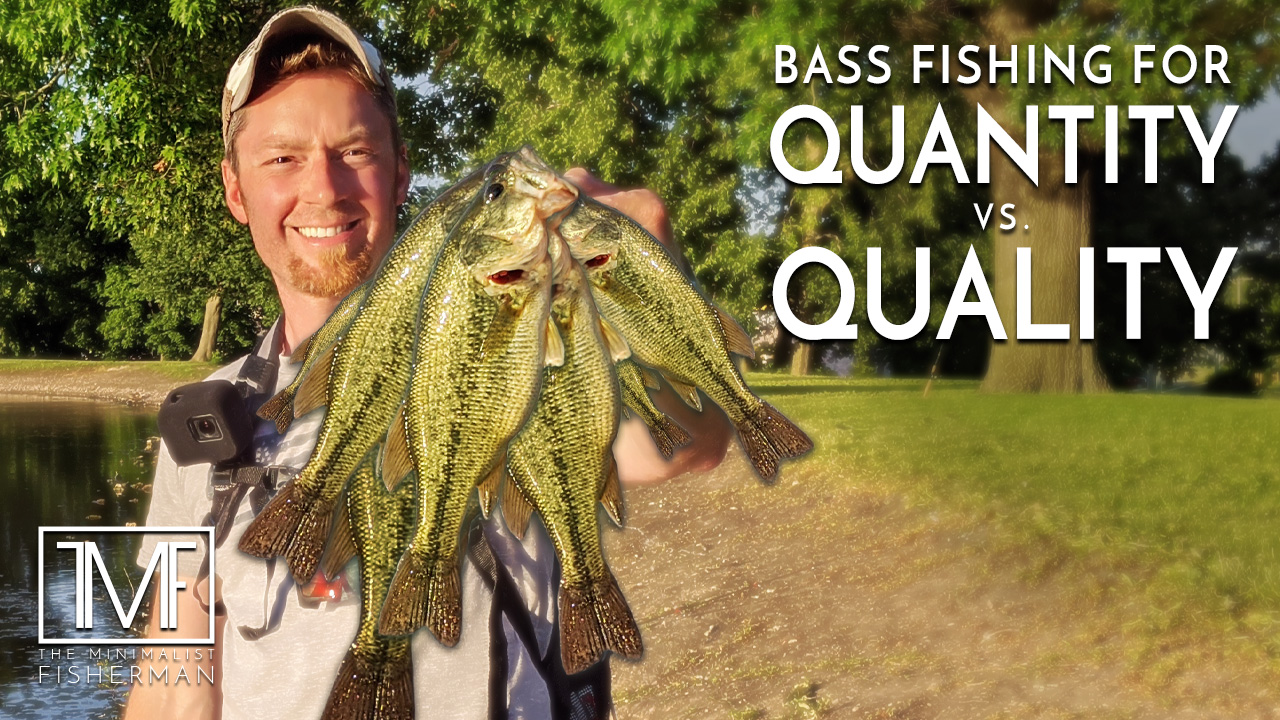
Bass fishing for quantity over quality – fishing for a large quantity of fish, versus fishing for a few quality fish. Yes, this is a decision you need to make every time you are on the water. You see that decision manifest itself in a fisherman’s bait selection most often – however – if you are lucky enough to fish multiple bodies of water, you may notice trends and patterns surrounding each pond, stream or lake. You may also notice that some lakes have a healthy population of larger fish, while others have a slightly stunted population with many more fish that are smaller in size.
Once you have made this type of discover you have the option to select what you are fishing for before you hear out to the water, before you tie on a presentation, or before you spend precious “free time” at a location that is not going to help you meet your own personal goals.
There are many reasons to select one over the other, and we’ll cover several of those in this video.
Time to fish.
Click the banner to jump to The Minimalist Fisherman on YouTube.
Let me know if you have any suggestions for improving, or a pond or creek to fish, or just want to say hey in the comments or on social media. I’m always trying to improve and appreciate your input. Thanks much!
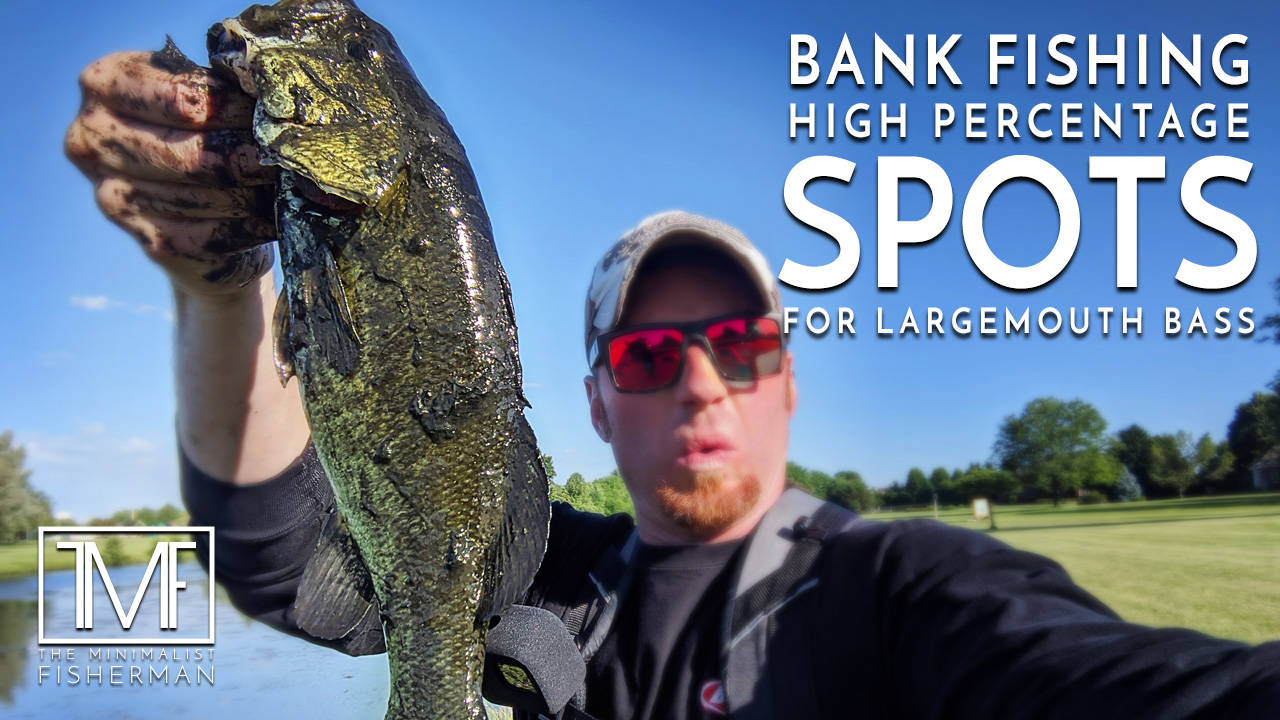
Want to catch more bass from shore? Keep your eyes peeled and make a point to bank fish high percentage spots. Recently we posted a video called “Bank Fishing Tips for Small City Lakes“, and this tip is meant to be an extension of that information – so make sure to check that out.
As I continue to improve, I want to see you do the same!
We’ll have more information coming soon regarding bank fishing, and we recently made some new modifications to the jon boat and took it out to test. We have a lot coming down the pike!
Time to fish.
Click the banner to jump to The Minimalist Fisherman on YouTube.
Let me know if you have any suggestions for improving, or a pond or creek to fish, or just want to say hey in the comments or on social media. I’m always trying to improve and appreciate your input. Thanks much!
Fishing with kids can be a great bonding experience, but remember this: it’s ok to let your kids fail at things from time to time. Without failure, they will never understand how special a victory – something that comes as the result of their hard work and dedication – truly is.
In this video we’re going to discuss some of the lessons I have learned over the years – both things I have done right, and things I have done wrong. Hopefully this helps you have a great trip with your kids and avoid some of my mistakes.
Enjoy the outdoors with your kids.
Click the banner to jump to The Minimalist Fisherman on YouTube.
Time to fish.
Let me know if you have any suggestions for improving, or a pond or creek to fish, or just want to say hey in the comments or on social media. I’m always trying to improve and appreciate your input. Thanks much!
Looking for bank fishing tips that work well in small city lakes? Start here. Not everyone has the option of fishing from a boat – but being land-locked doesn’t have to be frustrating. Several whopper fish can be had with the right gear, the right location, the right knowledge and a little bit of luck.
Actually now that I think about it… these bank fishing tips will work for MOST bank fishing situations. At the very least, they will help.
In this video we are going to discuss the things I have learned over the past year after spending quite a bit of time fishing from the shore… and catching some really, really nice bass along the way.
Time to fish.
Click the banner to jump to The Minimalist Fisherman on YouTube.
Let me know if you have any suggestions for improving, or a pond or creek to fish, or just want to say hey in the comments or on social media. I’m always trying to improve and appreciate your input. Thanks much!
Fishing with kids can be a ton of fun… and an extreme test of patience. If your kids are ready to move from bobbers to more active presentations, to target bass or other species and really feel like they are “fishing” and not just “sitting” or “waiting” – this video should help.
My son set the goal of landing a nice largemouth bass all on his own. It took several trips, but he stuck with it and got to learn the value and reward that comes with working hard to complete a goal that you set for yourself. He didn’t want a handout – he wanted to catch his own fish.
In this video we’re going to discuss some of the lessons I have learned over the years – both things I have done right, and things I have done wrong. Hopefully this helps you have a great trip with your kids and avoid some of my mistakes!
Enjoy the outdoors with your kids.
Click the banner to jump to The Minimalist Fisherman on YouTube.
Time to fish.
Let me know if you have any suggestions for improving, or a pond or creek to fish, or just want to say hey in the comments or on social media. I’m always trying to improve and appreciate your input. Thanks much!
Physical activity is a good way to deal with depression. In my case, getting out and fishing – walking – casting – landing fish – all help. If you are struggling with bouts of depression or anxiety, it would be worth testing this out for yourself… especially if you already have experience fishing!
Get out. Catch fish. Test theories. Make progress. Get better.
Both the act and the progress will help improve your mental state.
Take care of yourself – and keep your chin up.
Click the banner to jump to The Minimalist Fisherman on YouTube.
Time to fish.
Let me know if you have any suggestions for improving, or a pond or creek to fish, or just want to say hey in the comments or on social media. I’m always trying to improve and appreciate your input. Thanks much!
Fishing a Strike King Lightning Shad (Mr. Crappie) is a great way to target panfish, crappie – and in some cases… 4lb largemouth bass. The main takeaway here is that fish eat what they want, when they want, and it is in our best interest to be on the water as much as possible so we can catch them when they are willing to bite!
Click the banner to jump to The Minimalist Fisherman on YouTube.
Time to fish.
Let me know if you have any suggestions for improving, or a pond or creek to fish, or just want to say hey in the comments or on social media. I’m always trying to improve and appreciate your input. Thanks much!
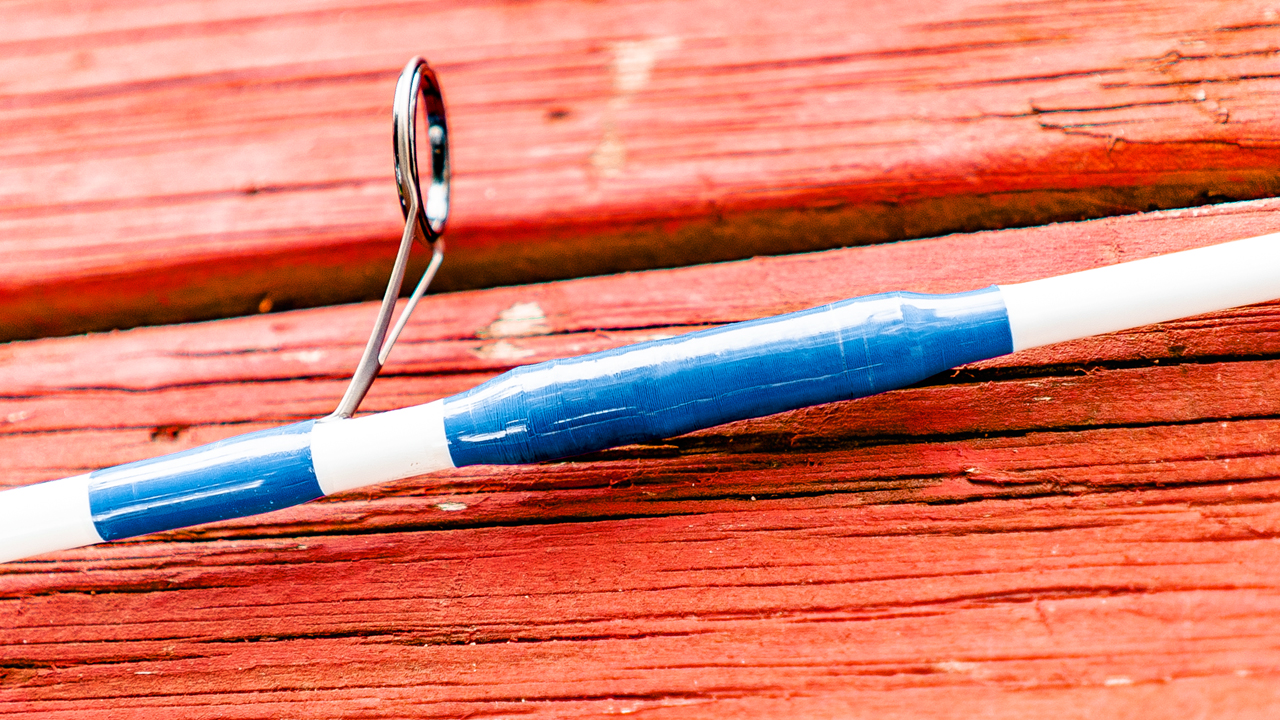
Fix your broken fishing rod with this super strong repair! This tutorial covers everything from supplies to technique and includes a segment where we take the repaired fishing rod out to test it on some feisty largemouth bass. Also, to show you how much I believe in it – I bought completely new components and built a brand new fishing rod just so I could break it for this video.
That was painful… but the end result is fantastic.
OH – here are some additional pictures of the finished rod repair and the process in general. As you can see it came out really nice! If you try this method make sure to contact me and show me your results!
Broken Fishing Rod Before Our Rock Solid RepairSplint for Fixing Our Broken Fishing RodThe Final Result: Completely Fixed Broken Fishing RodThe Final Result: Fixed Broken Fishing Rod TutorialBeautiful Fix for a Broken Fishing Rod
Whether you are fishing or not – it is important that we make the best out of every situation. When it comes to fishing, that means LEARNING no matter what. If the bite is on fire and you’re slaying fish – make sure you are learning, but if the bite is tough and the weather sucks… MAKE SURE YOU ARE LEARNING.
Click the banner to jump to The Minimalist Fisherman on YouTube.
This is one way to make sure that each and every fishing trip you are lucky enough to head out on serves a greater purpose in your life. That purpose is increasing your experience and education, and becoming a more weathered and knowledgeable fisherman so that you can share that knowledge with other anglers, your kids, your spouse – even complete strangers.
Test things out. Learn from people you can talk to. Watch other anglers and see what they’re doing. Figure out where structure and cover can be found. What is the forage? Is there current? Work on your casting accuracy. Explore the area and look for new hot-spots.
There is so much we can do to make the most out of the slowest of days.
So focus… and don’t take ANY days (even the slow ones) for granted!
Time to fish.
Let me know if you have any suggestions for improving, or a pond or creek to fish, or just want to say hey in the comments or on social media. I’m always trying to improve and appreciate your input. Thanks much!
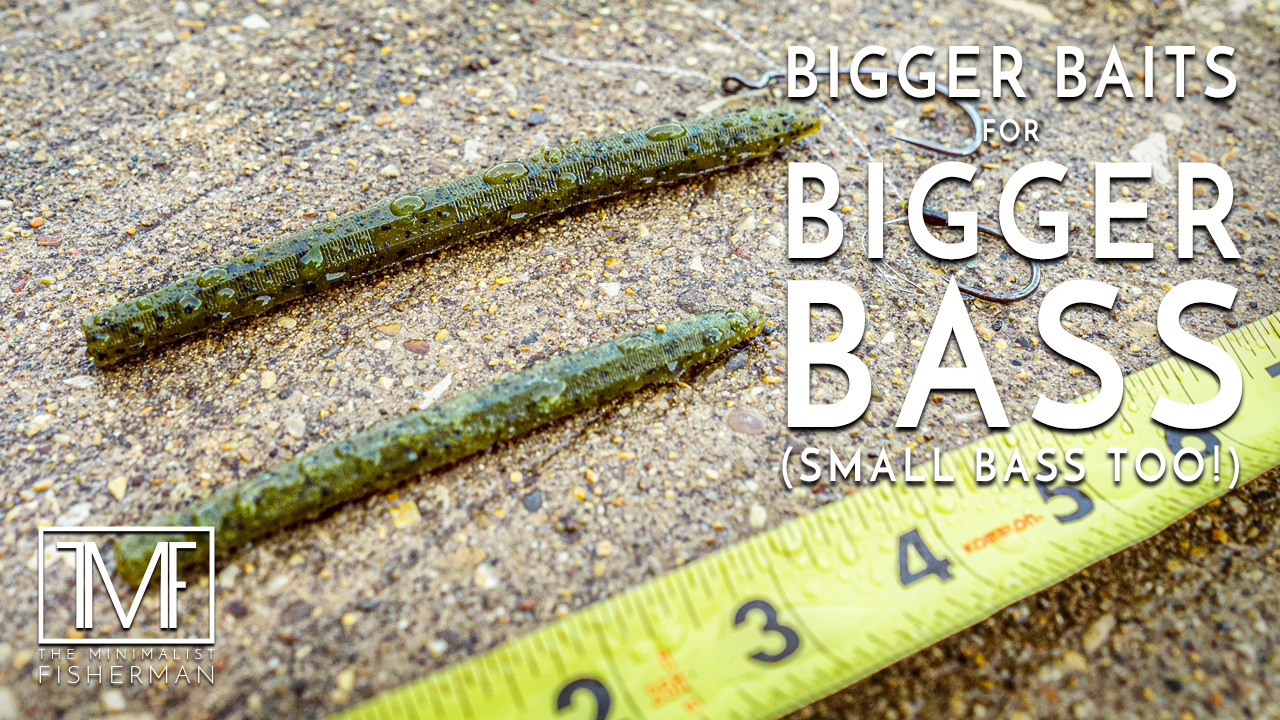
Fishing bigger baits for bigger bass sounds like such a simple concept. Bigger baits should mean putting more & bigger bass in the boat – right? Pulling more largemouth out to the shore, or sticking a better breed of smallmouth?
Well, it can… if the fish are keyed in on larger baits.
But what if the fish are focused on smaller forage? What if you feel uncomfortable using bigger baits? What if smaller baits have been working? How do you gain confidence? How do you reassure yourself that you’re not missing fish?
Simple. You test. You make changes and see what happens. One of the most important things you need to do is spend time on the water, and the truth of the matter is that a lot of that time needs to be spent testing new concepts. Otherwise, you’ll never grow, and progress goes a long way when it comes to happiness.
Click the banner to jump to The Minimalist Fisherman on YouTube.
As I mentioned, a 5.5″ stickbait is a morsel for some fish – but up until this day I had only been using a smaller 4″ stickbait. It was shorter and skinnier… and it had WORKED to this point. I wanted to try to see what would bite the larger bait.
I found out, and I suggest you try a similar test on your body of water!
Time to fish.
Let me know if you have any suggestions for improving, or a pond or creek to fish, or just want to say hey in the comments or on social media. I’m always trying to improve and appreciate your input. Thanks much!
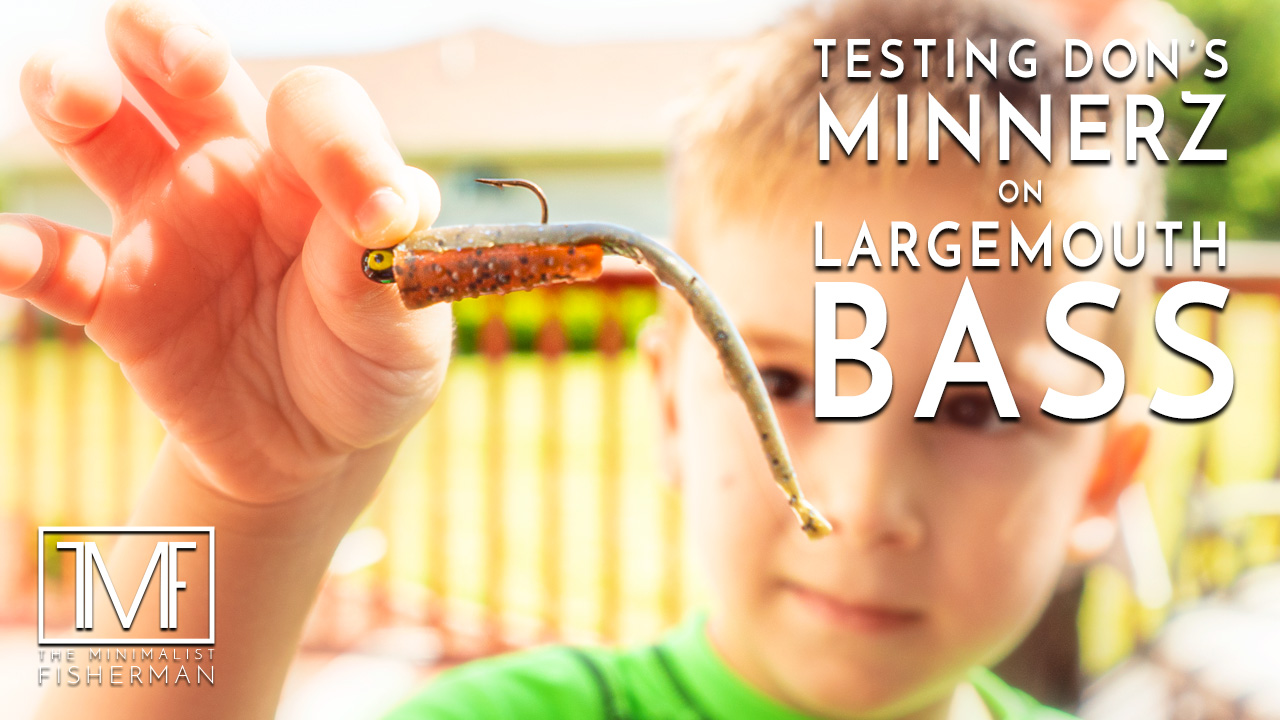
My man Don over at Show-Me Fish Tales has a very interesting little modification he makes to his Z-Man TRD MinnowZ… he calls the end result “MinnerZ”, and you can see on his channel that he absolutely slays all sorts of fish with it.
Well… he and his sis would probably say they “reap”.
I was glad I took an extra rod today, along with my trusty stickbait and swim jig for good measure. These presentations have both been very good to me this year – but the lake is changing. The algae is getting thicker, and the sun is setting on my swim jig… fishing is slowing down a bit… or is it?
The next few weeks will tell the tale, but for now, let’s focus on getting bit.
Click the banner to jump to The Minimalist Fisherman on YouTube.
One other change I noticed is that all of the fish that were up shallow doing their spring-thing seem to have moved out. Now what remains to be seen is whether “out” means out about 25 feet further from shore, or our across the lake to thicker cover – but either way, they ain’t sitting in 2 feet of water like they were!
Time to fish.
Let me know if you have any suggestions for improving, or a pond or creek to fish, or just want to say hey in the comments or on social media. I’m always trying to improve and appreciate your input. Thanks much!
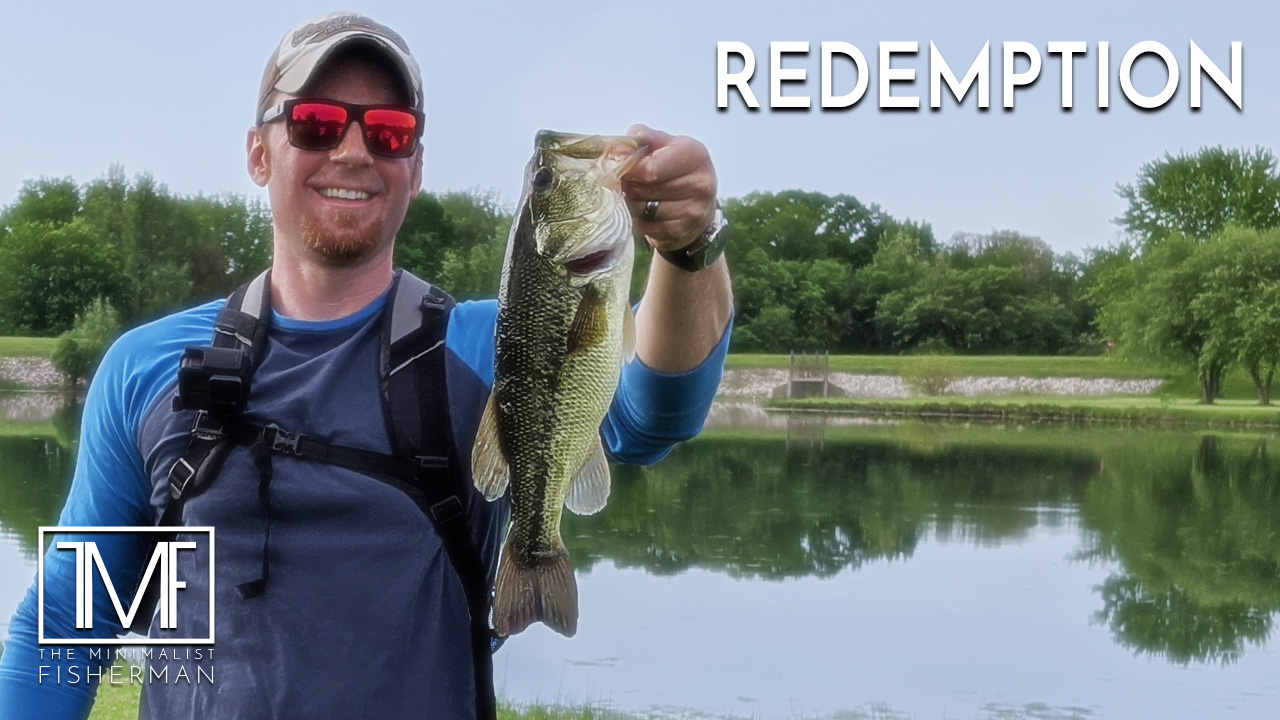
It was brutal. I lost sleep. I grumbled. I sulked around the house. I kept thinking about redemption… redemption… Am I a hack?! Can I redeem myself?!?!
Well… nothing else to do but try…
Click the banner to jump to The Minimalist Fisherman on YouTube.
For this trip I left early, about 6:30 in the morning with bright conditions, a comfortable 68 degree temperature & little wind. Lots of bass were up shallow, but they were mostly interested in doing their spring-thing. They was all twitterpated.
I rigged up my trusty swim jig with a new, more compact trailer, and also tied on a PowerBait General (5″ stickbait) incorporating a weightless TX rig. This bait seemed to sink faster then the Ocho I had been using earlier in the year, but it was also something that the fish I missed 4 times – yes you read that correctly – on the last trip had reacted to. This also used a larger EWG hook as opposed to the VMC Wacky hook I had been using…
When life gives you lemons… tie on a bigger hook.
There was a lot of congestion this morning as well, so I decided to walk far away from the pack. This paid off almost immediately, and I watched them from far away to see if they pulled anything out of the lake.
They didn’t.
They didn’t even move.
It seems like these guys are willing to work a spot for hours – to live or die there. I do not recommend this approach, and after the guys moved out of the area I had planned to fish – I swooped in, slowed down and made contact.
Quick note: the first fish I caught completely ignored my swim jig, he also ignored my stickbait when I brought it THROUGH the muck, but when I tossed it past him and brought it back on top of the algae, then allowed it to sink down next to were he was at vertically – he picked it up. The second fish I caught hit on the right side of a little algae cover – but not on the left side.
Try different retrieves!
Let me know if you have any suggestions for improving, or a pond or creek to fish, or just want to say hey in the comments or on social media. I’m always trying to improve and appreciate your input. Thanks much!
Yesterday was amazing. Today I was force-fed humble pie.
Most people would delete this kind of footage. They’d act like it never happened. I was tempted to do the same… but… who does that help?
If we truly are going to get better, then we need to be honest about the victories AND the losses.
This was a loss. It made me lose sleep. It made me doubt myself. It made me crazy.
It also made me want to go back. To redeem myself.
Have you ever had an experience like that on the water?
Don’t give up.
Click the banner to jump to The Minimalist Fisherman on YouTube.
Don’t give into the temptation to ignore it or act like it never happened – instead, learn from it. Get better.
Let me know if you have any suggestions for improving, or a pond or creek to fish, or just want to say hey in the comments or on social media. I’m always trying to improve and appreciate your input. Thanks much!
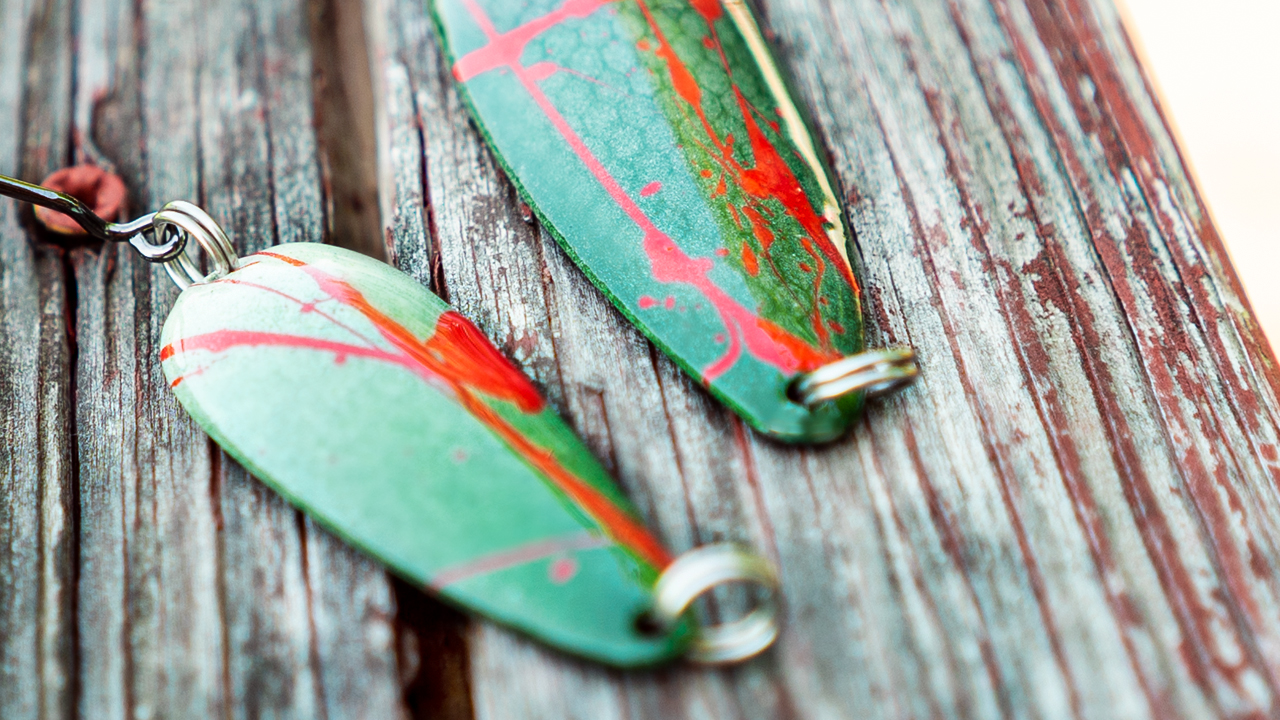
Z-Man ElaZtech is awesome stuff… until it comes into contact with something else, like other plastics or even the finish on your favorite Dardevle spoon. Then it’s game over. But never fear – with the use of some inexpensive Walmart supplies and these step-by-step instructions, anyone can bring back – and even IMPROVE – their damaged spoons without any prior experience. Let’s get started!
Click the banner to jump to The Minimalist Fisherman on YouTube.
Let me know if you have any suggestions for improving, or a pond or creek to fish, or just want to say hey in the comments or on social media. I’m always trying to improve and appreciate your input. Thanks much!
OH – here are some additional pictures of the finished spoons. They came out really nice. If you try this method make sure to contact me and show me your results!
One of the most frustrating things for an angler has got to be seeing a fish, but not being able to get them to bite.
Recently at my lake, I came upon this situation… oh… about every 15-25 feet along the shoreline. Bass were up shallow on what appeared to be beds, and they were thinking about spawning… but they had yet to do the deed.
They were clearly visible, but they simply ignored every bait that was put in front of them.
Question is – does this have to do with the spawn?
Maybe.
Does it have to do with the fact that they could actually see people on shore?
Maybe.
The fact that they could feel the vibration from footsteps coming towards them in shallow water?
Maybe.
The fact that the baits were entering the water with an unnatural SPLOOSH unlike any local forage?
Maybe.
I was always under the impression that spawning bass were very aggressive, but this was clearly not the case, and I would venture a guess that everything we just mentioned played a role in the lack of strikes.
So, instead of getting hung up on the fish that I could SEE, I decided to start to cover water and look for active bass that were back off shore a bit – the ones that I couldn’t see.
Thankfully, it worked, and the added benefit was those fish could be left alone on their beds to do their thing. (I have nothing against “bed fishermen”, and will do it from time to time for a bit, but I struggle with whether or not this is actually ethical or good for a fishery.)
Click the banner to jump to The Minimalist Fisherman on YouTube.
So if you find yourself in a similar situation, don’t get hung up and spend all day on uninterested fish – go find active ones! We’re always trying to get a little bit better – and today, this was what I learned.
Let me know if you have any suggestions for improving, or a pond or creek to fish, or just want to say hey in the comments or on social media. I’m always trying to improve and appreciate your input. Thanks much!