Category: Posts with Fishin’ Stories

Posts that start off with some sort of story – fiction or otherwise – meant to set the scene instead of jumping straight into educational material.

  • The Pop ‘n Drop Rig | Topwater + Finesse Tactic for Bass

    The Pop ‘n Drop Rig | Topwater + Finesse Tactic for Bass

    Finally… finally, back in the creek… it’s been too long… “, you mutter to yourself.

    The wind is lightly blowing on this warm June morning in Illinois as the kayak slips silently into the slow-moving water. You begin to plunge the paddle below the surface and make a quick note on clarity.

    A foot of visibility, maybe two“, you again mumble out loud, remembering the rainfall from earlier in the week, “with this sediment I’m not sure where the smallmouth are, but there is a good chance they’ll be in tight to cover.

    Creek Fishing in Illinois: Kayak and Smallmouth Bass

    You start to make your way upstream, against the current.

    Left. Right.
    Left. Right.
    Left. Right.

    The methodic movement is almost enough to put you to sleep. Blades dipping below the surface one after the other, sparse droplets sprinkling down each time you lift. Left. Right. Alternate. Repeat. At times you scrape the rocky bottom as the creek bed comes up within the runs between the riffles and pools.

    Might as well start casting here“, you say as you arrive at the shallow end of the first pool, “I can work my way up to the riffles, then lift the kayak above my head and hike to the next run… now we gotta find the fish.

    Smallmouth bass fishing presentations flood your mind:
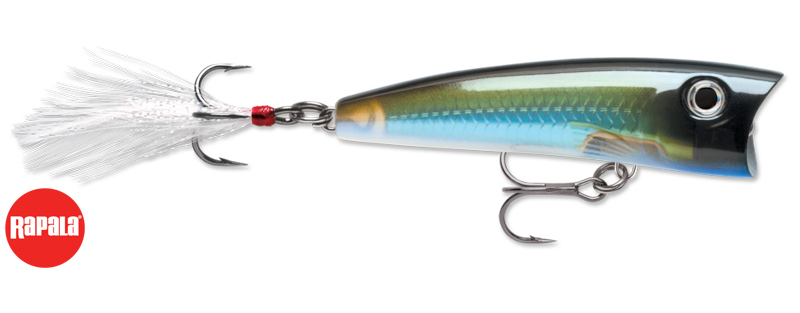
    Rapala X-Rap Pop Popper Ad Banner
    Worth Checking Out: Rapala X-Rap Pop

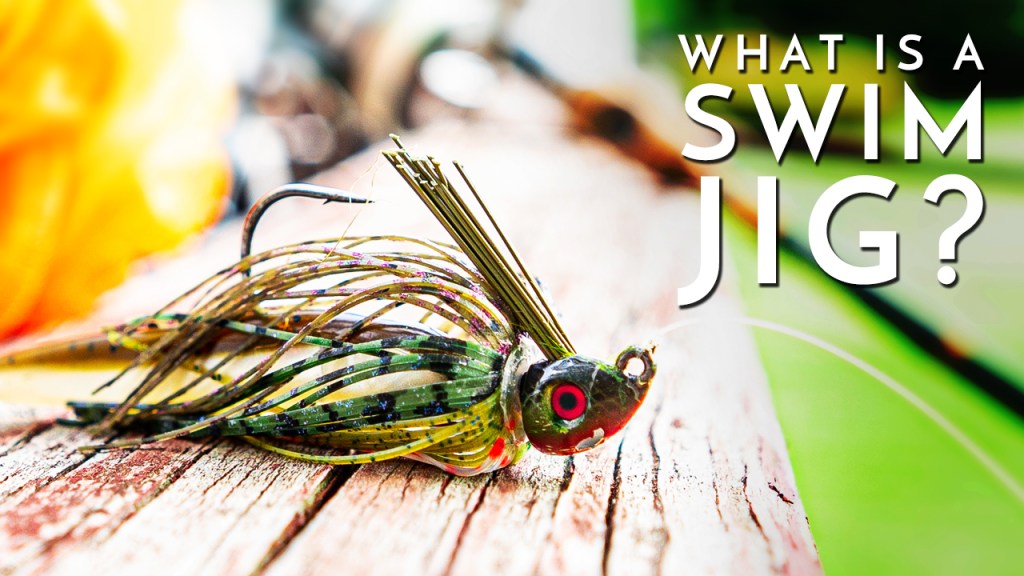
    A jigworm is always a great option but it’s so slow, doesn’t allow you to really cover water. A swim jig lets you cover water, but they’re clunky and don’t look natural in this stream because of their size. An inline spinner might be better… maybe a small swimbait is the right option… but maybe not… can they see it and feel it from far enough away in the sediment? Topwater is always fun, but it seems like the topwater bite is always hot or cold – and with limited time we need something that is versatile. Efficient.

    Can we do two things at once?” you ask yourself? “Maybe… combine a few items? Wait… what if we…

    Grabbing a small pair of pliers, you frantically get to work on your creation:

    Creek Fishing in Illinois: Heaven on Earth

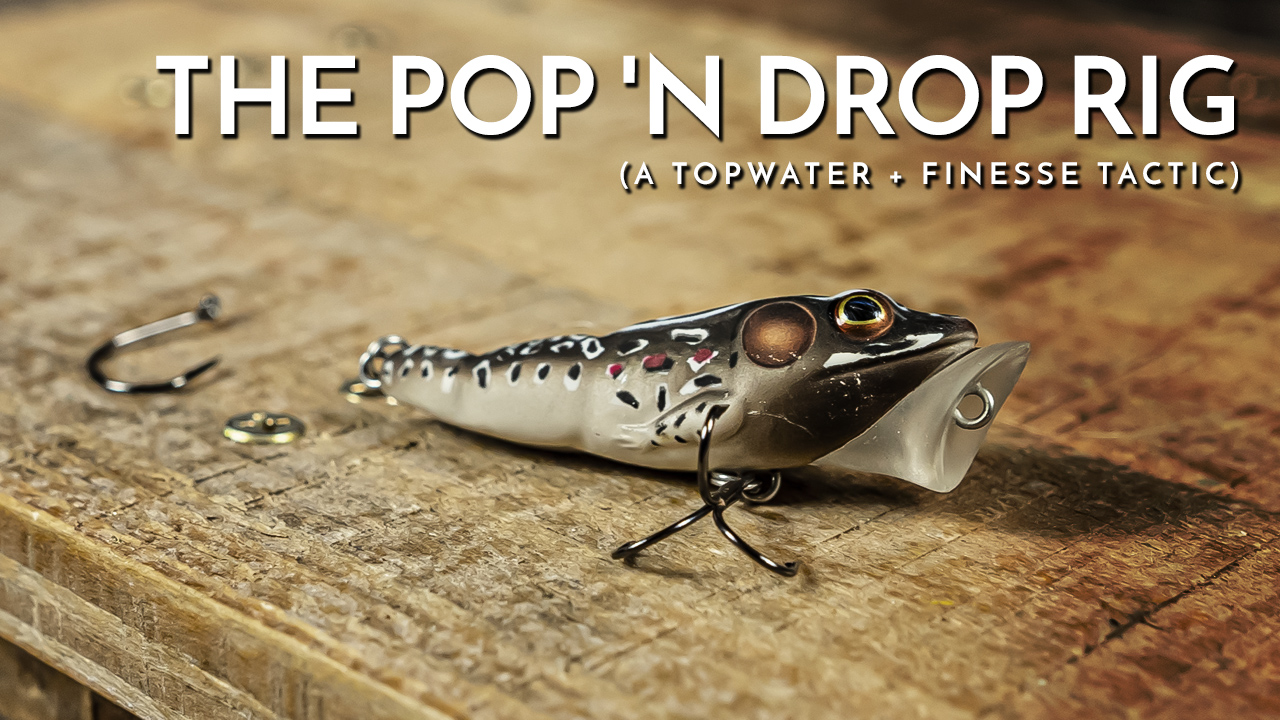
    First, let’s snip the back split ring off of a Livetarget Popping Frog (which is similar to a Rapala Skitter Pop) to remove the rear treble hook. Then we’ll strip 3 feet of line for a dropper. Done. In your head, you envision the dropper holding a trailing plastic – something that could look like it’s chasing the popper, but also settle a foot or so below the surface (held in place, suspending seductively) tempting fish that are not inclined to commit to a topwater strike. A quick palomar knot attaches a light wire wacky hook to one end of the dropper, and another attaches the line to the popping frog where the rear treble was seconds ago. A Strike King 4″ Ocho in green pumpkin is attached to the dropper hook – wacky – of course.

    That should work“, you reassure yourself, looking at the goofy contraption you’ve just Frankenstein’ed while slowly floating in circles back downstream. “That… should… work?

    Hmmm… maybe…

    A few quick paddles back to the spot you wanted to start exploring, and it’s time to cast.

    Kayak AJ Hauser Creek Fishing

    WHIZZZZZZZZZZ-SPLASH!!

    Good Lord… not the most subtle presentation…“, you grumble as you begin twitching the popper back towards the kayak.

    Twitch… twitch…. twitch… the popper spits and gurgles as the stickbait trails behind, settling underneath and making the popper sit out of the water at a 45 degree angle.

    One cast. Two casts. A third…

    Man it looks pretty good, I mean it should wor-

    BOOM!!

    A MONSTER creek smallmouth annihilates the popper, ripping the entire rig underwater as you lean back into a startled hookset. The abrupt commotion decimates the summer morning calm.

    She starts to bulldoze with the current, ripping line off of your Abu Garcia Orra spinning reel, which makes a familiar sound that is both exhilarating and scary –

    Oh my – please God let me have a good hook in that beast! Don’t pop off. Don’t pop off!!

    The drag on the reel is absolutely screaming.

    A jump.
    A splash.
    A turn.
    A doubled-over rod.

    More bulldogging… she plunges beneath your kayak… but then… she starts to tire.

    After another minute, the battle is over. You lip ‘er boatside and hoist her in the air to marvel at the impressive girth… the Pop ‘n Drop dangling from her mouth.

    What a sight to behold.
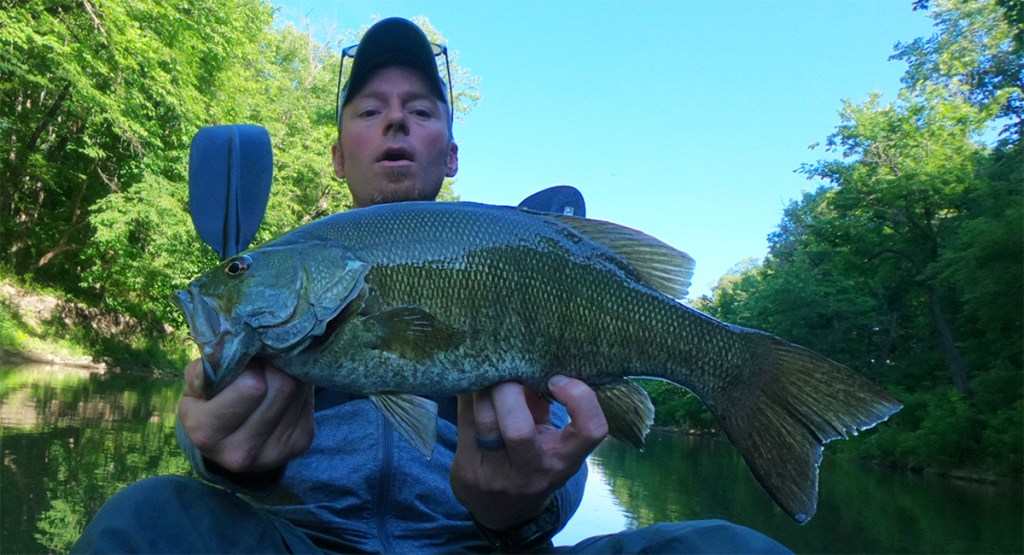
    Pop 'n Drop Creator AJ Hauser with a Beautiful Smallmouth Bass
    Pop ‘n Drop Creator AJ Hauser with a Beautiful Smallmouth Bass

    Believe it or not, this story is true, and while she would be the best fish on that warm summer morning, she wouldn’t be the last. The popper drummed up another bite or two, but many lesser smallmouth fell prey to the trailing wacky worm suspended in the current of the creek.

    Creek Fishing Smallmouth TRD Craw

    The popper almost acted as a bobber with hooks, but overall what I learned was this:

    At certain times, in certain conditions, the Pop ‘n Drop is a great way to combine an aggressive technique with a finesse presentation that allows a fisherman to cover water quickly and pause in strategic locations to entice a bite.

    Example:

    Let’s talk a bit more about what it is, where it came from, and how you can make your own to catch more fish.

    The Origin of the Pop ‘n Drop

    The very first iteration of this presentation was made in my garage about 6 years before I actually got around to using it. I set it up with an old Rapala Skitter Pop, and hung it up on the wall. One day I tried it on a lake with largemouth, and I think I caught one small bass… but at that time I was still green – and we all know that there is no shortage of exciting, active presentations that we simply have to try.

    I tried them all.

    Pop 'n Drop Finesse Topwater Technique by AJ Hauser
    The original combo and cobweb collector.

    This obsession took over, and ultimately culminated in me having too much stuff… which is also what led to the creation of The Minimalist Fisherman. I needed to reduce… and as “must have” presentations were tossed aside or retired, this one remained on the wall of my garage, covered in cobwebs…

    For some reason, I couldn’t throw it away. It just always looked like it should work.

    Last year, I began fishing creeks heavily after discovering 3 or 4 hidden locations in Illinois. Beautiful spots. Isolated, full of deer & songbirds, eagles and herons. Yet, it all came with a very frustrating learning curve, as current, sediment load & clarity changed substantially between trips.

    More than one early morning outing were a complete bust due to changing conditions…

    washed out creek illinois fishing

    This year, after a few unproductive trips, I needed to figure out a way to fish multiple depths so that I could find the fish. Actively search, without skipping over semi-neutral bass. To date, jigworms and small plastics have accounted for about 65% of my catches – so it would be foolish to ignore them – but you have to work them slow, and they certainly don’t work well in chocolate milk! Then, I remembered the wall decoration…

    Pop 'n Drop Finesse Topwater Technique by AJ Hauser
    Off the wall and into the frying pan! Or… something.

    I took it down, and made a smaller version with a more natural looking bait that might appeal to smallmouth in skinny water, and it was game on.

    Pop 'n Drop Finesse Topwater Technique by AJ Hauser
    Pop ‘n Drop: Livetarget Frog Popper w/ 10lb Red Label Seaguar & a light wire wacky hook (AJ Hauser)
    Pop 'n Drop Finesse Topwater Technique by AJ Hauser
    Rapala Skitter Pops work well with the Pop ‘n Drop technique.
    Pop 'n Drop Finesse Topwater Technique by AJ Hauser
    Weedless and regular light wire wacky hooks work well on the fluorocarbon dropper.

    Pop ‘n Drop Components

    You can mix and match any number of components when it comes to making your own unique Pop ‘N Drop. Chances are you already have everything you need to get started:

    Pop 'n Drop Finesse Topwater Technique by AJ Hauser

    Part 1: A Floating Bait
    Start with a floating bait that can support the weight of the trailing offering & dropper you plan to use. I found that even something as small as the Livetarget Frog Popper could float a fluorocarbon dropper (18″) with a (sinking) 4″ Strike King Ocho.

    Important note: if your trailing bait is too light, the wind will catch it on the cast and you will experience some pretty nasty snarls. Experiment until you find the right combination for your situation.

    Part 2: A Dropper Line
    I like fluorocarbon. 10 pound test Seaguar Red Label works fine for smaller applications, and 20 pound fluorocarbon works when I am fishing largemouth, like in the video below. I have gone all the way up to 30 pound fluorocarbon at times, in very heavy muck where the bass aren’t line shy.

    Important note: the other thing to keep in mind is your leader material. Even when I am fishing braid, I will use a small fluorocarbon leader to make my topwater connection less visible. It does sink so you have to balance everything. When I use the smaller Livetarget version on my creek spinning setup, I simply tie straight to my 10 pound fluorocarbon mainline – no leader required.

    Part 3: A Dropper Hook
    Wacky hooks
    are the way to go. They are low profile and compact with wide bends. Light wire options easily penetrate fish jaws. If I am going to work over weeds or shallow timber, I might opt for a wacky hook with a weed guard on it. These days I’m using a Berkley Fusion19 Weedless Wacky Hook because the guard is made out of fluorocarbon. It collapses better than the wire guards on my Weedless VMC hooks.

    Part 4: A Trailing Offering
    Try a YUM Dinger, an Ocho, or if you want a trailer that floats – pop a Z-Man TRD on there and keep everything up on the surface. If you’re fishing a bigger floating bait, you can even get away with a full size stickbait – just make sure your line and hook are matched appropriately.

    Pop ‘n Drop Heavy Cover Modification

    One significant mod that I tried (with mixed results) was a Pop ‘n Drop with a Z-Man Pop Shad and a large single Trokar EWG hook. This left me nowhere to attach my dropper, so I had to put a split ring in some tubing used for spinnerbait trailer hooks, which allowed me to slide it onto the shank.

    Pop 'n Drop Finesse Topwater Technique by AJ Hauser
    Pop ‘n Drop Heavy Cover Modification

    From there I was able to attach a 30 pound dropper line to a weedless wacky. Kinda cool – but here’s the problem. Twitching the popper made the rubber tubing slowly move back on the hook, right up under the belly of the Pop Shad. When a bass hits topwater, the Pop Shad will not move down the hook on the set – meaning you will lose fish.

    Pop 'n Drop Finesse Topwater Technique by AJ Hauser

    I lost a BIG fish.

    I did manage to catch a good handful on the lower portion though, as I was able to use a full size Zoom Zlinky (with heavy salt) as my dropper offering.

    Pop 'n Drop Finesse Topwater Technique by AJ Hauser
    The Zoom Zlinky is a soft, salty stickbait and a fish catching machine!

    So this version, geared towards largemouth bass in ultra-mucky water, is going to require more thought… I’ll keep working on that. Just don’t make this mistake that I made with this version of the rig!

    Give the Pop ‘n Drop a shot!

    Don’t be like me – don’t take this presentation and use it as a wall decoration for years – get out on your favorite body of water and put it to work.

    I’ve posted a few videos with this technique hard at work, and there are more to come…

    Create your own combination, and let me know how it goes!

    Pop 'n Drop Finesse Topwater Technique by AJ Hauser
    Pop ‘n Drop Finesse Topwater Technique by AJ Hauser

    Tight lines!

  • Why I don’t Share my Location in YouTube Fishing Videos

    Why I don’t Share my Location in YouTube Fishing Videos

    You heading out?!

    What was that?“, you think to yourself as you look over your shoulder, behind the kayak you’re pulling towards the water where the creek feeds into the river. “I don’t know anyone here…

    Creek Fishing in Illinois: Sun and Trees by the Creek

    You see someone walking down to the gravel launch with an adult beverage in hand, wearing sunglasses and jean shorts. His orange shirt – completely tucked in – sports the ironed-on name of some greasy spoon he visited years ago. It’s faded… almost illegible. The trailers in the background all look similar, with their Jacktop range fences and patio furniture. Dreamcatchers, wind chimes and bug zappers hang like Christmas ornaments from the permanently extended awnings.

    What’s that?“, you holler back, not sure what to make of this fella.

    Are you heading out to fish?“, he asks again.

    You lean over and plop the front end of your kayak down in the dingy river water as you turn around. “I am – never been here before. Been all over the roads nearby looking for access to the creek – it’s all private property. Saw on my map that if I launch here you can get in the creek with a short paddle against the river current.

    Oh“, he cracks a slight smirk, “… you sure can… and they’re in there…

    Creek Fishing in Illinois: Heaven on Earth

    You can see his eyes focus in and pause for a brief second on the GoPro you have mounted to your chest, then travel over to the pole on your kayak, scanning for the bait you plan to throw as he takes another deep swig off the bottle.

    Crankbaits? Got any chartreuse?

    I do“, you reply, “and check this out – last week I was throwing this Rebel Teeny Wake-R in another creek and a 2-pound smallmouth absolutely hammered—

    They get bigger than 2 pounds in here…“, he interrupts, “way bigger… got any tubes?

    Not on me.

    Hmmm.” He pauses for a second. You can tell he’s sizing you up, as if there is something that he wants to tell you… but… he’s not sure if you’re someone that needs to hear it. If you’re worthy. He takes another big swig off the beverage.

    Finally he breaks the silence. “I tell you what, you head on up this creek here about half a mile, and when you get to the bridge – stop. There’s a nice deep hole there that the big females use, and if you crank that area then come back through with a plastic, there is a good chance you’ll see what I mean. Fish it deeper, slower, and play the current.

    He smirks again, well aware that he just saved you time and effort while putting you on fish.

    Oh man, thank you so much for the tip“, you exclaim as you crack a smile and extend your hand towards the stranger, telling him your name.

    He pauses for a second, eyes wide as if he’s surprised. The simple gesture catches him off guard. In this season of “social distancing” something as small as a smile, a handshake or a high five now carries much more weight – and according to the media – more risk. He looks up, makes eye contact and smiles as he grabs your hand and shakes it vigorously – Covid be damned.

    Name’s Billy“, he responds, and for the next 15 minutes the two of you talk about fishing, how he comes down from the city to stay here and fish as much as possible, and how crazy the outside world is.

    Creek Fishing in Illinois: Beautiful Spot
    Creek Fishing in Illinois: An Amazing Little Spot LOADED with Smallmouth Bass

    This is God’s country“, Billy says finally. You can see in his face and hear in his voice how important this little area is to him. His little trailer, his little creek, and his beautiful smallmouth.

    It sure is“, you reply, “and I won’t tell a single soul about it.

    A slight breeze is blowing through the campground, rustling the leaves in the trees on this perfect August evening. Billy replies with one word:

    Good.

    The two of you part, and you hop in your kayak and paddle up the river while pushing the small red button on top of your GoPro to record the trip.

    I hope he really believes me…“, you mumble to yourself, as you turn left and begin to skim the shallow water and push up the creek.

    YOU COME ON BACK AND LET ME KNOW HOW YA DID WHEN YOU GET IN – I’M IN THE THIRD TRAILER ON THE RIGHT!“, Billy shouts from somewhere within the campground.

    You hold your thumb high in the air, assuming he can see you – even though you can’t see him – then return to paddling.

    Up ahead you can see the bridge Billy told you about. Chances are he was being honest with you… hopefully he knows you were being honest with him…

    Creek Fishing in Illinois: Kayak and Smallmouth Bass

    How Important Are Views?

    My YouTube Channel is growing – but it is far from huge. In fact, with 2,275 subscribers at the time of writing, it’s not much more than a hobby. However… even noobs and hobbyists have standards!

    The Minimalist Fisherman - Over 2,000 Subscribers Banner
    Click the banner to jump to The Minimalist Fisherman on YouTube.

    One of the things that we see a lot of anglers on YouTube do is share their location. And why not? The viewers want to know where the “hot bite” is at any given moment, and the YouTubers want to share the information that is most likely to get they the most views.

    … right?

    This is why I don’t want to be a “traditional” YouTuber, as discussed in the first vlog we put out this year:

    On the surface, there isn’t anything wrong with sharing info in and of itself. Sharing information is a good thing, that’s why we all do this. To learn & share tips, techniques, presentations & delivery methods – to get better, as is the mantra here.

    However – it makes no sense to share spots.

    Two reasons:

    1. Sharing spots is not even a worthwhile endeavor for serious fishermen. Those spots aren’t always where the fish are at – meaning at times, they are worthless. If you want to get better, you need to learn HOW to find fish, then HOW to catch them. This is what sparked the creation of this site and the YouTube channel – my desire to get better at fishing for me and my family.
    2. The other reason I keep my lips sealed is because I have extreme respect for the local anglers – especially on small bodies of water.
    Creek Fishing in Illinois: Rebel Teeny Wake-R Smallmouth Bass
    Creek Fishing in Illinois: Rebel Teeny Wake-R Smallmouth Bass

    Think about it: what happens when one of my videos gets 10,000, 20,000, even 30,000 views? It’s happened. It’s not unreasonable to think it will probably happen again at some point.

    What impact could that have on a small fishery loved by locals?

    What happens if I post a video after having a killer day on a 3 acre city lake that is fished by about 10 or 20 residents that live nearby. Nobody knows about it – which is great for them, because they can’t go to big lakes to fish, they don’t get much time, they have to do what they can with what they got – and what they got is 15 minutes before and after work at this pond I’m taping a video at.

    Sharing this location could have a serious negative impact on the local fishermen that rely on this body of water. If 30,000 people decide to go visit “Smithville’s City Pond”, it won’t be long before said pond is completely fished out.

    Bad for the fish.
    Bad for the fishermen.
    Bad for my conscience.

    I want the locals to know that I respect them, I respect their areas, I respect their fish, and I want them to feel comfortable sharing both information and stories with me.

    I am not a threat.

    Creek Fishing in Illinois: Hunting Smallmouth Bass
    Creek Fishing in Illinois: Hunting Smallmouth Bass

    Several weeks ago I found an area about 50 minutes from my home. I went out to fish it with a single rod and a kayak, selecting a presentation that had worked well on fish of all sizes, and I had an extremely challenging morning because the water was so clear.

    But I caught fish.

    The morning was spent exploring a new lake that was absolutely beautiful. A lake that I would have imagined only existed in other states – not right here in Illinois.

    I spent the morning by myself. Talking to God. Mumbling at fish, and squawking at birds.

    After 4 hours of fishing I decided to leave, then drove around the area and saw just two other men that had come down to fish different spots. Two men. All morning. That’s it. Both were elderly, and as I pulled away, grateful the morning had been spent exploring, I imagined what might happen if anyone were to shout about this location from the rooftops.

    It might ruin this sacred fishing hole for them…

    I am not a threat.

    Creek Fishing in Illinois: Huge Smallmouth Bass at Dusk
    Creek Fishing in Illinois: Huge Smallmouth Bass at Dusk

    So How Do We Find New Spots to Fish?

    Great question:

    EXPLORE.

    Put in the work.

    We have tools and information available to us that our grandfathers would have KILLED for. Open Google Earth and pull up your area. Look for water. Look for roads that pass over creeks. Look for shallow areas in the river where you can wade. Look for little lakes that are not known far and wide – then take some time to explore them yourself.

    Creek Fishing in Illinois: Rebel Teeny Wake-R Smallmouth

    A big part of what makes this fun is finding new areas while you are alone, then catching fish in areas that nobody else knows about.

    While this answer is simple, it isn’t always easy.

    If you find that you don’t have time to explore for hours on end because of… well… life… take a deep breath and consider this simple technique that you can add into your own discovery routine:

    Sometimes you will fail.

    You’ll fail to find a good spot. Fail to find access. The “creek” you marked will be more of a ditch filled with field runoff. You’ll fail to catch fish in your limited window of time. The weather won’t cooperate or you’ll have other obligations that need your immediate attention.

    That’s ok.

    Without failure, victory wouldn’t be so sweet.

    And man… the victories are so, so sweet.

    CONCLUSION:

    As you pull back to the gravel launch, you can see the locals sitting around their campfires. Their faces are blurred by the dancing shadows cast by the flame, and the friendly banter you could hear as you paddled up in the darkness has slowed completely to silence.

    You can feel them observing you.

    The outsider.

    You are a threat to their oasis.

    That’s fine… in time, they will come to know you. To recognize you. One day they will realize that you are not a threat.

    But today is not that day.

    In an attempt to quickly remove yourself from the prying eyes of the locals, you grab all of your gear in one arm and the front handle of the kayak in the other, then begin dragging the vessel up the hill next to the launch.

    The hill – like the launch – is loaded with gravel, and the plastic kayak scraping along the ground throws the most obnoxious, nails-on-a-chalkboard sound deep into the night. If any of the locals weren’t aware of you before – they certainly are now.

    Campfire before a fishing trip

    I gotta get outta here“, you mumble as you haphazardly throw the kayak in the back of your truck, slamming the tailgate and throwing your armload of gear in the back seat, further disrupting their campfires.

    So how’d ya do?!

    It’s Billy.

    He’s walking across the dark gravel parking area with a fresh beverage in one hand, and a small bag in the other.

    Hey man! I was just going to come find you“, you fib. “I caught a few beautiful smallmouth in the area you told me about – no giants, but I can’t thank you enough for putting me on a few fish. I’d really like to come back.

    Oh, you need to come back“, he says, “and I put a few baits together for when you do“.

    He holds out the bag which is filled with small red-brown tubes, twister-tail grubs (chartreuse of course) and some other choice selections from his personal stash. Each bait is loaded up perfectly on the proper jig in the proper weight.

    I… holy cow man, thank you so much“, you sputter, not sure why this fellow decided to share not only his knowledge, but actual physical items to help you catch more fish.

    His fish.

    Don’t mention it. I got a buddy named Chris that comes down all the time – brings his kids – his kids love to fish. He has the same truck as you. You come on back and you can park right in front of my place whenever you like.

    Maybe he’s grateful to have someone to talk to about fishing.
    Maybe he’s grateful to meet someone that wasn’t afraid to shake his hand.
    Maybe he’s come to realize that you won’t do anything to harm the fishery.

    It’s beautiful here. This is God’s country“, he says again, with a serious look on his face.

    I agree“, you reply, “and like I said before… I won’t tell a single soul about it.

    He smirks, then reaches out to shake your hand one last time.

    As you pull away from the campground, you find yourself dreaming about catching more smallmouth. Bigger smallmouth. Meaner smallmouth. Topwater smallmouth. Crankbait smallmouth…

    What a perfect gem of a spot you’ve discovered.

    Creek Fishing in Illinois: Rebel Wee-R Smallmouth Bass

    You gently place the bag of baits up on the dashboard and look ahead down the dusty dirt country road. The corn is high, which means there is a good chance the deer will be active. You decide to take it slow… and besides, a leisurely ride home will allow you to unwind, to replay the events of the day, and to plan your next step…

    … but you already know exactly what you’ll be doing after work tomorrow…

    See you soon, Billy.

    Callout Section The Minimalist Fisherman Midwest Bass Fishing Blue Banner Background Migration
    The Minimalist Fisherman Father Son Bonding Better Anglers Better Men

    Thank You For Your Support

    Your support directly funds the creation of weekly articles and videos that promote the development of better anglers and better men. Our country (and our kids) need both. Please share this site, and consider a monthly, weekly, or one-time donation. You are helping us make a difference!

    TMF Small White Logo
  • Fishing the Manitowish Chain O Lakes by Minocqua, Wisconsin

    Fishing the Manitowish Chain O Lakes by Minocqua, Wisconsin

    Hey… g’morning Dad…

    You grumble as you shuffle-step over to the coffee pot to get a bit of java.

    Morning bud“, he replies.

    It’s just now 6:00 am, but Dad has been awake since 4:30. There is a crisp breeze coming through the windows. It’s refreshing, but a good reminder to bundle up a bit… it’s going to be chilly on the lake, even though the sun is finally poking up over the pine trees.

    The surface is calm.

    Glass calm.

    Well… aside from the occasional strike as a panfish or smallmouth snaps a bug off the top of the water.

    Even though Dad gave up coffee some time ago, he graciously prepared a pot so that you could enjoy a cup before the two of you hit the water to begin your annual “exploration phase”. It’s the first day here in Wisconsin after yesterdays 7 hour drive up from the cesspool known as Illinois, and you need to knock the dust off and get out on the lake.

    Morning Coffee & Fishing Stories

    So, what are you thinking we start with this morning?“, you ask as you noisily slurp the piping hot liquid while sucking in air, attempting to avoid burning your tongue (unsuccessfully)… even though you already know what his answer will be…

    “Deep weed edges“, he replies. “I grabbed half a pound of leeches before the bait shop closed yesterday, so we might as well use them. Dan said that fishing has been tough this year due to the heat… these leeches aren’t going to last long, and after this batch he’s saving what he can get his hands on for the guides.

    You quickly look up from your coffee.

    No more leeches after this batch? That could make things… interesting… I mean leeches have been our most productive method for years now.

    Yup. I grabbed a few crawlers though, so we’re good.

    This is good, however… crawlers are challenging to use. Panfish magnets. While they may usually perform better than plastic, the amount of time you have to spend re-rigging fresh bait on your jigs makes it almost a wash.

    I think I’ll opt for plastics“, you say out loud as you consider your options. Putting worms back on a jig every 2 or 3 casts does not appeal to you at the moment, especially considering your first cup of coffee isn’t even gone yet.

    Suit yourself – let’s get out there.

    90 horse merc fishing boat smoker craft

    The two of you grab your gear and head towards stairs that lead from the back deck down to the water where the Smoker Craft is tied up. She’s still covered, which means the interior will be free from dew. With a few quick movements you pull the cover off, toss your poles & tackle in the back, and Dad fires up the 90 HP Merc.

    One shot is all it takes.

    The 2-stroke motor vibrates back and forth, filling the air with that familiar smell of gas & oil as you as you idle next to the dock looking at the depth finder, mentally charting a path.

    Without saying a word, you push the front end of the boat away from the dock and out into the channel, while Dad kicks the motor into gear.

    The sun is a bit higher now, but as you look out ahead you can see that there is a rolling fog rising and moving across the still-calm water.

    It’s beautiful.

    As you putter out of the channel and into the deeper water, you realize something else…

    It’s finally time.

    It’s here.

    After 50 weeks of waiting in Illinois – the two of you will fish Wisconsin again, just as you have in years past.

    Dad drops the throttle and the motor pushes you back into your seat, and as the boat gets on plane your excitement builds at the thought of setting into a monster smallmouth, pike, or even a good walleye.

    It’s been too long… and it’s time to get to work.

    The Manitowish Chain O Lakes near Minocqua, Wisconsin

    I’ve been visiting the Manitowish Chain O Lakes ever since I was a boy. My grandfather bought a little green house in the channel between Rest and Stone Lake, and we would visit for several weeks every year because… well… Grandpa didn’t charge us rent.

    Grandpa's Wisconsin House - Years Later
    Grandpa’s Wisconsin House – Years Later

    That meant it was a vacation we could afford.

    When I was a wee lad, I only had the patience to fish from the dock. There were visible weeds and a ton of perch, bluegill and pumpkinseed ready and willing to smack a crawler. Fat rock bass as well. All were aggressive and more than enough to keep my extremely short attention span entertained before our daily dip in the lake.

    Scott Hauser & AJ Hauser Fishing
    Dad’s all business and I’m in my goofy walleye hat & 90’s t-shirt… tucked in of course… lookin’ good, dude!

    As I got older though, I wanted to catch bigger fish… like what Dad was catching… but it would be some 20+ years before I would really develop the patience and knowledge necessary to complete this task.

    Manitowish Lake Wisconsin Smallmouth AJ Hauser
    Manitowish Lake Smallmouth (Wisconsin)

    My family became extremely attached to the chain, and we continued to visit until I left for college. Grandpa sold his house around this time as the market was primed. He made a tidy sum, but as the years passed, we would look back at all of the photos and talk about what we would give for “just one more visit“.

    AJ Hauser Fishing Boat Project
    Me, Dad & Zach fishing in “the green aluminum boat”
    Scott Hauser Aluminum Boat
    … add another brother? Great idea!

    Well, 7 or 8 years later, the family tradition was brought back like a phoenix from the ashes, and it continues to this day.

    How Do Fish Eyes Work? Wisconsin Walleye.
    Wisconsin Walleye

    Shortly after we started going back to the chain, I actually proposed to my wife in a boat on Island Lake.

    For some reason she said yes… and she’s been exploring the chain with me every summer since – even continuing to fish while pregnant.

    Speaking of exploration, the chain itself is awesome, and it’s made up of a series of 10 lakes. If you are like me, you’ll appreciate the beautiful mix of both complexity and accessibility. Lots of structure both shallow and deep, lots of fish-holding areas, and lots to explore.

    Lakes include (in no particular order) Rest Lake (809 acres), Stone Lake (139 acres), Fawn Lake (74 acres), Clear Lake (555 acres), Spider Lake (272 acres), Island Lake (1023 acres), Manitowish Lake (496 acres), Little Star Lake (245 acres), Wild Rice Lake (379 acres), and Alder Lake (274 acres).

    Common species include musky, pike, smallmouth & largemouth bass, walleye, perch, bluegill, rock bass, crappie and more.

    AJ Hauser Largemouth Bass Wisconsin Dock Fishing
    Largemouth Bass Wisconsin Dock Fishing

    The chain is located in Manitowish Waters in Vilas County, Wisconsin, United States. While it is indeed known for its fishing, the Little Bohemia Lodge on Little Star Lake is where John Dillinger had his famous shootout (naturally, the movie Public Enemies was filmed there).

    The lakes are fed by the Manitowish River, which drains into the Chippewa River basin and ultimately the Upper Mississippi River.

    Fishing the Lakes this Year:

    I am writing this article less than 24 hours after returning home from the Manitowish Chain O Lakes for the year, and it is very fresh in all of our minds. The fishing this year was TOUGH, but also EXTREMELY REWARDING. My wife caught some great fish, as did several of my sons – and of course… Dad landed the biggest fish.

    Again.

    dad big smallmouth wisconsin fishing manitowish chain o lakes

    What’s different though is that this year we taped a lot of the action, and you can see for yourself much of what we love about the chain by starting with the video below, then clicking over to this YouTube channel.

    The Minimalist Fisherman - Over 2,000 Subscribers Banner
    Click the banner to jump to The Minimalist Fisherman on YouTube.

    I post weekly videos fishing both Wisconsin and Illinois – bank fishing, kayak fishing, jon boat fishing – you name it – and soon we’ll be adding several trips to Arkansas as we get ready to move south. I have to do some recon later this year and we’ll be taping some fishing on Bull Shoals.

    Help Preserve Everything About This Place

    There’s so much more to say… but for now, let me leave you with this: if you get the chance to fish this chain, do so. Take care of it. Clean it. Don’t bring invasive species in on your boat, or in your livewell. Release fish that don’t fall within the slot limit, or that are too big to put on the table. Allow those big boys and girls back into the fishery to breed, so that our children may enjoy this special place like we do.

    Leave it nicer than you found it… and maybe I’ll see you on the water.

    Tight Lines & Godspeed, Patriots.

    Callout Section The Minimalist Fisherman Midwest Bass Fishing Blue Banner Background Migration
    The Minimalist Fisherman Father Son Bonding Better Anglers Better Men

    Thank You For Your Support

    Your support directly funds the creation of weekly articles and videos that promote the development of better anglers and better men. Our country (and our kids) need both. Please share this site, and consider a monthly, weekly, or one-time donation. You are helping us make a difference!

    TMF Small White Logo
  • The Advantages of Fishing From Shore

    The Advantages of Fishing From Shore

    Mornings are so peaceful in spring“, you think to yourself and the first rays of sunlight begin to trickle through your office curtains. A slight, cool breeze slips through the screen on your window as you sip your steaming black coffee.

    Delicious.

    The house is quiet. Kids are asleep. So is the misses. Slowly you turn back to the book you are devouring.

    Morning Coffee & Fishing Stories

    The wisdom contained within seems to jump off the pages as you scan the old drawings and think of a time when books were the primary source of information – not the internet. Grandpa told you that there were advantages to these “tomes”, and after reading this far, you can certainly see his point.

    Something about the noise of the pages as they turn and the actual weight of the book in your hands seems to activate more of your senses and pull you into the material in a way that the small back-lit screen of your phone could never achieve.

    Slowly, carefully you turn another yellowed page, completely mindful of even the slightest sound as the old paper crinkles and folds within your weathered hand –

    … flap flap flap HONK! HONK! HONK! HONK! HONK!

    A majestic goose flies overhead, absolutely shattering the peaceful morning that you were savoring just seconds before. In Illinois, these hissing, bulbous, noisy, flying poop-machines are excellent at making their presence all too known.

    Illinois Geese Goose Flying

    “DADDYYYY!!!!!!!”

    The children…

    They rise.

    Well now it’s a party“, you chuckle to yourself, placing the book upside down on your desk. You missed them last night as they slept, time for morning hugs and then you’ll (attempt to) return to the book later. Maybe after the kids eat and go outside to play. Maybe after work…

    WORK!

    Oh shoot, I need to get through all of this work so I can FISH!“, you quickly open your inbox to take a peek at the situation.

    Your heart sinks…

    “DADDDDDYYYYYYY!!!!!!!??? I’M UUUPPPP!!!”

    78 Unread Messages.

    Email Inbox Full 78

    Well… maybe I’ll fish tomorrow. There’s no way I’ll be able to help with the kids, get all my work done, get the boat cleaned up and ready to go, get my poles rigged, grab gas & bait, call Bill and Tim and see if they want to go, launch the boat… or have enough time to make any progress locating and catching fish.

    “I’ll go tomorrow.”

    There it is.

    The kiss of death.

    Chances are, you won’t go tomorrow. Chances are, something else will pop up. Chances are, you’ll come to the same conclusion: “I’ll go tomorrow.”

    It completely takes the wind out of your sails… but maybe it doesn’t have to be this way.

    How to (actually) go fishing “tomorrow”

    I’ll be honest with you – work is very important, as is faith, and family comes first in all instances. If you are a mother or father, your obligation is to your husband or wife and children first and foremost – but that doesn’t mean we need to completely deny ourselves the opportunity to fish…

    We just need to be smarter about it.

    2 years ago I came out of a dark period in my personal and professional life, and caught 9 bass (this is actually what started “The Minimalist Fisherman”).

    Minimalist Pond Fishing Largemouth Bass AJ Hauser

    I was ecstatic.

    Last year I changed my behaviors even more, and caught 193 bass.

    Spinnerbait largemouth bass caught while using the Deeper Pro+ Sonar to record a little city lake.

    This year, I’m exploring new water close by while testing new presentations, trying to further refine my behaviors so that I can catch 250 bass.

    (At this time, The Hunt for 250 is in full effect!)

    It’s working, and it can work for you too.

    Even if you are busy. Even if you are self-employed. Even if your family needs a lot from you – it can work.

    Fishing from shore is the answer. It’s the real-world solution that many of us have (mistakenly) turned away from in favor of “my big boat on my big lake or my big river fishing with big baits for the big boys!

    This type of fishing takes big time – and on a weekly basis, chances are we don’t have that. What we do have, is 45 minutes to stop on the way to a job site, 60 minutes after work if we’re able to cut out early before we make it home for dinner, 90 minutes in the evening after we’ve helped with the dishes (see what I did there, ladies?) to fish that small city lake with the playground next to it that the kids can use.

    We all have limited time… but we still have time.

    Do you want to cut into that time dunking your boat and getting electronics working and poles rigged as you float around by the launch? By the time you’re done I’ve caught 4 fish and I’m just carrying a backpack and a single rod.

    There is a time and place for boat fishing – and it is awesome – but if you are ready to realistically catch more fish every week, embrace bank fishing and carefully apply your time.

    Do what you can with what you’ve got.

    You will make more casts and catch more fish – I promise you.

    The Advantages of Fishing From Shore

    1. Fishing from shore is the easiest way to get up and go if you have limited fishing time.
    2. It can make fishing trips less stressful, requiring less research & planning.
    3. Fishing from shore also requires less gear. No need to worry about a spare for the trailer. Life jackets. An emergency paddle. Did I charge the batteries? Do we have gas? Will the motor start? Do the lights on the trailer work? Do I have all of my rods, bait and tackle? It also means you won’t slip and fall on your butt on the slippery boat ramp first thing in the morning… not that I’ve ever done that… several times…
    4. It allows you to fish smaller bodies of water, either because of motor-restrictions or lack of access. This means more options, plus the chance to find fish that are not heavily pressured.
    5. Fishing from shore allows you to fish at any speed without worrying about boat control. You can fish fast. You can fish slow. You can work an area over once you contact fish, and you can focus on making accurate casts because if there are fish here – they are right in front of you. Simply focus on catching fish.
    6. If you tread lightly, you have a chance to catch bass that are using the absolute shallowest shoreline, backed into inches of water. You can make long parallel casts with the bank, which can put your bait(s) in the strike zone longer. If you see a fish, cast well past him and bring your bait up slowly and naturally so you don’t spook ’em.

      WARNING: be mindful that you are not clomping along or you will spook shallow bass and see them jet out from shore before you get a chance to cast to them! Tread lightly, and don’t forget to stand back at first and fish your OWN BANK before launching a bait across narrow areas. Don’t walk right up to the edge and start bombing away – be deliberate with your positioning and movements – you’ll catch more fish.

    7. If you do some searching for honey holes, you can potentially find areas of complete solitude. While fishing city lakes can be fun and rewarding, in my humble opinion it is much better to fish surrounded by the sounds of nature as opposed to fishing while Bill mows his lawn and Timmy weed-whacks the entire ditch in front of his house. If you are fishing a city lake, you can look for areas that are hard to get into and find fish that are not hammered by every bank fisherman working the obvious spots.
    8. Get away from electronics. Enjoy “fishing the old fashioned way“.

      Trust me – it’s fun.

    Bonus: fishing from shore is also good exercise and a way to burn extra calories. Let’s be real here… if we’re frying up fish and having a few brewskies, this doesn’t hurt!

    The Disadvantages of Fishing from Shore

    Nothing is magic. There are always pros and cons in every situation… so here are a few to consider.

    1. If the fish are deep and far out from shore – which is an issue with large shallow flats – you may not have access to them.
    2. If the shoreline weed growth is too thick, you may have very limited presentation options. It may also be extremely difficult to fish the outside weed edge, and fish will often hold here waiting to ambush prey.
    3. You can only fish as far as you can hike, bike or walk.
    4. You can only take what you can carry.
    5. If the bugs are thick, you will get chewed up. If spiders, snakes and other animals are present (and they probably are) keep your wits about you.
    6. If you get hurt or twist an ankle or cut yourself out in the thick of it, you have to be able to take care of yourself. Don’t put yourself in a position you can’t get out of if you have an accident.

      Trust me – it will happen.

    So… which will you choose?

    Do the advantages outweigh the disadvantages?

    I think so… but I don’t think that’s the right question to be asking.

    It’s not really a question of “which is better?“, it’s more of a question of “what do I have time for?” Life is busy. Running a business, working long hours, supporting a family and being a good spouse – these are massive responsibilities!

    There is a time and a place for fishing from a boat, a time and a place for fishing from a kayak, or wading a creek.

    There is also a time and place from fishing from the bank.

    Add fishing from shore to your repertoire. You will find yourself making more casts, testing more presentations, learning more about your area and catching more fish.

    It sure worked for me…

    AJ Hauser PB Largemouth Bass 2020
    My PB Largemouth (so far) – Caught from Shore

    Tight lines!

    Callout Section The Minimalist Fisherman Midwest Bass Fishing Blue Banner Background Migration
    The Minimalist Fisherman Father Son Bonding Better Anglers Better Men

    Thank You For Your Support

    Your support directly funds the creation of weekly articles and videos that promote the development of better anglers and better men. Our country (and our kids) need both. Please share this site, and consider a monthly, weekly, or one-time donation. You are helping us make a difference!

    TMF Small White Logo

  • All About Black Bass: Part 1

    All About Black Bass: Part 1

    *zzzzziiiiiinnnnggggg* screams the drag as line is violently ripped from your spinning reel.

    Whaddya got on there buddy, a big ‘ol bronzeback?!

    A what!?“, you holler back to Grandpa as he drops his Zebco and scampers over sticks and brush, moving quickly towards your current location.

    A bronzeback! Big ‘ol hawg. Lookin’ like a dang football!

    You look around scanning the shoreline, expecting to find a handful of empty beer cans. “You said you had coffee in that thermos not hooch! Why the heck are you speaking in tongues?!

    A smallmouth bass kid! But I guess probably not in a pond… Oh waitwaitwaitWAIT I see some green – you got a spot? Meanmouth? Kentucky? Or did you hook into a nice bucketmouth?! Black bass?! They’re all black bass… WAIT – I see ‘er – ‘ol linesides!!! Looka’ thar looka’ thar whatta TOAD!!

    *ker-SPLOOSH!!*

    Grandpa… are you off your meds?

    JUST LOOK AT THAT DONKEY!!!

    The monster bass makes another acrobatic leap out of the water, then returns to the algae-covered pond with a massive sideways splash that further disrupts everyone still inside their tents at the campground. The once silent morning has been completely shattered by what sounds like a crazy person. The two of you make eye contact for a brief second, and the look on Grandpa’s face lets you know he is not joking.

    Campground Morning Fishing

    *zzzzziiiiiinnnnggggg*

    The green behemoth pulls you back to reality, making another extremely powerful run.

    We gotta land that fatty! He’s a giant! A gorilla! A REAL WHOPPER! What a BRUISER! STUD MUFFIN! A BEEFY CHUNK BOX!!

    Grandpa seriously…

    SHAMOOOOOOO!!!!!“, he screams as he angles his head back and releases a primal howl. It’s as if this fish has awoken something deep inside – something that has been dormant all winter, begging to be released.

    You bend down to the edge of the mucky water, slowly pulling the bass towards your outstretched hand.

    Just a bit closer darlin’… a bit closer… lemme get a lip on ya…“, you mumble to yourself… pulling a bit too hard on the line…

    *pop*

    The hook flies out of the mouth of the fish just two feet from the shoreline.

    Your heart stops.

    You look down down in disbelief at your hand – the hand you were unable to place within the maw of the fish.

    No… no… no no no… nononono…”

    SHAMOOOOOOO!!!!!” Grandpa screams again as he lunges past you, flinging himself head first into the water, tearing the thick green mat covering the pond in two. He seems crazed. Unwilling to accept defeat. This is not the one that got away!

    Giant Splash Grandpa Jumps After Fish

    You take a step back, wiping the splatter from your own face and notice he’s managed to place a hand on the beast. Then another. He lifts the fish then drops it. It flops left. He goes left. It flops right. He goes right. Reflexes are on high alert. Adrenaline coursing through his veins. It’s like watching someone wrestle a greased pig; the fish is bucking like a crazed bronco – but this ain’t Grandpa’s first rodeo…

    GAHHHHHHHGetOverHereYaBigFatCowIGOTCHAAAA!!!

    He thrusts his arm towards the sky… along with a beautiful 6 pound largemouth bass. Not a blemish on her. Truly a giant for this campground pond. His knuckles are white aside from the blood, and his grasp on the lower mandible resembles something closer to a vise-grip than a human hand.

    The sun, now peeking over the trees provides a soft warm glow behind the mighty warrior. One might describe the scene as angelic… if the victor wasn’t completely covered in foul green sludge.

    Here’s your mondo,” he says with a pleasant Grandfatherly smile, extending his arms and the fish towards you.

    No Grandpa, you earned it. It’s your fish.

    OUR fish then“, he smiles again, covered in stinky green pond scum, “let’s see if anyone is awake and ask them to snap a picture.

    He looks right at you as the blood immediately drains from your face…

    I forgot the camera.

    Silence.

    A cardinal sounds off.

    Ha! That’s ok… I don’t think we’ll forget this one…

    The two of you take one more gander at the magnificent specimen and gingerly place her back in the shallow water, holding her by the belly and gently working water through her gills. Then after just a few seconds, you watch as she slowly saunters off. No doubt she’ll live to fight another day.

    The calm morning sounds have returned to the campground, and as the two of you watch the ripples slowly fade, you share the exact same thought:

    What a perfect morning.

    All About The Black Bass

    Largemouth bass are often called black bass, which can be confusing – mainly because they aren’t “bass” at all. What about all those other fish we call bass, you ask? Well, they’re not really related to largemouth… because the largemouth is a sunfish.

    I know, I know… mind blown.

    The largemouth bass is the world’s largest sunfish.

    Known Range of Largemouth Bass in The United States
    Known Range of Largemouth Bass in The United States – Visit USGS.gov for current information

    The sunfish family, Centrachidae, includes 33 species that live in warm or cool water. Their flat bodies offer plenty of fin area, useful for short bursts of speed and maneuvering in tight places. Sunfish have spiny dorsal fins – in fact, the name “bass” is derived from the Old English word baers, meaning “bristly like a wild boar“. These spines give sunfish limited immunity to attack, as preyfish will often opt for soft-rayed morsels over spiny sunfish.

    If they don’t… this can happen:

    Largemouth Bass Eating a Largemouth Bass
    Such a waste. During our last walk around the lake during the cold water period we came across this bass whose eyes were definitely bigger than his stomach…

    Sunfish are shallow-water nest builders. The male is tasked with protecting the eggs and the young (with the single exception of the Sacramento perch… which is a sunfush, not a perch… to help add to the confusion).

    However, the largemouth differs from their sunfish cousins in many ways. If you’ve ever caught a sunfish you may have noticed their small mouths are perfect for feeding on insects, zooplankton and small crustaceans. By contrast, the largemouth has a gigantic maw and a much heavier frame. In certain bodies of water, they are the dominant predator. This means they can use the water and cover in any way they see fit – they can be at any depth at any time.

    AJ Hauser with a Beautiful 5 Pound Largemouth Bass
    You’re a… you’re a SUNFISH?!

    These characteristics must be advantageous for predator fish, as other fish unrelated to bass have evolved into similar shapes over time. White, yellow, peacock, striped and sea basses are not related to largemouth bass. However, they are called bass because of their body forms. The word bass has been applied to many fish with spiny dorsal fins, big mouths and chunky body types.

    #triggered

    Maybe we should stop being so offensive?! Maybe stop fat-shaming and ask the bass how it identifies?? Maybe it’s non-binary?? BIGENDER?!?! GENDERFLUID?!?! HMMMmmmmm????????

    </end sarcasm>

    Yeah… maybe.

    Maybe not.

    I’m most interested in what she wants to eat.

    Come ‘ere you fat pig… (he said with love)…

    The Black Basses

    Within this family of sunfish, the largest members are indeed called the black bass. Again, even this name is confusing – since they aren’t even black! Darker yes, but not black. These black basses include: largemouth, smallmouth, spotted, redeye, shoal, Suwanee, and Guadalupe.

    Depending on who you talk to, you’ll come across different “lumps” or “splits” in these species & sub-species, as bass have been continuously recategorized, but no matter what you call them (donkey, toad, football, spot, hawg…) or where you find them – one thing is for sure…

    Bass are fun to catch!

    So let’s take a look at some of the differences between the most common species that you are likey to find on the other end of your line – all the fish that we lump together into the confusing category of BLACK BASS.

    Tight lines!

    Callout Section The Minimalist Fisherman Midwest Bass Fishing Blue Banner Background Migration
    The Minimalist Fisherman Father Son Bonding Better Anglers Better Men

    Thank You For Your Support

    Your support directly funds the creation of weekly articles and videos that promote the development of better anglers and better men. Our country (and our kids) need both. Please share this site, and consider a monthly, weekly, or one-time donation. You are helping us make a difference!

    TMF Small White Logo
  • The F4 Rig / Flexible Finesse Fluke Fishing

    The F4 Rig / Flexible Finesse Fluke Fishing

    “Son of a… another snag?!

    It’s March in the Midwest. Water temps have barely hit the 50° mark on the surface. In fact, just two weeks ago most of the small farm ponds that line the interstate were still sporting a layer of crusty, frozen slush.

    Things are changing.

    Dang it…“, you grumble as you waste time picking the cold, messy wad of brown snot off of your exposed swimbait hook for the 563rd cast in a row. “It’s cold. I want to fish a jerkbait but can’t because of all the floating dead debris from last year. Those trebles don’t stay clean for a single twitch. How about slowly working a shaky head? Can’t. As soon as that weight lands in the muck on the bottom, it gets sludged up even if my hook doesn’t touch it… it’s too windy for a weightless Texas Rig, and don’t even think about dragging a jig… what the heck am I going to do?

    You violently shake your rod tip in an attempt to both relieve your frustration and dislodge the remaining mucky morsels from your lure, debating whether or not to make a long cast and let it sink, then work it back slowly – like you should – or make a short little pitch simply so you don’t have such a mess to clean off when you get it back to shore.

    It’s a lose-lose proposition.

    Your fingers are now cracked and bleeding in a few new spots. That’s what happens when you get them wet again and again and again in cold, windy weather. It’s tolerable when you’re catching fish, but today…

    “This is not working… so now what!?”

    Time to get creative.

    The F4 Rig Created by AJ Hauser: Flexible Finesse Fluke Fishing Simple Components

    The Origin of The F4 Rig

    The F4 Rig (meant for Flexible Finesse Fluke Fishing) was something that I created out of necessity. During a particularly mild day in very late winter, my son noticed a small silver shiner with traces of light purple & blue coloring while we were walking around the lake. Just a few weeks earlier, this same lake had ice on it.

    We’re not sure why or how this shiner ended up on the shore, but it told us something; the local forage is not limited to bluegill, crappie or even bullhead. These little 3.5″ silver shiners dart around the shallows, and there is a good chance that they are both the appetizers and the main course for bass of every size swimming in the lake.

    Small Baitfish Lake Silver Shiner
    The Forage: Small Silver Shiners

    As the water continues to warm, bass will move up onto the large shallow food-shelf areas filled with these small, frantic baitfish. They’ll start to feed, and we need to present a small bait efficiently, but also cover a fair amount of water. So the question is this: how can we imitate the forage convincingly in a way that allows us to fish multiple depths, at multiple speeds with the least amount of mucky snags?

    First: Select The Bait

    Z-Man Fluke for The F4 Rig Created by AJ Hauser: Flexible Finesse Fluke Fishing ZMan StreakZ Fluke

    The Z-Man StreakZ in 3.75″ is a perfect little pot-bellied shiner imitation in terms of both size and color (try “smokey shad” or “the deal” for a silver or blue tint). I’ve also had a lot of luck using green pumpkin in this lake, so my follow up of choice is The Standard Zoom Fluke in a two-tone “baby bass” color that has a bit more fleck and sparkle.

    It’s a bit more… fabulous

    *shudder*

    The F4 Rig Created by AJ Hauser: Flexible Finesse Fluke Fishing - The Fluke by Zoom in Baby Bass

    It’s also smaller than the extremely popular Zoom Super Fluke.

    We’ve caught some great fish on this larger offering (as seen on Thursday Night Fishing) and later in the year the Super Fluke will definitely be paired with The F4 Rig, and a larger hook. It will come into play around rip-rap to mimic spawning or feeding baitfish, while helping us avoid some of the snags that come with using heavy, compact weights (jigs, shaky heads) around jagged rocks.

    The OG: Zoom Salty Super Fluke
    The OG (Original Gangsta!) the Zoom Salty Super Fluke

    Another reason we’re going to experiment with a green color is because we definitely know that bass eat other bass… or… they try to eat each other… it doesn’t always work out too well… we found the proof of that last time, right after we found that silver shiner!

    Largemouth Bass Eating a Largemouth Bass
    I’ve made a huge mistake…-Billy Bass

    Also, it’s important to note that in this body of water largemouth bass are the primary, dominant predator. We have no walleye, pike, or muskie. This means we won’t get bit off, and the bass can (and do) use any depth and any location they want in the lake.

    Having the flexibility to fish shallow or deep, fast or slow, calm or erratic is critical for maximizing our limited time on the water.

    Next: The Complete F4 Delivery System

    The F4 delivery system is incredibly simple. Dare I say… minimalist?

    The BBFF Rod: Build it. Break It. Fix it. Fish it.
    The BBFF (Build it. Break It. Fix it. Fish it.) Rod

    The Rod: 7′ Medium Heavy Spinning (The BBFF from our Rod Repair Video)
    The Reel: Shimano Solstace 2500 (Alternative: Shimano Syncopate)
    The Line: Berkley Vanish Fluorocarbon 8-Pound Test
    The (Single) Knot: Palomar
    The Weight: 1/16 ounce bullet weight
    The Clack: 2 rubber bobber stops + 1 plastic bead
    The Hook: 2/0 Trokar Pro-V Worm Hook or a Trokar EWG

    ASSEMBLY: Grab your spinning rod, reel, and spool up with 8 pound test fluorocarbon. Fluoro will sink (helping your bait get deeper, faster) and give you greater sensitivity and power on the hookset compared to mono. It offers the most abrasion resistance around rocks, and is much less visible than braid. Low visibility is key, because we need the option of stealth. Attach the components (in this order) to your line:

    Bobber Stop #1 | 1/16 Ounce Bullet Weight | Plastic Bead | Bobber Stop #2 | 2/0 Worm Hook w/ Palomar Knot

    Add your favorite soft plastic. Fish. Enjoy. Repeat. Tell your friends. Or maybe don’t.

    Any plastic will work – but The F4 Rig was originally designed for smooth, snagless fluke fishing.

    Complete F4 Rig - New Fluke Delivery System by AJ Hauser

    Keep reading – there are several nuances to keep in mind and countless ways to fine-tune this rig so you can maximize your time on the water!

    It’s like a Texas Rig… but it isn’t…

    The Texas Rig with a Senko Worm Setup

    The original concept was to create a “finesse Texas rig” for fishing around all of the muck in my lake after a frustrating afternoon fishing with exposed hooks. I wanted the weight to move freely up and down the line – however – also needed to be able to “peg” the weight close to the bait if too much muck was getting picked up. The bobber stops give me the best of both worlds – allowing the weight to be pegged close to the bait, pegged away from the bait and further up the line, allowed to float freely, OR float within a dedicated range higher up the line, never coming into contact with the bait. This last option allows me to let the weight sink and land on the mucky bottom, but floating plastics stay slightly suspended and right in the face of curious bass – which is incredibly effective.

    Never use toothpicks to peg your weight when you are using light line. You will compromise your rig.

    It’s like a Carolina Rig… but it isn’t…

    The Carolina Rig with a Senko Worm Setup

    The Carolina Rig requires 3 knots and several additional components (weight, bead, clacker, swivel, leader, hook, bait… and again, 3 knots). They utilize a heavier weight and typically include a brass “clacker” somewhere between the weight, the bead and the swivel. Dragging a Carolina Rig on the bottom kicks up sediment and causes a disruption – it is suited for rocks & gravel, not mucky bottom.

    The plastic bead between the weight and the lower bobber stop on The F4 Rig will give off a slight “click” if you need noise as an extra attractant (like in murky water or on windy days), but it is more finesse than that big ‘ol Carolina clack.

    It’s like a Tandem Fluke (Donkey) Rig… but it isn’t…

    Tandem Fluke Donkey Rig Double Fluke Rig

    Want to move faster to trigger bites? No problem. Twitch The F4 Rig along the surface to create the illusion of a baitfish chasing something small and edible as the weight and fluke bounce back and forth with every snap of the rod tip – similar to the triggering effect of a tandem fluke rig (aka the Donkey Rig or Double Fluke Rig).

    It’s like a Split-Shot Rig… but it isn’t…

    The Split-Shot Rig with a Senko Worm Setup

    Split-Shot Rigs are a great option around rip-rap or when you’re targeting finicky bass. They are not a great option around muck and weeds – it is incredible how much muck and debris the jagged, pointy edges of the traditional easy-pinch removable sinkers will pick up on a single cast. And slipping through the suspended debris without getting hung up?

    Not gonna happen.

    The bullet weight on The F4 Rig is much more streamlined, allowing the angler to make repeated muck-free retrieves.

    It’s like a Mojo Rig… but it isn’t…

    The Mojo Rig with a Senko Worm Setup

    The Mojo Rig is similar; a hybrid rig between the Split-Shot Rig and a Carolina Rig. Mojo Rigs utilize a cylindrical weight and a single rubber stop between that and the hook. They are silent. By using a bullet weight and a bead, we can create space on The F4 Rig to add subtle noise when needed, push the stoppers together for complete stealth, or push our bobber stops down to the hook to fish a traditional Texas Rig with the weight pegged or free-floating.

    A super-fast modification that takes seconds without requiring any retying – complete with bullet weight.

    This gives you extreme versatility.

    (For even more on the differences between the California / Mojo Rig and the F4 Rig, plus a modification for steep banks in clear water, click here.)

    Complete F4 Rig - New Fluke Delivery System by AJ Hauser Rigged Texas Style
    Complete F4 Rig – Rigged (close to) Texas Style

    Give The F4 Rig A Shot!

    The F4 Rig was born out of necessity. It stays weedless. It creates noise. It can be silent. If you’re using a floating plastic it stays off the bottom. It’s flexible. It allows you to experiment with different leader lengths (from several feet to zero inches) without retying. It’s subtle. It’s erratic.

    The F4 Rig Created by AJ Hauser: Flexible Finesse Fluke Fishing

    It’s a Flexible Finesse Fluke Fishing delivery system, and it will put more bass in your boat.

    The F4 Rig in use at a Small City Lake
    Strike King KVD Perfect Plastics Ocho Largemouth Bass
    The F4 Rig catches little largemouth bass…
    2020 Fishing (Resized for Gallery)
    … and plenty of big ‘ol keepers!

    Let me know how it works for you.

    Tight lines!

    Z-Man Fluke for The F4 Rig Created by AJ Hauser: Flexible Finesse Fluke Fishing
    Z-Man StreakZ Fluke for The F4 Rig Delivery System created by AJ Hauser: Flexible Finesse Fluke Fishing

    NEXT SECTION: Catch & Release Fishing
    PREVIOUS SECTION: Location of Largemouth Bass by Region

  • Location of Largemouth Bass by Region / Learn to Fish Largemouth Bass

    Location of Largemouth Bass by Region / Learn to Fish Largemouth Bass

    I’ll never catch any fish around here“, the forklift driver grumbles as he enters hour 11 of his 12-hour shift. “When we go up to the clear northern lakes, man… that’s where it’s at.

    The clang of the tines echo through the warehouse as they hit the floor just a bit too hard. Too hard for an experienced driver like this – unless of course he’s having a tantrum.

    I wish there were pike around me. Or smallmouth. Or walleye. All these ponds and lakes in Illinois is just so mucky – so sloppy – so hard to fish. Can’t use the jig-n-leech I grew up on, it snags everything floating and on the bottom – same with my jerkbait, even my swimbaits with exposed hooks – especially in early spring. Nothing of any quality lives here – the good fish are all far away and there is no way with work I can travel. I barely get enough time to go throw a footballhead jig in the slop for a frustrating hour once or twice a week… I hate this.

    The low battery beep starts to go off on the fork, meaning he’ll have to go swap for a different one and plug his in. A mild inconvenience, but combined with the current foul, frustrated mood – a recipe for total defeat & exhaustion.

    Whatever… I just need to get done so I can go home and go to bed. There is no point fishing when I spend more time picking debris off of my hooks than I do catching fish. Forget it.

    With that, he backs his lift into a “charging station”, designated by some spray paint on the floor, plugs the large plastic power connector into his battery an wanders off – completely defeated – to finish his shift…

    Upset Forklift Driver wants to Fish

    The questions our hero should be asking himself are simple, but not always easy to figure out: What fish live around me? Where do they live? What do they eat?

    I know this – because I was the forklift driver not that long ago… and until I re-learned how to fish based on local fish, forage and cover, I was constantly frustrated by the fact that the presentations I learned to love as a kid – the ones that worked in clear, natural lakes with distinct weed edges – definitely did not work around me.

    At least, not the way I was fishing them. We don’t have pike. Or smallmouth. Or walleye.

    What we do have… is largemouth bass.

    And oh boy… do we have some good ‘uns!

    AJ Hauser 4lb Largemouth Bass
    A nice largemouth bass over 4 pounds pulled from a mucky, shallow city lake. Video: Catching BIG BASS on a Strike King Lightning Shad

    Where do Largemouth Bass Live?

    Largemouth bass are easy to like – especially after you catch a few. They’re “sporty”, they fight hard, they jump, and even though they don’t fight as long as smallmouth – their broad bodies and tails allow them to pull like an ox.

    They’re green little beasts.

    Largemouth are known to be scrappy. They are also aggressive, and can be caught on a myriad of artificial baits – hard & soft – fast & slow – depending on the conditions and their location.

    Rebel 4 Pack of Lures
    4 Rebel lures that largemouth bass will attack…
    Strike King Rage Tail Craw
    Soft plastics are another great option for bass in all sorts of cover…
    Strike King Tour Grade Swim Jig - 1/4 oz Smokey Shad
    … and pair a soft plastic with something like a swim jig for intense shallow water strikes!

    There is nothing like hooking into a largemouth bass in shallow water if you are looking for what feels like hand-to-hand combat. Bass can set up in what seems like mere inches of water, and if you hook into a spooky bass in skinny water, they will put you and your gear to the test!

    The Minimalist Fisherman - Over 2,000 Subscribers Banner
    Click the banner to jump to The Minimalist Fisherman on YouTube.

    Bass also spend time in areas that look “bassy”, and finding them while fishing visual cover is extremely enjoyable. Word on the street is that there are always some bass sitting shallow – even if they might not be the biggest bass in the system, or part of the highest concentration. This means that shore-bound anglers can usually beat the bank and find some fish – sometimes more effectively than boaters.

    Hunting largemouth bass is a thinking game, because no matter the time of year or the conditions, there is always a way to catch them. The challenge is in solving this puzzle.

    It’s addicting.

    Largemouth Bass Accessibility

    One of the most amazing qualities of the largemouth bass is their adaptability. This in turn makes them extremely accessible.

    They live (almost) everywhere!

    In fact, few Americans live far from good bass fishing. They live in both still & running water. Lakes & reservoirs. Streams & ponds. Huge water. Small water. Pits & rivers. They live among alligators in the southern tropical lakes and far to the north where water is frozen over 5 months out of the year.

    In terms of their geographical spread, largemouth bass live in some capacity in all of the lower 48 states + Hawaii! (Even the southern fringe of Canada!) In fact, it’s easier to say where they don’t exist: Alaska, the Rocky Mountains, and certain arid regions of the Great Plains.

    One huge factor to the spread of these fish, was of course stocking. Originally bass were present only in the eastern half of the continental United States (with the exclusion of certain eastern seaboard states). As bass interest grew in the 19th century, they started to get transported in milk cans via the new and improved railroad system, ultimately being placed into waters all across the country.

    It’s ‘merica’s fish!

    They have adapted to artificial lakes, ponds, and during the “Dust Bowl” days that started around 1936, the construction of ponds was encouraged by federal and state agencies. Over 300 million farm ponds were built and most were stocked with bass. In Kansas for example, almost 43 percent of the bass habitat is in ponds the size of 20 acres or less. Additionally man-made reservoirs total about 10 million surface acres. Excluding the Great Lakes, their construction has nearly doubled the nation’s total lake surface area.

    Bass have been able to adapt extremely well to all of these bodies of water. There are probably some nearby, and we can probably all go catch a few… in fact, with such a wide range, maybe we should all be asking the same question…

    Where is the closest 10-pounder hiding?!

    Tight lines!

    NEXT SECTION: Learn to Fish The F4 Rig
    PREVIOUS SECTION: A Brief History of In-Fisherman

  • A Brief History of In-Fisherman

    A Brief History of In-Fisherman

    My brothers and I have vivid memories of the stacks and stacks of In-Fisherman Magazine that Grandpa collected. They were placed ever so carefully in medium-sized wicker baskets that lived next to the old wooden rocking chairs in the cabin up North.

    Well… it was a “cabin” to us because it was in Wisconsin… but in reality, it was simply Grandpa’s “home away from Illinois”.

    We loved it.

    AJ Hauser Fishing Boat Project
    Dad taking us out into the channel to fish.

    We also loved flipping through the pages of these beauties, imagining ourselves pulling giant pike, walleye, smallmouth bass and muskie up from the depths of the chain ‘o lakes – which would be extremely difficult at this time considering we all fished with bobbers, worms and a size 6 Eagle Claw baitholder hook right off the dock in about 4 feet of water.

    (We never had cheap cartoon-character fishing poles, thankfully… Grandpa and Dad insisted we go straight to Zebco 33s.)

    The covers though, I remember the covers. They were exciting and mysterious and I would flip through the pages looking for more pictures – not so much tips, advice and science. Science?! I got enough of that at school – this was about fishing!

    Many great memories were made in the living room, but when anyone mentions In-Fisherman, I think about those wicker baskets next to the rocking chairs…

    Grandpa's Wisconsin House - Years Later
    Grandpa’s Wisconsin house years later – similar, but at the same time very different… good memories.

    The In-Fisherman

    Al and Ron Lindner also used to vacation in Wisconsin as kids. Bass fishing started for them around this time, and Al avidly read Jason Lucas (who at the time was the only national figure writing about largemouth bass in Sports Afield magazine). While bass weren’t the only fish the brothers chased, this was still an important developmental time for the two young anglers.

    We fished a lot in a little lake outside Hayward, Wisconsin, when I was about 5 years old. Ron and I didn’t have a boat, so we ran around in swim suits fishing lily pads and deadfalls from shore. We usually fished with frogs on weedless hooks. Later we used all sorts of artificials.

    I remember two particularly big bass. One was a huge fish that Ron hooked on a Johnson Silver Minnow… we finally lost it, but I think that bass was 7 or 8 pounds, one heck of a fish for northern waters.

    Another time, on the same lake, I tied into one on a Burke plastic worm with propellers. I lost it in shallow pads. Figure it was a 10. Even if I’m wrong, it was huge!

    That lake turned me on to bass fishing. We fished for other species, but bass were exciting. I was pretty good with a jig and a worm when I was 10, long before worms were popular in the North.

    Al Lindner

    Those lost fish are the things that nightmares are made of… sleepless nights… wondering “WHY?! Why did she pop off?!”

    Ron too, was knows to ask the question: “why?” He was a fisherman that loved the catch, but was fascinated by theory. In fact, in the book “Largemouth Bass in the 1990s: an In-Fisherman Handbook of Strategies“, it is said that Ron frustrated hundreds of fishing partners, fishing in screwball ways simply to test new theories.

    Al on the other hand was more of a results-oriented angler, applying theories when they were shown to help him catch more fish.

    These two personalities meshed together, one providing the yin to the other’s yang, allowing the brothers to probe the frontier of fishing in a way that no other single individual could.

    In 1970, Al experienced lean times as a guide in the north during the ice season. He decided to make a move, and relocated near Sam Rayburn Lake in Texas. Rayburn was 5 years old at this time, and it was just hitting it’s productive peak – but Al still needed to learn how to target these winter bass in a huge southern reservoir.

    He quickly learned just how important timber and creek channels were to bass location. With the help of other guides from Missouri and Arkansas, he mastered deep-water jigging. This method – along with many others associated with Rayburn – allowed the two brothers experience the effectiveness of lures that hadn’t yet reached the north.

    By 1975, even though they had accumulated a large amount of knowledge, they had not accumulated a large amount of money.

    They were broke.

    So… what better time than now to start a brand new fishing publication?! It was out of this situation that The In-Fisherman Magazine was born. However, it didn’t look like the In-Fisherman we know today – the In-Fisherman that lives in those wicker baskets next to the rocking chair. No, Ron’s original concept was to create a small, focused correspondence course for a select few serious angling subscribers. However, by 1980 the magazine had evolved into so much more than that. It didn’t take long for the information the Lindners were bringing to the table to expand out into radio and television as well, forming the base of the In-Fisherman network. A network that would become In-Fisherman Incorporated, providing a powerful base for fishing education, sustained by contributions from powerful fishing educators.

    Al & Ron Lindner

    The network has always centered around collaboration, striving to provide authentic, useful fishing information provided by great fishing minds working together.

    The development of general principles that aim to help anglers understand both fish and their world take center stage. Without these principles, the sea of “tips & tricks” can become a useless, overwhelming mass.

    The network does not limit itself or specialize in a single technique, species or region. Instead, it seeks insight in all aspects of freshwater fishing.

    From the beginning, In-Fisherman presented a more comprehensive picture of angling than had been the norm. Instead of focusing on “hot baits” or “hot lakes” and ignoring location and outside factors that could position fish, they provided a more complete picture and developed the formula: F+L+P=S

    F (Fish) + L (Location) + P (Presentation) = S (Success)

    Finally, by taking a more scientific approach to understanding fish and their environment while still focusing on catching fish (remember, Ron was all about the theory, and Al was all about the results), In-Fisherman was able to bring together recreational anglers, scientists and fishery managers – establishing itself as an authority and helping to promote sound conservation and wise fish management principles – all while teaching people how to fish.

    Al & Ron Lindner of In-Fisherman & Angling Edge

    As an adult, I am now a paying subscriber, just like Grandpa was years ago. Doug Stange (the current Editor in Chief at the time of writing) has done an outstanding job of keeping In-Fisherman on the cutting edge of the fishing world with continuous, high-quality information and articles. If you have never cracked the pages and had a look for yourself – I suggest you do so.

    You might even consider filling up some wicker baskets and planting a few seeds for the next generation of anglers while you’re at it…

    https://www.in-fisherman.com/

    Tight lines!

    NEXT SECTION: Location of Largemouth Bass by Region
    PREVIOUS SECTION: How the “Average Fisherman” Benefits from Professional Bass Tournaments

  • A Brief History of Bass Fishing in America / Learn to Fish Largemouth Bass

    A Brief History of Bass Fishing in America / Learn to Fish Largemouth Bass

    It’s damp & cold down here in the basement.

    You’ve come by to visit a million times. To the casual observer it might appear cluttered, but Grandpa knows where each and every piece of fishing gear lives.

    Gear that has taken a lifetime to accumulate. Cultivate. Collect… and of course… use… and use well as evidenced by the pictures strategically nailed into place all over the homemade workbench.

    Grandpa's Ancient Tackle Collection

    Some of those pictures are prints you gave him. You, your wife, the kids kids, all holding some combination of bobbers and panfish in vivid color. The over-the-top contrast and super-saturation that comes with phone cameras is on full display – but to the left near the edge of the light thrown by the single dangling bulb you notice something else. Pictures with a wide white border; lower contrast and yellowed edges that are slightly curled – maybe from age, maybe from nicotine… maybe both.

    “Polaroids”, he says, before you have the chance to ask. “We used to shake ’em when they came out of the camera, thinking they’d ‘develop’ faster. Still don’t know if that actually worked…”

    “I remember Grandma chasing us around with those big pancake-looking cameras when we were kids”, you respond. “Smile you little rugrats! I only got so much film and ‘yer wastin’ it!!

    You both pause for a second, fondly reminiscing about the docile woman in the kitchen upstairs (currently boiling hot dogs for lunch in her meticulous manner) chasing a bunch of kids around snapping pictures many moons ago.

    Good memories.

    Grandpa breaks the silence without looking up from the ancient reel he’s cleaning; “speaking of chasing – what are you chasing these days?”

    Without hesitation you respond; “largemouth bass. I’m about perch & sunfished out, Grandpa. I want to catch something like what you’re holding up in the pictures on your workbench.”

    “Ah! ‘Ol bucketmouth!”, he chuckles. “We’ve had a few run ins over the years. Powerful brutes… beautiful coloring and blood-red gills so vibrant that pictures never seem to do them justice.”

    You sit in silence hoping he’ll keep talking…

    Grandpa's Old Lures Hanging in the Basement

    “If you want to catch them… and I mean really catch them… you need to go back and learn everything you can. History, anatomy, location and adaptations. It ain’t about the latest & greatest hot-shot lure on the market, it ain’t about learning spotsit’s about knowledge. It’s about learning what makes them tick. What drives their behavior.”

    He stops and looks you dead in the eyes.

    “Them big ones ain’t big because they’re stupid. If you want to land one, you’re gonna have to put in the work… or get really lucky… or both.”

    With that, he places the reel on the workbench and wipes his hands on a towel – stands; straightens his back, then reaches up to the stack of books sitting high above. He moves “Book of the Black Bass” aside, then “More About the Black Bass” – both by Dr. James A. Henshall – “you should read them too” he mutters, “but start with this.” He pulls down a well-weathered book and blows the dust off, revealing a busted spine and several deep creases in the cover:

    Largemouth Bass in the 1990s: an In-Fisherman Handbook of Strategies
    Largemouth Bass in the 1990s: an In-Fisherman Handbook of Strategies

    “Guaranteed to keep you two steps ahead of the crowd, huh!? Dang, pretty serious!”

    “Don’t laugh”, Grandpa warns, “there is more knowledge packed into these 300 pages than you will be able to absorb in a single read. If you really want to catch bigger fish – this is your foundation.”

    He tosses the book your way. Some of the leftover dust sticks to your shirt as you fumble to catch it.

    “Keep it. Read it twice. Then tell me what you think.”

    “I will… thanks.”

    You hear Grandma’s voice from up above, “lunchtime you two!”

    Grandpa reaches up to pull the white string attached to that single bulb above the workbench. The two of you turn and head up the creaky stairs for the bounty that awaits: boiled hot dogs.

    Meticulously prepared.

    Grandma’s specialty.

    They’ll taste just as good today as they did over 30 years ago.

    Holding the book in your hand, you think to yourself “a hot dog and a visit sound excellent… but… I’m actually kind of excited to crack this book open when I get home…”

    Grandpa doesn’t say a word… he knows the seed has been planted, and your deep dive into the world of largemouth bass fishing is about to begin.

    The Beginning of Bass Fishing in America

    It took bass fishing over 200 years to achieve the popularity that we see today. When colonists arrived in the new world in the 18th century, they would fish for sport and food – but they knew two classes of fish: the highly valued trout and salmon, and the less valued “coarse” fish like pike and carp.

    AJ Hauser Fishing for "Coarse" Pike in Canada
    Coarse? Perhaps in the eyes of some…

    The largemouth bass is actually a member of the sunfish family, and originally only existed in North America. British colonists were unfamiliar with them and as a result this new “coarse” fish was considered second-class. One early writer wrote about native brook trout as if he was penning a love letter; they are “a thing of beauty and joy forever”. But the bass? A “blackguard and tough”.

    Some would say that catching even a 15 pound largemouth out of alligator infested waters was a far cry from landing a single tiny brook trout in pristine surroundings.

    Debatable.

    This sentiment was also influenced by availability. Many initial settlements on the eastern seaboard had streams with plenty of trout – and without bass. Yet in the early 19th century, wealthy sportsmen in Kentucky wanted to fish closer to home than the great trout waters of New England.

    Guess what that meant?

    Yup. Fishing for largemouth bass.

    Bass were readily available in Kentucky, and interest increased even further with the development of the “Kentucky” style reel in 1810. This reel was designed by watchmakers to cast live bait on the long, slow action rods of the day, making fishing for bass much more “sporty”.

    A "Kentucky" Style Fishing Reel
    A “Kentucky” Style Fishing Reel

    A prominent physician and writer named Dr. James A. Henshall published his “Book of the Black Bass” in 1881. Anglers in other parts of the country had begun taking largemouth bass seriously, and Henshall famously claimed that bass were “inch for inch and pound for pound the gamest fish that swims.” In fact, he prophesied that bass would become the primary gamefish in America… but this opinion was held in the minority for decades.

    Trout remained king in the eyes of sportsmen.

    In the early 1900s, artificial lures began to gain in popularity. Henshall led the charge for shorter rods (8-footers instead of the usual 10-foot plus models of the day) built with more backbone and geared towards casting. Around 1896 James Heddon started making plugs. The Johnson Silver Minnow was invented in 1920, and archaic soft plastics came onto the scene as well.

    After World War II, many advancements were made in the areas of plastic and fiberglass, and new, inexpensive fishing rods soon came onto the market. Monofilament line was invented, as was the spinning reel (actually it was imported from Europe – we can’t claim that one), and the first sonar system followed soon after.

    Moving Forward

    You sit back and close the cover of the book, running your hand over the deep creases that adorn the cover. Proof that this guide has been opened and closed hundreds if not thousands of times.

    “The Johnson Silver Minnow is Grandpa’s all-time favorite lure”, you think to yourself. “He was absolutely slaying pike on that thing in the deep cabbage-filled bays last summer with Dad – that spoon is over 100 years old and it still catches fish?!”

    If a lure that was created over 100 years ago still catches fish, what other gold nuggets lie within these pages that may have been forgotten or replaced with the latest & greatest whizz-bang marketing craze pushed by XYZ tackle corporation?

    “I have no idea… but I’m about to find out!”

    You take a long, deliberate swig off of your piping hot coffee and crack the creased cover open one more time to see if you can glean just a bit more information before it’s time to hit the sack.

    But sleep is the last thing on your mind.

    NEXT SECTION: The Origins of Fishing Sonar

  • Checking Water Temperature from Shore for Better Fishing

    Checking Water Temperature from Shore for Better Fishing

    Cold. Cold. Cold. Cold.

    Done with winter.

    Icicles are gone, but there are still random piles of dirty, crusty ice in sporadic locations all around town. These are the dead remnants of another miserable winter.

    But the combination of these signs and the first few solid days with sun poking through the dark canopy of thick cloud cover gets my heart racing. I immediately start thinking about setting the hook, feeling my line tighten up and seeing it rip off to the side while my drag screams bloody murder.

    SCREEEEEEEEEEEEEEE!!!!!

    Oh, how sweet it is.

    Once the daydreams kick in… so does reconnaissance. Me and the boys start going to “play at the lake”… which really means Dad is going to check the water temperature and look for signs of life… like baitfish:

    Small Baitfish Lake Shad
    Small baitfish my son found – color & size will help when selecting our initial presentations this spring. We think it might be a Steelcolor Shiner but there are a few other likely candidates on this DNR list of minnows in Illinois.

    Once the water hits about 50°F, bass become more active. Question is, how are we shore anglers supposed to check in on the water temperature without the aid of fancy bass-boat electronics?

    Well, there are 3 options as far as I can tell:

    1. Stick your head in the water and guess (GOOD? Yes. Worked just fine for your grandpa, sissy.)
    2. Get a small water thermometer to toss in… and wait… and wait… (BETTER)
    3. Get something like the Deeper Pro+ Sonar and get the temperature as well as much more useful information about the body of water you plan to fish! (BEST)
    Deeper Pro+ Sonar
    Create your own topographic maps, get water temperature and down-imaging-style fish finder features right on your phone. Use from shore or in a boat (with the appropriate mount).

    The feature that initially got my attention with this unit was map creation. It allows you to make your own topographical maps. Literally cast out from shore, slowly reel the Deeper unit back – and as long as it stays connected to your phone (which can be a bit of a challenge at times) it will track bottom contours, depth, temperature and draw out a map that will automatically upload to Deeper Lakebook™ the next time you are connected to WiFi.

    This is a great way to be more efficient. Instead of going to check the temperature alone – grab this unit and check temperature, depth, look to see if you can mark fish, and draw a topo map – all at the same time.

    I also took this unit out on the jon boat this year and just let it run in the background, recording the bottom. After returning home, everything I charted was uploaded to Deeper Lakebook™, and I could go back and review bottom contours and deeper areas that I missed from the comfort of my desktop PC.

    This helped me focus on fishing while I was on the water, but still go back to find the deepest area of the small city lake (about 25 acres) after the fact. This is critical for those of us with limited fishing time.

    Deeper Lakebook App Example
    Find areas of interest after you’re off the water. Focus on fishing while you’re out! It’s like another set of eyes for those of us that fish alone.

    Guess where I’ll be starting this spring?

    Moving Forward

    The daydreams continue.

    They become even more vivid when it’s warm enough to open windows around the house. The smell of the breeze pulls me out of whatever website I am designing, and I’m transported to the lake.

    Fortunately, with these recordings I am able to pull up my maps from last year and start to strategize where I’ll go first. This is so helpful for those of us that fish alone, and those of us that fish small lakes and ponds with no topographical maps to be found.

    Last season was the best I’ve ever had, and the fishing continued up until the snow started to fall. I’m ready to start back up again.

    Are you with me?

    Spinnerbait largemouth bass caught while using the Deeper Pro+ Sonar to record a little city lake.
    Spinnerbait largemouth bass caught while using the Deeper Pro+ Sonar to record a little city lake on a COLD morning! Video will be up for this one in the near future!
    The Minimalist Fisherman - Over 2,000 Subscribers Banner
    Click the banner to jump to The Minimalist Fisherman on YouTube.

    Tight lines.

  • Solunar Calendar Fishing in the Midwest

    Solunar Calendar Fishing in the Midwest

    Dang it.

    My inbox threw up all over itself again last night. There are emails everywhere.

    Whenever I answer a message, two more take it’s place. It’s going to be very difficult to fish this week – especially without feeling guilty the whole time. But… we have to go. The goal is to catch at least one every week, and gosh darn it, that’s what we’re going to do!

    Question is… when do we go to maximize our time so we can give ourselves the best chance at success?

    Let’s discuss Solunar Calendar Fishing and see how it can play into our minimized fishing lifestyle.

    Fishing Prevented by Full Inbox
    *Audible Groan*… SHE’S GONNA BLOW!!!

    When are Animals Most Active?

    Any sportsman that is blessed enough to spend a fair amount of time outdoors quickly realizes that there are time periods when the local wildlife exhibits heightened activity levels. For us fisherman, the first thing that comes to mind is an aggressive topwater bite in the early morning, or perhaps the swirls & ripples that appear on the top of a calm lake in the evening as the sun sets and bass really start to chase around their evening snacks.

    Multi-Species Fishing Activity Largemouth Smallmouth Bass

    For hunters, similar activity has been noted for whitetail deer. Dawn & dusk are active periods, with increased activity at times in the middle of the night – which can be seen on trail cams.

    In the 1930’s a man named John Knight started to wonder why these periods of increased animal activity seemed to be consistent, complimented by less activity during the day. His research led to the development of The Solunar Table. Fishermen and hunters alike use this to try to “get an edge” – but the question is… is there any legitimacy to this theory?

    Solunar Calendar March 2021
    EXAMPLE: Solunar Calendar March 2021 | In-Fisherman Solunar Tool

    What is the Solunar Method?

    Knight’s method relies on lunar phases – the changing angles of the earth, the moon and the sun that dictate how the moon “looks” – and the time of sunrise and sunset. These factors have in fact been shown to have an impact on wildlife activity.

    Deer. Bass. Coyotes. More bass. Your Mother-In-Law. Etc.

    Small Perch Fishing Lake

    In May 1926, John Alden Knight put together some fishing folklore and other fishing factors such as the sun and the moon, hence the name Solunar (Sol for sun and Lunar for moon) to form a theory on the patterns of animal movement. Knight compiled a list of factors which control or influence the day-to-day behavior of many freshwater and saltwater fish. Each one of the 33 different factors were considered. All but 3 were rejected. The three factors retained were the sun, the moon and the tide. For salt water fishing, tides have long been known as a factor that controls fishes’ behavior. As Knight’s research progressed, he found that rather than just tides themselves, the relationship of the moon and sun’s positions relative to each other may be the determining factor. In addition to the time of moon up (moonrise) – moon down, his research determined that there were intermediate times of the day that occurred in between the two major periods. From that he establishes that there were major periods (moon up – moon down) and minor periods. Knight published the first Solunar table in 1936.

    Wikipedia

    Sounds scientific.

    What this method doesn’t take into account, is the weather. Changes in temperature will have an impact, so will storms, and any sort of increased cloud cover at night can reduce the amount of moonlight passing through to the earth. This means visibility will be reduced; animals on the hunt for food, or animals hoping to avoid predators will all be at a disadvantage.

    Additionally, some believe the force of gravity – something we all experience on a subconscious level – comes into play as well:

    Using these tables, a fisherman and a hunter can tell when the moon is directly underfoot or overhead. The strongest activity occurs when there is a full moon or a new moon, and is weakest when there is a quarter moon or a three quarter moon. This is because the combined gravitational force of the moon and the sun is strongest when both are directly above or directly below our heads.

    Wikipedia

    When reviewing a Solunar Calendar, take note of the major feeding periods and the minor feeding periods. Major feeding periods are 2 hours long, centered around (sandwiching) the solunar time. Again, most activity is usually predicted to take place around the full moon or the new moon. During a quarter moon or a three-quarter moon, activity is predicted to be at it’s lowest.

    Summary: Solunar calendars can provide you with a nice baseline for potential animal activity, but you must also take into account local weather conditions leading up to (and during) your outing. If you’re fishing, it might be a good idea to take a peek at barometric pressure. Use all of the tools that are available to you!

    Moving Forward

    Planning is important – especially for those of us with very limited time to fish. But your next trip should not be planned using just a single tool. Take advantage of all sources of information at your disposal. Consider all options and factors.

    But don’t obsess.

    The most important thing is that we make the time to go and be on the water – whether we’re catchin’ ’em or not.

    That reminds me… I need to hammer out some of these emails. Sitting here feeling sorry for myself isn’t going to improve the situation… and I really need to get out and catch a fish.

    Hey… on a positive note, I suppose it’s best to be grateful for all of the website improvement requests from people that need help selling more online. That means I can afford groceries and release everything I catch instead of eating ’em…

    … most of ’em…

    Always Make Time to Fish With Kids Rockbass Rock Bass
    You’ll Never Have Time… So Always Make Time to Fish With the Kids

    Tight lines!

    OH! Before you go make sure to check out In-Fisherman’s Solunar Calendar Tool. It’s free and fantastic if you’re wondering what the current solunar calendar looks like in your area!

  • Fall Reservoir Fishing Scenarios / Learn to Fish Reservoirs

    Fall Reservoir Fishing Scenarios / Learn to Fish Reservoirs

    The leaves look like a red, orange & yellow quilt against the bluebird sky.

    It’s a subtle reminder that the days will be getting shorter soon. Darker. The evenings cooler.

    Hoodie weather again. Maybe tonight would be a good night for some toasty s’mores with the kids.

    Yeah… yeah let’s make it a point to set aside some quality time for family.

    Vacation Wild Rice Lake Wisconsin Smores S'mores after Fishing

    Fall in Reservoirs

    Some of our friends are hanging up their rods for hunting gear and tree stands. Certainly nothing wrong with that… but this could be a great time to catch a trophy now that the fish are putting on the feedbag in preparation of winter. Not to mention the reduced fishing pressure, which will only continue to decline as the weather becomes even more “uncomfortable”.

    The water temperatures are dropping as well; below the optimal temperature range for bass. The young shad have grown up to a size that is very interesting and appetizing, and the bass have taken notice. They’re schooled up tight and moving towards shore, to the shallows.

    Fishing Muddy, Rising Water with Sharp Temperature Drops

    While these are certainly tough conditions, the general consensus is that the changes do not actually displace the bass. Some anglers will switch to baits that cover the bottom, and slow down. Others prefer to tie on a muddy water bait and cover water; looking to stumps, hard cover of some sort, grasslines or submerged grassbeds.

    Another option is to seek out the food. Where are the shad? Where is the forage? Find them, and be on the lookout for suspended fish. If you mark them, tie on a lipless crankbait and use it to cover water while following these moving shad.

    Strike King Lipless Crankbait
    My Strike King Lipless Crankbait – Similar to a Rat-L-Trap 1/2 oz Crankbait – Has Been to War

    If you find good looking hard cover, attack it using crankbaits, spinnerbaits, and vibrating jigs. Look around to see if you can locate incoming water as well. Fishing around the source of inflowing water can be a solid strategy, and at the very least it is worth your inspection.

    Fishing Falling Water with Sharp Temperature Drops

    If the water clarity has stabilized – meaning the water clarity is “normal” – then your primary variable will be either the water temperature, or the water level. Pay close attention to both.

    If the water is falling you can expect the bass to relocate to the ends of laydowns, and to back off of shallow water areas. If they are in the backs of creeks and bays for example, the falling water may push them back out to the main lake. They may even suspend.

    Don’t shy away from main lake structure, and try to seek out areas that can funnel fish. Say a channel under a bridge, or the opening in a causeway (a causeway is a raised road or track across low or wet ground).

    Since the water clarity is “normal”, don’t be afraid to fish fast with topwaters, spinnerbaits, jerkbaits, crankbaits, vibrating jigs & swimbaits.

    Moving Forward

    Graham crackers are so crumbly.

    Gosh.. they get everywhere.

    That’s one nice thing about eating our s’mores outside by the lake. Let the bugs & the birds have the crumbs. Let the kids make a mess. Don’t sweat the small stuff.

    And let’s be honest here – the main attraction is that marshmallow… which… has somehow ended up on the little dude’s forehead.

    Vacation Wild Rice Lake Wisconsin Smores S'mores after Fishing

    The fishing has been good this year, and there is still no end in sight. So even though we’re in the Midwest and the changing seasons can be frustrating, and yes – a bit sad – it’s hard to be grumpy when you have cool air and a fire going in the evening, surrounded by sticky, laughing children.

    Thanks God.

    Tight lines.

    PREVIOUS SECTION: Summer Reservoir Fishing Scenarios

  • Summer Reservoir Fishing Scenarios / Learn to Fish Reservoirs

    Summer Reservoir Fishing Scenarios / Learn to Fish Reservoirs

    There are few things as satisfying as the crackle of a piping-hot grill.

    Sharp, crispy-hot pops of delicious fat sliding off of that ribeye that we should probably share with someone else… but… we won’t.

    We’ll devour it.

    Much like the bass devoured our topwater frog this morning. Ah… that is one thing more satisfying than a smokey grill: topwater largemouth bass explosions. Maybe we’ll be able to get a few more tomorrow…

    AJ with a Topwater Largemouth Bass
    Try a Sebile Pivot Frog for Explosive Topwater Srikes

    Summer in Reservoirs

    The summer period is one of stability. Temperature changes are a non-issue for the most part, and several bass have moved out now that they are done spawning. Cool water inflows can attract and concentrate baitfish, and the bass will follow.

    Heavy rainfall during the summer months can cause a sharp rise in the water level. This can also be followed by a sharp decline in the water level as the reservoir is brought back to the recommended pool.

    Fishing Muddy, Rising Water in Summer

    Muddy water prompts fish to relate tighter to their surroundings. We discussed this when we looked at a few springtime reservoir fishing scenarios as well – and the same advice holds true here…

    Work your presentations tight to cover.

    The presentations we’ll start with have expanded a bit more, and a big reason for that is warmer water temperatures and additional stability. During prespawn we’d reach for spinnerbaits and jigs – but now it’s a great idea to add buzzbaits, frogs, bladed jigs, additional pitching jigs and soft plastics to the mix!

    Trimmed Up Topwater Frog Bass Baits
    The Sebile Pivot Frog and the Strike King Sexy Frog are both rock-solid options.

    Fishing Muddy, Falling Water in Summer

    When the water returns to the normal elevation, it has much less of an effect on the bass. Many pros and hot-stick locals agree that this does not seem to be a major game-changer.

    Continue to work tight to cover, but look to a few new locations.

    Check shallower, offshore structure. Then drop back to deeper cover and structure, using louder, brighter, high-contrast baits. Don’t be afraid to add in scent if you haven’t already – you want to do everything you can do activate the other senses utilized by bass – not just vision.

    Moving Forward

    Speaking of scent… that steak is looking mighty fine this warm summer evening… mighty fine…

    I still don’t think we’ll share any though.

    Family Meal after Fishing
    Enjoy your pasta fam… Daddy is eating steak 😉

    Tight lines.

    NEXT SECTION: Fall Reservoir Fishing Scenarios
    PREVIOUS SECTION: Prespawn Reservoir Fishing Scenarios

  • Prespawn Reservoir Fishing Scenarios / Learn to Fish Reservoirs

    Prespawn Reservoir Fishing Scenarios / Learn to Fish Reservoirs

    Spring has sprung!

    Well… spring has sprung in my head at least. At the earliest signs of melting snow and bright skies I’m ready to rip the Christmas lights down, tear off my hoodie (that’s strategically covering about 20 extra pounds of “holiday cheer” on my belly), and tie up any ‘ol rig so we can get out to the water and stick some bass!

    The problem is that here in the Midwest, melting snow does not mean nice, warm water or active bass. Quite the opposite… we’ve got a ways to go, which means it’s a great time to do a bit more homework…

    2020 Fishing (Resized for Gallery)
    Last season we were able to poke a few prespawn bass by slowing down with wacky worms and working out from the bank very, very sloooooowwwwllllyyyyy…..

    Prespawn in Reservoirs

    During the prespawn period bass are programmed to do a few different things. Primarily though, they start to move towards shallow spawning areas. Big flats and bays. Keep in mind that not all fish will spawn at the exact same depth in a system, and it’s not uncommon for bass in certain lakes and reservoirs to spawn a bit deeper if they are larger.

    This period is also prone to rain and muddy water. In some parts of the county (… like mine…) residual snow flurries and frost can still make an appearance as well.

    It’s torture!

    But as that water temperature starts to scoot higher and higher, a few different unique scenarios can present themselves.

    Here’s how to fish ’em.

    Muddy, Rising Water + Falling Temperatures

    For many anglers – both pros and hot-stick weekend warriors – this is a recipe for disaster.

    Under these conditions, most would suggest you fish shallow and tight to cover. One technique is to stay within the pre-flooded shoreline. Try to work into the new shallow water areas from there.

    If you are able to make a move – consider traveling to the lower end of the lake in search of clearer water. In reservoirs, water carrying sediment is usually incoming at the upper (northern) end. This means that as a general rule of thumb, water at the upper end is both shallower and dirtier than what you will find as you get closer to the dam, at the lower end. This area is usually the deepest spot in the reservoir and water is outgoing.

    Temperatures can also be more stable on the lower end of the reservoir, which is not a bad thing.

    Fish your prespawn, muddy water confidence baits (for a few ideas check out our suggestions in The Prespawn Period (55°F to 65°F) / Learn to Fish Reservoirs) and don’t be afraid to bump up the size in search of a big fish.

    Big baits. Big confidence – always worth testing.

    Booyah Colorado Blade Spinnerbait
    Try a large spinnerbait with thumpy Colorado blades in a dark color like the Booyah Colorado Blade Spinnerbait so bass have the best chance to feel your offering as it’s headed their way!

    Muddy, Falling Water + Falling Temperatures

    What happens if the water is falling – still muddy and still dropping in temperature a bit like our last example – but the water level is actually getting lower?

    This scenario can present itself in reservoirs with a flood-control function. A rise in springtime water is usually followed by a drop in reservoir level. Well… guess what?

    This is another recipe for disaster.

    Fish tight to available cover, fish muddy water, and fish your prespawn lures slowly. Go ahead and try to fish a bit further out from banks that are about 45 degrees or so.

    Strike King Rage Tail Craw
    Grab some trailers that kick off a fair amount of thump.

    Moving Forward

    Whether the water is going up or going down – muddy, cold scenarios are never a great situation. They are uncomfortable. Frustrating.

    About as frustrating as trying to fit my 20 extra “holiday cheer” pounds into my rain gear from last season…

    But placing ourselves in uncomfortable situations is the best way to prompt growth. Progress. It’s a chance to get better when everyone else has thrown in the towel.

    Don’t quit.

    Let’s get better.

    Prespawn Muddy Water Spring Fishing

    Tight lines!

    NEXT SECTION: Summer Reservoir Fishing Scenarios
    PREVIOUS SECTION: Fall into Winter (70°F & Cooling)

  • Fall into Winter (70°F & Cooling) / Learn to Fish Reservoirs

    Fall into Winter (70°F & Cooling) / Learn to Fish Reservoirs

    The days are starting to shorten.

    It’s a grim reminder that another dark, dreary winter is coming; but there is still more work to do. You throw a thick hoodie over your head that matches your jeans and hiking boots, then grab a face shield – no – not a ‘Rona mask – something that will protect you from the wind.

    While it’s not the end of the world, in some ways it certainly feels like it.

    Winter is coming...
    Winter is coming…

    Water Level

    While conditions heading into fall and winter are traditionally stable, the water is definitely cooling. Much like our warming trend in spring, except the pendulum is swinging back in the opposite direction.

    In reservoirs that are part of a flood management system, the water levels are declining to what is called “winter pool”. Winter pool is when the water level is lowered. This can reduce ice damage to dams and shoreline structures, and allow for additional flood storage which will be necessary during the upcoming spring rains. Water fluctuations also discourage beavers and muskrats from creating shoreline habitat.

    Before the water reaches it’s lowest point, shad will start to migrate to the backs of coves. If the water actually starts to rise, it can push bass further back into these coves as well – or scatter them. Many anglers turn to topwater this time of year, and suggest that flipping a jig becomes less effective.

    Make sure you also spend some time working with jerkbaits, spinnerbaits and swimbaits.

    Slowly falling water won’t cause a dramatic change, but quick drops can move fish out onto flats, to the outer edges of weedbeds, or the ends of laydowns. They can even suspend out over deep water. If this is the case and the fish have moved out, fish the same presentations – but deeper.

    Water Temperature

    Cold Water Morning Lake

    Even though the water temps are on a downward trend, most anglers would agree that this decline in water temperature has little effect on patterns or presentations.

    Watch for extreme changes though – from 5°F to 10°F – or harsh weather conditions that can turn the fish off. Like we said before – slow down, downsize, and try finesse if the baits they were chewing on previously stop working.

    Water Clarity

    What baits do you have confidence in?

    Use them.

    This time of year the fish will be feeding up getting ready for winter. Clearer water conditions mean turning to more natural colors and shad-imitating presentations.

    If inclement weather causes the water to muddy up, turn back to shallow cover and more obnoxious options. Try baits that are loud, brightly colored, or that kick off a lot of vibration. Fish tight to cover and if you don’t get bit, consider whether you are able to leave the area and find clearer water elsewhere on the lake.

    In some cases, moving will be your best option.

    Spring Swim Jigs All-Terrain Strike King and Dobyn's
    Check out our Top 10 Swim Jigs that Perfectly Pair with Big, Thumpy Trailers

    Moving Forward

    A quick look online proves most of your angling buddies are hanging it up for the season. They’re saying things like “well it was fun while it lasted!”, and “come on spring!” – or worse… “it’s a shame that it’s cooling off and the fish stopped biting…”

    Some are trading their time on the water for time in a tree stand. Some are prepping snowmobiles. Others… they’ve just had enough of the wind and the cold and the rain that seem to pierce layers of clothing like a hot knife thru butter.

    But you know better.

    Fewer anglers means less pressure, more freedom to fish where you want when you want, and most importantly… peace. Many days you find yourself on the water alone.

    Alone with your thoughts. Your goals. Your Creator.

    Perhaps this time of year isn’t so much an end as it is a beginning?

    Early Morning: Stone Lake Wisconsin (WI)

    Tight lines.

    NEXT SECTION: Prespawn Reservoir Fishing Scenarios
    PREVIOUS SECTION: The Summer Period (Over 70°F)

  • The Summer Period (Over 70°F) / Learn to Fish Reservoirs

    The Summer Period (Over 70°F) / Learn to Fish Reservoirs

    Still dark.

    Early.

    The faint smell of campfire hits your nostrils as you place your cap back upon your head. Some of the smoke from last nights fire has decided to linger – but you don’t mind. It’s the perfect compliment to the cup of black coffee you just poured yourself.

    It’s summer… and we better get moving if we want to catch the morning bite.

    Campfire before a fishing trip
    Snap… Crackle… Pop.

    Water Level

    In summer the weather is more stable. Many bass have moved offshore to deeper structures, and they are less affected by the whims of Mother Nature.

    As water rises and settles, the bass that have remained shallow move even further into shore. Starting with frogs, walking baits or buzzbaits can help you fish through this flooded cover.

    Boat docks are a prime summer location, especially those with planks that sit closer to the water. Larger docks that offer extensive protection can attract more fish, especially if they are the last in a series of docks and the closest to deep water. Cast towards the outside edge, skip plastics up underneath, or run a swim jig right along the edge.

    (Check out our Top 10 Swim Jigs if you’re looking for new gear.)

    If the water recedes, fish will pull back offshore to the next available cover or suspend. A drop in depth of a foot or more is a good indicator that it’s time to look for deeper fish. Current is usually associated with a rise or fall in water levels, and current also has an impact on the position of fish.

    Water Temperature

    In summer changes in water temperature are rarely an issue. For the most part this is a stable period. Be mindful of huge swings – say 5°F to 10°F – or aggressive stormy weather that might “turn fish off”. When you’re able to get back out fish what was working previously, and if you don’t get bit – slow down, downsize, and try finesse.

    Water Clarity

    It takes a fair amount of time for shallow water to clear up in different parts of the country. As visibility increases, think stealth. Think natural colors. Think finesse for those fish that remain shallow.

    Green Pumpkin Hula Stick Ned Rig
    Green Pumpkin Hula Stick on a Ned Rig Power Finesse Jighead

    If the water muddies up again, the fish can get displaced – even those that are deep-structure oriented. Muddy water means it’s time to focus on shallow cover.

    Fish brighter. Fish tighter.

    Grab a high-contrast spinnerbait with orange or chartreuse blades, a vibrating jig, squarebill crankbait or some jigs and soft plastics. In addition to the high-contrast colors, experiment with dark colors like black & blue. Dark colors can be more visible in dirty water.

    Shallow Muddy Water Bass Cover
    Chocolate milk? Get in tight.

    Moving Forward

    As the day comes to a close it’s time to tie the boat up for the evening. You notice a different smell as you wipe the sweat from your brow. It’s a bit fishy, but subtle – it smells like hard work. Like success.

    You crack a smile.

    Some men shy away from such a smell, but you pause for just a brief moment to relish in it as the sun starts to dip lower towards the horizon.

    The lake glistens with a toasty orange haze and you turn back towards camp.

    Time to get that fire going.

    Let's get better.

    Tight lines.

    NEXT SECTION: Fall into Winter (70°F & Cooling)
    PREVIOUS SECTION: The Prespawn Period (55°F to 65°F)

  • The Prespawn Period (55°F to 65°F) / Learn to Fish Reservoirs

    The Prespawn Period (55°F to 65°F) / Learn to Fish Reservoirs

    Finally. It’s the end of the suck. Winter is dying. The water temperatures are coming back up, and the bass… well, the bass are moving shallow again to spawn.

    Frozen Reservoir Melting Away
    Away with you, Old Man Winter…

    This move won’t happen overnight. It takes time. It’s incremental. Therefore, it requires you the angler to explore and experiment to find the most effective depth to fish at.

    It’s calm on the water.

    But rest assured – the bass are moving beneath the surface.

    Water Level

    We’ve discussed how fish move shallow when the water rises (see Fluctuating Water Levels: Learning to Fish Rivers & Streams), and how they move out when the water falls. When the water is high, it’s not uncommon to see professional anglers working the first available cover that lies between shallow and deep water.

    If you are in open water, turn towards a jerkbait or a lipless crankbait. Spinnerbaits are a great option in heavier cover, and don’t be afraid to try swim jigs. (If you have never tried this technique, check out this helpful guide: Learn How to Fish a Swim Jig or if you’re ready for some new gear, take a peek at our Top 10 Swim Jig Picks.)

    All 4 of these presentations will help you cover a fair amount of water. This is a great way to find fish – but once you’ve found them, take some time to slow down and work the area over by pitching jigs and soft plastics into cover. Slower techniques can be fished more deliberately and help you dissect an area.

    If the water is falling, bass are usually triggered into moving out from shore. They will leave shallow cover and spawning flats to head for the first drop outside of the spawning area, where the water is deeper. They may relate to a breakline (meaning a distinct drop or edge) or a creek channel, and they can set up at multiple depths within the water column.

    This means that bottom-hugging presentations may work – but if the fish are suspended, something like a jerkbait can really shine.

    Suspended Largemouth Bass

    A good way to search for fish during low water would be to start with the ends of laydowns and docks, steep banks, or any cover that protrudes out from shore into deeper water. Work the ends of these structures, searching for fish and work your way out fishing from top to bottom.

    Water Temperature

    On most bodies of water the temperature will fluctuate daily. High sun and bright skies can warm the water during the day, but cold nights can drop temps back down. Still, throughout the prespawn period there is definitely an upward trend in water warmth.

    melting icicle and warming water

    A good rule of thumb: don’t worry too much if the temperature swings 4°F or less from day to day. Usually – usually – temperature changes of this amount won’t have a major impact on the fish or their location. They’ll stay put. That said, if the fish are in very shallow water, they might move out.

    If the cooling water has had an effect on the fish – start with the same presentations that were working the day before, move out to the next available cover or structure. Adjust your cadence. Slow down.

    Water Clarity

    Bass like to spawn in clear water.

    Clear water means better visibility – for both you, and the fish.

    Stealth mode: activate.

    Start by fishing your confidence baits in natural colors. Shad colors, green pumpkins, finesse presentations and maybe even faster lure speeds. Faster lure speeds can trigger reaction strikes. The fish won’t get a great look at the bait, and they may attack out of pure instinct.

    Spring Swim Jigs All-Terrain Strike King and Dobyn's
    Try burning a swim jig in clear water conditions. The curly tail grub trailer mimics a fleeing baitfish and kicks off small, frantic vibrations.

    Shade can come into play, so make sure to explore shady areas throughout the day.

    Depending on the conditions, clear water can turn muddy overnight. If the water muddies up and visibility drops, fish will hold tighter to cover and tend to stay in the area. You’ll need to fish up close to (or in) cover.

    This is a good time to look to baits that will silhouette well like a black & blue jig, or something that stands out like an orange or chartreuse spinnerbait. Baits with more thump or appendages can come into play, as well as baits with more scent.

    Fish brighter. Fish tighter.

    When visibility drops – think about all of the senses of the bass and make it easier for them to find your offering. More contrast. More flash. More vibration. More scent.

    Experiment with those adjustments in mind.

    Moving Forward

    Here in the Midwest, little changes in the weather around this time of year are extremely exciting. The days get longer. The air gets warmer. The bitter chill of winter starts to fade, giving way to small green buds on the trees and the reassuring sounds of songbirds.

    Woodpeckers peck, peepers peep, and bulbs bloom.

    The fish are on the move. It’s time for us to exit hibernation, venture forth from our winter haunts, and go visit our little green friends…

    … even though they probably don’t miss us as much as we miss them.

    2020 Fishing (Resized for Gallery)

    Tight lines.

    NEXT SECTION: The Summer Period (Over 70°F)
    PREVIOUS SECTION: Differences in Natural Lakes & Reservoirs

  • Fishing New Kinds of Water

    Fishing New Kinds of Water

    Life is full of changes.

    In fact, change is the only thing that’s consistent.

    Two years ago when I started this website, my intent was to simply get better at fishing while reducing the amount of clutter I had accumulated. (Banjo Minnow, anyone?)

    If you would have told me that certain changes to my behavior (which we have outlined in Thursday Night Fishing) would have resulted in a total increase of 10x in bass caught last season over the one before it – I wouldn’t have believed you.

    Thankfully it happened.

    AJ Hauser 4lb Largemouth Bass

    Now, I find myself staring down a new challenge that I bet many of you can relate to. That is the challenge of facing new kinds of water.

    To date all of my productive fishing has been done in lakes (both large and small) all throughout the Midwest, from Illinois to Wisconsin. It wasn’t that long ago we did a video focusing specifically on Illinois Fishing:

    We followed this with a few videos on Fishing in Wisconsin:

    The Minimalist Fisherman - Over 2,000 Subscribers Banner
    Click the banner to jump to The Minimalist Fisherman on YouTube.

    Very productive… but now… no we’re looking south. We’re looking at property in Arkansas very seriously. We’re even looking at land and considering the possibility of buying a few acres and building over the next 2 years. This would mean spending most of my time fishing rivers, streams and reservoirs as opposed to my beloved natural lakes.

    I’m sure some lakes are present, but when you look up Arkansas, you see things like Bull Shoals Reservoir, and The White River that flows beneath the dam – famous for year round trout fishing due to the cool, deep water flowing from Bull Shoals. You’ll see Norfork Lake, another man-made reservoir, and countless hiking trails and streams.

    In one sense, this is like a dream come true. A guide I spoke with last week said they call Bull Shoals “The Lake of 5’s“, because you can catch a 5lb largemouth, smallmouth and spotted (“Kentucky”) bass all in the same day. There appears to be more water here than one person could ever cover in a lifetime – and this is only scratching the surface.

    On the other hand… I have no idea how to fish for bass in deep water reservoirs, or streams or rivers. I have never targeted trout, or hiked a stream in search of panfish.

    So while I am excited… I’m also a bit overwhelmed.

    Fortunately, this has also pushed me to develop a few new behaviors that have been very productive – and also helped calm my nerves a bit. I started to spend some time every morning (literally 15 – 25 minutes) researching things like river and stream fishing. I started to dig deeper into the presentations that had worked to help me 10x my overall catch count last year, and this week I’m going to start to dig into seasonal movements of bass based on water temperatures in reservoirs.

    I am also sharing all of my notes with you – absolutely free – so please take a look and share them with others if you like what you read:

    What is a River Channel / Where are they Located?
    SECTION 1 | Series – Learning How to Fish Rivers & Streams
    What is a Swim Jig
    SECTION 1 | Series – Learn How to Fish a Swim Jig

    Moving Forward

    So is this an exciting time? Absolutely. Is it also overwhelming? Absolutely.

    You combine moving with building a home or buying land with re-learning everything you know about fishing and it can make your head spin. But even though all of these changes are uncomfortable, being uncomfortable is a great way to help force you to improve yourself.

    So let’s do that.

    If you find the notes I am sharing with you helpful, please share them with others. If you have questions let me know – and if you have suggestions from experience regarding ways that we can all improve, I would be most appreciative if you’d email me and share them.

    2020 Fishing (Resized for Gallery)
    The first bass from last season… let’s get that counter going again ASAP!

    We have more work to do. Let’s get after it.

    Tight lines!