Tag: Learn to Fish Rivers & Streams

  • Smallmouth Bass Fishing Tips from Matt Straw (In-Fisherman)

    Smallmouth Bass Fishing Tips from Matt Straw (In-Fisherman)

    I’ve met a lot of really cool dudes since I started working on this website. Guys will reach out and let me know what they think about something they read, or something they’re working on. We’ll talk about fishing. Life. Sometimes personal stuff.

    It’s really cool.

    This morning I got an email from my buddy Ron Richards, who let me know he was heading to Texas until April.

    Texas!

    APRIL!!

    I had to laugh. “Brother I am stuck here in Illinois sharpening hooks and organizing tackle. Very jealous – let me know how it goes and have a safe trip!

    To say that I’m envious would be an understatement. When you don’t ice fish, this is the cold reality of living in a state like Illinois through the winter months. We shut down.

    Hell, it was -30° with the wind chill the other day.

    -30°!!!

    Ridiculous.

    Ah well… thankfully, life goes on, and we would be foolish to sit about feeling sorry for ourselves instead of being productive. Let’s take a look at some really good tips that I had earmarked a few months back in an In-Fisherman article by Matt Straw simply titled: “Smallmouths My Way“.

    (Matt Straw is one of my favorite writers / authors, and over the years I have found myself seeking his material out more and more. I never skip one of his articles, and hopefully one day I’ll get to shake his hand and thank him.)

    1. You’ll Catch More Smallmouth Bass Using Lighter Line

    Seems like common sense, right?

    It ain’t… and let me tell you, it takes some steel cojones to go back to light line after you’ve had your heart broken into tiny pieces by a trophy bass.

    Yes, I’m speaking from experience.

    No, I do not use light line often.

    Yes… I just insulted my own cojones…

    Cerrano marbles cojones gif

    Matt makes the case for light line and longer rods, culminating with a story about a 17-pound steelhead he landed on – get this – 3-pound monofilament.

    Unreal. If 3-pound test can bring in a 17-pound beast of a river fish, then 4-pound test is worth revisiting for touchy smallmouth in my skinny water. Make sure to go with a high-quality line though, like Seaguar InvizX. That’s a fluorocarbon, which is my preference. Matt suggests monofilament. Just be aware of the stretch if you go this route (something those longer poles can offset).

    Either way, as more and more bass are caught and angling pressure continues to increase, lighter, less-visible fishing line is going to become even more important.

    Mule Jig Donkey Tail Largemouth Bass
    I’ve landed some really nice bass on 4-pound test, including this largemouth on a Mule Jig. I’ve broke a few off as well…

    2. Turn Off All Electronics

    Talons. Spot-Locks. Side-Imaging. Down-Imaging. Image-Imaging.

    All of these toys that we want to play with make noise. Pings. Dings. Noise that lets bass know we’re encroaching on their territory.

    Gives ’em lockjaw.

    I’ll have to remember this, because I’m eyeing up a new trolling motor that can follow a path to cart me around in the jon boat this summer when I’m fishing alone…

    Minn Kota Powerdrive Trolling Motor
    Hubba Hubba

    Not to mention, my Garmin is usually on so I can map the bottom.

    garmin striker fishfinder sonar vivid 9sv
    Ping-a-Ling-a-Ding!

    Better get my new battery first so I don’t get stranded anymore… but then, if the bass are spooky – we’ll go mega-stealth mode!

    3. Always Have A Pole In The Water

    This one can be challenging, especially if it’s windy or you’re fishing alone. However, if you are in a boat, floating a stickbait underneath a bobber on a secondary pole can be a great way to pick up a few extra bass. This worked really well for me last summer while I was trying to learn as much as possible about a new Illinois Rock Quarry.

    pit quarry fishing largemouth bass clear jon boat
    Illinois Rock Quarry Fishing

    Matt mentioned that he always has at least one pole in the water at all times. So, if he needs to retie, or if he’s eating a sandwich or fixing something that takes two hands – floating a stickbait can pick up a few extra fish in the area.

    Smart.

    I like to do this with Dingers and Ochos – which reminds me – if you clicked on the big blue button at the bottom of this page to support this website by pitching in for a pack of Dingers – thank you!

    4. Stop Stinkin’

    We all smell.

    Some worse than others… especially after ingesting cabbage, or undercooked burgers… but I digress.

    Matt mentioned that smallmouth bass don’t have the olfactory abilities of steelhead, but as a salmon fisherman, he got into the habit of hiding the smell of L-serine. That’s an amino acid that’s on all of our hands. It’s on racoons and bears, too.

    Salmon avoid it.

    Smallmouth bass might not care about L-serine, but there might be something else on our hands that they reject. It’s in our best interest to mask any offending odors.

    I’m in.

    Matt suggests “juicing all of your baits“, so that’s what I’m going with – even though there are a ton of scents on the market.

    dr juice bass attractant scent
    Juicy!

    If it lives in a bag, it’s gettin’ juiced!

    Now go, my friend, and prosper – you’re armed with the knowledge necessary to defeat the mighty smallmouth bass.

    Keep learning. Keep prepping.

    Sharpen them hooks & organize your gear, because spring will be here before we know it…

    Thank God.
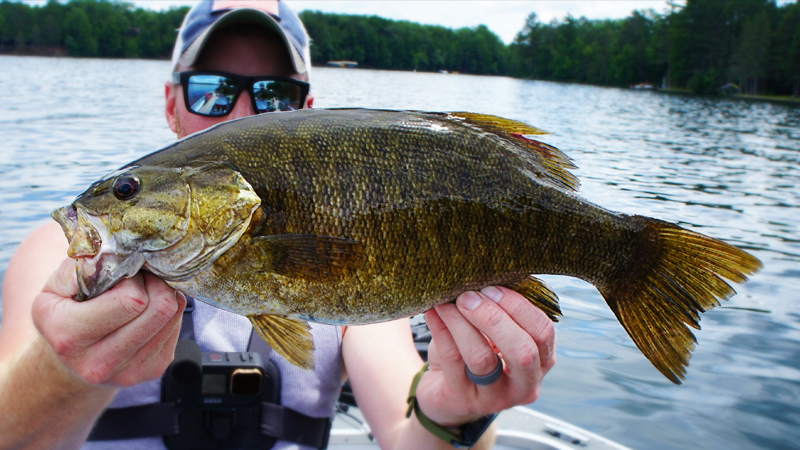
    Monster Wisconsin Smallmouth Bass on a Tube AJ Hauser
    Absolute unit. Can’t wait.

    Tight Lines & Godspeed, Patriots.

    PREVIOUS SECTION: The Most Important Tip for More Fall Bass

    [ Back to the Index Page for Learn How To Fish Rivers & Streams ]
    Callout Section The Minimalist Fisherman Midwest Bass Fishing Blue Banner Background Migration
    The Minimalist Fisherman Father Son Bonding Better Anglers Better Men

    Thank You For Your Support

    Your support directly funds the creation of weekly articles and videos that promote the development of better anglers and better men. Our country (and our kids) need both. Please share this site, and consider a monthly, weekly, or one-time donation. You are helping us make a difference!

    TMF Small White Logo
  • The Most Important Creek Fishing Tip for More Bass in the Fall

    The Most Important Creek Fishing Tip for More Bass in the Fall

    I almost quit for the season.

    Threw in the towel.

    … but something kept nagging at me…

    “We don’t quit. We don’t quit.”

    FINE.

    Fine. Fine. We’ll go. Even though last year we fished all fall with minimal success. A few dinks here and there. All the big fish I made friends with last summer? They left. Not sure when. Not sure where. But the fact remains: we don’t just quit.

    So we set about fishing one more time… and at first… let’s just say it was less than ideal…

    Let me paint you a picture.

    It’s cold.

    Really. Freaking. Cold.

    To call this fall morning “brisk” would be a gross understatement. Air temps? About 40 degrees. The light poncho I’m wearing is blocking the wind a bit… as are the half-naked trees… but the water falling from the sky is soaking my top half.

    The water I’m standing in?

    Yup. Soaking my bottom half.

    I’m not great at maths, but 50% + 50% has to be close to 100%.

    Pushing ahead, sloshing through the waist-deep water is helping to keep my heart rate up, but my hands are shaking. If I break off on a log and need to retie, it’s going to be extremely difficult.

    Illinois Creek Fishing for Smallmouth Bass Rain Overcast Poncho
    Right about now I’m questioning my sanity…

    It seems like the creek water is actually getting colder as the trek continues.

    That makes sense when you consider the fact that I’m wading in shorts. Don’t actually own a pair of waders. Don’t own a real pair of “wading shoes” for rocky creek beds either – just a crummy old pair of hiking boots.

    Clodhoppers.

    Why am I here?

    (I mean in the creek – this is not a metaphysical exercise.)

    Simple. My business is struggling. Those of you that are self-employed know that when it rains it pours (ah, what an appropriate saying), but in between the peaks are the valleys. They’re not uncommon, and I’ve been here before, but the timing this year is terrible.

    Been going 60+ hours a week for some time now to get the ship back on track. That’s why I haven’t added anything on this site in weeks. It’s been an absolute slog.

    I’m exhausted.

    Stress is high across the country. We all feel it.

    It’s also high here at home. I did the math the other day (don’t worry, a calculator was involved) and my monthly expenses are up $1,200 between the current gas, food and utility costs. Our 4 sons eat a lot, and me and mama can put it away, too. I need to unplug and think. Fishing usually helps with that.

    Never had much luck fishing creeks at this time of the year, though…

    Last year I fished creeks all through October and into November, but I only landed dinks.

    Why?

    I’ll tell you… because on this rainy, cold October day… I figured it out…

    Illinois Creek Fishing Smallmouth Bass Rain Raining Poncho Wading
    Nice smallmouth bass well over 2 pounds on a cut down finesse worm.

    Where to Find Smallmouth Bass in Creeks

    If you’ve ever fished a creek for smallmouth bass, you know that these little buggers can at times be extremely aggressive.

    They’re incredible fish.

    Some mornings, or even afternoons, it seems like they’re everywhere.

    … because they are.

    Pop 'n Drop Creator AJ Hauser with a Beautiful Smallmouth Bass
    Pop ‘n Drop Smallmouth Bass (Early Summer)

    When the water is stable and warm, clear not muddy, these fish move wherever they want, eat whatever they want, and assert their dominance over the other creatures scooting along the rocky bottom or swimming in the current beside them. Bugs that make the mistake of getting too close to the surface of the water will quickly realize the error of their ways.

    I’ve seen many 3 pound smallmouth launch themselves high into the air, then come crashing back down again after making a meal out of a bug that made this mistake.

    They only make it once.

    Kayaking or wading a creek during these periods of high activity can be extremely productive. 30, 40, even 50 fish outings – using active presentations, no less – are not uncommon. If the creek is clear, you can use a lot of the same strategies that work on Largemouth Bass in Ultra-Clear Quarry Lakes.

    How To Fish Ultra-Clear Borrow Pits & Rock Quarry Lakes
    How To Fish Ultra-Clear Borrow Pits & Rock Quarry Lakes
    “Crystal-clear quarry lakes are very difficult to fish. No rock stars here. Believe me. The banks are steep. The fish are spooky. The depths are depth-y. Other anglers, you ask? Few & far between…”

    But when the water starts to drop and cool, the bass move. They are in-tune with their surroundings and can feel the water rise, or fall. The current increase, or decrease. Slight changes don’t go unnoticed. As the days start to get shorter and the water cools, smallmouth will move…

    Where?

    Here’s the mistake I made last year…

    I have about 5 different areas where I can access several miles of fishable water, between two creeks. One of these creeks runs for about 55 miles, the other runs for about 10. Both creeks empty into large rivers.

    Last year, I spent all of my fall fishing time in sections of creek about 1 or 2 miles from their mouths, meaning I was less than 2 miles away from the large rivers mentioned above.

    I did this, because all spring and summer, these had been the most productive areas for both quantity and quality when bass fishing. The problem though, was that at some point, the smallmouth bass decided to empty out into the deeper, more stable water.

    That means the bass – especially the big bass – were not in the creeks.

    They were in the rivers.

    But they can’t all leave a 55-mile creek, because there are many super-shallow areas (runs) and even some rocky barriers that block all but a trickle of water (riffles) – meaning the fish can’t make their way through these areas unless the water is high.

    Some are surely trapped, and those fish would seek out the deepest pockets and pools they could find within their section of creek.

    To test this theory, I moved back – about 10 miles away from the river – and guess what I found?

    Illinois Creek Fishing Smallmouth Bass Raining Rainy Poncho Overcast Cloudy
    “Well hello there.”

    Smallmouth.

    Loads of ’em.

    19 to be exact. I also found 4 massive rock bass, and a bonus 5-pound channel cat!

    Illinois Creek Fishing Channel Catfish Can Rainy Poncho Rain Overcast
    A face only a mother could love… the catfish is ugly, too.

    The moral of the story, is that location matters.

    By focusing my (extremely) limited time on an area of the creek that was miles and miles away from the river, I was able to fish through sections that still held quality bass. In the spring, I’ll go back to focusing my attention closer to the mouths of the creeks, when the big river smallmouth move back in.

    This will allow me to target large fish, and higher quantities, while leaving the bass that remain in the creek all year alone until I have to fish them.

    Huge difference. Had I not tested this theory, these big bronzebacks wouldn’t have been caught.

    This is why we don’t quit.

    The following presentations helped me pick this section of creek apart.

    Here’s How to Fish for Fall Smallmouth Bass

    Even though I was able to find fish far from the river, we’re still talking about a 2 mile stretch of creek, and maybe 5% of that was productive water. I needed to move quickly and stay warm, and to try to find the fish before I could even think about stopping to work an area over.

    The following 3 presentations accounted for all of my success. Try ’em:

    Start with a jerkbait to cover water, and vary your retrieve speed and depth. I landed my first few fish on a 3.5″ model similar to a suspending Lucky Craft Pointer 100.

    Go for a natural color or a semi-translucent, especially if the water is clear.

    lucky craft jerkbait pointer 100
    Lucky Craft Pointer 100
    Price Check
    Amazon

    After about an hour I decided to change it up for two main reasons. While the jerkbait was working, there was a big problem. I was snagging a TON of leaves that were sitting on top of the water with every other cast – wasting time.

    The solution was a Zoom Fat Albert Grub in Smoke / Salt & Pepper rigged weedless on an Owner Flashy Spinner.

    zoom fat albert grub smoke salt pepper
    Zoom Fat Albert Grub
    Price Check
    Amazon
    owner flashy swimmer swimbait hook underspin
    Owner Flashy Swimmer
    Price Check
    Amazon

    This allowed me to fish through the leaves more effectively as I pushed ahead up the creek. Several more bass were caught, but I missed a handful as well (including a hawg) because the weedless rigging meant bigger hooksets were required to pin fish. Even though I was using 10 pound test on my spinning rod, I was a bit underpowered for this presentation.

    Seaguar Invizx Fluorocarbon
    Seaguar Invizx Fluorocarbon
    Price Check:
    Tackle Direct | Amazon
    Lew's Mach I Speed Spin Spinning Reel
    Lew’s Mach 1 Spinning Reel
    Price Check
    Tackle Direct | Amazon

    However, it allowed me to move quickly and get the bass to betray their position. At one point I noticed several flashes in between strikes, which told me that they were here – they just needed to see something different. I slowed down and really worked the area.

    The name of the game was a weedess, light wire jighead with either a small minnow shaped plastic, or a cut-down finesse worm.

    Powerbait Pro Twitchtail Minnow
    Powerbait Pro Twitchtail Minnow
    Price Check
    Tackle Direct | Amazon
    Z-Man Power Finesse ShroomZ Weedless
    Z-Man Weedless Finesse ShroomZ
    Price Check
    Tackle Direct | Amazon

    I tossed this setup into every little hole or area where I could see the water darken and drop just a bit next to the shore (in addition to outside bends). The weedguard helped keep the leaves that had settled in the creekbed at bay. Smallmouth were sitting right on the bottom, hiding in the dark debris & shadows in many of these small, slightly deeper areas, and the subtle plastics worked again, and again, and again.

    Once we found the fish… it was an absolute blast.

    I needed it.

    Even though my world is on fire right now, being able to eek out just a few hours over the weekend helped me clear my head. I would have been happy just to stand out in the wilderness by myself to have some time to think about what I need to do next.

    The fact that we had some late-season success was surprise icing on the cake.

    Find a stretch of creek away from the river. Cover ground and cast active presentations while you look to see if fish will show themselves. When you notice an uptick in activity – slow down and work the area.

    Fall fishing, man…

    Cold. Rainy. Soaked. Shivering. Alone…

    Awesome.

    Illinois Creek FIshing Rainy Poncho Hike Wet
    Thank you for a few hours, God. Now… back to work!

    Tight Lines & Godspeed, Patriots.

    PREVIOUS SECTIONCheck the Local Water Level in a Creek or River

    NEXT SECTIONSmallmouth Bass Fishing Tips from Matt Straw

    [ Back to the Index Page for Learn How To Fish Rivers & Streams ]

    Callout Section The Minimalist Fisherman Midwest Bass Fishing Blue Banner Background Migration
    The Minimalist Fisherman Father Son Bonding Better Anglers Better Men

    Thank You For Your Support

    Your support directly funds the creation of weekly articles and videos that promote the development of better anglers and better men. Our country (and our kids) need both. Please share this site, and consider a monthly, weekly, or one-time donation. You are helping us make a difference!

    TMF Small White Logo
  • How to Check the Local Water Level in a Creek or River

    How to Check the Local Water Level in a Creek or River

    “Well… I suppose we can try to head upstream, but it’s going to be one heck of a workout…”

    You mumble to yourself, trying to convince the rational part of your brain to go along with what is clearly a bad idea.

    “It’s not flowing that fast…”

    You lie. Again.

    Slowly. Deliberately. Painfully. You enter the cold rushing water and begin pulling your kayak upstream. Paddling just isn’t an option, which is a shame – because the water level is currently about 3 feet higher than normal, which would make it easy to cover ground quickly and avoid the shallow riffles you would walk on a normal day – but with the current moving at this speed, there is no way you’ll be able to keep up.

    If you catch any fish today… you will have earned them!

    Why Check the Water Level before Fishing a Creek?

    Creek Fishing in Illinois: Hunting Smallmouth Bass
    Creek Fishing in Illinois: A Beautiful Smallmouth Bass

    The situation above is not hypothetical. Recently I went out to fish a creek that has been blessing me with smallmouth bass all season, only to find that the late October rain we had received here in Northern Illinois had caused the water level to rise significantly. This in turn increased the overall current, which completely washed out the shoreline on both sides and pushed all of the giant log piles and cover down to the bridge.

    Areas that were previously cluttered with logs and difficult to pass were now clean, but again, the current made traveling upstream both impossible – and dangerous. I made it about a mile up the creek, but when I entered an area known to have very large jagged boulders along both sides – now covered in low-grade rapids – I had to admit defeat and turn back.

    rocky creek shoreline low water illinois
    A week ago these jagged rocks and holes were easy to walk across, but…
    washed out creek illinois fishing
    … when I came back, everything was covered with rushing water!

    When I return, we’re going to be fishing a clean slate.

    Literally.

    This waste of time could have been prevented. I should have done my homework before leaving for the day, only to waste some of the very limited “free time” available for fishing.

    What steps would have avoided this?

    1. Check the Current River Level & Streamflow Conditions in Illinois

    The first thing you will want to do is start to get acquainted with the United States Geological Survey. The water section of their website can be found here:

    https://waterdata.usgs.gov/nwis/rt

    At the time of writing, after you open the link you can click into your state and start to drill down into the available water data.

    Daily Streamflow Conditions

    I find it useful to click on one of the dots on my state to view both the discharge in cubic feet per second, and the current gage level (height) at one of the closest rivers.

    Try to find and monitor a gage or discharge location that is upstream from where you plan to fish!

    If you look at this default view, you can see that the day I was “flooded out” – October 27th – seems to be a high-water day, but not unreasonable…

    USGS Discharge & Gage
    USGS Discharge & Gage: Recent Illinois History

    … not unreasonable, until you take a look at a longer period of time. Look how this relates to earlier in the month when the water was low and calm. Select a start and end date beyond the immediate and click “Go” to do the same. The day I went fishing is marked for reference:

    USGS Discharge Level 2 months gage
    USGS Discharge & Gage: Extended Illinois History

    It’s pretty obvious why I ran into trouble, and I should have known things would be bad when I noticed all the flooded yards on my way to the creek.

    2. Check the Recent Rainfall in Northern Illinois

    Another extremely useful tool I found on the USGS website displays the Illinois Cumulative Rainfall Map with National Weather Service Radar Overlay. I’ll be honest – I have no idea how I found this tool – so I’ll just provide the direct link here:

    https://il.water.usgs.gov/gmaps/precip/

    Illinois Cumulative Rainfall Map with gage overlay
    Illinois Cumulative Rainfall Map with Gage Overlay

    This tool will show you active water gages and a table off to the right where you can look at recent rainfall in Illinois. Take a look and see if the recent rainfall corresponds with the discharge and height gage mentioned above.

    You can also take a look at https://www.weather.gov/ for more info. Click on your state, then select Rivers and Lakes from the available options.

    (It’s pretty hard to find actually, so here is a visual.)

    Weather.gov Rivers & Lakes

    This will give you additional flood and gage information.

    3. Check Personal Weather Stations

    Finally, look for even closer, localized water information by visiting a site like Ambient Weather. This site will allow you to view personal weather stations – but take it with a grain of salt, because there is no guarantee that all sensors are working properly.

    Ambient Weather Dashboard
    Ambient Weather Dashboard – Providing Even More Illinois Weather Information

    Grab Some Tools & Be Safe Out There!

    Let’s be honest. Most of us are checking the weather information to see if we will be able to access certain fishing areas – but keep safety in mind as well. Had I been in unfamiliar territory last week when I went out and the water was extremely high, injury (or worse) would have been very likely.

    It’s just not worth it.

    Check the sites listed here to make sure you stay safe and avoid wasting limited fishing time.

    Grab an inexpensive tool to monitor Barometric Pressure in your area as well. Pressure readings have been said to correspond to likely rainfall and incoming weather, as well as fish activity – but that topic is beyond the scope of this article. I keep this hanging on my wall in the garage:

    trac barometer barometric pressure gage

    Up Next:

    Before you go, make sure to grab a few of these extremely effective creek and river baits so you can catch more fish, and if you’d like to learn how to fish rivers & streams I have put together a guide on that topic.

    Be safe and tight lines!

    PREVIOUS SECTIONCreek Fishing Adventures

    NEXT SECTIONThe Most Important Tip for More Fall Bass

    [ Back to the Index Page for Learn How To Fish Rivers & Streams ]

    Callout Section The Minimalist Fisherman Midwest Bass Fishing Blue Banner Background Migration
    The Minimalist Fisherman Father Son Bonding Better Anglers Better Men

    Thank You For Your Support

    Your support directly funds the creation of weekly articles and videos that promote the development of better anglers and better men. Our country (and our kids) need both. Please share this site, and consider a monthly, weekly, or one-time donation. You are helping us make a difference!

    TMF Small White Logo
  • Top 5 Baits for Streams & Rivers / Learning to Fish Rivers & Streams

    Top 5 Baits for Streams & Rivers / Learning to Fish Rivers & Streams

    Over the past two weeks we’ve pulled together a plethora of information to explain the makeup of rivers & streams; how they change, how fish in these systems position themselves, where the food comes from – and all of this came from the note-gathering process as we prepare to explore new streams and rivers this coming year.

    A nice little winding stream - let's fish.
    The possibilities in this winding stream are endless…

    As those exploration videos are posted, we’ll be able to see what holds true, and today we’re going to discuss the Top 5 Baits for Streams and Rivers based on the information we’ve gathered so far.

    What fish are you hunting?

    It would be impossible to select 5 baits that would always be the top 5 options in every situation for every species of fish. Different fish respond to different presentations based on the local forage, weather conditions, even the time of year.

    We also explained how different species of fish express a different level of tolerance when it comes to current and water temperature. Check back to Section 2: What is Current in a Body of Water for a refresher, and take another peek at Section 5: Preferred Temperature Ranges of Warmwater Gamefish for a table that shows where your target species will likely hang out.

    I’ll be looking for largemouth bass, smallmouth bass, and aggressive panfish.

    Keep it Simple

    The last thing we want to do is take way too much stuff with us. That can cause us to overthink, and if the stuff is heavy it can lead to early exhaustion as we hike upstream. We’re going to do whatever we can to keep things minimal and as light and straightforward as possible.

    A quick note on live bait: live bait is always, always, always an option. Red wigglers on a split-shot rig, minnows under a bobber, crayfish on the bottom – but this list assumes we are focused on exploring new areas, and that means we want to focus on the exploration portion, not keeping live bait… well… alive.

    1. A Small Searchbait

    The first thing we will want to do is cover as much water as possible. As much as I love throwing jig worms and wacky rigs, those finesse presentations are best suited for slowly working an area over after you have found some fish and picked off the aggressive biters.

    Start with a small to mid-size crankbait if you are fishing an stream or river that is not loaded with timber.

    Rebel 4 Pack of Lures

    This Rebel 4-Pack is a great option for most of us, and it even includes a topwater popper if you feel like testing the upper edge. These smaller-sized baits will appeal to a wide range of gamefish, and imitate bugs, crayfish & minnows.

    2. A Larger Searchbait

    If timber and weeds are a concern, look to a searchbait that is much more weedless. One of my absolute favorites is the Strike King Tour Grade Swim Jig. This bait can be paired with all sorts of trailers, comes in multiple weights and sizes, and it is an effective way to work many depths in the water column quickly to help you find active biters.

    Strike King Tour Grade Swim Jig
    Bluegill Pattern: Strike King Tour Grade Swim Jig

    If you have more confidence in a spinnerbait – go for it. I use spinnerbaits in many of the same areas that I would throw a swim jig if it’s overcast, or if I’m looking for a bit more flash or a faster vibration.

    3. A Mid-Size Stickbait

    Stickbaits are extremely versatile, and Senko has become a household name – for good reason. I like to use a slightly smaller 4″ or 5″ Strike King Ocho in my area (because of local forage). There are many colors to choose from. A good rule of thumb if you’re not sure what color to use is to select one that is close to the color of the bottom.

    I like to pair these with VMC Weedless Wacky Hooks.

    VMC "Ike Approved" Weedless Wacky Hook
    VMC “Ike Approved” Weedless Wacky Hook + Strike King Ocho

    This is a good way to work over a likely spot, or to slow down after you have found fish with one of your faster moving searchbaits. If you rig your stickbait weightless you can slow-sink it right in the face of a hesitant fish, or cast upstream so the current brings the bait tumbling back like a minnow in distress.

    4. A Ned Rig Combo

    Smaller jigs account for a lot of fish in streams and rivers. If the stickbait doesn’t work, tie on something that will allow you to make contact with the bottom. Ned Rig jigheads come in many different styles and sizes – select one that will help you touch the bottom, and pair it with one of the many Elaztech trailers out there.

    Green Pumpkin Hula Stick Ned Rig
    Green Pumpkin Hula Stick + Ned Rig “Power Finesse” Jighead

    Popular options include the Z-Man TRD or the Z-Man Hula StickZ, and both can be used to imitate smaller forage like baitfish or insects rooting around for food on the bottom.

    They get bit. Period.

    5. Test The Nikko Hellgramite

    One of the YouTube channels that I have been enjoying this winter is Creek Fishing Adventures (this actually played a large role in my increased desire to explore some new creeks and rivers). One of John’s favorite baits is the Nikko Hellgrammite – and many, many fish are taken on this lure. It can be rigged on a jig, weightless Texas style, on a Carolina rig – you name it.

    Nikko Hellgrammite
    Watermelon w/ Red Flake Pattern – Nikko Hellgrammite

    While this is similar to the presentation above, it deserves to be mentioned and tested – because there is a chance that this bait will “match the hatch” better than a simple jig-worm.

    Try it out!

    Moving Forward

    These recommendations are what I’ll be using while I search for new fish in new locations this year. Again, live bait is always an option – but personally, when it comes time to explore I want to be able to focus 100% on that aspect of my trip, and pay very close attention to my surroundings – not be worried about my bait getting too hot and dying.

    If you have any suggestions or adjustments, feel free to share.

    2020 Fishing (Resized for Gallery)
    Poked this little fatty with a wacky-rigged Ocho

    Time to fish – tight lines!

    PREVIOUS SECTION: International Scale of River Difficulty

    NEXT SECTION: Creek Fishing Adventures

    [ Back to the Index Page for Learn How To Fish Rivers & Streams ]

    Callout Section The Minimalist Fisherman Midwest Bass Fishing Blue Banner Background Migration
    The Minimalist Fisherman Father Son Bonding Better Anglers Better Men

    Thank You For Your Support

    Your support directly funds the creation of weekly articles and videos that promote the development of better anglers and better men. Our country (and our kids) need both. Please share this site, and consider a monthly, weekly, or one-time donation. You are helping us make a difference!
    TMF Small White Logo
  • The International Scale of River Difficulty / Learning to Fish Rivers & Streams

    The International Scale of River Difficulty / Learning to Fish Rivers & Streams

    Before you load up the ‘ol kayak and attack a river – make sure you do some research to see if you can find information explaining the level of difficulty of its rapids. In an effort to standardize the terminology surrounding rapids, The International Scale of River Difficulty was developed.

    Keep in mind that the water stage (whether the water is high and fast or low and slow) may have an impact on the difficulty level. For instance, high water can turn Class 2 rapids into Class 3 – or even 4 in some circumstances. If you have any hesitation or uneasy feelings about a section of river or certain rapids, do what you can to scout ahead from shore before attempting to make a run.

    The Six Grades of White-Water Difficulty:

    Remember: no matter what class of rapid you plan to traverse, a personal flotation device like a lifejacket is absolutely critical – do not leave home without one!

    Personal Flotation Devices - PFDs
    Personal Flotation Devices – PFDs

    The following images can be found in: The Freshwater Angler™: Fishing Rivers & Streams

    Class 1: Easy rapids with small standing waves and few obstructions. Under high water conditions they may disappear completely.

    Class 1 Rapids Example
    Class 1 Rapids Example

    Class 2: Standing waves that may reach a height of 3 feet. Some maneuvering is required for safe passage. As a general rule of thumb – anglers in small fishing boats should avoid any rapids greater than Class 2.

    Class 2 Rapids Example
    Class 2 Rapids Example

    Class 3: High, standing waves are capable of swamping an open canoe or small boat. Extensive maneuvering may be required to follow narrow chutes between boulders or turbulent areas.

    Class 3 Rapids Example
    Class 3 Rapids Example

    Class 4: High, irregular standing waves along with constricted passages and blind drops require a rubber raft, decked canoe, kayak, a maneuverable deep-sided boat or jet boat.

    Class 4 Rapids Example
    Class 4 Rapids Example

    Class 5: Hazardous to life because of long, violent rapids and steep drops or falls, which may require a complex route to navigate. These rapids are runnable only by experts with a raft or fully decked boat.

    Class 5 Rapids Example
    Class 5 Rapids Example

    Class 6: The same hazards that are present in Class 5 rapids, but more severe. Even whitewater experts consider Class 6 rapids nearly impossible to navigate. These torrents pose a great risk to life.

    Class 6 Rapids Example
    Class 6 Rapids Example

    Moving Forward

    This summer, I will not be taking my jon boat out to try to navigate any rapids. We might do a bit of kayaking, but the goal will be to hike and explore as many winding streams as possible. Still… this is very important knowledge to have, even if it is just put into play from a research perspective.

    2020 Fishing (Resized for Gallery)

    It’s cold outside as I write this… but soon… we fish… tight lines!

    NEXT SECTION: Top 5 Baits for Streams & Rivers
    PREVIOUS SECTION: River Hazards

    [ Back to the Index Page for Learn How To Fish Rivers & Streams ]

    Callout Section The Minimalist Fisherman Midwest Bass Fishing Blue Banner Background Migration
    The Minimalist Fisherman Father Son Bonding Better Anglers Better Men

    Thank You For Your Support

    Your support directly funds the creation of weekly articles and videos that promote the development of better anglers and better men. Our country (and our kids) need both. Please share this site, and consider a monthly, weekly, or one-time donation. You are helping us make a difference!

    TMF Small White Logo
  • Hazards & Locks / Learning to Fish Rivers & Streams

    Hazards & Locks / Learning to Fish Rivers & Streams

    Any river you fish can have hazards that you would be wise to look out for. On every body of water there are certain things we need to be mindful of, or avoid – rivers of course have the added element of moving water. Current is no joke, and all sorts of goodies can be carried along into areas that were previously clear of obstructions.

    A Quick Note on Safety

    Before we talk about any hazards – allow me to take a moment to suggest you get some sort of personal flotation device. Life jackets are very important (especially if you are alone) so let’s start there. If you are in a boat there are some other safety items you’ll want to grab: extra rope, possibly other flotation devices like cushions, maybe some sort of flare gun, lights… but for now – let’s just start with a nice PFD:

    Personal Flotation Devices - PFDs
    Personal Flotation Devices – PFDs

    Submerged Deadheads

    One of the most common (and dangerous) river hazards is a submerged deadhead. These water-soaked logs can float just beneath the surface, or poke out just a bit. If you hit a deadhead at a high speed, you will damage your boat, rip off your lower unit – you could even capsize.

    Submerged Deadhead in a River
    [Additional Info Can Be Found In: The Freshwater Angler™: Fishing Rivers & Streams]

    Deadheads are most common when the water is rising. As the river swells up, logs and other objects are lifted away from the shoreline and the current can carry them downstream. Under higher-water conditions, boaters should be careful, reduce their speed and watch the water ahead for any sort of surface disturbance.

    Wing Dams

    Submerged wing dams are bad news for boaters that are brave enough to venture out of the main channel. Wing dams are usually made up of chunk rock (think boulders, busted concrete, rip-rap…), and the rocky structures can live just a foot or so below the surface. This makes them just about perfect for propeller or lower unit damage.

    Wing Dams Viewed from Above
    A series of wing dams viewed from above.

    To spot wing dams, look for lines of ripples that extend out from the shore at a right angle to the direction of the current or flow.

    Barges

    Barges are just like trains in the fact that they can’t come to a complete stop quickly. Fortunately for us… they’re not hard to see.

    Always be on the lookout for the wake of a barge or other large vessels, like houseboats, cruisers, etc. Instead of crashing through the wake in a small boat, slow down and ride it out like a bobber. If you hit a large wake at high speed, the bow could dip into the water. Pay attention to your surroundings when fishing – especially on windy days when these larger boats can creep up on you without the sound of their motors reaching your ears before it’s too late.

    Large Barge in the River
    An example of a large barge in the river… not exactly small…

    When crossing paths with a barge or a much larger ship, circle behind or wait for it to pass. There is always a chance that if you cross in front of the barge your motor could stall, and the large vessel will not be able to stop – or… they might not even see you. There’s no swimming away from one of these… be careful.

    Dams

    This one is simple – stay back. Boaters that approach a dam run the risk of getting sucked into the heavy current, especially if the water is high. Strong eddies below the dam create turbulence that can trap a boat or suck it under completely.

    A boater too close to a dam.
    A boater too close to a dam.

    Stay away from the fast moving water below dams.

    Proper Anchoring

    Anchoring in fast current is not the best idea. That said, if you must anchor, attach your rope to the bow eye up front:

    Bow eye in front of a boat
    Bow eye in front of a boat

    Do not attach your rope to the gunwale (side) or stern (back) of the boat:

    Gunwale and stern anchor tie location examples.
    Gunwale and stern anchor tie location examples

    If you anchor sideways, the current could flip your boat. If you anchor from the stern, the current could push water up and over the transom.

    Lock-Through Procedures

    If you have locks that are able passable on your river, you may want to keep these tips in mind.

    Start by looking for directions or instructions that are posted for boaters before you enter a lock. Check them – then, while approaching a lock, look for a pull rope about 1,000 feet from the lockmaster. The rope typically rings a bell that lets them know you would like to lock through.

    Boaters waiting to "Lock-Through"
    Boaters waiting to “Lock Through”

    Usually a red signal light will flash when the lock is being prepared for entry. This light should turn green when they are ready for you to move ahead. Proceed to slowly motor into the lock.

    When you are inside the lock, the gate will close and the water will rise or fall, depending on which direction you are heading. There may be ropes (one may be tossed to you) or some other method to hold your boat in place and avoid drifting – but do not tie anything to your boat! When the water drops the rope could tighten, keeping you in place and causing damage to you or the vessel – or flipping you over.

    When they are ready for you to leave, the red signal should again turn green, meaning you can slowly motor or paddle out.

    Moving Forward

    As you can see, it’s very important to be mindful and pay attention when you are on the water. Many of these rules and hazards apply to lakes as well – but in rivers the addition of a current makes things a bit more complex. Next, we’ll talk a bit more about the International Scale of River Difficulty – a rating system that tells us how easy or difficult a stretch of rapids will be to navigate.

    Less Than Ideal Fishing Conditions...
    Pretty nice PFD you got there, dear…

    Keep ‘yer wits about you. Tight lines!

    NEXT SECTION: The International Scale of River Difficulty
    PREVIOUS SECTION: The Rules of River Navigation

    [ Back to the Index Page for Learn How To Fish Rivers & Streams ]

    Callout Section The Minimalist Fisherman Midwest Bass Fishing Blue Banner Background Migration
    The Minimalist Fisherman Father Son Bonding Better Anglers Better Men

    Thank You For Your Support

    Your support directly funds the creation of weekly articles and videos that promote the development of better anglers and better men. Our country (and our kids) need both. Please share this site, and consider a monthly, weekly, or one-time donation. You are helping us make a difference!

    TMF Small White Logo
  • The Rules of River Navigation / Learning to Fish Rivers & Streams

    The Rules of River Navigation / Learning to Fish Rivers & Streams

    If you drive, you are probably (hopefully?) familiar with the “rules of the road”. But how many of us are familiar with the rules of the river, lake or stream?

    Ever had someone pass you too close in a faster boat? Ever have someone throw a huge wake in your direction while you were anchored up fishing?

    Rude.

    Let’s make sure we’re not “that guy”… What is the process for passing other boats? How do I pass through a lock? What do all of the buoys, signs and signals mean? What hazards should I watch out for?

    If you are unfamiliar with these rules, then this article is as much for you as it is for me. I need to learn more on this topic, and I’m referencing Dick Sternberg’s book: The Freshwater Angler™: Fishing Rivers & Streams again for this section.

    Boating Rules for Rivers & Streams

    When you are approaching another boat head-on, steer to the right (as if you were on an actual road) to pass each other and avoid a collision. However, if your boats are far enough away from each other on the left, there is no need to alter your course.

    When another boat moving the same direction as you attempts to pass you, make sure that you maintain the same direction and speed. If you are the one that is attempting to pass another boat moving in the same direction, make sure you put enough distance between your two vessels so that your wake does not endanger them.

    If two boats approach each other at a right angle, the boat on the right has the right-of-way (similar to a stop sign). Canoes, kayaks and other non-motorized boats have the right-of-way over motorized boats. Make sure to pay attention and give these smaller boats enough space.

    When crossing paths with a barge or a much larger ship, circle behind or wait for it to pass. There is always a chance that if you cross in front of the barge your motor could stall, and the large vessel will not be able to stop – or… they might not even see you. There’s no swimming away from one of these… be careful.

    Always yield right-of-way to any emergency craft displaying red or blue flashing lights.

    What Buoys & Markers Mean

    Channel Markers: usually large, red, or green – channel markers are used to designate the edges of the channel. When you are heading upstream you will see red on the right, and green on the left. An easy way to remember this is with The Three Rs: Red-Right-Return.

    Channel Markers in a River System
    [Additional Info Can Be Found In: : The Freshwater Angler™: Fishing Rivers & Streams]

    Mooring Buoys: usually white with a blue line in the center when the buoy is upright. Mooring buoys are often used by larger vessels.

    Mooring Buoy Example
    [Additional Info Can Be Found In: : The Freshwater Angler™: Fishing Rivers & Streams]

    Mile Markers: these can be found along the navigation channel of major rivers. An example of these would be the mile markers present on the Mississippi River, which give the distance in miles above the mouth of the Ohio River.

    Mile Markers on the Mississippi River
    [Additional Info Can Be Found In: : The Freshwater Angler™: Fishing Rivers & Streams]

    A buoy with a vertical line means you should not pass this area on the side closest to shore.

    A buoy with a red or orange diamond means there is a hazard nearby, like a large boulder.

    A buoy with a red or orange circle means this is a restricted area, like a no-wake zone.

    A buoy with a red or orange square gives boating information or directions.

    Different Types of Buoys
    [Additional Info Can Be Found In: : The Freshwater Angler™: Fishing Rivers & Streams]

    Moving Forward

    Now that we know a bit more about how to operate our boat, how to interact with other boats, and what some of the most common signs and markers mean, we’ll take a look into other hazards on the river, and also how to interact with certain locks that are passable (with lock-through procedures).

    AJ Hauser Fishing Boat Project
    Dad knew the rules. He also knew we needed to wear some sweet orange life jackets!

    Safety first, eh? Tight lines!

    NEXT SECTION: Hazards & Locks
    PREVIOUS SECTION: Threats to Stream Habitat

    [ Back to the Index Page for Learn How To Fish Rivers & Streams ]

    Callout Section The Minimalist Fisherman Midwest Bass Fishing Blue Banner Background Migration
    The Minimalist Fisherman Father Son Bonding Better Anglers Better Men

    Thank You For Your Support

    Your support directly funds the creation of weekly articles and videos that promote the development of better anglers and better men. Our country (and our kids) need both. Please share this site, and consider a monthly, weekly, or one-time donation. You are helping us make a difference!

    TMF Small White Logo
  • Threats to Stream Habitat / Learning to Fish Rivers & Streams

    Threats to Stream Habitat / Learning to Fish Rivers & Streams

    Fishermen care about the environment. The same could be said for hunters and many outdoor enthusiasts. We all appreciate and understand that we need to take care of the animals we chase and the environments in which they live. This is contrary to what many “activists” would have you believe… but it’s true. The best way to convince others that we are a source of good is to expand and share our own personal knowledge of the things that have an impact on the outdoors.

    First, let’s be honest: man’s activities have destroyed a large amount of fish habitat in rivers & streams. Water that passes through cities or agricultural areas face the worst problems. We hear the most about pollution in the press, but sometimes other less startling problems can create more havoc for the fish.

    Bank Erosion

    One issue is bank erosion. Bank erosion is something that we are all aware of (if you’ve ever been on a large natural lake you’ve probably come across “no wake” zones), but this is also one of the most difficult problems to solve. Near streams, many farmers allow livestock to graze right to the edge of the water, which can remove the vegetation that stabilizes the bank during a flood.

    Example of Stream Bank Erosion
    [Additional Info Can Be Found In: : The Freshwater Angler™: Fishing Rivers & Streams]

    If the protective vegetation is removed, the banks will actually crumble during high water, which will cause mud to cover or blanket the rock and gravel below. This change can lead to the stream holding fewer gamefish. Why? Remember when we were discussing Cover & Current Breaks [Part 1], we pointed out that small rock holds baitfish and other forage:

    “… it’s natural that fish living in current would seek out anything that might prevent them from being swept away. The moment they hatch new fry are small, weak swimmers – and food for larger predators – but fortunately, they can find cover and concealment behind pebbles and gravel… to start.”

    No baitfish means no gamefish, and streams with severely eroded banks typically don’t hold great populations of the latter.

    Streams can be fenced off near farmland to prevent this to an extent, but sometimes that is a tall order and not fair to ask of the farmers. Not to mention this isn’t a practical solution for larger streams… and even on smaller ones fences can be damaged by flooding or the same livestock they are supposed to ward off. This means they require frequent maintenance (which again is not fair to the farmer that has more than enough work to do already).

    Channelization

    Another threat to be mindful of is channelization, which is the straightening of stream and river channels. This is done to reduce flooding, because a straight channel can funnel off water much faster than a meandering one. However this can have a very negative impact on the fish population, and in one Missouri study tracking the channelization of the Chariton River, a section that had been channelized produced 83 percent fewer pounds of fish per acre than another section of the river that was untouched.

    Channelization of a River or Stream
    [Additional Info Can Be Found In: : The Freshwater Angler™: Fishing Rivers & Streams]

    Channelization can also worsen flooding downstream, which harms the fish population there as well. Overall channelization reduces the total length of the stream (because there are no winding bends) and much of the cover, spawning areas and food sources are destroyed.

    Dewatering

    Dewatering is the pumping of stream or river water to irrigation systems to help maintain fertile farmland during drought years. The advantage of course is fertile farmland… the disadvantage is that it reduces already low water levels in rivers and streams. This can reduce streamflow by 90 percent or more – in some cases streams have even been pumped dry.

    High Capacity Dewatering Pump
    [Additional Info Can Be Found In: : The Freshwater Angler™: Fishing Rivers & Streams]

    This change forces fish into deep holes where food may be very scarce. Slower water also heats up faster, which can stress or kill the fish.

    Dredging

    On large rivers like the Mississippi, a minimum depth of 9 feet must be maintained to allow barge traffic to freely pass through. The U.S. Army Corps of Engineers dredges the river – which means they clean the bed of weeds, muck and rubbish using some sort of scoop or suction. This sounds good, but in reality the dredge spoil is made up of about 90 percent water, and when it is deposited on the river bank it doesn’t pile neatly – much of the spoil runs back to the river or nearby waterways.

    Dredge Spoil Pumped out of River
    [Additional Info Can Be Found In: : The Freshwater Angler™: Fishing Rivers & Streams]

    This spoil can ruin prime areas for both fish and wildlife.

    Pollution & Sewage

    These days, there are much stricter rules and laws regarding pollution and sewage. Poorly treated municipal sewage and waste from feedlots can still be a problem though. This waster actually increases the fertility of the stream, which results in large algae blooms that consume dissolved oxygen and cause periodic fish kills.

    Large Dangerous Algae Bloom
    [Additional Info Can Be Found In: : The Freshwater Angler™: Fishing Rivers & Streams]

    Algae blooms are a common thing here in Illinois – especially as the weather gets warmer and warmer on the smaller lakes that we fish on a regular basis. However, the algae never gets so thick that it kills off the largemouth bass we’re hunting… who will actually use these thick mats for cover at times.

    Herbicide runoff can also cause fish kills. If the chemicals are applied right before a heavy rain, they may actually wash into nearby streams or rivers. This can kill fish and invertebrate life as well.

    Moving Forward

    We need to take care of our hunting & fishing areas so that we can pass down a clean, amazing earth to our children and grandchildren. However, we need to work with farmers and the Army Corps of Engineers – these people are not “the bad guys” by any means, and there are reasons that they do what they do.

    By understanding the dangers to our fisheries, we can continue to work towards compromises and improvements that benefit everyone.

    Scott Hauser Aluminum Boat
    Me, my brothers and Dad returning from a ride on the lake in WI. Pass on the goodness of the outdoors.

    Next, we’ll touch on river navigation. Fun fact: it is currently -6 degrees with about 3 feet of snow piled up outside. Everything is frozen… Lord help me, I can’t wait for spring.

    If you’re able to fish today – go do it right now – tight lines!

    NEXT SECTION: The Rules of River Navigation
    PREVIOUS SECTION: Fluctuating Water Levels

    [ Back to the Index Page for Learn How To Fish Rivers & Streams ]

    Callout Section The Minimalist Fisherman Midwest Bass Fishing Blue Banner Background Migration
    The Minimalist Fisherman Father Son Bonding Better Anglers Better Men

    Thank You For Your Support

    Your support directly funds the creation of weekly articles and videos that promote the development of better anglers and better men. Our country (and our kids) need both. Please share this site, and consider a monthly, weekly, or one-time donation. You are helping us make a difference!

    TMF Small White Logo
  • Fluctuating Water Levels / Learning to Fish Rivers & Streams

    Fluctuating Water Levels / Learning to Fish Rivers & Streams

    Within just a few hours of a heavy rain, water levels in a stream can rise as much as 10 feet, the current speed may triple, and water that is normally clear can turn a nice, appetizing chocolate brown! Of course, this depends on the size of the stream, and some other factors – but the moral of the story is that water levels are going to fluctuate.

    Flooded Bridge in Illinois
    A few years back my local stream went way, way up after heavy rain, flooding roads and washing out nearby woodland areas.

    Physical changes of this magnitude can make life difficult for fishermen – and fish. Fish will take up different positions during high water to avoid the fast, muddy water.

    As water rises, fish tend to move shallower. The shallowest water available is usually near the advancing waterline, right against the bank. It can be a bit more clear, and baitfish and insects will be here as well – not midstream.

    Fishing During High Water
    Fishing During High Water

    At the first sign of the water dropping back down, fish will move to steep banks and drop-offs, or deep holes. All kinds of fish – including baitfish – move out of the shallows. This is because fish possess an acute sense for changing water levels in their environment. If they did not, many would be trapped in small pools or puddles as the water recedes.

    Good stream fishermen understand this behavior and pay close attention to water levels so they know where to look for fish. This can be done using water gauges on bridges or dams, by looking at in-stream objects like logs and boulders, or using a tool like the Deeper Pro+ Sonar, which is a castable depth finder we have talked about many times.

    Water Gauge on a Bridge Piling
    Even a drop as small as an inch or two can cause fish to move back out of the shallows.
    Silt Left Behind After High Water
    Freshly deposited silt by weeds, trees and rocks on the shoreline signal the water is falling and fish will move deeper as a result. When the water level is dropping streams will carry little floating debris.

    Pay close attention to the clarity of the water following a heavy rain. Large clouds of mud rolling downstream usually mean bad fishing because the fish can’t see your presentation. Again, if you are going to try to fish these conditions, work close to the bank where the water can potentially be a bit clearer. You can also move upstream if muddy water is flowing into your fishing area from a tributary, as seen below.

    Incoming Dirty Water
    Chocolate milk? No thanks.

    Some fishermen believe that rain washes all sorts of insects off the shoreline, temporarily changing the feeding behavior of the fish. Keep this in mind when you are selecting your presentation. A spinnerbait could be effective, or some sort of swim jig with a large trailer that brings with it a lot of thump and vibration to the table (I would opt for a darker color in muddy water, maybe with some chartreuse). If the water isn’t too fast and there is some visibility you could tie on a smaller crankbait to match anything that is getting washed off the shore, like the Rebel Tiny Crank Collection:

    Rebel 4 Pack of Lures

    When the water starts to clear up, fishing will improve because the fish will start to feed heavily. The speed at which these streams clear up depends greatly on the size of the drainage area. The larger the drainage area, the longer it takes. In fact, smaller streams fed primarily by springflow can cloud up much less and be a great choice when larger streams and rivers are too muddy to fish. The springflow can also maintain the water lever if there is a drought, making them more consistent throughout the entire year.

    Moving Forward

    Now that we know more about fluctuating water levels in streams and rivers, we can adjust out location and presentation accordingly. We mentioned early on that change in streams & rivers is constant which makes fishing challenging, even intimidating for many anglers – but if we’re going to explore these areas extensively this year – and yes, we are – then we need to absorb this knowledge and start off on the right foot.

    Research is important but it’s time to put it into action!

    2020 Fishing (Resized for Gallery)
    Come on warm summer mornings…

    It’s exciting and I can’t wait for the snow to melt… tight lines!

    NEXT SECTION: Threats to Stream Habitat
    PREVIOUS SECTION: How Streams Change

    [ Back to the Index Page for Learn How To Fish Rivers & Streams ]

    Callout Section The Minimalist Fisherman Midwest Bass Fishing Blue Banner Background Migration
    The Minimalist Fisherman Father Son Bonding Better Anglers Better Men

    Thank You For Your Support

    Your support directly funds the creation of weekly articles and videos that promote the development of better anglers and better men. Our country (and our kids) need both. Please share this site, and consider a monthly, weekly, or one-time donation. You are helping us make a difference!

    TMF Small White Logo
  • How Streams Change / Learning to Fish Rivers & Streams

    How Streams Change / Learning to Fish Rivers & Streams

    Have you ever returned to a river or stream – heck, even a lake – after say a long winter or a few seasons away, only to find that things are much different than you remember?

    Mother Nature… she doesn’t sit still!

    When it comes to running water, the cutting force of current keeps all streams in a constant state of flux. New sandbars are formed as sediment is carried along and deposited in new areas, new holes are cut by swirling current, erosion causes bends to move s-l-o-w-l-y downstream and as water washes against the bank the soil on the downstream bend is slowly washed away – the looser the soil and faster the current, the faster the movement.

    Even waterfalls may move (pause and consider that for a second – natural forces in our world are incredible). When water spills over the falls, erosion at the base undercuts the crest which will eventually collapse. This causes the falls to creep upstream. If the crest of the falls erode at a pace faster than the base, they will eventually collapse or convert into a series of rapids.

    Severe flooding may change the course of a stream altogether. Floodwaters may cut across a major bend, rather than flow around it. The bend (now separated from the stream) can become what is called an oxbow lake. These narrow, horseshoe shaped lakes may become completely separated from the main channel.

    Oxbow Lake Example
    Aerial photo of an oxbow lake from the pages of Fishing Rivers & Streams

    Floodwaters may also cut across bridges and roads. Several years back a local stream flooded right outside my neighborhood. These (awful cell phone) pictures show just how high this normally tiny stream was!

    Flooded Road in Illinois
    Flooded Road in Illinois
    Flooded Stream in Illinois
    Flooded Stream in Illinois
    Flooded Bridge in Illinois
    Flooded Bridge in Illinois

    You’ll notice that the surrounding woodland in these photos is also completely flooded. It is not uncommon in situations like this for floods to carry logs, brush or other debris along, only to be hung up in narrow areas, creating logjams. Some logjams block so much of the flow that the stream is forced to make a new channel on one side or the other. Silt is also deposited where the new logjam is located (because the current is slowed in this area) and a new island may eventually be formed here as well.

    Even beavers can cause major changes in a small, low-gradient stream. A large beaver dam can back up water for hundreds of yards, creating a fair sized lake. Then with the slower current, the silt can settle out, filling the streambed. This creates a wider, shallower area that warms more quickly, in some cases up to 10 degrees.

    Large Beaver Dam
    DAM!

    This change in temperature can be severe enough to have an impact on the species of fish that would use this stretch of the stream. (Check back to Preferred Temperature Ranges of Warmwater Gamefish for reference.)

    If you are visiting an area regularly make sure to check the water temperature on a routine basis using tools like the Deeper Pro+ Sonar. This data can be logged automatically so you have a record. If you notice some major changes in the stream flow or path, check again and compare your data to see if you can understand why your favorite fish may have moved.

    Streams with braided channels change the most. Their bottoms are constantly shifting, and even a minor flood can cut several new channels and fill in some old ones. Braided channels are most common in streams that flow over loose material. There are usually two or more channels that act independent of one another, often crossing upstream and downstream of islands.

    Example of a Braided Stream
    Example of a Braided Stream

    High altitude photos allow channel changes to be seen easily. Below, the present channel is shown in blue, and the old channel is in red. This image comes from: The Freshwater Angler™: Fishing Rivers & Streams. The photo also shows many other channel changes that have occurred throughout the years.

    Large Detailed Ariel Photo of a Braided Stream
    Large Detailed Aerial Photo of a Braided Stream

    Moving Forward

    We now know a bit more about how streams can change. Next we will talk a bit more about how stream and river water levels fluctuate, along with some of the signs of that fluctuation. Remember that lake water can change too (depth, clarity, etc) – but the changes in rivers and streams are constant.

    2020 Fishing (Resized for Gallery)
    Changes mean new cover. New cover means new fish will move in. Stay alert.

    Don’t fight it – change is good. Tight lines!

    NEXT SECTION: Fluctuating Water Levels
    PREVIOUS SECTION: Food & Forage

    [ Back to the Index Page for Learn How To Fish Rivers & Streams ]

    Callout Section The Minimalist Fisherman Midwest Bass Fishing Blue Banner Background Migration
    The Minimalist Fisherman Father Son Bonding Better Anglers Better Men

    Thank You For Your Support

    Your support directly funds the creation of weekly articles and videos that promote the development of better anglers and better men. Our country (and our kids) need both. Please share this site, and consider a monthly, weekly, or one-time donation. You are helping us make a difference!

    TMF Small White Logo
  • Food & Forage / Learning to Fish Rivers and Streams

    Food & Forage / Learning to Fish Rivers and Streams

    Stream fish are opportunists.

    If you’re like me and you want to catch more fish, and it’s a good idea for us to study the mouse instead of the owl. What are all of the different kinds of food that could be available to fish in a system? Remember… these are predators we’re talking about here!

    Common Stream & River Forage

    • Insects (Grasshoppers, Flies, Spiders)
    • Insect Larvae
    • Wind-Blown Morsels (?… use your imagination…)
    • Aquatic Invertebrates
    • Crustaceans
    • Baitfish & Minnows

    The Availability of Food Matters

    On a windy day, species like smallmouth bass may feed heavily on grasshoppers and other insects blown into the stream or river. Fish can simply wait in the shallows along the bank and wait for wind-blown morsels to come along. But these same fish that live in the stream, can’t rely solely on food that comes from outside the stream. This would be too unpredictable (or even seasonal) to support a healthy fish population.

    Therefore the stream itself must be able of producing ample food. (This is why our list above is a mix of both external and internal food sources – both are very important and will change throughout the season.)

    How to Tell if a Stream Will Produce

    Water fertility has a big impact when it comes to the amount of food and forage that a stream or river can produce. The more food, the more fish… and if there is adequate food and cover, the more large fish could potentially be present. Take a look at this picture from The Freshwater Angler™: Fishing Rivers & Streams. Just as in lakes, water with a high concentration of dissolved minerals will typically produce more pounds of fish per acre than water with a low level.

    Very Fertile Stream Water
    Mmmmm… you can smell all the… fertility…

    Fertile water contains an abundance of plankton (definition: the small and microscopic organisms drifting or floating in the sea or fresh water, consisting chiefly of diatoms, protozoans, small crustaceans, and the eggs and larval stages of larger animals) and this is the most basic link in the aquatic food chain. Young gamefish feed directly on plankton; older ones on insects and other organisms that eat the plankton.

    Smaller creatures are a staple on the menu, and when it comes to imitating smaller creatures in a fertile stream, Rebel has produced some of the most iconic, recognizable options for years – especially when it comes to downsized versions:

    Rebel 4 Pack of Lures
    The Rebel 4 Pack: The Teeny Pop-R, Crickhopper, Teeny Wee-Crawfish and a Super Teen Wee-R

    Later this year we will be doing a Rebel Rundown where we go through and test a good handful of their most popular lures – so make sure to sign up for alerts on our YouTube channel to you get notifications when those tests are released!

    Where to Look for Forage

    If you’d like to learn more about the forage in your stream or river, then it’s time to get your hands a little dirty! The bottom of rocks, gravel – or better yet a mixture of the two – make a great habitat for aquatic invertebrates and minnows alike. These creatures can quickly and easily find cover under the rocks or in the spaces between them – even in the gravel itself.

    Insect Larvae Underneath a Rock
    Ah… the perfect hiding place. “Put us back!”

    When the bottom silts over or sediment is carried in with the current and settles, the spaces between rocks and gravel disappear. The food disappears with them. No cover… no food.

    A firm muck bottom will produce some food, like the larvae of burrowing insects, such as mayflies. (Many avid smallmouth and walleye fishermen up north are all too familiar with “mayfly hatches”.) However, a clean, sandy bottom produces practically no food. The sand will shift with the current, and provide little cover for invertebrates or anything else.

    A steady flow is the final ingredient. If a stream is too shallow, the gravel beds may dry up during periods of low water, or they may freeze completely resulting in a winter kill… ending life for any and all organisms in the area. When the water comes back, the stream looks normal… but the food is gone, and the fish will follow.

    Streams of this type typically do not support a healthy population of gamefish.

    Moving Foward

    Take some time to explore the bodies of water that you plan to fish. Look for forage and see if you can figure out what kind of food is available. This will help you select a presentation that will work well, and it is also a critical step when it comes to fishing with kids so they don’t have a horrible time!

    Fishing with Kids Beyond the Bobber
    The more prep-work you do, the more fish you’ll catch. Get after it, Dad.

    Learning more about your local bodies of water is always time well spent. Tight lines!

    NEXT SECTION: How Streams Change
    PREVIOUS SECTION: Changing Temperatures in Rivers & Streams

    [ Back to the Index Page for Learn How To Fish Rivers & Streams ]

    Callout Section The Minimalist Fisherman Midwest Bass Fishing Blue Banner Background Migration
    The Minimalist Fisherman Father Son Bonding Better Anglers Better Men

    Thank You For Your Support

    Your support directly funds the creation of weekly articles and videos that promote the development of better anglers and better men. Our country (and our kids) need both. Please share this site, and consider a monthly, weekly, or one-time donation. You are helping us make a difference!

    TMF Small White Logo
  • Changing Temperatures in Rivers & Streams / Learning to Fish Rivers & Streams

    Changing Temperatures in Rivers & Streams / Learning to Fish Rivers & Streams

    The only constant in life… is change.

    Yesterday, we took a look at some of the different water temperatures that fish prefer (with a focus on warmwater species). Today, we’re going to look at a range of elements that can have an impact on the temperature in a river or stream.

    What’s a Good Way to Check the Water Temperature?

    One tool that I keep with me whether I’m on foot fishing from the bank, or in a small boat, is my Deeper Pro+ Sonar. This is my preferred model because it allows me to check the temperature close to where I’m standing or on the opposite shore (if a cast can reach that far). It allows me to create and store my own topographic maps, it’s GPS enabled and syncs up with my phone to provide a depth finder & info on bottom composition:

    Deeper Pro+ Sonar
    Whether you’re fishing from shore, kayak or jon boat – the Deeper Pro+ Sonar is a great tool to have.

    What Causes Stream Water Temperature Changes?

    Understanding what causes the temperature to change in rivers and streams can have a big impact on your fishing success. Take into consideration the time of year: in early spring for example, fish will typically be looking for areas with warmer water, but in midsummer, cooler water can be key. If you have the tools and the know-how to find pockets of cooler and warmer water, you can enjoy some spectacular fishing year round. Even a difference of just a few degrees can have a big impact on fish location.

    The following pictures come from a book that my grandfather gave me a few years back titled The Freshwater Angler™: Fishing Rivers & Streams, but before we jump into that let’s quickly discuss temperature differences in the pool-riffle-run configuration we first explained while discussing current.

    Fast-flowing water is completely churned and has less time to absorb sunlight. This means it will retain a cooler temperature longer, especially if the section in question is shaded from the sun. (Think riffles and certain faster-moving runs.)

    Slow-moving water may also remain churned (remember river and streams do not normally stratify like a lake does), but slow-moving water has a longer time to soak up sunlight and heat. In especially slow-moving sections of a stream with no shade cover, the water can warm rapidly. (Think slower-moving runs and pools.)

    Incoming Feeder Stream
    Incoming feeder stream with cool, shaded, fast moving water.

    This is why spring-fed tributaries are so important. These – along with other incoming sources of cooler water – are what allow streams to stay cool enough to maintain healthy populations of northern pike, walleye, or any fish that prefer (and thrives in) cooler temperatures. Without these, streams could only maintain a population of fish that could tolerate very high water temperatures – like largemouth bass, catfish or redbreast sunfish.

    *Note: Some streams located in the north or in higher altitudes are not as susceptible to this because their summertime water temperatures remain moderate.

    Key Areas to Look For

    Narrow Shaded Portions of a Stream
    Narrow, shaded portions of a stream will warm slowly because little water is exposed to direct sunlight.
    Steep Fast Moving Stream Water
    Steep sections within a stream with fast-flowing water will warm slowly because the moving water absorbs little heat.
    Slow Moving Stream Areas Warm Faster
    Flat portions of a stream with slower-moving water will warm faster (especially if there is no shade present) because the water has more time to absorb heat.
    Surface Draw Dams Slow Water
    Surface-draw dams spread out the water and slow the overall flow, which increases the stream temperature.
    Incoming Springs Can Cool Stream Temperatures
    Incoming springs can reduce the temperature of a stream in a small area below the entry point.
    Flat Pools Warm Faster in the Sunlight
    Wide, unshaded stream areas (like pools) warm rapidly because much of the water is exposed to the sun.
    Cold Water Tributary
    Coldwater tributaries (which are much larger than the incoming springs pictured above) cool a large area below the entry point.
    Coldwater Draws Lower Water Temperature
    Coldwater draws reduce the stream or river temperature by draining water from the cold depths of an upstream lake.

    Moving Forward

    Now that we understand what species of fish prefer what water temperatures, and the factors that can help determine that temperature in a stretch of river or stream, let’s look at some common food and forage options that these fish will be keyed in on. This will help when it comes time to select the right baits and presentations as we explore new streams this year.

    Be calm. Be patient. Make it about them.
    Be calm. Be patient. The more we learn… the more we can help them be successful.

    Tight lines!

    NEXT SECTION: Food & Forage
    PREVIOUS SECTION: Preferred Temperature Ranges of Warmwater Gamefish

    [ Back to the Index Page for Learn How To Fish Rivers & Streams ]

    Callout Section The Minimalist Fisherman Midwest Bass Fishing Blue Banner Background Migration
    The Minimalist Fisherman Father Son Bonding Better Anglers Better Men

    Thank You For Your Support

    Your support directly funds the creation of weekly articles and videos that promote the development of better anglers and better men. Our country (and our kids) need both. Please share this site, and consider a monthly, weekly, or one-time donation. You are helping us make a difference!

    TMF Small White Logo
  • Preferred Temperature Ranges of Warmwater Gamefish / Learning to Fish Rivers & Streams

    Preferred Temperature Ranges of Warmwater Gamefish / Learning to Fish Rivers & Streams

    Different species of fish prefer different water temperatures. The fish you have access to in your local stream or river will depend on the temperature and cover – and even though many warmwater fish can survive over a wider range of temperatures than coldwater fish, there are still ideal conditions for the species you are hunting.

    How can I quickly & accurately test water temps?

    Testing the water temperature when you’re fishing is a good idea in general, and one of the tools that I usually take with me is a Deeper Pro+ Sonar. There are multiple models available at different price points.

    Deeper Pro+ Sonar
    Create your own topographic maps, get water temperature and down-imaging-style fish finder features right on your phone. Use from shore or in a boat (with the appropriate mount).

    The added benefit is that you can tie this unit to your fishing line and cast it to inspect the opposite shoreline, deep holes or underwater structure. (Personally, I use mine to create useful topographic maps when I am fishing from the jon boat, and occasionally when fishing from shore. The maps are great for reviewing after I get back from a trip to learn even more about the area.)

    Preference by Species

    Most anglers know that trout need cold water, and largemouth bass prefer warmer water, but what they don’t realize is that there are considerable differences in preference even among warmwater fish. The chart below shows the preferred temperature ranges of common warmwater species – notice that the range covered is more than 30 degrees.

    AJ with a Topwater Largemouth Bass
    A nice topwater largemouth taken on a hot, sticky summer morning. Not a trout in sight.

    Even though many warmwater fish CAN survive over a wider range of of temperatures than coldwater fish, there is still an ideal temperature range required for every species to thrive. For example, a warmwater fish could survive in a trout stream, but the water temps would be too low for optimal feeding and growth, making it difficult to compete with the trout or grow to the size we’d like to catch.

    The temperature of a stream depends mainly on it’s primary source of water. To support a diverse population of fish, additional springflow is usually necessary. Springflow helps the water stay cooler in the summer, and warmer in the winter (preventing freezing, and allowing fish to feed throughout winter instead of going dormant).

    Other factors like shade, the course of the stream, the shape of the channel and the gradient of the streambed all impact the temperature as well. Different sections of the same stream can be different temperatures. For example, a shaded stream can run 5 to 10 degrees cooler than a similar stream in direct sunlight. A shaded run can also be several degrees cooler than an unshaded run in the same stream.

    Water in narrow, deep channels tends to stay cooler than water in wide, shallow channels because less of the water comes into contact with the air.

    Some streams or rivers also contain lakes along their course. Some are natural, others are the result of a dam. In either case, the stream temperature below a lake will be several degrees warmer than the stream temperature above the lake (unless the lake has a coldwater draw, which we will talk about in the next section in this series). The lake water may also stratify into different layers, however this does not happen in streams or rivers – the water stays turbulent and completely mixed – which means the surface temperature is darn close to the temperature right above the streambed (unless the water is very deep).

    Water Temperature by Species Chart

    Information provided courtesy of: The Freshwater Angler™: Fishing Rivers & Streams.

    SpeciesTemperature Range
    Redbreast Sunfish80° to 84° Fahrenheit
    Flathead Catfish78° to 82° Fahrenheit
    Blue Catfish77° to 82° Fahrenheit
    Channel Catfish75° to 80° Fahrenheit
    Bluegill75° to 80° Fahrenheit
    Spotted Bass73° to 77° Fahrenheit
    Redear Sunfish73° to 77° Fahrenheit
    Black & White Crappies70° to 75° Fahrenheit
    Largemouth Bass68° to 78° Fahrenheit
    Muskie67° to 72° Fahrenheit
    Smallmouth Bass67° to 71° Fahrenheit
    Striped Bass65° to 75° Fahrenheit
    White Bass65° to 75° Fahrenheit
    Walleye65° to 75° Fahrenheit
    Northern Pike (under 7 lbs)65° to 70° Fahrenheit
    Northern Pike (over 7 lbs)50° to 55° Fahrenheit
    White Sturgeon65° to 70° Fahrenheit
    Wiper64° to 66° Fahrenheit
    Sauger62° to 72° Fahrenheit
    Shad60° to 65° Fahrenheit

    Moving Forward

    Now that we know what species typically prefer what water temperatures, we’re going to look into some other factors that can impact the overall temperature of a stream or river. This is yet another piece of the puzzle that we are putting together to get ready for some new exploration this coming year.

    Keep Fishing my Dudes & Dudettes
    Keep Fishing my Dudes & Dudettes – we have more work to do!

    Onward my friends – tight lines!

    NEXT SECTION: Changing Temperatures in Rivers & Streams
    PREVIOUS SECTION: Cover & Current Breaks [Part 2]

    [ Back to the Index Page for Learn How To Fish Rivers & Streams ]

    Callout Section The Minimalist Fisherman Midwest Bass Fishing Blue Banner Background Migration
    The Minimalist Fisherman Father Son Bonding Better Anglers Better Men

    Thank You For Your Support

    Your support directly funds the creation of weekly articles and videos that promote the development of better anglers and better men. Our country (and our kids) need both. Please share this site, and consider a monthly, weekly, or one-time donation. You are helping us make a difference!

    TMF Small White Logo
  • Cover & Current Breaks [Part 2] / Learning to Fish Rivers & Streams

    Cover & Current Breaks [Part 2] / Learning to Fish Rivers & Streams

    Now that we have gone over some of the different kinds of cover, where the most cover can be found, and areas that fish consider to be prime real estate – fish magnets – let’s look at some visual examples so that we have a better idea of what to actually look for when fishing a river or stream.

    All of these images have been scanned and taken from an awesome reference titled The Freshwater Angler™: Fishing Rivers & Streams. I’m not going to place the photo link / credit after every picture because there will be quite a few – but make sure to try to get a copy of this book. (My grandpa gave this copy to me and it’s nice to have!)

    We’ll start with a definition of a word that gets thrown around a lot…

    What is an “Eddy” in a river or stream?

    An eddy is an area in a river or stream where the water actually flows against the main current. This is the result of something disrupting the main current flow, like shoreline that extends into the channel, or a rock or log. Eddies typically form on the lower side of the obstruction, but they can also form on the side facing into the current, and in either case they usually create some sort of slack-water area.

    How to Identify Eddies & Slack-Water Areas

    streamlined boulder eddy in a stream
    Streamlined Boulders have an eddy on the downstream side only. This is because water can flow smoothly over the front. (As opposed to non-streamlined boulders, which can actually have an eddy on the downstream side AND the upstream side – don’t overlook the upstream eddies as they are potential fish-holding areas!)
    Boils Forming in a River or Stream
    Boils can form when water deflects off of a submerged object, like a boulder. An eddy can form below the boulder, several feet upstream of the boil.
    eddy forming below a point bar
    Point-Bars form along inside bends in areas where the current slows slightly, allowing sediment to settle out. The eddies located below point-bars are prime fish holding locations in many streams.
    points in a river can create major eddies
    Points or Sharp Bends in a river system can create major eddies. The larger the point or the sharper the bend, the larger the eddy that will form.
    bridge pilings have eddies on the upstream and downstream sides
    Bridge Pilings have eddies that form on both the upstream and downstream sides – just like large boulders (that are not streamlined). As a bonus this cover is usually even better than it looks because of rip-rap piled at the base to prevent erosion.
    shoreline notches create eddies
    Notches in the Shoreline of the mainland or an island can cause slack-water pockets that often go unnoticed.
    log jams blocking a river
    Logjams can sometimes block the entire channel of a river, causing a large eddy to form downstream, or even deflect enough water to cause a new channel to be cut out to the side.
    wing dams cause eddies to form
    Wing Dams are man-made current deflectors, and they create eddies on both the upstream and downstream sides. There can even be deep holes created off the ends as the current swirls around them.
    Channel Markers have eddies on the front and back sides
    Channel Markers – especially those built on rock piles – can be excellent fishing spots. These areas not only form eddies, but the rocks can attract minnows, crayfish and other forage for larger predators to chomp.
    dunes can form as sediment settles creating eddies
    Dunes can often develop on bottoms with shifting sand. The current will brush the dune peaks, but a slack-water pocket will also form right below each one.
    tributary junctions can create eddies
    Tributary Junctions can be great fishing spots because the delta of the incoming stream creates an eddy downstream from the entry point.
    river pools viewed from above
    Pools are areas below riffles & runs that look darker when viewed from above. These areas are slow-moving with a slick surface.
    weedbeds create unique current patterns
    Weedbeds can create all sorts of interesting current patterns. Fish will hold in the slow water of the beds themselves, then dart out to grab food that comes drifting through channels within the same beds.
    largemouth bass under a rooted weed clump
    Rooted Weed Clumps can develop a mound of sediment around their base. This allows an eddy to form downstream, and can carve out a hole.
    tailwater eddies forming below a dam
    Tailwater Eddies form along the sides of the fast current below a dam. Sometimes the reverse current in these eddies can be as strong as the mainstream current.
    dugouts form below waterfalls
    Dugouts that form below waterfalls can be surprisingly deep. The eddying action of the water can undercut the base of the falls, providing fish with an ideal hiding spot.
    river island eddies
    Islands will often have large eddies on the downstream side. Depending on their shape, they may have a smaller eddy on the upstream side as well. If the sides are irregular (like the notches we mentioned above) even more eddies may form.

    Additional Overhead Cover to Look For

    Remember that the best spots to hide not only include slack-water – but overhead cover as well – these areas are especially attractive to larger fish!

    overhead cover for a gamefish
    Floating Leaf Vegetation like lily pads will grow in slack water. These areas will attract fish like sunfish, crappie, largemouth bass and northern pike.
    Undercut banks hold gamefish
    Undercut Banks usually form along outside bends where the current erodes away shoreline materials. This creates an overhang which can provide shelter to many different kinds of gamefish.
    docks provide cover for largemouth and other gamefish
    Docks can be great fish-holding areas. Larger docks provide both overhead cover and eddies on the front and back sides of the posts (if they are large enough). Smaller docks will offer some shade, but larger docks with canopies will offer the best protection and therefore be more attractive to gamefish.
    freshly fallen trees provide cover for a while
    Freshly Fallen Trees will have many branches both large and small that will break the current and create a large eddy that can hold crappie or other fish that prefer slow current. However, over time (a year or two) the small branches will rot away – but the tree may still hold fish that tolerate faster current.

    Again, all images provided by this great reference that I strongly suggest you get a copy of: The Freshwater Angler™: Fishing Rivers & Streams.

    Moving Forward

    Next, we’ll take a look at what species of fish prefer what water temperatures. We’ll also discuss what can cause that temperature to change in rivers & streams. This will come in handy as we start to explore new water this year – so make sure to stay tuned for those videos as we report on both success and failure.

    AJ Hauser 3lb Smallmouth Bass
    AJ Hauser with a healthy smallmouth bass.

    Progress, progress, progress. Tight lines!

    NEXT SECTION: Preferred Temperature Ranges of Warmwater Gamefish
    PREVIOUS SECTION: Cover & Current Breaks [Part 1]

    [ Back to the Index Page for Learn How To Fish Rivers & Streams ]

    Callout Section The Minimalist Fisherman Midwest Bass Fishing Blue Banner Background Migration
    The Minimalist Fisherman Father Son Bonding Better Anglers Better Men

    Thank You For Your Support

    Your support directly funds the creation of weekly articles and videos that promote the development of better anglers and better men. Our country (and our kids) need both. Please share this site, and consider a monthly, weekly, or one-time donation. You are helping us make a difference!

    TMF Small White Logo
  • Cover & Current Breaks [Part 1] / Learning to Fish Rivers & Streams

    Cover & Current Breaks [Part 1] / Learning to Fish Rivers & Streams

    Now that we have looked into current and the affect it has on the fish in a river system or stream, we should go a step further and discuss cover and current breaks. We’ll do this in two phases, starting with some basic concepts provided in: The Freshwater Angler™: Fishing Rivers & Streams:

    If you think about it, it’s natural that fish living in current would seek out anything that might prevent them from being swept away. The moment they hatch new fry are small, weak swimmers – and food for larger predators – but fortunately, they can find cover and concealment behind pebbles and gravel… to start.

    Small Minnows in a Stream
    Time for Hide & Seek…
    [Photo Credit: The Freshwater Angler™: Fishing Rivers & Streams]

    As fish grow, they will need to find larger types of cover to both shade and hide themselves. It is common for the largest fish in a system to set up near the largest boulders, or near logs or banks with the deepest undercuts. Streams & rivers without cover like this will probably not hold as many large fish.

    In the previous article we discussed the different species of fish found in currents of varying strength and their general tolerance to that current. Fish like smallmouth bass have a higher tolerance and so in an area with more current, a single boulder or even a branch can provide enough cover to hold a quality fish – but crappie and largemouth (fish that prefer slower current like what we could expect in a pool or low-gradient area) would probably require more substantial cover to block faster current enough to hold in that stretch of water.

    Streams that wind and meander typically have more structure, cuts and cover than those that are straight. Remember too that smaller streams make it easier to see the pool-riffle-run pattern that changes the bottom composition and strength of the current, as the same amount of water has to move through narrow and wide areas – ultimately leading to many deep holes and undercut banks. Straight streams can be more uniform, and therefore offer less cover, meaning fewer adult fish will be present.

    A nice little winding stream - let's fish.
    A nice little winding stream – let’s fish.
    [Photo Credit: The Freshwater Angler™: Fishing Rivers & Streams]

    The best cover will not only offer a break in the current, but provide overhead protection (from the sun and predators) as well. This means that fish may well prefer the slack water of an undercut bank to say, slack water behind a boulder. The undercut bank offers more robust protection – but both can hold fish.

    Whether you are fishing a lake or a stream, most bodies of water have some prime real estate. Areas of cover (either visible or submerged) that are just “fish magnets”. A good spot is a good spot, and when the largest and most dominant fish that set up in these areas are caught, they will either return upon release, or another fish of similar size will move into the area. Pay attention to areas that are productive and revisit them to test this concept.

    Over time you will start to recognize visual cues that mean there is cover present. At first, you will miss many of these spots – but that’s good for two reasons. First, other less experienced fishermen will miss them as well, and second, the more you practice, the more cover you will be able to identify, and the more cover you can identify, the more fish you will catch as you continue to develop as an angler.

    Moving Forward

    Now that we know more about cover and current breaks in a river or stream – and why they are important – let’s go ahead and put together a list of common slack-water areas that you can look for which may very well hold gamefish.

    The combination of these concepts & targets will help us zero in on success.

    Nice Tubby Smallmouth Caught on a Deep Water Hump
    Nice Tubby Smallmouth Caught on a Jig & Plastic.

    Tight lines!

    NEXT SECTION: Cover & Current Breaks [Part 2]
    PREVIOUS SECTION: What is Current in a Body of Water?

    [ Back to the Index Page for Learn How To Fish Rivers & Streams ]

    Callout Section The Minimalist Fisherman Midwest Bass Fishing Blue Banner Background Migration
    The Minimalist Fisherman Father Son Bonding Better Anglers Better Men

    Thank You For Your Support

    Your support directly funds the creation of weekly articles and videos that promote the development of better anglers and better men. Our country (and our kids) need both. Please share this site, and consider a monthly, weekly, or one-time donation. You are helping us make a difference!

    TMF Small White Logo
  • What is Current in a Body of Water? / Learning to Fish Rivers & Streams

    What is Current in a Body of Water? / Learning to Fish Rivers & Streams

    Recently, we discussed what a channel within a river or stream is and where it is located. This knowledge will help you find the deepest, fastest water without the aid of electronics. But are there other factors that come into play and impact how fast your body of water is moving?

    Yes.

    Does the speed of the current help determine what fish are present as well?

    Yes.

    Let’s take a look at what can increase or decrease current speed, and how fish behave in these different conditions.

    What is current?

    A current in a river or stream is the flow of water primarily influenced by gravity as the water moves downhill. Over time, this flow can lose its potential energy. The rate of movement, speed and direction are all important factors.

    Current is the force of flowing water, typically discussed in terms of “speed”. This speed is usually determined by the slope – or gradient – of the streambed, the shape of the channel, and the amount of flow.

    A high-gradient stream is one that drops rapidly in elevation. One that slopes slowly would be considered low-gradient. A stream can also contain both high and low gradient areas. The gradient is typically highest near the source, and it slows as it flows along, especially as sediment is deposited (this gradually flattens the streambed, slowing current). Usually the slowest current speed can be found near the mouth, where the flowing water enters another body of water. (Note that in some cases the water flow will slow and spread before connecting with another body of water, simply soaking into the ground.)

    If the flow increases, the current will generally increase as well. A narrow passage or shallow area can also increase current, because the same amount of water is forced through a smaller area.

    What are pools, riffles & runs?

    When the current increases, it can excavate a deep pool. In this pool, the current is much slower and the sediment carried here settles out. As the sediment builds up though, it can cause the water to get shallower – and remember when water gets shallower it causes the current to speed up because the same amount of water is forced through a smaller area – this increased current is called a riffle. Riffles are shallower, faster moving areas of a stream, and their fast water starts to dig the channel deeper, creating a run. This run is usually characterized with a more moderate current and it will continue until reaching the next pool where the process repeats.

    This is what leads to the typical pool-riffle-run configuration, which is very noticeable in smaller streams, but can be harder to identify in larger bodies of water.

    Pools also look calmer on top, because the sediment that settles in the slow current consists of fine materials: sand, silt or muck. In riffles and runs where the water moves faster, sediment washes away and the gravel, rocks and boulders that remain can deflect the current and produce more turbulent waters.

    How does current impact fish behavior?

    Fish behave differently in fast current versus slower current. For example, fish in faster water are conditioned to grab food quickly without much examination. If they didn’t the current would simply sweep their meal away! This means that fish in faster water are quicker to hit a lure when compared to those in slower water. Fish are also easier to locate as they are typically confined to slack water areas where they can avoid fast current – as opposed to being scattered all throughout an area.

    The deepest, fastest water always follows the outside bends along a channel, and expert stream fishermen can quickly spot these deep zones at a glance. They also know that most stream species hang out in or alongside these areas.

    If you are targeting a specific species of fish, it helps to know which fish prefer high-gradient areas, medium-gradient areas and low-gradient areas. Let’s take another peek at one of our references: The Freshwater Angler™: Fishing Rivers & Streams:

    River and Stream Fish Location by Current and Gradient
    From left to right we can see high, medium and low gradient areas in a stream or river and the types of fish that frequent these areas. While this is not always the case, it can help you target more productive water if you are looking for a specific species.
    [Photo Credit: The Freshwater Angler™: Fishing Rivers & Streams]

    High-Gradient areas are favored by species like smallmouth bass and steelhead. The higher the gradient, the more the fish hug the bottom to escape the current. These areas typically hold the largest rocks and boulders.

    Medium-Gradient areas are favored by everything from walleye to channel catfish, sauger, muskie, spotted bass, sturgeon, striped bass, wipers and shad. These areas have a more moderate current which means the fish don’t have to hug the bottom quite as tight, and there are usually fewer boulders but a good mix of rocks and gravel.

    Low-Gradient areas are favored by largemouth bass, pike, blue & flathead catfish, white & black crappie, bluegill and redear sunfish. The slower current means silt and muck can settle, resulting in a smooth streambed and fish cruising further off the bottom.

    * These “speeds” are relative. There are usually no fish found in the absolute fastest water.

    Moving Forward

    Next, we’ll spend a little time discussing cover and current breaks. If you need a refresher, make sure to bounce back to review what a channel is – all of this knowledge we are amassing is important as we get ready to explore new streams and rivers this coming year!

    Last year we had good luck in small lakes… this year, we have our work cut out for us.

    AJ Hauser 4lb Largemouth Bass
    AJ Hauser with a nice 4lb Largemouth Bass taken on a crappie jig from a small city lake.

    Let’s keep making progress. Tight lines!

    NEXT SECTION: Cover & Current Breaks [Part 1]
    PREVIOUS SECTION: What is a Channel & Where is it Located?

    [ Back to the Index Page for Learn How To Fish Rivers & Streams ]

    Callout Section The Minimalist Fisherman Midwest Bass Fishing Blue Banner Background Migration
    The Minimalist Fisherman Father Son Bonding Better Anglers Better Men

    Thank You For Your Support

    Your support directly funds the creation of weekly articles and videos that promote the development of better anglers and better men. Our country (and our kids) need both. Please share this site, and consider a monthly, weekly, or one-time donation. You are helping us make a difference!

    TMF Small White Logo
  • What is a Channel and Where is it Located? / Learning to Fish Rivers & Streams

    What is a Channel and Where is it Located? / Learning to Fish Rivers & Streams

    To the angler that does most of their fishing in lakes and reservoirs, approaching streams and rivers can seem quite foreign. (I’m speaking as someone who is currently intimidated by these winding bodies of rolling water.) The fish behave differently, they use different locations, respond to different presentations, conditions can change constantly… things are just… well, different.

    However, a 30 second internet search will reveal the truth: there are many stream & river fishing opportunities that we are missing.

    Question is… how do we fix that? Where do we start?

    Answer?

    Right here, right now.

    Let’s discuss what a channel is, and where the deepest water in a river or stream is typically located.

    What is a channel?

    A channel is typically a narrow, fluid body of moving shallow water that provides a path for sediment flowing within the stream (or river) banks. Vegetation, sediment load, slope and flow can lead to constant changes that affect both aquatic & terrestrial life.

    Because the water is moving, the fish in these areas can be slightly more resilient to changing weather conditions like cold fronts, cloud cover and changes in air temperature. If you have the option to fish either a small lake or a stream after a cold front – it might be a good idea to pick the stream!

    It is also important to note that many sources seem to refer to the channel as something that is actually within the stream or river itself. The channel is part of a river or stream. Look back at our definition above, the channel provides “a path… flowing within the stream (or river) banks”.

    Where is the channel actually located?

    Next, it’s important that we understand the general underwater makeup of these channels, especially since most of us will not have access to our depth finders or the electronics we’re used to relying on when we’re fishing lakes. To understand where the channel itself is located (along with the deepest water) let’s look at a cross-section provided by The Freshwater Angler™: Fishing Rivers & Streams:

    In a straight section of a river / stream?

    Straight River or Stream Channel Location
    This image displays a straight section of this river / stream. The cross section inset shows the channel located dead center. The deepest water in this stretch of water is located right in the center of the stream / river.
    [Photo Credit: The Freshwater Angler™: Fishing Rivers & Streams]

    Along an outside bend of a river / stream?

    Outside Bend River or Stream Channel Location
    This image displays an outside bend section of this river / stream. The cross section inset shows the channel actually shifts to the outside edge of the bend. The deepest water in this stretch is located there, and the fastest moving water is indicated by the dark blue area. Current is slower on the surface, bottom and along the sides because of friction with the air and streambed.
    [Photo Credit: The Freshwater Angler™: Fishing Rivers & Streams]

    Along an inside bend of a river / stream?

    Inside Bend River or Stream Channel Location
    This image displays an inside bend section of this river / stream. The cross section inset shows the channel actually shifts to the outside edge of the bend – just like the previous image but in the opposite direction. Again, the deepest water is located there, and the fastest moving water is indicated by the dark blue area. Current is slower in areas of friction.
    [Photo Credit: The Freshwater Angler™: Fishing Rivers & Streams]

    Moving Forward

    Next, we’re going to talk more about current, current speed, and the different elements that factor into this attribute in your body of water. This is important knowledge to have, especially if you’re like me and plan to hike & explore as many streams as you can find in the near future!

    That’s a big goal for this year.

    Last year, it was important to take some bad habits and turn them into good behaviors. These behaviors resulted in a whole bunch of awesome fish – now this year, it’s time to repeat that process and catch more fish from more bodies of water.

    Yup... this looks like a great fishing spot!
    A 3.5 lb bass taken from a small local lake. The result of better behaviors.

    Let’s keep pushing ahead. Tight lines!

    NEXT SECTION: Understanding Current and How it Affects Fish Behavior

    [ Back to the Index Page for Learn How To Fish Rivers & Streams ]

    Callout Section The Minimalist Fisherman Midwest Bass Fishing Blue Banner Background Migration
    The Minimalist Fisherman Father Son Bonding Better Anglers Better Men

    Thank You For Your Support

    Your support directly funds the creation of weekly articles and videos that promote the development of better anglers and better men. Our country (and our kids) need both. Please share this site, and consider a monthly, weekly, or one-time donation. You are helping us make a difference!

    TMF Small White Logo