WARNING: Skipping gear maintenance is the fastest way to ruin a fishing trip.
(Don’t ask me why I know this…)

Get Articles & Videos First
Catch More Fish Than Your Friends. Laugh At Their Tears.
Good evening brothers.
You’ve likely encountered some version of this quote:
“Take care of your equipment and your equipment will take care of you.”
I’ve heard it for years, from parents & grandparents, although recently Jocko Willink has been credited with the version above. I didn’t realize this even though I do quite a bit of design work for his company, Echelon Front. But It doesn’t matter where the phrase originated – what matters, is that it’s correct.
Let’s talk about taking care of your spinning reels.
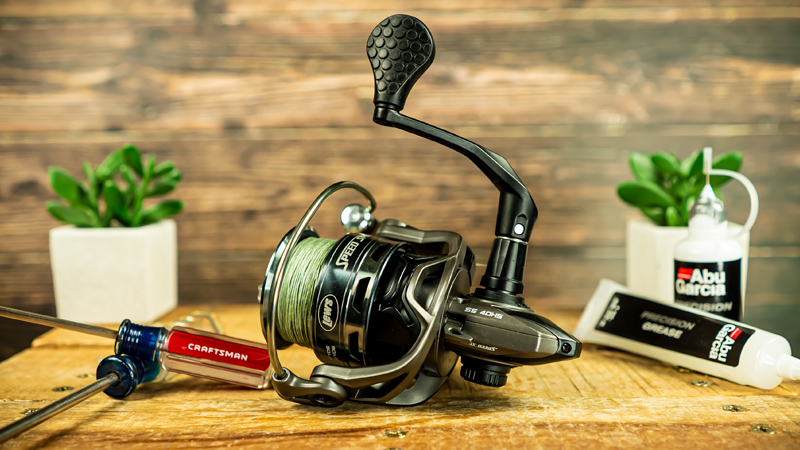
How Often Should You Lubricate Your Fishing Reel?
Great question. The answer is another question: how often do you use your spinning reel? Here in the Midwest I fish twice a week (three times if I’m lucky) from spring through fall. Roughly early April to Late October. 4 hours at a crack.
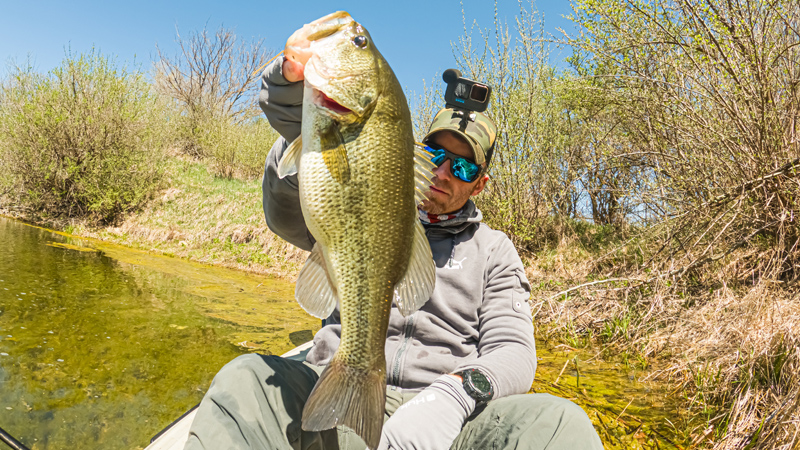
Under normal circumstances, a general oil & grease (as outlined below) at the beginning and end of the season is just fine, and keeps my reels functioning properly. Smooth. Better performance makes for more enjoyable fishing trips, and allows the focus to be on the conditions and the fish – not problems.
However, certain events trigger the need for a re-lube. Have you ever dropped your rod & reel into a creek? I love to get into the thick of it and fish in places where others fear to tread. However… I drop my stuff all the time…
I also used to allow my reel to hang under my arm or between my legs, in the water, while unhooking fish, not realizing that submerging a reel allows water carrying sediment, grit and grime to seep it’s way into the inner cavity, which can wreak havoc on the internals. Sometimes said havoc is wreaked quickly, sometimes it takes a while – but ultimately what you will end up with is a gritty, clunky feeling as you turn the handle… and your spinning reel will eventually seize up completely.
Not cool.
Always oil and grease your spinning reel after it has been submerged – or better yet, avoid submerging it.
If your reel has completely seized up, you will need to disassemble everything, clean everything, and apply new grease and oil. This article covers a good portion of that disassembly process.
Spinning Reel Oil & Grease Process (Simple)
We’re going in-depth on the following 6 steps:
- (Oil) Handle Knob Bearing
- (Oil) Spindle
- (Oil) Bail Arm
- (Oil) Line Roller
- (Oil) Handle Assembly (Interior Bearings)
- (Grease) Interior Gears & Guides
1. Oil the Handle Knob Bearing
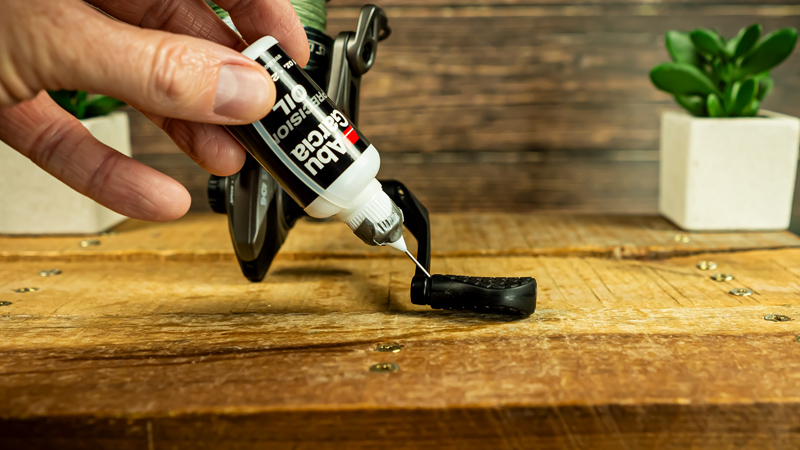
Place a single drop (ok, maybe two) right at the edge of the handle knob. Some spinning reels have bearings here, others rely on (cheaper) plastic collars. No matter – it’s a moving part so dab it up before moving on.
2. Oil the Spindle
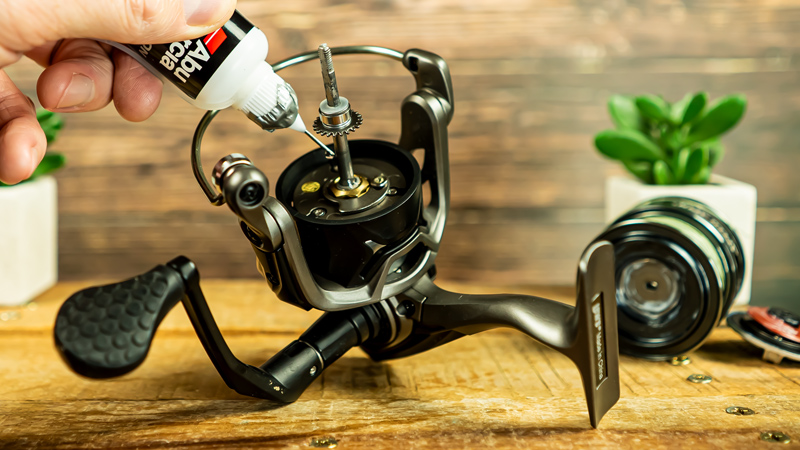
Your spool rests on the spindle, usually on some combination of a star washer (or “external tooth” washer), a bearing or plastic collar, and a plastic washer. The drag cap (on top) holds the spool in place. Unscrewing the drag cap completely will release the spool, revealing the spindle, washers & bearings.
Since the spindle moves up and down when you crank the handle, add 2 to 3 drops of oil underneath the star washer, then turn the handle to work it in. I also like to pull the plastic washer on the spindle up, and add a drop of oil between these parts – especially on the bearing that rests on the star washer.
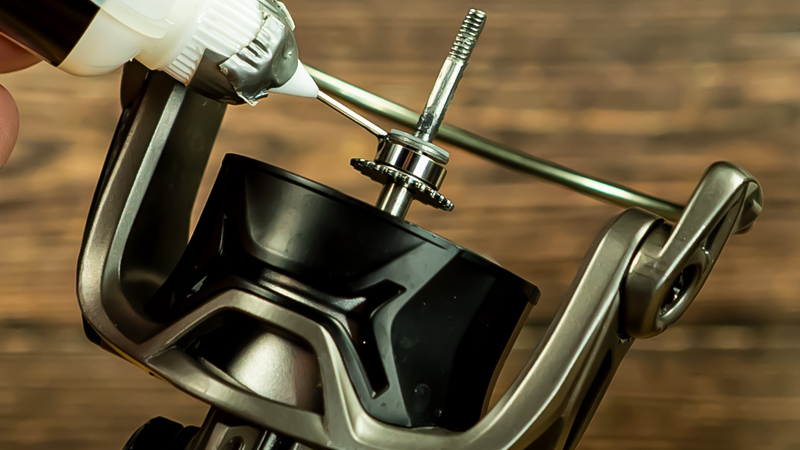
Note that when you remove the drag cap, your drag washers may fall out. These are usually alternating metal and felt washers, or carbon, or composite… so just remember to be careful when you lift off the spool. On my Lew’s Speed Spin (SS 40HS) you can see they are actually pinned in place.
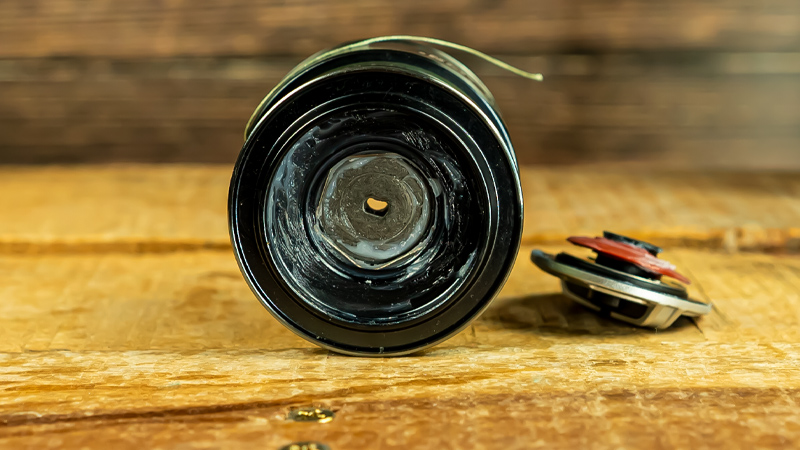
Drag washer grease is different than reel grease. It is also common to find spinning reel grease that is different than baitcaster grease. How many different kinds of grease do you need?
That’s up to you.
Had I found felt washers that were dry, I would have had no problem putting a bit of my general reel grease on them (a little lube is better than no lube, amirite?) – or even a few drops of oil. But drag washer specific grease would be best – and as you can see, this thing is (sloppily) packed already. I considered wiping some out, but since the reel performed well this season, I just left it be.
3. Oil the Bail Arm
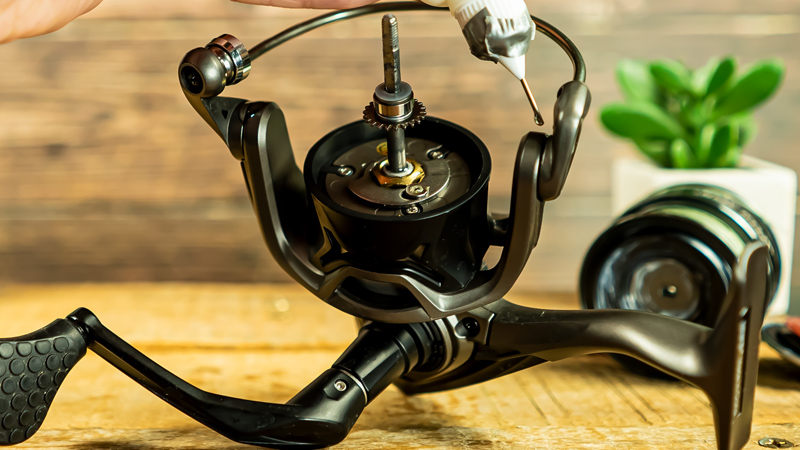
Place a drop of oil on either side of the bail arm. Your reel may actually have grease inside this area, by the bail spring – but there is no need to disassemble at this time. Work the bail back and forth to get the oil in between this connection on the bail assembly.
4. Oil the Line Roller
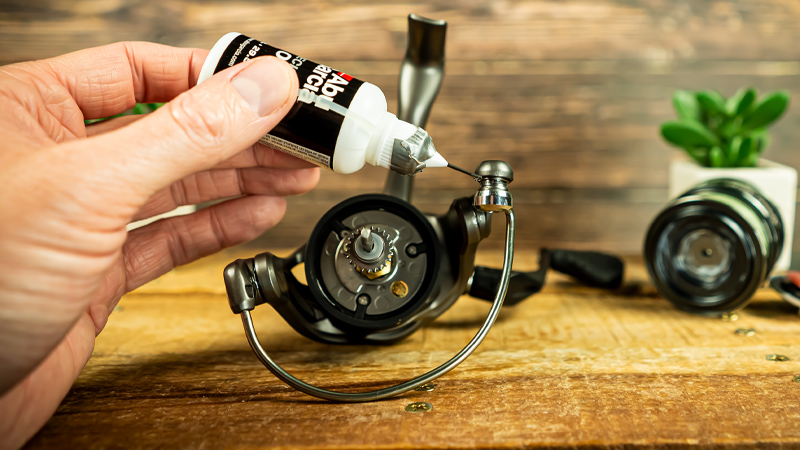
The line roller lives on the bail. This is what your line actually comes across on the retrieve. Low friction here is obviously extremely important so that you do not compromise your line. Place a good drop on either side and try to work it in with your finger.
I have come across articles online where guys talk about adding grease to this area instead of oil. Some say they have had good results – I haven’t tried this. Some reels have bearings, others have plastic sleeves or collars – but whatever your model, there are most likely moving parts here.
Check to make sure whatever it is moves freely, then hit it with that oil.
5. Oil the Handle Assembly (Interior Bearings)
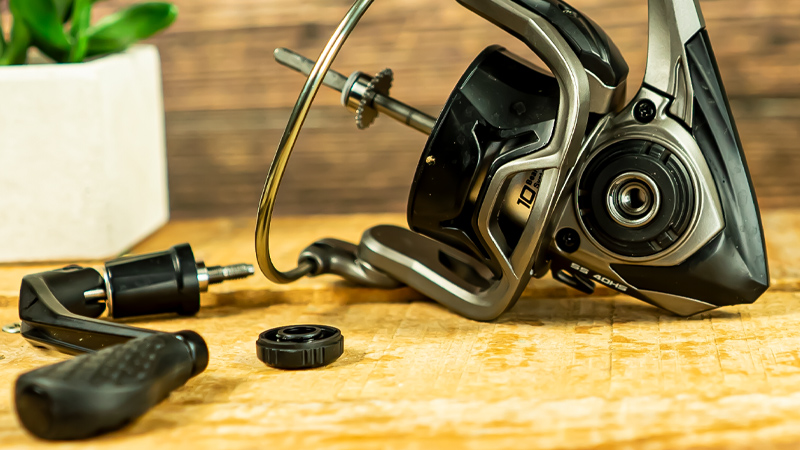
Unscrew the handle itself by rotating it backwards while holding the bail assembly in place. Some models may have a long screw on the opposite side that you need to remove to free the handle. As you can see in my case all I had on the opposite side was a cap.
Either way, once the handle assembly is free, look for bearings within the body of the reel, and apply oil.
Now would also be a good time to look for areas on the handle itself that you couldn’t access when it was attached. A little oil here and there is never a bad idea.
6. Grease the Interior Gears & Guides (WARNING!)
Our final step might be a bit more complicated, depending on your reel. We need to open the guts by removing the body side plate. Some companies make this simple… I assumed this company would make it simple… and I assumed wrong…
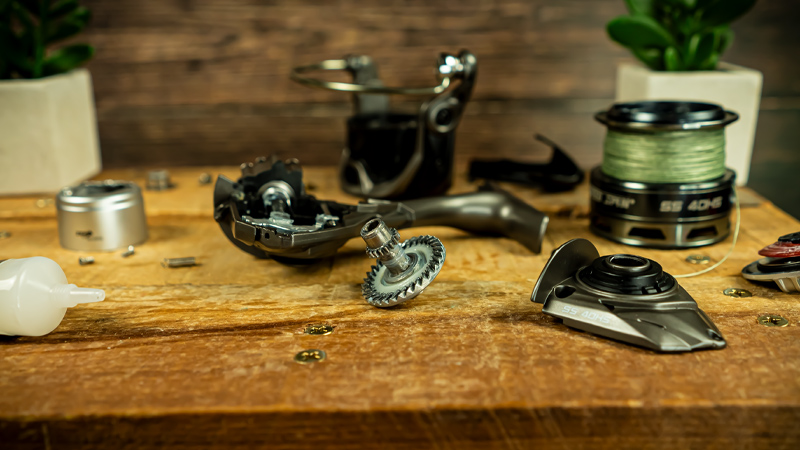
Still, we got ‘er done, and I’ll show you how, but before you proceed…
Make sure to grab the schematic that goes with your reel so you have something to reference if a spring shoots across the room unexpectedly.
(Don’t ask me why I know this…)
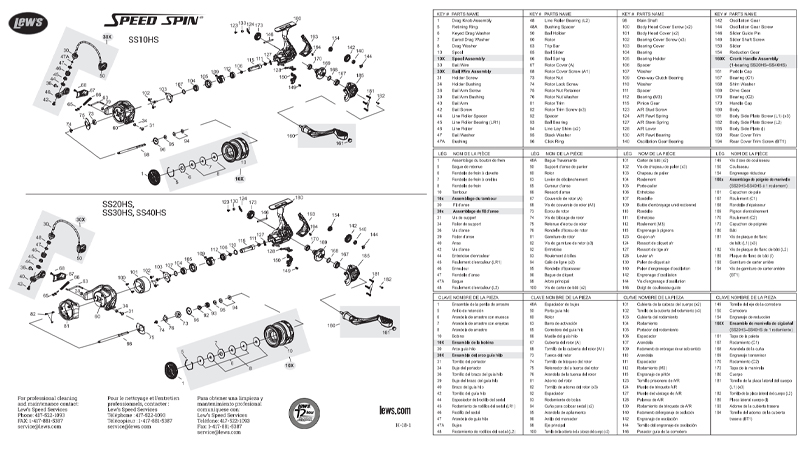
[ View the Lew’s Speed Spin PDF ]
Then make sure you have good lighting, no holes in your workbench, and make slow, careful, deliberate movements.
You can do it. Let’s go.
Remove the rear cover trim piece. This is usually held in place with a single screw.
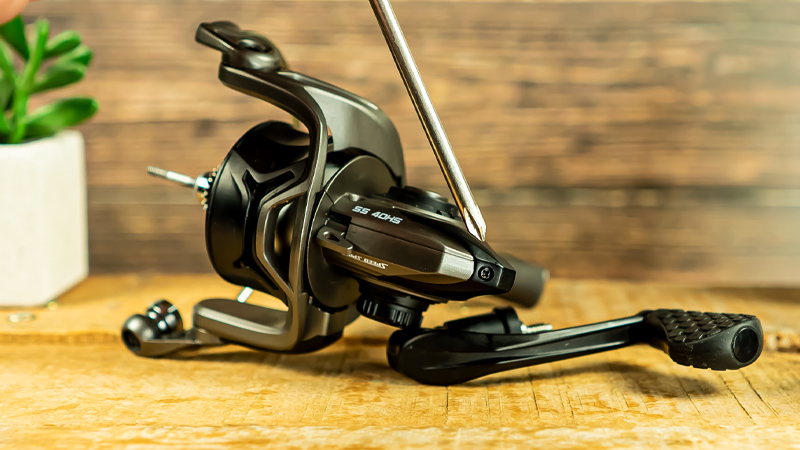
Pay attention to the length of every screw you remove during this process. It’s common to have several the same color, the same diameter… but different lengths. This can be a nightmare.
(Don’t ask me why I know this…)
Keep every piece you remove in order on your workbench. A systematic line from the first piece you remove to the last. This makes the reassembly process… not… full of swear words…
(Don’t ask me why I know this…)
The trim piece should come free with light prying. If not, slow down and look for hidden screws or tabs. Notice how mine hid one of the side plate screws?
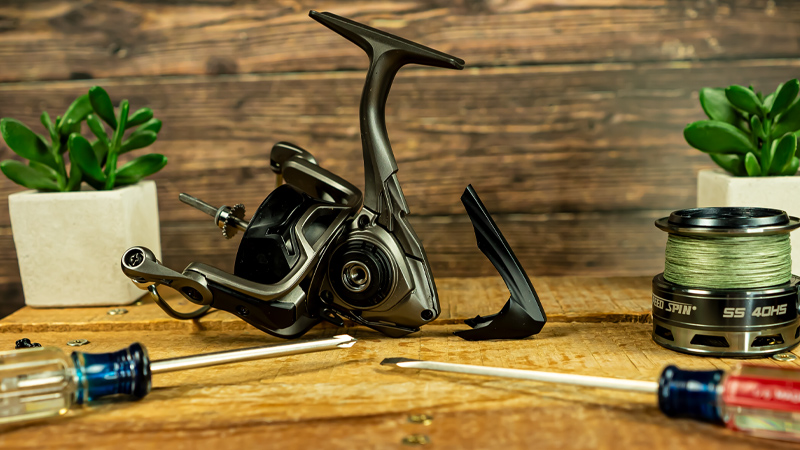
This is why I had to remove it first. Once it was free, I went to work on the side plate screws… but much to my dismay, said side plate would not lift free.
I had to remove the bail assembly.
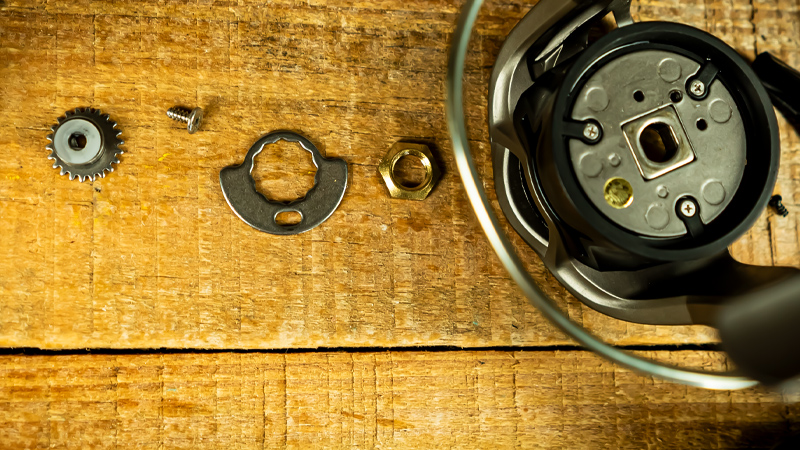
First, remove the spindle stack (star washer, bearing, metal and plastic washer) followed by the screw that holds the rotor nut retainer stationary. This is what locks the rotor (gold) nut in place. Loosen the rotor nut by twisting it clockwise – usually – all of the reels I have disassembled have reverse threads on this nut.
Never crank it super hard.
(Don’t ask me why I know this…)
This allowed me to remove the bail assembly, and see the body head cover, held in place with two small screws.
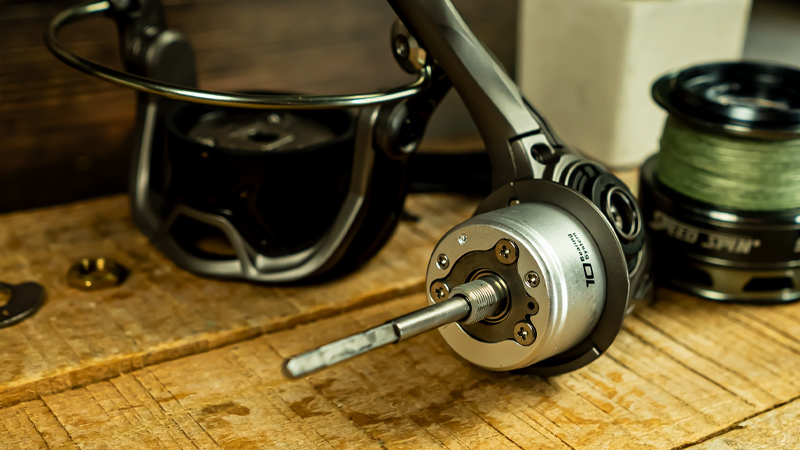
My last hidden screw was right there – below the body head cover. Once removed, the side plate was finally free.
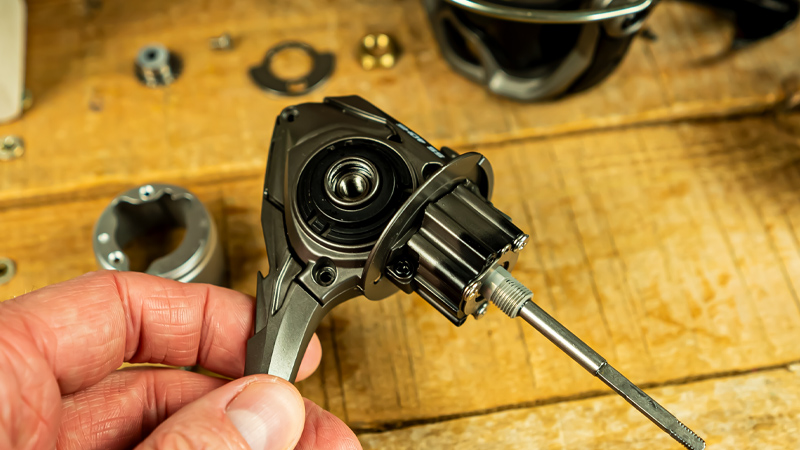
Then, I had access to the guts.
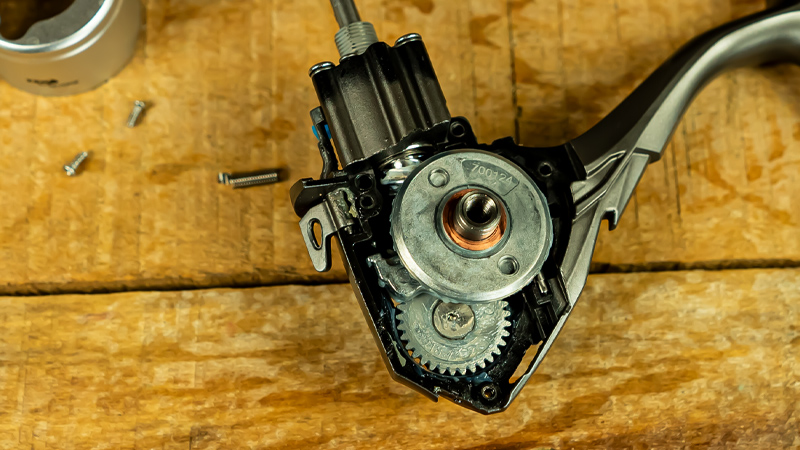
Notice my anti-reverse lever spring popped free? Yeah… but I caught it! That clean work area is key!
It’s time to apply the grease.
Hit the slider guide pin, and the oscillation and reduction gears after removing the primary drive gear. Don’t forget to apply grease on the lower portion of the pinion gear (which is dead center, surrounding the lower portion of the pinion itself).
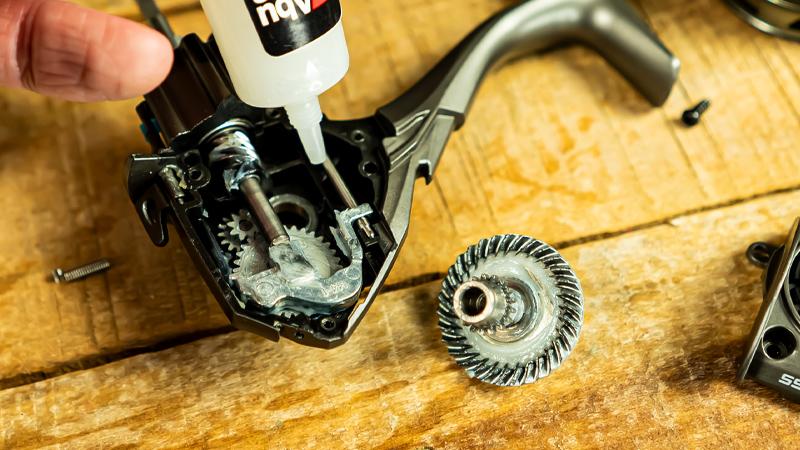
You don’t have to COAT the gears. You don’t want them to be swimming in grease, but do apply a nice dollop or two and work it in.
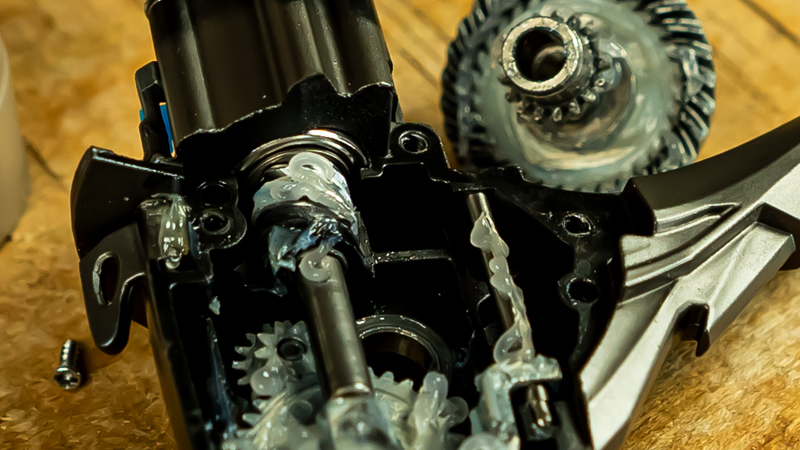
Carefully put everything back together in reverse order, make sure the bail opens and the gears sound smooth. Spend a minute working the bail and spinning the handle to distribute the grease and oil.
That’s it!
You have successfully complete Spinning Reel Oil & Grease Maintenance 101 (send me just $95 to receive your diploma). Now the only thing left to do it get ready to catch some bruisers!
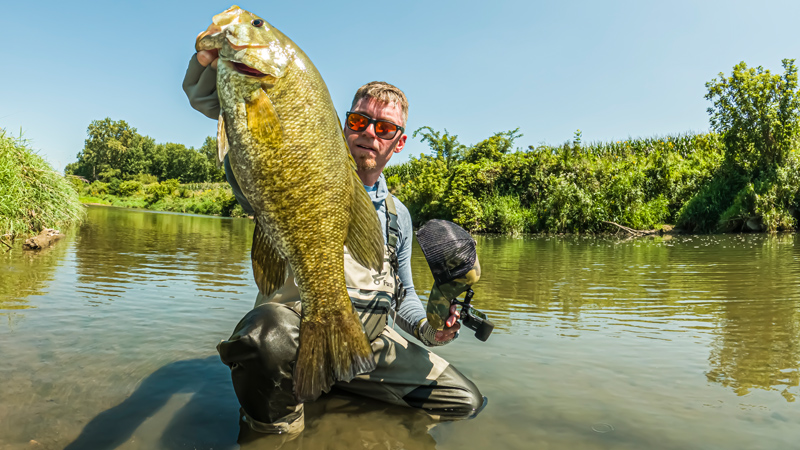
Tight Lines & Godspeed, Patriots.
Get Articles & Videos First
Catch More Fish Than Your Friends. Laugh At Their Tears.






Thank You For Your Support
Your support directly funds the creation of weekly articles and videos that promote the development of better anglers and better men. Our country (and our kids) need both. Please share this site, and consider a monthly, weekly, or one-time donation. You are helping us make a difference!