
Good morning Brothers.
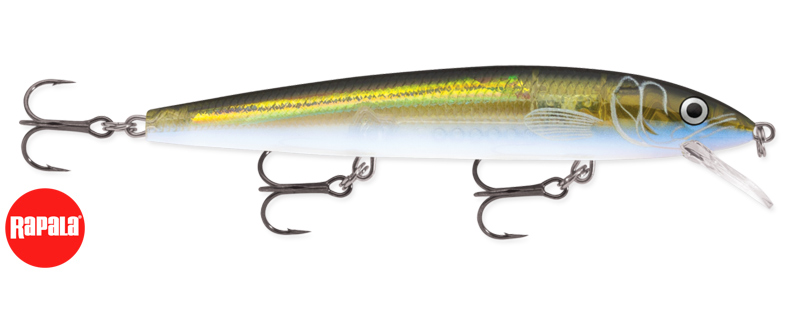
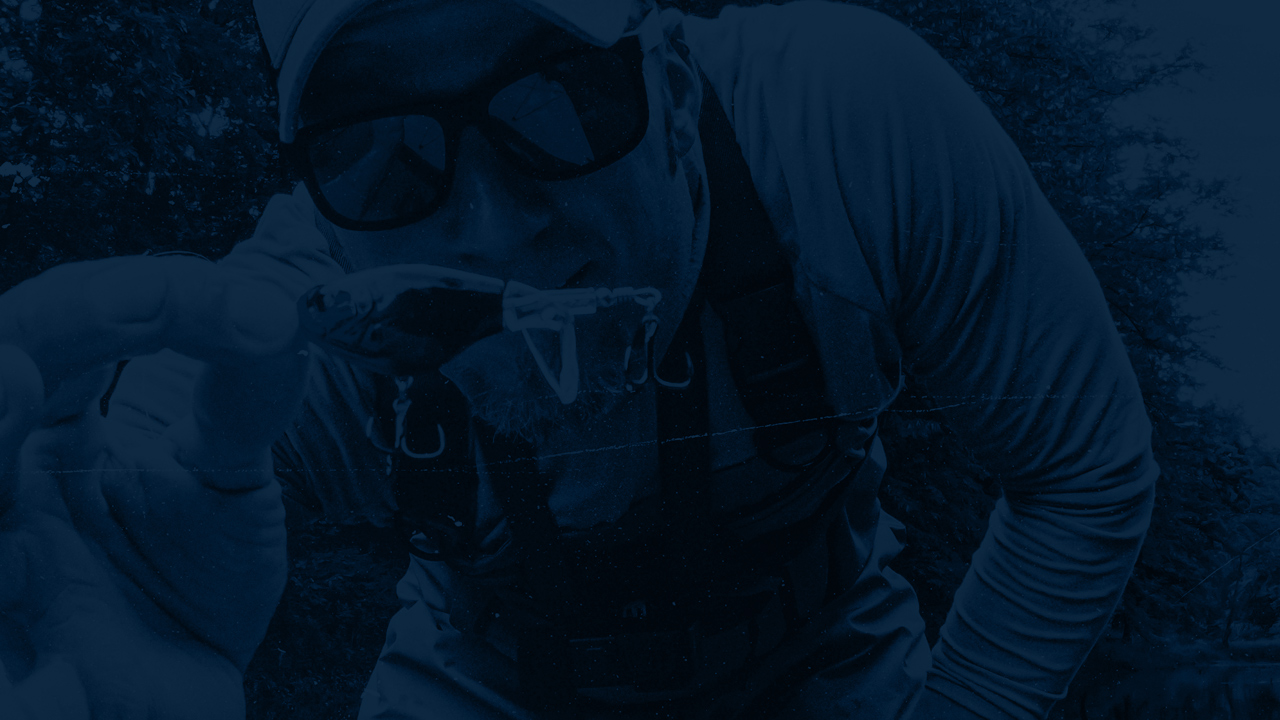
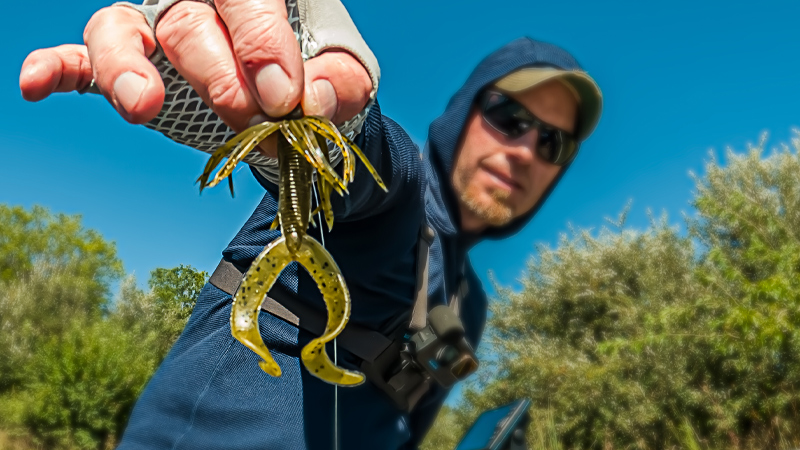
Yesterday, I did a little bit of online shoppin’. Picked up 3 new jerkbaits in the exact same finish and size. Should be here in a few days, and I’m pretty excited – #8 Husky Jerk (two hooks, 3.125″) in Olive Ghost.
Why am I telling you this?
Well… because… buying 3 of the same thing doesn’t seem very minimalist, does it? Seems like I’m fallin’ off the wagon a bit, eh?!

No no no, see here’s the thing: the goal of a Minimalist Fisherman isn’t to stop buying gear. The goal is to find out what works – why, when & where – then use that thing while taking less stuff with you so you can catch more fish.
It’s all about mindful, intentional, careful accumulation.
Last year I caught many quality fish on jerkbaits. How many had I caught in the years leading up to that point, you ask? None. I kid you not! NONE!! But as soon as I decided to dedicate time and effort into really understanding how to work the bait – the hits just kept coming!
Why?
Because suspending jerkbaits give you the ability to pause right in the gamefish strike window. They can trigger a reaction strike if they’re moving quickly, or tempt pensive biters on the pause. They’re an extremely versatile hard bait, and I was missing a lot of fish by not utilizing this tool. Adding them to the arsenal brought success.


I want that same success for you. Seriously.
So as we prep for spring fishing… I’m looking over every presentation, thinking about what to start with. If I can fish a jerkbait, I’m going for it – and this Olive Ghost color (which is semi-transparent) should play well when the water is clear. When the cover is sparse. It’ll get fished in creeks and quarries, and the bass will have time to inspect… but mark my words… this is gonna get bit… provided I can stop ‘er right in the strike zone.
Ah! Strike zones… strike windows… just how big is the strike zone of a largemouth bass?
What Changes the Size of the Largemouth Bass Strike Zone?
A few days ago we discussed the strike window of active and hovering bass (note that “strike zone” and “strike window” are interchangeable). This strike zone can change based on the speed the bass is moving, the direction it’s facing, or it’s current activity level.
This is important, but let’s list a few other factors that can increase – or decrease – the strike window:
Bass tend to feed actively for short periods of time. They will cruise just outside of cover, stropping periodically to look for vulnerable prey. During these periods of high activity, a splash won’t always spook them – in fact, a splash can attract them. They’ll move in to inspect… and sometimes, active bass will even compete with one another, which can lead to the two-bass-on-one-lure phenomenon:
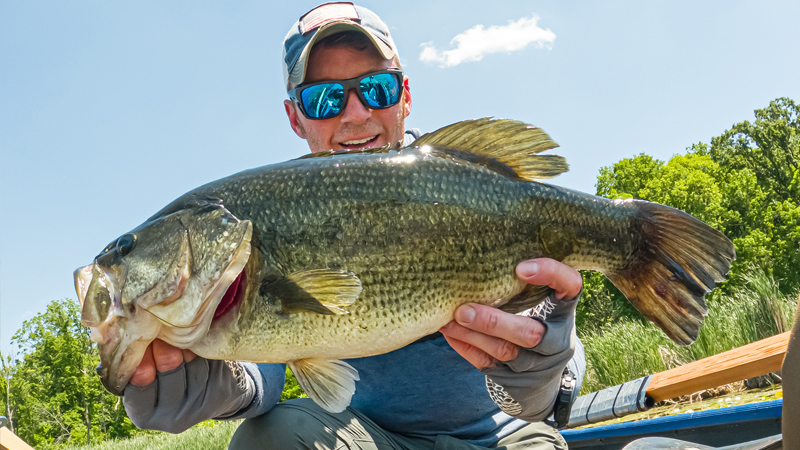
Active bass have the largest strike window. They may dash up to 12 feet to maul their prey, and they are usually most active at dawn & dusk. Longer periods of activity typically take place in deeper water.
During periods of high activity, fast, aggressive presentations are the name of the game. You want to try to show your bait to as many fish as possible.
Clear water can increase the size of the strike zone, as this allows bass to see presentations that are further away. (Clear water also requires you to use lighter line and make longer casts while being more stealthy…)
Shade tends to increase the size of the strike zone, especially in shallow water, as this is usually the result of overhead cover (protection). We discussed this in Cover & Current Breaks: Part 1. The same concept applies to both largemouth and smallmouth bass.

Bright sunlight tends to decrease the strike zone. It can also cause bass to hold much tighter to cover.
Cold water tends to decrease the strike zone.
Warm, stable weather tends to increase the strike zone. Plus, the strike zone can expand even further (YUGE!) right before weather fronts hit… but then, the strike zone will decrease after the front arrives.
Fishing pressure will decrease the size of the strike zone.
Take these possibilities into consideration the next time you’re on the water. Largemouth and smallmouth bass are amazing little creatures – but like all creatures that lack free will, they act on instinct. Conditioning.
They react.
Make sure you select your presentation based on what the fish show you they want – not what you think “should” work! It’s tough… but leveling up in this area will mean more fish in the boat.
Tight Lines & Godspeed, Patriots.
Get Articles & Videos First
Catch More Fish Than Your Friends. Laugh At Their Tears.




Thank You For Your Support
Your support directly funds the creation of weekly articles and videos that promote the development of better anglers and better men. Our country (and our kids) need both. Please share this site, and consider a monthly, weekly, or one-time donation. You are helping us make a difference!











What do you think?