
Good morning brothers. I’ve got the itch.
No, not one that requires a cream or ointment or a salve… I got bass itches.
(You should see the looks I get while scratching in public…)
It’s March here in Illinois. We’ve had a few warm days, and when that happens, the creative juices get to flowin’. The mad dash to clean up all of the fishing equipment that was strewn about in different “I’ll do that later” piles has begun. We’re in full swing, baby!
Wait. Piles?? Shouldn’t a MINIMALIST Fisherman have very little gear??
Great question. I have less gear than ever before, but minimalist fishing is a system, not a destination. It’s the ongoing process of optimizing what you have. We test new gear of course, but only keep the best of the best and discard the rest. This keeps us lean. It keeps us efficient. It keeps us deadly.
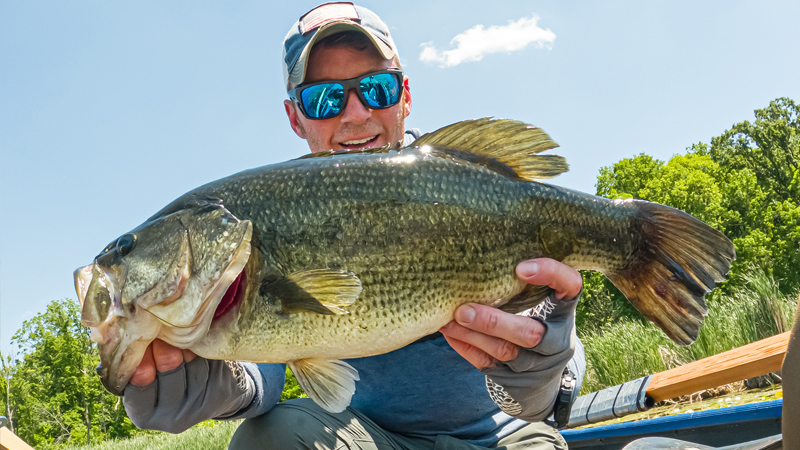
While I can’t wait for some big fat heifer largemouth, right now, my sights are set on bronzebacks. When you consider all of the differences between these distinct fish, they’re more like distant cousins than brothers, and my goal today is to lay out the groundwork for targeting Midwest smallmouth effectively in the spring.
Let’s get some.



What Triggers Smallmouth Bass Movement
Before we can catch the fish – we have to find the fish.
As I mentioned above, areas that can be insanely productive one day can be completely void of life the next. Smallmouth bass are not afraid to move – and they move a lot. If a system is unobstructed by dams or ultra-shallow riffles smallmouth have been known to move 50 miles or more. But what triggers that movement, and how can we use it to our advantage?
Well, it depends on the type of water we’re fishing.
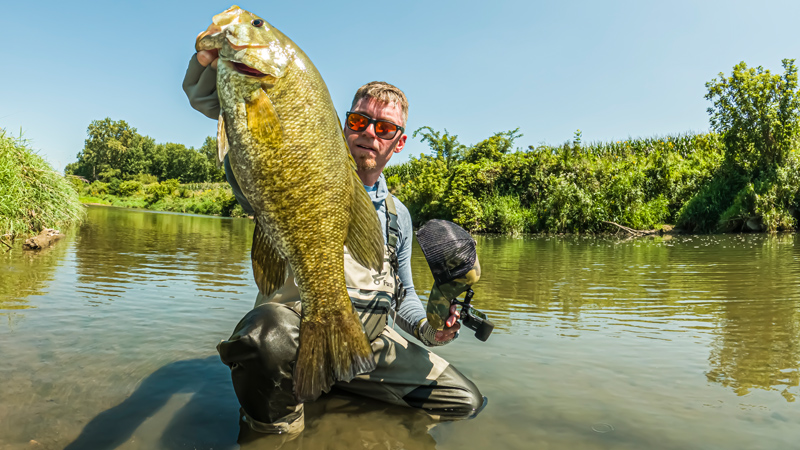
I catch smallmouth bass in nearby strip pits, creeks and rivers. Here, they coexist with largemouth, but you won’t find smallmouth in our shallow lakes and ponds, especially if there is floating muck present. Largemouth simply dominate these areas. But in water with current (rivers & creeks) or rocky, boulder-filled pits that drop to depths of 40 feet or more, smallmouth can flourish. In fact they seem to do better than largemouth in areas with current, and in the pits, they will inhabit the deeper depths.

But they don’t just stay in one spot all year. They move.
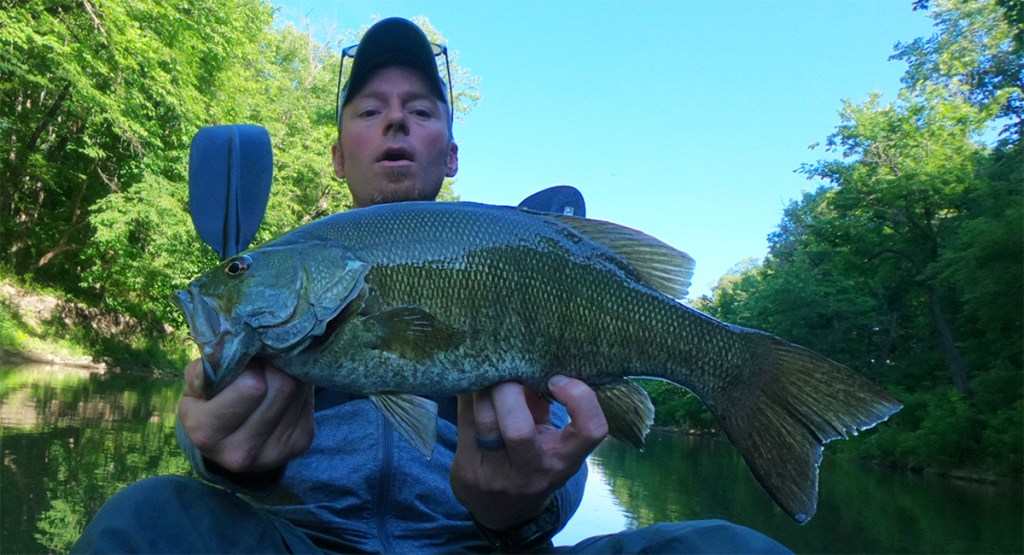
I’ll give you an example… there is a creek by my house where I have landed some absolute bruisers. It empties directly into a large river. I’ll fish 3 miles up from the mouth of the creek and back, from ice out to late fall… but while reviewing my notes from the last 5 years, it seems I only catch BIG fish in May and June. Sure I can catch fish in the creek most of the year, but the BIG fish are only present for a brief period of time. WHY?
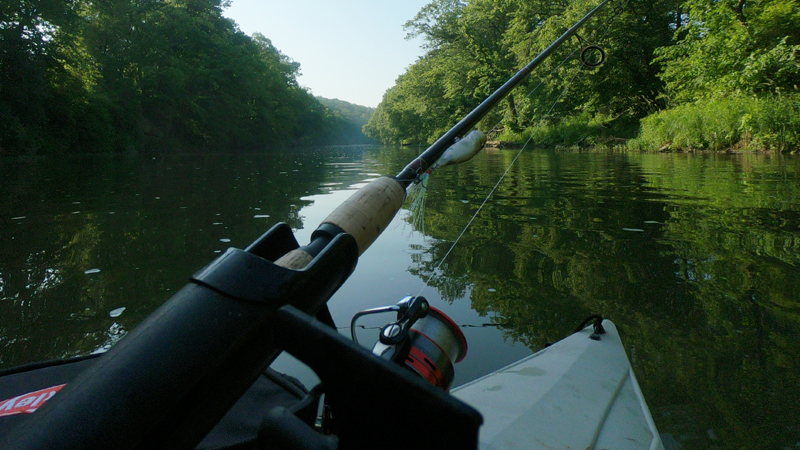
I always assumed it had to do with spawning. I figured when it was “time to spawn” they would “move up into” the creeks and smaller rivers. When the water reached a certain temp, when the days were a certain length, etc. While spawning is definitely a factor, another aspect I completely ignored was the water table and the amount of current pushing through the larger river system as a whole.
When current increases and water levels rise, smallmouth will move to the source of that current. They’ll move up towards dams. Anglers will tell you the best time to fish a dam is when water is spilling over the top, bringing food and oxygenating the water below (especially during the heat of the summer). Dams are also one of the most dangerous and overfished areas on a river (they get fished all year long, and for good reason) so savvy anglers will find productive areas that hold less pressured fish downstream. Also note that the water above the dam has the poorest quality, with loads of silt and low oxygen levels.
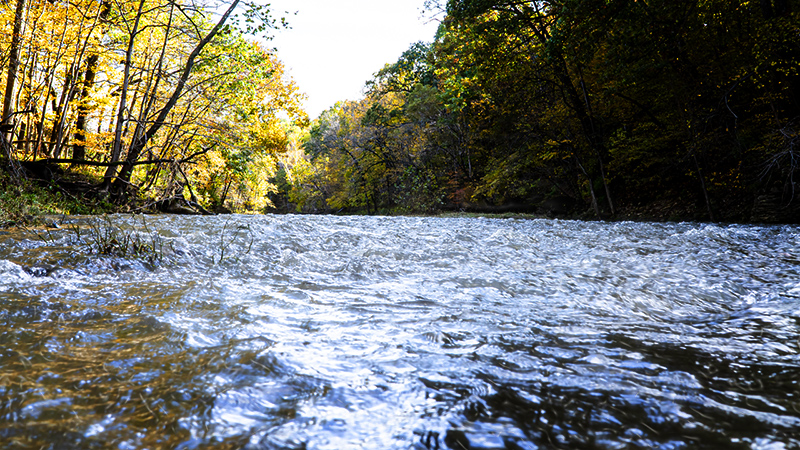
Increased current also prompts smallmouth to leave the main river channel and move into backwaters, up into smaller connecting rivers or – you guessed it – creeks. As the water levels stabilize, remember to fish anywhere current comes into the main river. There will be fish there (maybe even within a half-mile range). Don’t just take my word for it. Here’s Al Lindner and Dan Lindner talking about smallmouth bass movement in a river system (jump to 7:23 for a summary of conditions).
In the spring, we get melting snow followed by rain. This means higher water and more current. We also see the water beginning to warm up. Word on the street is that the magic temps for smallmouth pre-spawn into the spawn are 55° to 65°. They prefer sand, gravel & rocks, and spawning depth will depend on the maximum depth and clarity of the water. In my super-clear strip pits, I’ve seen them on beds that had to be 20 if not 25+ feet deep. The creeks are obviously shallower than that, with much lower visibility – especially when the current is really moving.
The earliest smallmouth get their metabolism going is in the high 30s and into the low 40s. Some river bass guides actually consider this prime time for smallmouth. Fish deep water near flats where smallmouth can congregate waiting to come up and spawn. The theory is that during this stretch, every bass in the river is thinking the same thing as long as the weather remains stable: time to eat! Storms and dropping temps can shut the bite back down. As the water inches up into the 50s the bass can become scattered. The biggest fish will move up onto those same flats and spawn anywhere from 10 to 25-feet deep, and spawning will typically continue through 65°.
This is different than largemouth, who usually spawn when the water is 60° (with stable conditions) and begin to disperse around 70°. I do not prefer to target spawning bass, but if I see them I’ll usually cast to them and grab a quick pic before a careful release.
Combine all of these elements and it’s clear why my big bruiser smallmouth pay me a visit in the creek, but don’t overstay their welcome. This year, I want to find them sooner, stick with them longer as they move in and then out of the creeks and smaller rivers, and catch more and bigger bass.
As the weather continues to warm and the water levels recede, smallmouth will exit the creeks and backwaters and make their way back into the primary river in a system. They instinctively know when the water level is dropping. The amount of fluctuation that matters is different on every body of water. Remember, bass generally “move up” as waters rise, and “pull back” as it falls.
So, here’s how you can catch more of them…
Track Rain, Water Levels & Temps CONSTANTLY
The first thing we need to do – before we rig a rod – is track the conditions.
This can be done without leaving the house, although I’d suggest a hybrid approach. In this example, I’m going to be looking for data near The Fox River in Illinois, since it’s one of the initial places I’ll be exploring.
- First, make a note on your calendar every time it rains
- Next, head over to the USGS website and pull up rainfall data
- Click into a nearby rain gauge graph and check the last 30 days
- Look at the real-time stream flow data in your state
- Check current & historical depth / height information on the hydrograph
- Look at the peak data if it is available
- Predictive data for the region may also be available
- Check the closest water temperature gauge (last 60 days if possible) and any other nearby gauges
- Drop an actual thermometer in the water every time you’re out and about, then log the results
This process seems confusing, but it’s actually quite simple. As you begin to collect your own data (like rain times and local water temps) and compare it with the data provided on the sites listed above, you can start to paint a pretty good picture without leaving the comfort of home. One area that is a bit tricky for me, however, is the water temperature gauges…
You’ll notice my Illinois River water temp link goes to a “legacy” page, because I can’t figure out how to get the “modernized” page to actually display temperature data at all. I can’t find a temperature gauge for the Fox River which is why I’m looking at the Illinois River. Even though it’s significantly larger, they connect. My second link shows the Illinois River again, in a different location. While this is somewhat helpful, taking a thermometer out to collect real, site-specific data is the superior method.
Pay close attention to the gauges that show the historical and current height of a river as well, especially as a safety precaution.

Start tracking your own data now – and continue all year. Combine your data with whatever else is publicly available and plan your trips accordingly. You’ll be glad you did.
Go Catch Some Spring Smallmouth!
With our due diligence completed – it’s time to fish!
Let’s consider fishing two distinct types of smallmouth habitat. Water with current (creeks & rivers) and deep, clear pits. You’ll notice I didn’t link to any public gauges for the pits I discussed earlier. That’s because there aren’t any. I have to rely on my temperature notes from years past, and new measurements in the field.
As you consider these presentations remember that smallmouth bass rely more on sight and smell to feed. Largemouth rely more on vibration and sound. You’ll likely catch more largemouth bass in the early mornings, late evenings, or on overcast or rainy days. These are low light situations where largemouth are more likely to venture out from cover. Smallmouth can see better on bright, clear days. They are also (usually) more willing to travel a long distance to strike a lure, so periods of higher visibility (even later in the day when it’s slick calm) can be surprisingly productive.
This is one reason why schooled-up smallmouth can have such a violent reaction to extremely vibrant, unnatural colors like “clown” or pink or orange or everyone’s favorite: chartreuse. It’s also why you’ve probably noticed certain flats that are dead in the morning seem to come alive later in the day, especially if it’s sunny.
Largemouth and smallmouth are very different animals.
We’ll be keeping it simple but leaning on 3 specific, highly-productive presentations, with 1 alternate:
- Pop ‘n Drop
- Subsurface Search Bait
- Dark Corner Custom Squarebill
- Rebel 4″ Slow-Sinking Tracdown Minnow
- Swimbait
- Hula Grub
Fortunately for me, all of these presentations are already present in my Clear Water Base Box.
The Pop ‘n Drop
The Pop ‘n Drop is a smallmouth bass killer. It consists of a floating popper (like a Rapala Skitter Pop) with the rear treble removed and a 10-pound fluorocarbon dropper line attached in its place. Dropper length depends on the depth you plan to fish, but 18″ is a good starting point. Attach a lightweight wacky hook to the dropper line and add your favorite 3″ or 4″ stickbait. Ochos are almost too heavy, but Dingers are almost too light. I’ll use both at times. If your popper has no problem staying afloat, you can add a frog hook (or double hook) where the rear treble was removed.
If the water is above 55° I’ll make a long cast on braided line (which floats), and begin twitching my rod tip, causing the popper to spit water. The stickbait then pendulums, sinking slowly behind. If smallmouth are active, they will destroy your popper. If they are a little reserved, they will inspect, but opt for the stickbait. You’ll see your popper *BLOOP* backwards underwater – it’s like bobber fishing, except your bobber has hooks and you’re imparting action into it.
Cadence? Work it slow, then try it fast. At higher speeds it looks like the stickbait is chasing a meal, which can get nearby fish fired up!


This is a great option in both clear and stained water, especially when searching for fish.
Subsurface Search Baits
As we move subsurface, I’m going one of two ways. In the creeks and rivers I’ll grab a moving bait that makes a bit more commotion, like a Sonic Side KO Squarebill in Matte Green Craw that runs 2 to 6-foot deep. If I notice any crayfish with blue in them (which we find along some of our shallow city lakes with lots of riprap) I’ll change to the Sonic Side KO Squarebill in Matte Blue Craw.
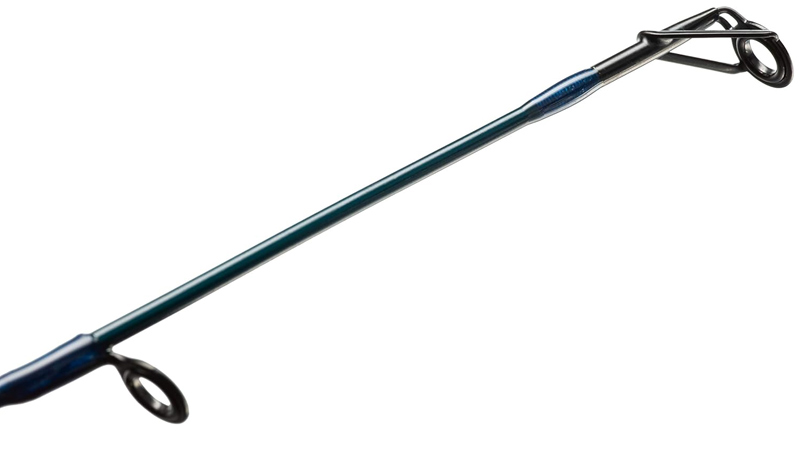
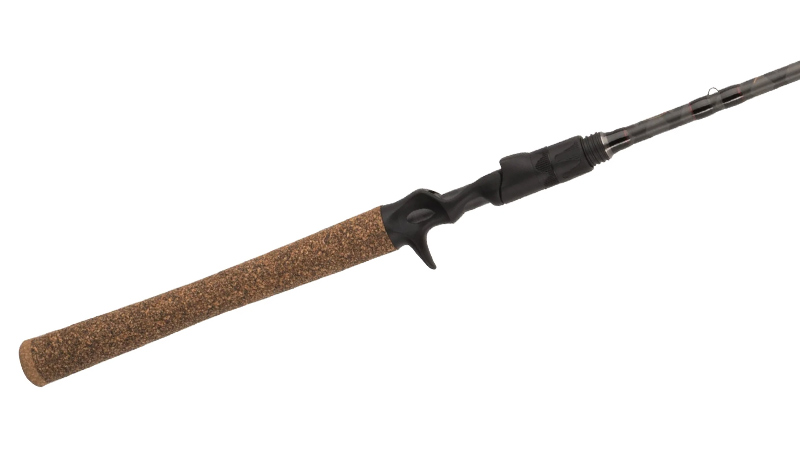
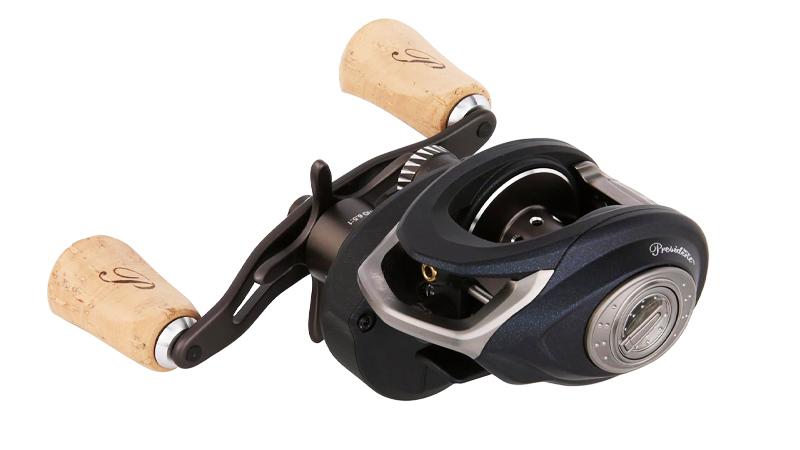
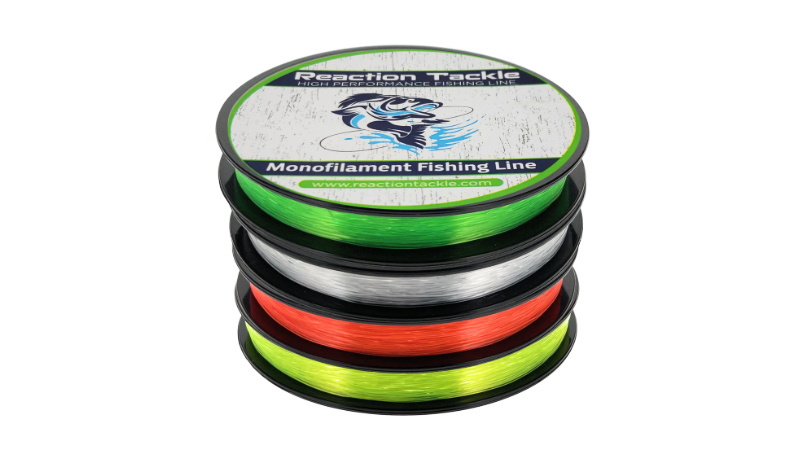
These look awesome and they’re customized by a company called Dark Corner Custom Crankbaits. The owner (Blake Paff) designed a few custom jerkbaits for me that will come into play later this year… oh, the stick? A 7-foot Lightning Rod paired with a Pflueger President XT baitcaster and 12-pound Reaction Tackle mono. Sweet. Not too expensive. Plus it provides a nice little rubber-band effect.
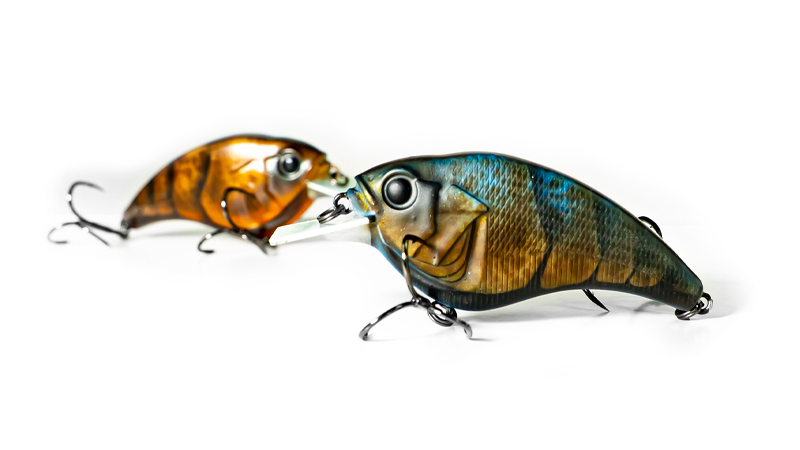
If I’m fishing a deep, clear borrow pit, I’ll swap this crankbait out for either a deep-diving jerkbait, or a slow-sinking jerkbait like the Rebel Tracdown Minnow. I’m not sure if they still make the 4″ version, but I have one, and this will help me get deeper and put my bait in front of fish down along the big boulders peppering the steep sloping bottom.
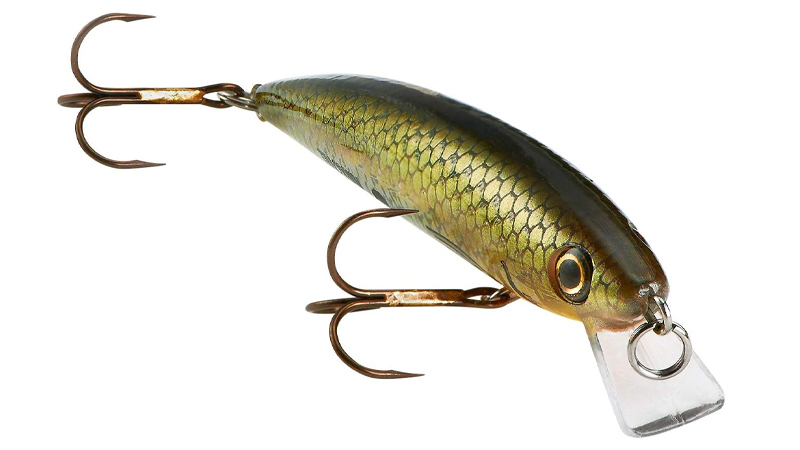
I’ll pair this with a responsive spinning combo, and straight 8 or 10-pound fluorocarbon.
The Storm WildEye Swim Shad
Next, we’ll grab a swimbait that will allow us to cover water and get down even deeper. Casting a swimbait out and letting it sink to the very bottom, they slowly reeling it back so it doesn’t rise up in the water column, can be a wildly productive technique.

The WildEye Swim Shad comes pre-rigged. Tie it on. Cast it out. Reel it back with a no-nonsense retrieve. Aside from paying very close attention to your depth, it’s a straightforward presentation.
Down & Dirty with a Hula Grub
Finally, I’ll want to take something with a bit of bulk that gets all the way down to the bottom and stays there. My friend Dan Brozowski at Midwest Outdoors told me about this little bait right before the end of last season. I used it to catch largemouth. Then smallmouth. They both love it. The twin-tail grub has a molded skirt attached to a solid body. Thread it onto a plain football head jig if you’re around rocks, or a slender shaky head jig if you want a more compact profile.
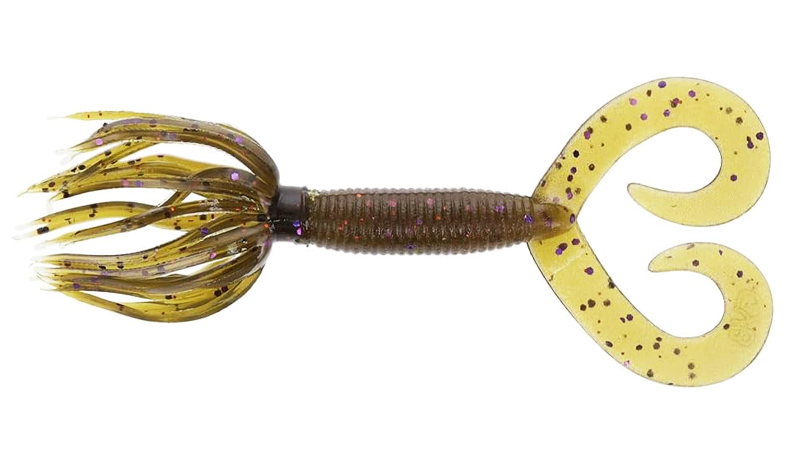
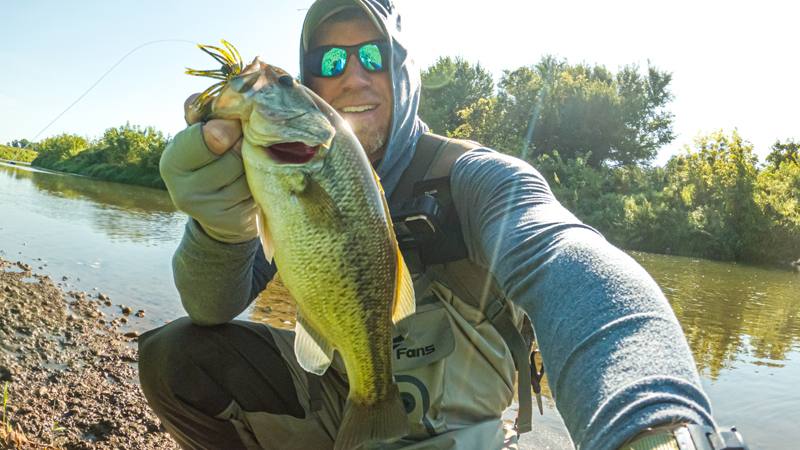
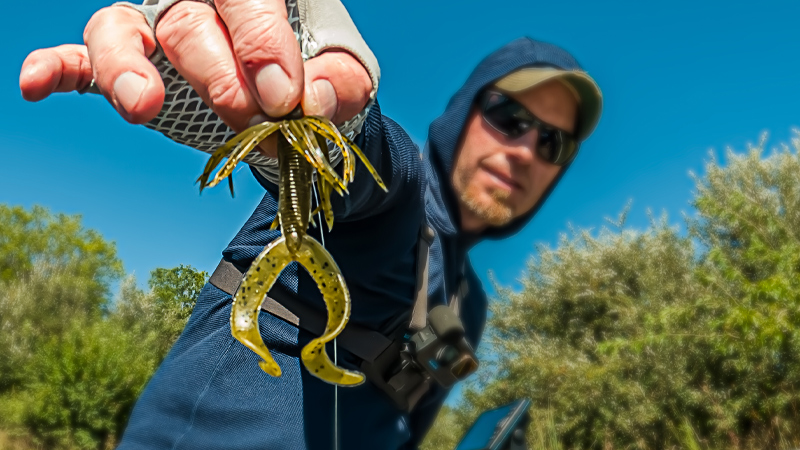
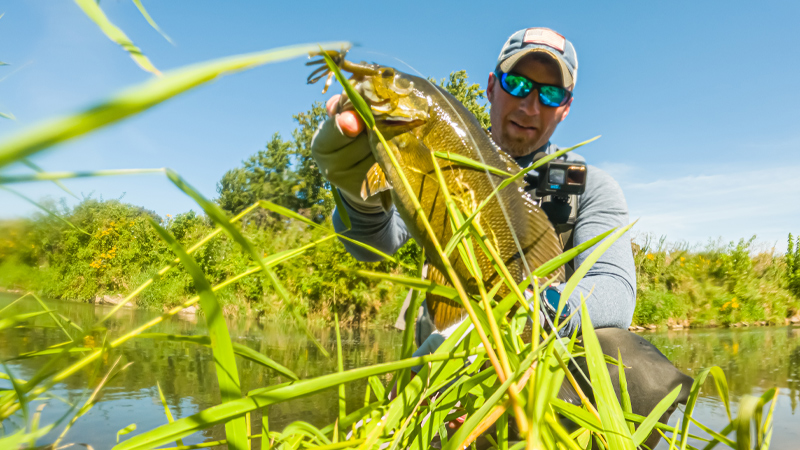
Rig this up on a spinning combo and go to work at multiple depths. Just remember if you’re fishing around a lot of rocks and current, consider upsizing your line, or fishing with braid to a quality 20-pound fluorocarbon leader. Yes, you read that correctly.
If crayfish are present, smallmouth will absolutely destroy this bait, especially as the water continues to warm. Up until about 40° river bass are believed to be more “baitfish oriented,” but as temps climb the entire food chain starts to become more active. Around the mid-40s if crayfish are on the menu, smallmouth will take full advantage.
You should, too.
When do Big Smallmouth STAY in Creeks?
In some rivers & streams the local smallmouth bass are year-round residents.
This can even be the case in small creeks, if you fish a stretch that is many miles away from the connecting river. You can still contact bass in the bends and deep holes that likely attracted them earlier in the season. I’ve caught some fatties as late as October near where I live.

This productive stretch was well over 6 miles from the mouth of the creek. It was also surrounded by several extremely shallow riffles that prevented the fish from completely leaving for the winter. In order to fish this area I had to hike miles and miles against the current in frigid water (this was before I owned waders, so I was in shorts, which was beyond stupid) while a nice, frosty drizzle gave me a good soak.
Again, I did find good bass, along with a bunch of No Trespassing signs… so… between that and the hypothermia, I won’t be going back. But if you have (legal) access to a stretch of creek that has similar attributes, bundle up and check it out. The bass I found will be year-round residents, unless they get uppity and jump those riffles next time the creek floods.
The Plan for Fishing Midwest Smallmouth Bass in the Spring
So that’s the plan. Is it perfect? Nah. But it’s better than anything I’ve ever come up with before. That’s the point. That’s the goal. Constant improvement isn’t a destination; it’s a process. While the 5 presentation options are very important, I am finally beginning to understand why the heavy-hitters at In-Fisherman, Midwest Outdoors, and other educational (not sensational) publications focus so much on finding the fish first & foremost.

It’s fun to play with new baits, but when it comes to fishing: if you can’t find ’em, you can’t catch ’em.
Let’s keep getting better.
Tight Lines & Godspeed, Patriots.
Get Articles & Videos First
Catch More Fish Than Your Friends. Laugh At Their Tears.





Thank You For Your Support
Your support directly funds the creation of weekly articles and videos that promote the development of better anglers and better men. Our country (and our kids) need both. Please share this site, and consider a monthly, weekly, or one-time donation. You are helping us make a difference!










What do you think?