Category: Learn to Fish Series

Top level category for Learn to Fish New Presentations, Reservoirs, Rivers & Streams etc…

  • Preferred Temperature Ranges of Warmwater Gamefish / Learning to Fish Rivers & Streams

    Preferred Temperature Ranges of Warmwater Gamefish / Learning to Fish Rivers & Streams

    Different species of fish prefer different water temperatures. The fish you have access to in your local stream or river will depend on the temperature and cover – and even though many warmwater fish can survive over a wider range of temperatures than coldwater fish, there are still ideal conditions for the species you are hunting.

    How can I quickly & accurately test water temps?

    Testing the water temperature when you’re fishing is a good idea in general, and one of the tools that I usually take with me is a Deeper Pro+ Sonar. There are multiple models available at different price points.

    Deeper Pro+ Sonar
    Create your own topographic maps, get water temperature and down-imaging-style fish finder features right on your phone. Use from shore or in a boat (with the appropriate mount).

    The added benefit is that you can tie this unit to your fishing line and cast it to inspect the opposite shoreline, deep holes or underwater structure. (Personally, I use mine to create useful topographic maps when I am fishing from the jon boat, and occasionally when fishing from shore. The maps are great for reviewing after I get back from a trip to learn even more about the area.)

    Preference by Species

    Most anglers know that trout need cold water, and largemouth bass prefer warmer water, but what they don’t realize is that there are considerable differences in preference even among warmwater fish. The chart below shows the preferred temperature ranges of common warmwater species – notice that the range covered is more than 30 degrees.

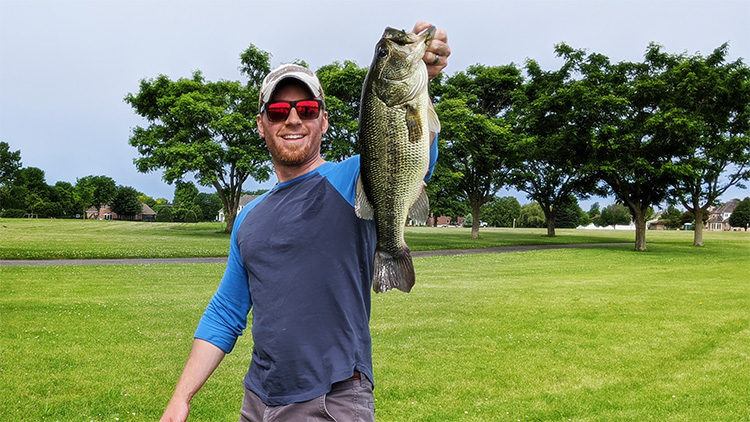
    AJ with a Topwater Largemouth Bass
    A nice topwater largemouth taken on a hot, sticky summer morning. Not a trout in sight.

    Even though many warmwater fish CAN survive over a wider range of of temperatures than coldwater fish, there is still an ideal temperature range required for every species to thrive. For example, a warmwater fish could survive in a trout stream, but the water temps would be too low for optimal feeding and growth, making it difficult to compete with the trout or grow to the size we’d like to catch.

    The temperature of a stream depends mainly on it’s primary source of water. To support a diverse population of fish, additional springflow is usually necessary. Springflow helps the water stay cooler in the summer, and warmer in the winter (preventing freezing, and allowing fish to feed throughout winter instead of going dormant).

    Other factors like shade, the course of the stream, the shape of the channel and the gradient of the streambed all impact the temperature as well. Different sections of the same stream can be different temperatures. For example, a shaded stream can run 5 to 10 degrees cooler than a similar stream in direct sunlight. A shaded run can also be several degrees cooler than an unshaded run in the same stream.

    Water in narrow, deep channels tends to stay cooler than water in wide, shallow channels because less of the water comes into contact with the air.

    Some streams or rivers also contain lakes along their course. Some are natural, others are the result of a dam. In either case, the stream temperature below a lake will be several degrees warmer than the stream temperature above the lake (unless the lake has a coldwater draw, which we will talk about in the next section in this series). The lake water may also stratify into different layers, however this does not happen in streams or rivers – the water stays turbulent and completely mixed – which means the surface temperature is darn close to the temperature right above the streambed (unless the water is very deep).

    Water Temperature by Species Chart

    Information provided courtesy of: The Freshwater Angler™: Fishing Rivers & Streams.

    SpeciesTemperature Range
    Redbreast Sunfish80° to 84° Fahrenheit
    Flathead Catfish78° to 82° Fahrenheit
    Blue Catfish77° to 82° Fahrenheit
    Channel Catfish75° to 80° Fahrenheit
    Bluegill75° to 80° Fahrenheit
    Spotted Bass73° to 77° Fahrenheit
    Redear Sunfish73° to 77° Fahrenheit
    Black & White Crappies70° to 75° Fahrenheit
    Largemouth Bass68° to 78° Fahrenheit
    Muskie67° to 72° Fahrenheit
    Smallmouth Bass67° to 71° Fahrenheit
    Striped Bass65° to 75° Fahrenheit
    White Bass65° to 75° Fahrenheit
    Walleye65° to 75° Fahrenheit
    Northern Pike (under 7 lbs)65° to 70° Fahrenheit
    Northern Pike (over 7 lbs)50° to 55° Fahrenheit
    White Sturgeon65° to 70° Fahrenheit
    Wiper64° to 66° Fahrenheit
    Sauger62° to 72° Fahrenheit
    Shad60° to 65° Fahrenheit

    Moving Forward

    Now that we know what species typically prefer what water temperatures, we’re going to look into some other factors that can impact the overall temperature of a stream or river. This is yet another piece of the puzzle that we are putting together to get ready for some new exploration this coming year.

    Keep Fishing my Dudes & Dudettes
    Keep Fishing my Dudes & Dudettes – we have more work to do!

    Onward my friends – tight lines!

    NEXT SECTION: Changing Temperatures in Rivers & Streams
    PREVIOUS SECTION: Cover & Current Breaks [Part 2]

    [ Back to the Index Page for Learn How To Fish Rivers & Streams ]
    Callout Section The Minimalist Fisherman Midwest Bass Fishing Blue Banner Background Migration
    The Minimalist Fisherman Father Son Bonding Better Anglers Better Men

    Thank You For Your Support

    Your support directly funds the creation of weekly articles and videos that promote the development of better anglers and better men. Our country (and our kids) need both. Please share this site, and consider a monthly, weekly, or one-time donation. You are helping us make a difference!

    TMF Small White Logo
  • Cover & Current Breaks [Part 2] / Learning to Fish Rivers & Streams

    Cover & Current Breaks [Part 2] / Learning to Fish Rivers & Streams

    Now that we have gone over some of the different kinds of cover, where the most cover can be found, and areas that fish consider to be prime real estate – fish magnets – let’s look at some visual examples so that we have a better idea of what to actually look for when fishing a river or stream.

    All of these images have been scanned and taken from an awesome reference titled The Freshwater Angler™: Fishing Rivers & Streams. I’m not going to place the photo link / credit after every picture because there will be quite a few – but make sure to try to get a copy of this book. (My grandpa gave this copy to me and it’s nice to have!)

    We’ll start with a definition of a word that gets thrown around a lot…

    What is an “Eddy” in a river or stream?

    An eddy is an area in a river or stream where the water actually flows against the main current. This is the result of something disrupting the main current flow, like shoreline that extends into the channel, or a rock or log. Eddies typically form on the lower side of the obstruction, but they can also form on the side facing into the current, and in either case they usually create some sort of slack-water area.

    How to Identify Eddies & Slack-Water Areas

    streamlined boulder eddy in a stream
    Streamlined Boulders have an eddy on the downstream side only. This is because water can flow smoothly over the front. (As opposed to non-streamlined boulders, which can actually have an eddy on the downstream side AND the upstream side – don’t overlook the upstream eddies as they are potential fish-holding areas!)
    Boils Forming in a River or Stream
    Boils can form when water deflects off of a submerged object, like a boulder. An eddy can form below the boulder, several feet upstream of the boil.
    eddy forming below a point bar
    Point-Bars form along inside bends in areas where the current slows slightly, allowing sediment to settle out. The eddies located below point-bars are prime fish holding locations in many streams.
    points in a river can create major eddies
    Points or Sharp Bends in a river system can create major eddies. The larger the point or the sharper the bend, the larger the eddy that will form.
    bridge pilings have eddies on the upstream and downstream sides
    Bridge Pilings have eddies that form on both the upstream and downstream sides – just like large boulders (that are not streamlined). As a bonus this cover is usually even better than it looks because of rip-rap piled at the base to prevent erosion.
    shoreline notches create eddies
    Notches in the Shoreline of the mainland or an island can cause slack-water pockets that often go unnoticed.
    log jams blocking a river
    Logjams can sometimes block the entire channel of a river, causing a large eddy to form downstream, or even deflect enough water to cause a new channel to be cut out to the side.
    wing dams cause eddies to form
    Wing Dams are man-made current deflectors, and they create eddies on both the upstream and downstream sides. There can even be deep holes created off the ends as the current swirls around them.
    Channel Markers have eddies on the front and back sides
    Channel Markers – especially those built on rock piles – can be excellent fishing spots. These areas not only form eddies, but the rocks can attract minnows, crayfish and other forage for larger predators to chomp.
    dunes can form as sediment settles creating eddies
    Dunes can often develop on bottoms with shifting sand. The current will brush the dune peaks, but a slack-water pocket will also form right below each one.
    tributary junctions can create eddies
    Tributary Junctions can be great fishing spots because the delta of the incoming stream creates an eddy downstream from the entry point.
    river pools viewed from above
    Pools are areas below riffles & runs that look darker when viewed from above. These areas are slow-moving with a slick surface.
    weedbeds create unique current patterns
    Weedbeds can create all sorts of interesting current patterns. Fish will hold in the slow water of the beds themselves, then dart out to grab food that comes drifting through channels within the same beds.
    largemouth bass under a rooted weed clump
    Rooted Weed Clumps can develop a mound of sediment around their base. This allows an eddy to form downstream, and can carve out a hole.
    tailwater eddies forming below a dam
    Tailwater Eddies form along the sides of the fast current below a dam. Sometimes the reverse current in these eddies can be as strong as the mainstream current.
    dugouts form below waterfalls
    Dugouts that form below waterfalls can be surprisingly deep. The eddying action of the water can undercut the base of the falls, providing fish with an ideal hiding spot.
    river island eddies
    Islands will often have large eddies on the downstream side. Depending on their shape, they may have a smaller eddy on the upstream side as well. If the sides are irregular (like the notches we mentioned above) even more eddies may form.

    Additional Overhead Cover to Look For

    Remember that the best spots to hide not only include slack-water – but overhead cover as well – these areas are especially attractive to larger fish!

    overhead cover for a gamefish
    Floating Leaf Vegetation like lily pads will grow in slack water. These areas will attract fish like sunfish, crappie, largemouth bass and northern pike.
    Undercut banks hold gamefish
    Undercut Banks usually form along outside bends where the current erodes away shoreline materials. This creates an overhang which can provide shelter to many different kinds of gamefish.
    docks provide cover for largemouth and other gamefish
    Docks can be great fish-holding areas. Larger docks provide both overhead cover and eddies on the front and back sides of the posts (if they are large enough). Smaller docks will offer some shade, but larger docks with canopies will offer the best protection and therefore be more attractive to gamefish.
    freshly fallen trees provide cover for a while
    Freshly Fallen Trees will have many branches both large and small that will break the current and create a large eddy that can hold crappie or other fish that prefer slow current. However, over time (a year or two) the small branches will rot away – but the tree may still hold fish that tolerate faster current.

    Again, all images provided by this great reference that I strongly suggest you get a copy of: The Freshwater Angler™: Fishing Rivers & Streams.

    Moving Forward

    Next, we’ll take a look at what species of fish prefer what water temperatures. We’ll also discuss what can cause that temperature to change in rivers & streams. This will come in handy as we start to explore new water this year – so make sure to stay tuned for those videos as we report on both success and failure.

    AJ Hauser 3lb Smallmouth Bass
    AJ Hauser with a healthy smallmouth bass.

    Progress, progress, progress. Tight lines!

    NEXT SECTION: Preferred Temperature Ranges of Warmwater Gamefish
    PREVIOUS SECTION: Cover & Current Breaks [Part 1]

    [ Back to the Index Page for Learn How To Fish Rivers & Streams ]

    Callout Section The Minimalist Fisherman Midwest Bass Fishing Blue Banner Background Migration
    The Minimalist Fisherman Father Son Bonding Better Anglers Better Men

    Thank You For Your Support

    Your support directly funds the creation of weekly articles and videos that promote the development of better anglers and better men. Our country (and our kids) need both. Please share this site, and consider a monthly, weekly, or one-time donation. You are helping us make a difference!

    TMF Small White Logo
  • Cover & Current Breaks [Part 1] / Learning to Fish Rivers & Streams

    Cover & Current Breaks [Part 1] / Learning to Fish Rivers & Streams

    Now that we have looked into current and the affect it has on the fish in a river system or stream, we should go a step further and discuss cover and current breaks. We’ll do this in two phases, starting with some basic concepts provided in: The Freshwater Angler™: Fishing Rivers & Streams:

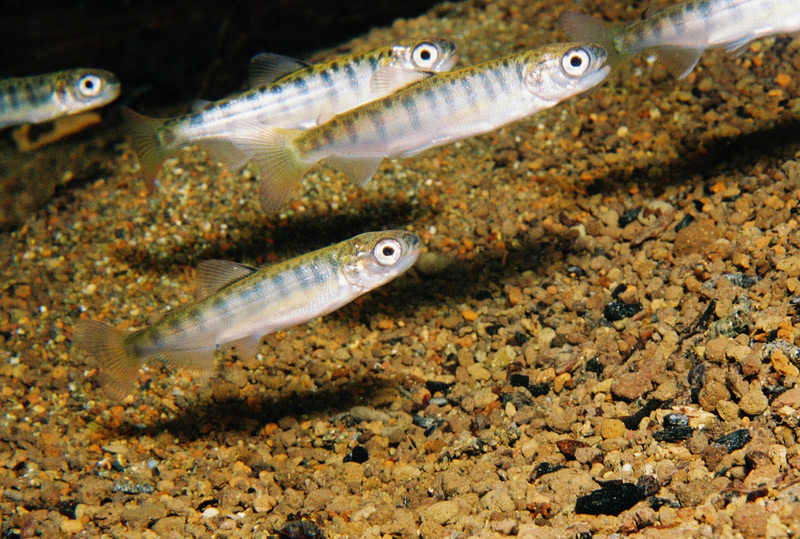
    If you think about it, it’s natural that fish living in current would seek out anything that might prevent them from being swept away. The moment they hatch new fry are small, weak swimmers – and food for larger predators – but fortunately, they can find cover and concealment behind pebbles and gravel… to start.

    Small Minnows in a Stream
    Time for Hide & Seek…
    [Photo Credit: The Freshwater Angler™: Fishing Rivers & Streams]

    As fish grow, they will need to find larger types of cover to both shade and hide themselves. It is common for the largest fish in a system to set up near the largest boulders, or near logs or banks with the deepest undercuts. Streams & rivers without cover like this will probably not hold as many large fish.

    In the previous article we discussed the different species of fish found in currents of varying strength and their general tolerance to that current. Fish like smallmouth bass have a higher tolerance and so in an area with more current, a single boulder or even a branch can provide enough cover to hold a quality fish – but crappie and largemouth (fish that prefer slower current like what we could expect in a pool or low-gradient area) would probably require more substantial cover to block faster current enough to hold in that stretch of water.

    Streams that wind and meander typically have more structure, cuts and cover than those that are straight. Remember too that smaller streams make it easier to see the pool-riffle-run pattern that changes the bottom composition and strength of the current, as the same amount of water has to move through narrow and wide areas – ultimately leading to many deep holes and undercut banks. Straight streams can be more uniform, and therefore offer less cover, meaning fewer adult fish will be present.

    A nice little winding stream - let's fish.
    A nice little winding stream – let’s fish.
    [Photo Credit: The Freshwater Angler™: Fishing Rivers & Streams]

    The best cover will not only offer a break in the current, but provide overhead protection (from the sun and predators) as well. This means that fish may well prefer the slack water of an undercut bank to say, slack water behind a boulder. The undercut bank offers more robust protection – but both can hold fish.

    Whether you are fishing a lake or a stream, most bodies of water have some prime real estate. Areas of cover (either visible or submerged) that are just “fish magnets”. A good spot is a good spot, and when the largest and most dominant fish that set up in these areas are caught, they will either return upon release, or another fish of similar size will move into the area. Pay attention to areas that are productive and revisit them to test this concept.

    Over time you will start to recognize visual cues that mean there is cover present. At first, you will miss many of these spots – but that’s good for two reasons. First, other less experienced fishermen will miss them as well, and second, the more you practice, the more cover you will be able to identify, and the more cover you can identify, the more fish you will catch as you continue to develop as an angler.

    Moving Forward

    Now that we know more about cover and current breaks in a river or stream – and why they are important – let’s go ahead and put together a list of common slack-water areas that you can look for which may very well hold gamefish.

    The combination of these concepts & targets will help us zero in on success.

    Nice Tubby Smallmouth Caught on a Deep Water Hump
    Nice Tubby Smallmouth Caught on a Jig & Plastic.

    Tight lines!

    NEXT SECTION: Cover & Current Breaks [Part 2]
    PREVIOUS SECTION: What is Current in a Body of Water?

    [ Back to the Index Page for Learn How To Fish Rivers & Streams ]

    Callout Section The Minimalist Fisherman Midwest Bass Fishing Blue Banner Background Migration
    The Minimalist Fisherman Father Son Bonding Better Anglers Better Men

    Thank You For Your Support

    Your support directly funds the creation of weekly articles and videos that promote the development of better anglers and better men. Our country (and our kids) need both. Please share this site, and consider a monthly, weekly, or one-time donation. You are helping us make a difference!

    TMF Small White Logo
  • What is Current in a Body of Water? / Learning to Fish Rivers & Streams

    What is Current in a Body of Water? / Learning to Fish Rivers & Streams

    Recently, we discussed what a channel within a river or stream is and where it is located. This knowledge will help you find the deepest, fastest water without the aid of electronics. But are there other factors that come into play and impact how fast your body of water is moving?

    Yes.

    Does the speed of the current help determine what fish are present as well?

    Yes.

    Let’s take a look at what can increase or decrease current speed, and how fish behave in these different conditions.

    What is current?

    A current in a river or stream is the flow of water primarily influenced by gravity as the water moves downhill. Over time, this flow can lose its potential energy. The rate of movement, speed and direction are all important factors.

    Current is the force of flowing water, typically discussed in terms of “speed”. This speed is usually determined by the slope – or gradient – of the streambed, the shape of the channel, and the amount of flow.

    A high-gradient stream is one that drops rapidly in elevation. One that slopes slowly would be considered low-gradient. A stream can also contain both high and low gradient areas. The gradient is typically highest near the source, and it slows as it flows along, especially as sediment is deposited (this gradually flattens the streambed, slowing current). Usually the slowest current speed can be found near the mouth, where the flowing water enters another body of water. (Note that in some cases the water flow will slow and spread before connecting with another body of water, simply soaking into the ground.)

    If the flow increases, the current will generally increase as well. A narrow passage or shallow area can also increase current, because the same amount of water is forced through a smaller area.

    What are pools, riffles & runs?

    When the current increases, it can excavate a deep pool. In this pool, the current is much slower and the sediment carried here settles out. As the sediment builds up though, it can cause the water to get shallower – and remember when water gets shallower it causes the current to speed up because the same amount of water is forced through a smaller area – this increased current is called a riffle. Riffles are shallower, faster moving areas of a stream, and their fast water starts to dig the channel deeper, creating a run. This run is usually characterized with a more moderate current and it will continue until reaching the next pool where the process repeats.

    This is what leads to the typical pool-riffle-run configuration, which is very noticeable in smaller streams, but can be harder to identify in larger bodies of water.

    Pools also look calmer on top, because the sediment that settles in the slow current consists of fine materials: sand, silt or muck. In riffles and runs where the water moves faster, sediment washes away and the gravel, rocks and boulders that remain can deflect the current and produce more turbulent waters.

    How does current impact fish behavior?

    Fish behave differently in fast current versus slower current. For example, fish in faster water are conditioned to grab food quickly without much examination. If they didn’t the current would simply sweep their meal away! This means that fish in faster water are quicker to hit a lure when compared to those in slower water. Fish are also easier to locate as they are typically confined to slack water areas where they can avoid fast current – as opposed to being scattered all throughout an area.

    The deepest, fastest water always follows the outside bends along a channel, and expert stream fishermen can quickly spot these deep zones at a glance. They also know that most stream species hang out in or alongside these areas.

    If you are targeting a specific species of fish, it helps to know which fish prefer high-gradient areas, medium-gradient areas and low-gradient areas. Let’s take another peek at one of our references: The Freshwater Angler™: Fishing Rivers & Streams:

    River and Stream Fish Location by Current and Gradient
    From left to right we can see high, medium and low gradient areas in a stream or river and the types of fish that frequent these areas. While this is not always the case, it can help you target more productive water if you are looking for a specific species.
    [Photo Credit: The Freshwater Angler™: Fishing Rivers & Streams]

    High-Gradient areas are favored by species like smallmouth bass and steelhead. The higher the gradient, the more the fish hug the bottom to escape the current. These areas typically hold the largest rocks and boulders.

    Medium-Gradient areas are favored by everything from walleye to channel catfish, sauger, muskie, spotted bass, sturgeon, striped bass, wipers and shad. These areas have a more moderate current which means the fish don’t have to hug the bottom quite as tight, and there are usually fewer boulders but a good mix of rocks and gravel.

    Low-Gradient areas are favored by largemouth bass, pike, blue & flathead catfish, white & black crappie, bluegill and redear sunfish. The slower current means silt and muck can settle, resulting in a smooth streambed and fish cruising further off the bottom.

    * These “speeds” are relative. There are usually no fish found in the absolute fastest water.

    Moving Forward

    Next, we’ll spend a little time discussing cover and current breaks. If you need a refresher, make sure to bounce back to review what a channel is – all of this knowledge we are amassing is important as we get ready to explore new streams and rivers this coming year!

    Last year we had good luck in small lakes… this year, we have our work cut out for us.

    AJ Hauser 4lb Largemouth Bass
    AJ Hauser with a nice 4lb Largemouth Bass taken on a crappie jig from a small city lake.

    Let’s keep making progress. Tight lines!

    NEXT SECTION: Cover & Current Breaks [Part 1]
    PREVIOUS SECTION: What is a Channel & Where is it Located?

    [ Back to the Index Page for Learn How To Fish Rivers & Streams ]

    Callout Section The Minimalist Fisherman Midwest Bass Fishing Blue Banner Background Migration
    The Minimalist Fisherman Father Son Bonding Better Anglers Better Men

    Thank You For Your Support

    Your support directly funds the creation of weekly articles and videos that promote the development of better anglers and better men. Our country (and our kids) need both. Please share this site, and consider a monthly, weekly, or one-time donation. You are helping us make a difference!

    TMF Small White Logo
  • What is a Channel and Where is it Located? / Learning to Fish Rivers & Streams

    What is a Channel and Where is it Located? / Learning to Fish Rivers & Streams

    To the angler that does most of their fishing in lakes and reservoirs, approaching streams and rivers can seem quite foreign. (I’m speaking as someone who is currently intimidated by these winding bodies of rolling water.) The fish behave differently, they use different locations, respond to different presentations, conditions can change constantly… things are just… well, different.

    However, a 30 second internet search will reveal the truth: there are many stream & river fishing opportunities that we are missing.

    Question is… how do we fix that? Where do we start?

    Answer?

    Right here, right now.

    Let’s discuss what a channel is, and where the deepest water in a river or stream is typically located.

    What is a channel?

    A channel is typically a narrow, fluid body of moving shallow water that provides a path for sediment flowing within the stream (or river) banks. Vegetation, sediment load, slope and flow can lead to constant changes that affect both aquatic & terrestrial life.

    Because the water is moving, the fish in these areas can be slightly more resilient to changing weather conditions like cold fronts, cloud cover and changes in air temperature. If you have the option to fish either a small lake or a stream after a cold front – it might be a good idea to pick the stream!

    It is also important to note that many sources seem to refer to the channel as something that is actually within the stream or river itself. The channel is part of a river or stream. Look back at our definition above, the channel provides “a path… flowing within the stream (or river) banks”.

    Where is the channel actually located?

    Next, it’s important that we understand the general underwater makeup of these channels, especially since most of us will not have access to our depth finders or the electronics we’re used to relying on when we’re fishing lakes. To understand where the channel itself is located (along with the deepest water) let’s look at a cross-section provided by The Freshwater Angler™: Fishing Rivers & Streams:

    In a straight section of a river / stream?

    Straight River or Stream Channel Location
    This image displays a straight section of this river / stream. The cross section inset shows the channel located dead center. The deepest water in this stretch of water is located right in the center of the stream / river.
    [Photo Credit: The Freshwater Angler™: Fishing Rivers & Streams]

    Along an outside bend of a river / stream?

    Outside Bend River or Stream Channel Location
    This image displays an outside bend section of this river / stream. The cross section inset shows the channel actually shifts to the outside edge of the bend. The deepest water in this stretch is located there, and the fastest moving water is indicated by the dark blue area. Current is slower on the surface, bottom and along the sides because of friction with the air and streambed.
    [Photo Credit: The Freshwater Angler™: Fishing Rivers & Streams]

    Along an inside bend of a river / stream?

    Inside Bend River or Stream Channel Location
    This image displays an inside bend section of this river / stream. The cross section inset shows the channel actually shifts to the outside edge of the bend – just like the previous image but in the opposite direction. Again, the deepest water is located there, and the fastest moving water is indicated by the dark blue area. Current is slower in areas of friction.
    [Photo Credit: The Freshwater Angler™: Fishing Rivers & Streams]

    Moving Forward

    Next, we’re going to talk more about current, current speed, and the different elements that factor into this attribute in your body of water. This is important knowledge to have, especially if you’re like me and plan to hike & explore as many streams as you can find in the near future!

    That’s a big goal for this year.

    Last year, it was important to take some bad habits and turn them into good behaviors. These behaviors resulted in a whole bunch of awesome fish – now this year, it’s time to repeat that process and catch more fish from more bodies of water.

    Yup... this looks like a great fishing spot!
    A 3.5 lb bass taken from a small local lake. The result of better behaviors.

    Let’s keep pushing ahead. Tight lines!

    NEXT SECTION: Understanding Current and How it Affects Fish Behavior

    [ Back to the Index Page for Learn How To Fish Rivers & Streams ]

    Callout Section The Minimalist Fisherman Midwest Bass Fishing Blue Banner Background Migration
    The Minimalist Fisherman Father Son Bonding Better Anglers Better Men

    Thank You For Your Support

    Your support directly funds the creation of weekly articles and videos that promote the development of better anglers and better men. Our country (and our kids) need both. Please share this site, and consider a monthly, weekly, or one-time donation. You are helping us make a difference!

    TMF Small White Logo