Let’s talk about Midwest Fishing. Illinois, Indiana, Iowa, Kansas, Michigan, Minnesota, Missouri, Nebraska, North Dakota, Ohio, South Dakota, Wisconsin… I’ve come to realize that every sub-region has it’s own unique flavor. The trick is figuring it out in your neck of the woods.
Our region is known for it’s harsh winters and scorching summers. At times those seasons will both make an appearance within a 48 hour period. Illinois in particular is known to “outsiders” for gang violence, corrupt governors and terrible drivers. That last one has earned us the nickname “FIBs.” Ask any Wisconsiner what that means next time you visit… chances are you’ll get them to burst into laughter…
Speaking of Wisconsin; what a beautiful state! Rich with natural resources, amazing scenery, warm people, cold beer, delicious diners and enough cheese to clog your arteries 10 times over. A little slice of Heaven on Earth.
When I was a kid I thought that you had to go to Wisconsin to catch smallmouth bass. I was also under the impression that largemouth bass were rare here in Illinois. Pike & muskie? Well, up Nort’ of course! Imagine my surprise a few years ago when a DNR officer mentioned we had pike right here at home. Good pike. In a marsh not far from where I live. “Pike?! In a shallow marsh? Seriously?? You’re messing with me…“
He wasn’t messing with me.
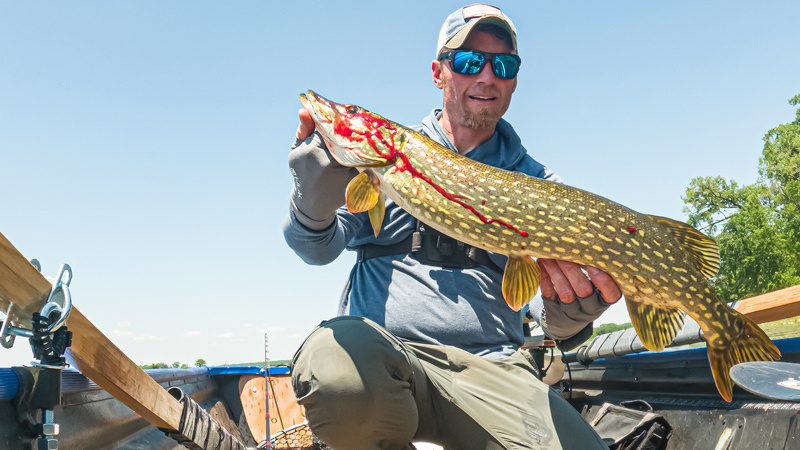
AJ Hauser with a nice Illinois pike measuring 28″
See what I mean? Every sub-region has a unique flavor and hidden gems. So exploring is important, and that’s great news, because for us anglers exploring new areas and new water can be incredibly rewarding. It can also crush your spirit, grind it into a fine powder and light it on fire… but that risk just adds to the excitement every time you load up to go fish.
I might fail today.
If that happens, I’ll feel bad for a while, pick myself up, dust myself off and try again tomorrow.
The results of that tenacity cannot be denied.
Right before the pike, this 20″ largemouth bass weighing 5.25 lbs joined me in the jon boat
So Illinois has given up some genuine chonks these last several years. For that I am so grateful. However, Wisconsin fishing – especially near Minocqua and along the Manitowish Chain ‘o Lakes – has always been a special thing for me and my family. We started fishing this area when my Grandpa Jerry bought a cabin along the channel between Stone Lake and Rest Lake (not far from Greer’s Pier) when I was just a wee lad.
A lot has changed since then, and over the years I’ve figured out the best baits for fishing the Manitowish Chain. Granted the word “best” is subjective, but when you consider the following fish, I think it’s fair to say that everything I’ve included should at least be in the conversation.
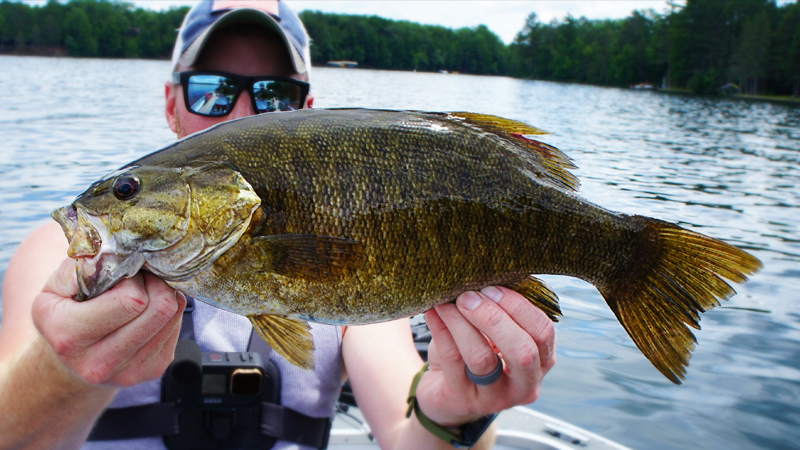
My best smallmouth bass on the chain (so far) was 20″ and 4 lbs – pretty good considering she was caught in the middle of summer (July)My wife with an absolute unit the year priorDad with a big, fat, Manitowish Chain smallmouth bass
We still vacation here every summer, and a few years back we stayed at a cabin on the bank of Wild Rice Lake for the first time. This lake sits at the far southeastern end of the chain, right next to the incoming river. I believe this is called Trout River – but I’m not sure about that. What I am sure about, is that Wild Rice Lake seems to have a fair amount of sediment in the water that I believe has something to do with that incoming river. The visibility isn’t bad, but it’s not as clear as some of the other lakes. It’s somewhat shallow (again, compared to the other lakes on the chain) with lots and lots of weeds, some underwater humps, and pockets that make it look like pike and muskie would absolutely flourish here.
We didn’t catch any notable pike or muskie during our visit – but we did see some locals pull up a few big fish! They’re in there… but we were plenty happy to discover a good handful of smallmouth and largemouth bass.
I’ve been cleaning up old video footage lately. It’s a great way to relive memories and learn even more about different bodies of water, but one thing keeps jumping out at me. My technique, my methods, my commentary – it was all unbelievably bad and cringy. Yikes. Wouldn’t it be better to hide these videos from the world? To delete them??
No.
I didn’t start The Minimalist Fisherman to look cool, I started it to learn more about fishing and share that info with my kids and readers, so we can all catch more & bigger fish. Hopefully along the way I meet a few guys & gals that fish for the same reasons we do. These old videos are actually pretty exciting, because they allow me to really see the genuine growth. They show progress. They show that this entire endeavor isn’t a waste of time – it’s a process, and being able to share that (even the stuff that might look bad) is a blessing.
Exploring new water near Copp’s Cabins on Wild Rice Lake, Wisconsin
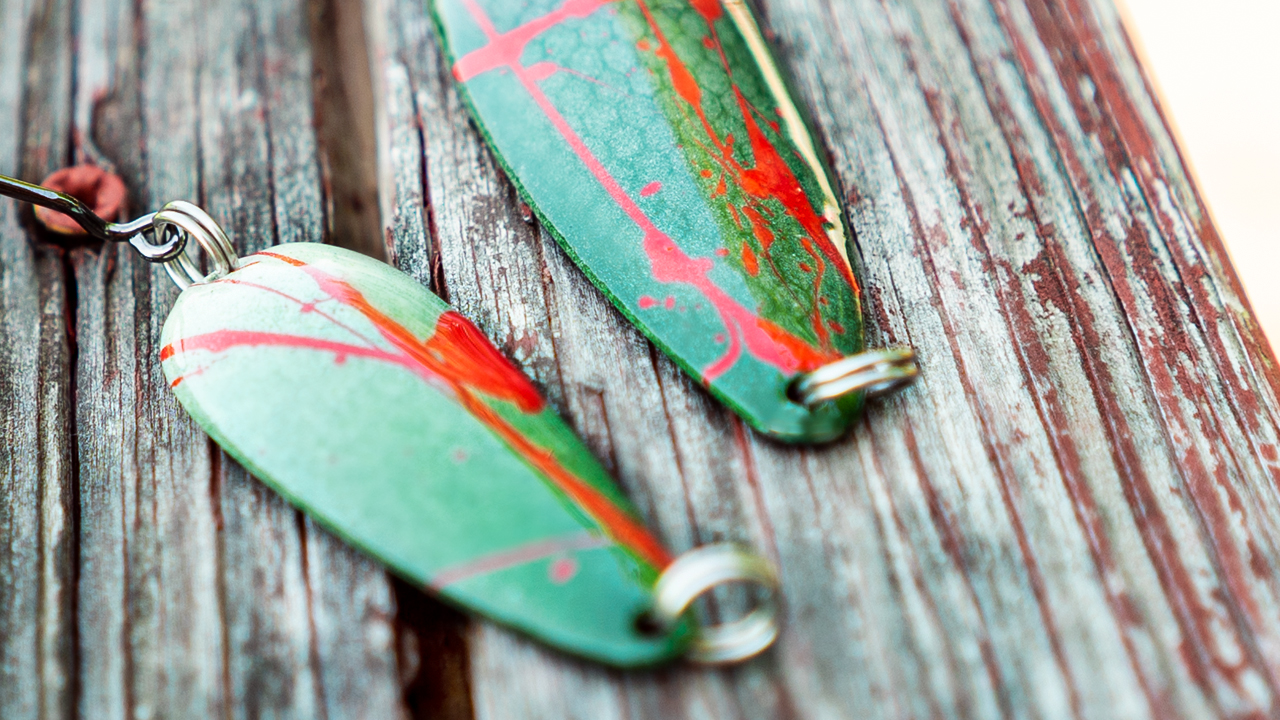
Cleaning this footage also reminded me of an old project I need to revisit… customizing spoons. Spoon fishing is something that my brother and I have loved for a long, long time. You can see one of my first paint jobs getting tossed around for a bit near the weedy humps on Wild Rice Lake. Here was how I modified them:
I’m going to scroll back up now, and look at the fat fish from the beginning of this article. Consistent hard work pays off. It pays off in fishing of course, but it also pays off in every other aspect of life. Maybe not today, or tomorrow… or for 5 years… but if you set your sights on something and try again, and again, and again… improvement is inevitable.
Your support directly funds the creation of weekly articles and videos that promote the development of better anglers and better men. Our country (and our kids) need both. Please share this site, and consider a monthly, weekly, or one-time donation. You are helping us make a difference!
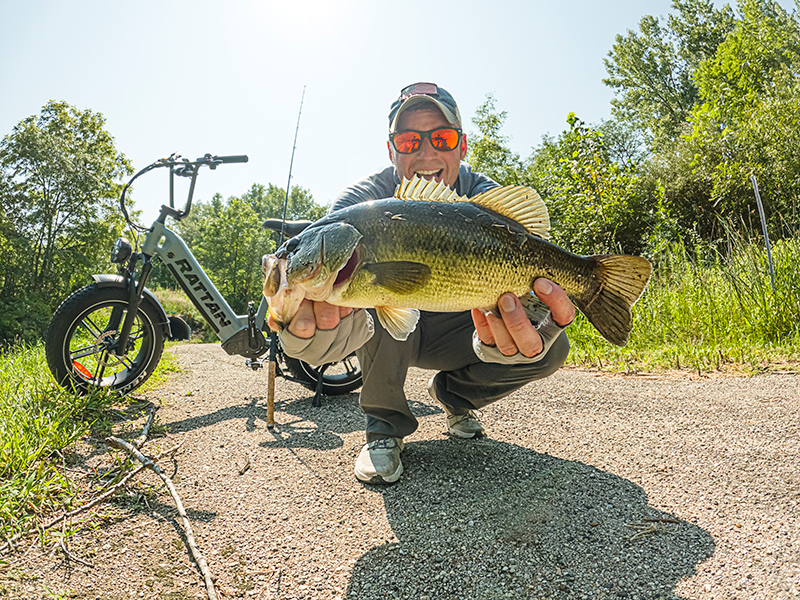
I hope that you have experienced the tightest of lines this season so far. We’re well into the “dog days” now in Illinois, and the bite has slowed to a crawl. You can still get ’em, but it requires a lot more patience and stealth. One method that has worked for me involves some green pumpkin Big TRDs, complete with a pair of Z-Man Neko ShroomZ / Weights (one on either end) and a 3/0 Weedless Wacky Hook. This simple, bite-sized technique is a great presentation for lethargic largemouth sitting in the shade of the muck and duckweed that floats atop our warm Midwest water. I’ve landed more than a few after ripping up and down a nearby canal quietly on a Rattan Ebike looking for shady areas near patches of clear, sandy bottom where largemouth can patrol in and out of the overhead cover and eat as they see fit.
A fat Illinois largemouth bass on a HOT summer day!
I’ll write more about this method, the Rattan, and post a video soon. They have both performed above and beyond what I expected!
Much has changed in my camp these last several months. I have had the privilege of writing several articles for Midwest Outdoors (most in print, and a few have been published on their blog). I’ve partnered with a few new companies and have some interesting collaboration videos in the works. Most importantly, my wife and I welcomed Ava Joy into the world in early July:
Welcome, little one.
She is awesome, and her 4 older brothers are completely in love with her. We are too… even though she doesn’t let us sleep… yet…
Forgot about that part.
As my tribe expands, I am constantly reminded that time is limited. With 5 kids, how can a father make sure that everyone feels loved and appreciated and special (including the misses)? It’s a tall order! Just “putting a roof over their heads” or “putting dinner on the table” isn’t enough – that’s the bare minimum. It’s our responsibility as men. It’s expected. However, if that is all we ever do for our family… yikes…
We must strive to do more, and if we can’t do more in terms of quantity, we have to do more in terms of quality. Fortunately, if you’re a fisherman like me (and of course you are) you have a hobby that is built for memory making.
Shortly after Ava Joy was born, we left for our annual Hauser Pilgrimage to the Manitowish Chain ‘o Lakes. This trip is something that we save for all year long. It’s not cheap. We have to make sacrifices to make it happen, but it allows us to stay in a house on a lake with our boat rigged & ready to go in the morning, afternoon and evening. Between family meals, swimming and exploring – my father and I fish.
A LOT.
As my boys have grown, they’ve all taken an interest in “doing what Daddy is doing with Gompa.” And so, every child gets multiple solo outings with me and Dad, without their siblings, where they get our full attention. The result? Many, many memories… just like this one I caught on tape below…
Finn Fights a Fat Wisconsin Smallmouth Bass
When I started The Minimalist Fisherman, my goal was to get good enough to help my kids catch more fish. Sure, I also wanted to catch more myself – but I knew that if I was going to get them excited about going outside while their friends all sat around like vegetables staring at screens, I’d have to be able to put them on fish quickly, no matter the conditions.
Is it easy? No, of course not.
Does it always work out? Also no.
But you listen to those squeals of excitement in that video and tell me it’s not worth every bit of effort to help your child experience the joy of catching a bruiser of a bass all by themselves.
It is.
I share this with you today as a simple reminder: fishermen are blessed.
We are blessed by God’s great bounty. By nature. By the wind and the rain and the rise and fall of the sun on the water. The cool morning air and the rustle of the leaves along the shoreline in the evening. These experiences are often simply a byproduct of chasing the beasts swimming below the surface… but don’t take any of this for granted. You have a hobby that is built for memory making… so stay alert and soak it all in… enjoy it, but more importantly…
Share it.
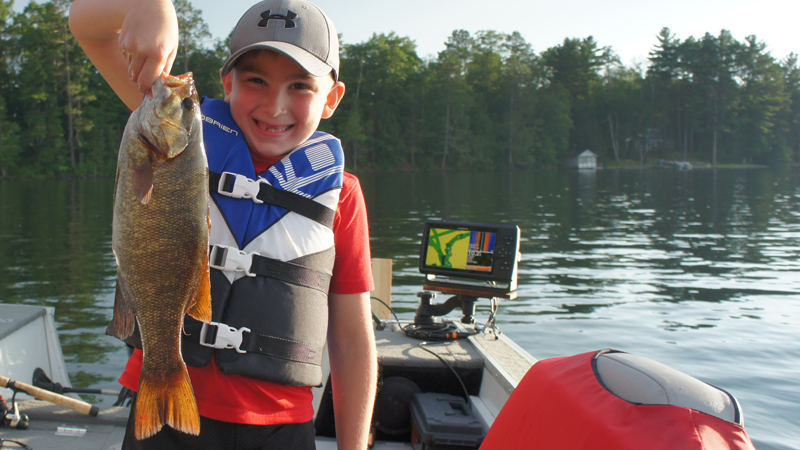
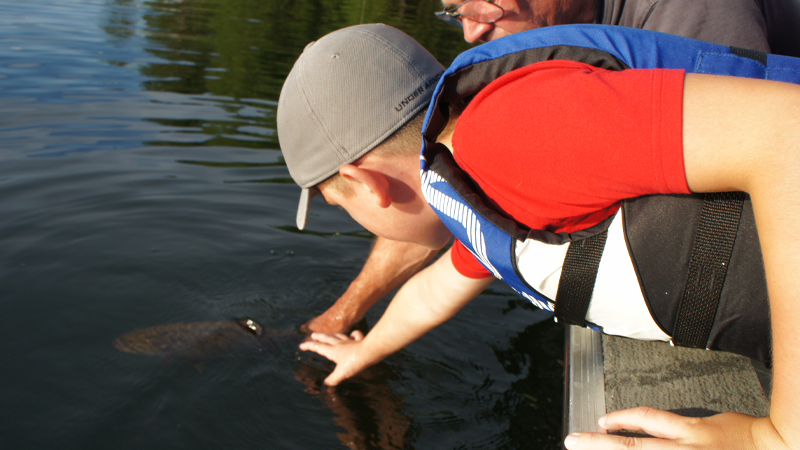
Finn on the way to our first spot.After losing multiple fish, he persevered, and was rewarded with this 17″ smallmouth bass. That’s a beauty, but to a little lad like this, IT’S A GIANT! The release with Gompa. If we want to enjoy these fisheries, we have to take care of them and treat the lake and the inhabitants with respect. This fish will live to fight another day!
Tight Lines & Godspeed, Patriots.
Get Articles & Videos First
Catch More Fish Than Your Friends. Laugh At Their Tears.
Your support directly funds the creation of weekly articles and videos that promote the development of better anglers and better men. Our country (and our kids) need both. Please share this site, and consider a monthly, weekly, or one-time donation. You are helping us make a difference!
Hold up: before we go down the all-too-common path of “my wife drives me nuts” and “my wife is such a nag” and “I love hiding from my wife while I’m fishing” memes… let me go ahead and stop you right there.
Brother… you should want to fish with your wife.
Otherwise you’re doing this whole marriage thing all wrong.
Weirdos. Bonding. Two peas in a deranged pod.
If you love fishing, and you love your family, you should want to share the things that are important to you. To enrich their lives. It should come naturally. If they reject your hobbies, so be it – but you should always present them with the opportunity to decide for themselves.
It’s an ongoing process, and yes, at times – it can be very frustrating for everyone.
Let me tell you how I screwed up recently so you can avoid my mistakes…
This year I learned a few new tips while fishing with my gal…
We fished Manitowish, Wisconsin for 2 weeks this year. It’s an annual event. A recurring pilgrimage of sorts where we connect with each other, with nature, and with the good Lord on a higher level. The yearly tradition started many moons ago when I was a little tike thanks to my Grandpa Jerry and his house on the channel.
Perfect.
It continues to this day, and my wife and children now share in this tradition with me. (Remember I said that sharing the things we love can enrich the lives of those around us? Prime example.)
We fish hard.
Multiple times every day. Different locations. Different depths. Different lakes. Different presentations.
This year things didn’t go so well for my wife the first week of the trip. 7 days of suck. It was rough. She couldn’t catch a keeper. She couldn’t catch anything, actually. Skunk after skunk, she insisted on using lipless crankbaits, even though they had produced zero bites between multiple outings. Why? Because she had caught some beefcakes on them in the past.
A beefy smallmouth bass from last year on a lipless crankbait. This year? No such luck.
One morning I couldn’t take it anymore – I was catching smallmouth bass left and right on a walking bait, and a trailing bobber rig – and I felt guilty.
Guilty!
“Here, give me that – we’re going to fix this problem. I can’t take it anymore.”
I yanked the pole out of her hands, pulled a Megabass Pop-X out of my backpack, tied a quick palomar knot and handed it back to her – right in the middle of the morning trip.
The Megabass Pop-X was one of my best topwaters this year – surely it would work well for her…
“What am I supposed to do with this??”
She asked. Clearly aggravated with me.
“Catch fish…”
I stated, matter-of-factly.
“… and when that trailing bobber drops, I want you to pick that pole up and reel in the next bonus fish.”
Boys… if you could have seen the daggers…
But daggers or not, it didn’t matter. I was being belligerent; primarily worried about how I felt watching her fish – which obviously backfired.
Herein lies tip #1…
Do Not FORCE New Fishing Presentations on your Wife
Jen had never used a popper before.
Ever.
She had zero confidence in it. This, coupled with the fact that she had already had a very frustrating week with hardly a bite, was a disaster. I tried to give her a few tips, but the frustration just kept mounting…
… up and up and up… until she snapped.
“You got this freakin’ thing on here and I don’t even know how to use it!! I HATE bobber fishing, I am NOT doing that either!!”
She just slumped down in the boat. Mad, but also defeated.
It was my fault.
Ouch.
That’s a fail.
I made everything worse, not better.
There are many different ways to introduce new fishing techniques. What work? Depends on the angler. Everyone is different. I find it is usually best to work with new baits “at the dock.” Before you’re mid-trip and frustrated. This allows people to get comfortable with something new (and maybe even catch a fish or two) instead of forcing them into an odd situation on the fly.
Also, trying to force them to use something they hate, like a bobber, is not a great idea. Even though technically – technically – this could result in more fish.
That’s not the only thing we need to take into consideration.
So what should I have done? Well, allow me to present tip #2…
You’re Welcome in our Camp
Add your email below and we’ll keep you up to date on new articles, videos & events. Join us as we continue to work on becoming better anglers – and better men.
Accept the Techniques your Wife is Comfortable With and Find Fish Willing to Bite
Easier said than done?
Yes.
I like fishing in thick, deep weeds for a couple big reasons…
However… if I had turned my attention towards finding areas where the techniques she was comfortable fishing could have been more effective, that would have led to a better end result – even though it might still result in another skunk.
Jen is comfortable fishing swimbaits, wacky rigs and jig worms (in addition to lipless cranks). We were fishing over massive patches of cabbage, trying to cover a lot of water, and big smallies were crashing through, hammering our topwaters… but… when you look at the 3 presentations I just mentioned, does it really seem impossible to find an area on any given lake on any given day where at least 1 of these 3 have a pretty stinkin’ good chance of being effective?
Nah man… honestly… I could have found areas where swimbaits, wacky rigs and jig worms could have done well. That’s what I should have done, instead of forcing her to use something she had never used before in the area I wanted to keep fishing.
So after I apologized for being a jerk, that’s what we did… and here were the results…
Week 2: We Found New Areas to Fish
The search was on… and we found new areas where she could fish what she liked. Areas with sparse weed cover, mixed with wood piles and boulders. Rocky shoreline. Flats. Some in as little as 5 feet. We worked shallow to deep. She had more fun. She was comfortable. She persevered and kept working hard.
Guess what happened next?
Not only did she catch a bunch of fish… she also caught the biggest fish of the trip!
One fish…
… two fish…
… green fish…
… HUGE FISH!
The skunks from week one didn’t bother her – they bothered me. She was ready and willing to work hard and power through – and I had tunnel vision on a quick fix. My approach was wrong.
During that second week, I spent a LOT of time tying (and re-tying) rigs for my wife & kids. Made sure their rods were always ready to go. Made sure everyone always had a bait in the water. Familiar baits. Baits they had confidence in. Made sure I had the camera. Snagged pics. Captured video. Kept looking for new areas where they could be successful.
Yeah, it was hectic, even stressful – but it didn’t matter – because it’s my job as Dad.
It’s my job as Husband.
It’s your job, too.
Your job to make sure your family is set up for comfortable, successful fishing, so they can improve and deepen their love for the sport… and at the same time, for you as well.
When you look at it like that, all the extra work melts away.
If you are lucky enough to fish with your wife, the trip is not about YOU and what YOU would do – it’s about HER, and helping HER be successful.
Deep breath. Relax. You might not get to make as many casts. Might not get to fish the way you want. Maybe… you won’t even fish at all… GASP!
But it’s worth it.
Fishing is about more than just the fish. I am so blessed by the fact that my wife enjoys this activity. Hopefully you are in a similar situation – but make sure you don’t make the same mistake I did…
I promise you, when you see the victories and soak up the smiles… everything else melts away.
Your support directly funds the creation of weekly articles and videos that promote the development of better anglers and better men. Our country (and our kids) need both. Please share this site, and consider a monthly, weekly, or one-time donation. You are helping us make a difference!
The days are shorter. The nights are colder. The daydreams are beginning to intensify.
There is a picture frame that lives on our counter. One of the best investments I’ve ever made. It cycles through photos from trips we’ve taken, constantly reminding the kids about their victories. It makes them want to fish and spend more time with family. It keeps the memories fresh, and they love to tell the story of “that fish I caught” and “that place we went” when different images pop up. It keeps them excited…
… truth be told… it has the same effect on me and my wife…
A simple digital picture frame cycles through memories, victories, and keeps “the good stuff” fresh and top-of-mind! Ours currently has 1,500 pics and that number increases every time we fish.
We’re so excited in fact, that I’m in the market for a new boat. Need something simple, minimalist, something that can run shallow and slam into rocks. We’ll be fishing The White River in Arkansas by next November, after all… for trout, yes, but also walleye and smallmouth bass. Lord knows, my wife is an amazing fishing partner, but she is NOT a fan of my 3.5 foot wide jon boat! It’s as wobbly as ‘ol Uncle Butch after his 9th whisky sour. I need to get something wider. More stable. As that search continues, end-of-season cleaning ensues.
Yesterday I came across my Wisconsin Bass Base Box. The presentations in this box accounted for many, many bass this year, including the 5 biggest smallmouth from our annual trip up north. Who caught #1 you ask? …
My wife and her MONSTER Minocqua smallmouth bass. (Told ya she was a great fishing partner.)
This bruiser came out of just 7 feet of water. In July. Often, when largemouth are not the dominant species in a lake, you’ll find smallmouth spread out to many different depths – including the warmer, shallower areas that are rich with forage, weeds, and wood cover. We assume that smallmouth prefer crayfish and deep, rocky, cold water, but sometimes they use deeper areas because they have to.
It takes longer to digest a crayfish than it takes to digest a baitfish.
So, in Wisconsin lakes where largemouth are present but not especially dominant, make sure to explore the weedy, warmer areas as well as the deep rocky humps – and everything in between – until you find what the smallmouth, walleye, crappie, pike, panfish & muskie prefer.
These baits will help you target bass throughout the entire water column effectively.
Let’s get into it.
What is a Wisconsin Bass Base Box?
A Base Box is a single Plano container, loaded with presentations that you have confidence in for a specific kind of fishing. This container is something that you can pick up with zero notice – it’s always ready to go. So when Billy Bob calls and says “BROTHER, LET’S FISH!”, you simply grab the correct Base Box along with the Terminal Tackle Base Box (which is always on hand no matter what), load the backpack and head out.
Fishing from the bank? Just take that backpack. Fishing from your friend’s boat? Just take that backpack. Fishing from your own boat? Just take that backpack!
My Wisconsin Bass Base Box is focused on targeting smallmouth bass in clear Wisconsin lakes (high visibility) with rocks, weeds, and woody cover.
Over the past 20+ years of fishing in Wisconsin, we’ve boiled it all down the the following presentations. Presentations that I absolutely need to have with me to fish with 100% confidence. This is very different from my Clear Water Base Box, and my Muck Bass Base Box… which we will cover in another article…
These items are all that remain after years of reduction. Minimizing. In the past, I’d take a complete bait store with me! These days? I take this box, a few bags of plastics, and some terminal tackle… and we all catch more fish.
The River2Sea Rover 98 was a surprise hit this year, with a walking Live Target Yearling Baitball coming into play when I wanted a slightly smaller profile.
Topwater is fun, and in clear Wisconsin lakes, fishing a topwater in 8 foot of water or less – especially over thick weeds – can be intense. It’s also a great way to cover water. Big pike and the occasional muskie are not afraid to hammer your topwater offerings as well, and that kind of pandemonium is a blast – I don’t care who you are!
I like to start out with a moving bait featuring a natural pattern. Something medium-sized that walks, like the River2Sea Rover 98. I’ll rig this up on a baitcaster, braid, and a 20 Pound Monofilament Leader. This does two things – it floats better than fluorocarbon, and yes – it is slightly less visible than straight braid – but more importantly, that mono is less likely to get twisted up on your guides in-between casts.
Straight braid can be a pain at times, especially if it’s windy.
Minocqua Must-Have Bait #2: Popping Topwaters
Having a few popping topwaters on hand will allow you to do two things:
First, they give you the option to present a smaller profile with distinct pauses, and at times this will coax bites better than a walking bait. (Experiment with a dressed rear treble. If you have follows but no takers, swap it out for a plain treble or try to change the color of your popper.)
Second, they give you one of the tools to make a Pop ‘n Drop. A Pop ‘n Drop is a popper with the rear treble removed, exchanged for a fluorocarbon dropper line, wacky hook and a trailing stickbait that sinks slowly, coming to a rest anywhere from 1 to 3 feet below the popper. This helps you put something irresistible in front of those fish that follow, but just won’t bite.
AJ Hauser with a healthy Manitowish smallmouth bass that could not resist the Pop ‘n Drop.
The popper gets their attention – the stickbait seals the deal.
Clear Wisconsin lakes are known to have expansive weed beds. In some places, they can stretch for miles and miles, and while you can jig fish them to target clearly defined transitions, pockets or other submerged cover (and you should), this makes covering a lot of water difficult.
If you’re searching for bass, consider running a wakebait right over the top of these weeds. You might be surprised at what lunges out!
The StrikePro Hunchback is a great wakebait that runs less than a foot, but they are expensive and harder and harder to find. Luck-E-Strike Cajun Wakebaits are a cheap alternative. A Rebel Teeny Wake-R is a lot of fun to throw on light line for numbers if the wind is calm, and a Mann’s Baby 1-Minus has been a staple in my arsenal for a while now – plus, it brings rattles to the table. I mark the running depth on most of my lures with a Sharpie.
Minocqua Must-Have Bait #4: Jerkbaits
Two years ago, I decided it was time to learn – yes, I said LEARN – to use jerkbaits. I’m glad that I dedicated time to the technique, because jerkbaits are fun, and they work.
I take a few with me when I fish Minocqua and the Manitowish Chain ‘O Lakes. They are great for covering water, especially around sandy flats with sparse weed clumps, stumps and logs. However, they are not the best option for the thick weed beds mentioned above.
I’ve had days where they were lights out – and days where they were ignored outright.
Take a few & test ’em.
My jerkbait collection includes a few Rapala RipStops that run shallow and stop on a dime, along with several Husky Jerks in different sizes. Huskies have been a staple for serious anglers for many years now – and as I’ve learned – it’s for good reason. I round out my collection with a few discontinued baits, which I will use until I lose ’em…
Minocqua Must-Have Bait #5: Lipless Crankbaits
Pike will destroy a lipless. I love to throw them when the water is a bit cooler and the big fish are active. We usually visit Minocqua during “the dog days” though… so pike fishing is hit or miss.
When I’m fishing areas with toothy critters, I’ll usually add a fluorocarbon leader to my line. Seaguar AbraizX is a great choice, and I prefer it over Seaguar Red Label. Neither are as tough as a steel leader, but it gives you a great chance of avoiding a bite-off while remaining invisible to the more finicky fish.
Smallmouth bass are not to be underestimated, as they will demolish a lipless crankbait as well – when they’re active. A great way to catch ’em is by throwing a lipless crankbait over the tops of the weed beds – then ripping your bait free when it gets hung up. My wife landed this beauty just minutes before a big storm rolled in using this technique. (You should have heard her warcry ring out across the empty lake as the bass came aboard and thunder rolled – it was truly epic!)
Nice smallmouth bass on one of my Dad’s Rattlin’ Rapalas. The (Discontinued) Bomber Ratl RRR A
We like Rattlin’ Rapalas, Rat-L-Traps, and I also throw Bomber Ratl RRR As that my buddy, Brother Ron, sent in a care package not that long ago. All three are great options.
Finally, swim jigs round out our bulky bait repertoire. The added weight, weed guard and skirt on a swim jig allow you to control the depth of your swimbaits while remaining very weedless and adding girth.
You can retrieve these bulked-up baits right through the cabbage and grass to get the attention of any number of species – they go where the trebled jerkbaits dare not tread!
Some of my favorite swim jigs can be seen here – just remember: opt for natural colors most of the time in the clear Wisconsin water.
Minocqua Must-Have Bait #7: Hair Jigs
Now that we’ve covered our moving baits, it’s time to sloooooow down a bit… hair jigs have increased in popularity over the last several years. Bass fisherman (largemouth, smallmouth and spotted) stayed tight-lipped about them for quite some time, but anglers like Kevin VanDam were seen using them in major tournaments, and us “normies” started to get wise…
I keep several on hand in different colors (usually natural or black with a highlight color for attraction) sized from 1/16 to 3/8 ounce.
Now, you can fish these a few different ways… some anglers like to fish them as-is, working them up and down and drifting them out from shallow to deep water with a simple pendulum motion.
This can work – but I prefer to tip mine with live bait…
Leeches.
One of my best bass from an especially slow morning came on a light hair jig tipped with a leech. We were sitting in about 30 feet of water casting towards the entrance of the lake which had a steep rocky drop-off. This bass followed my jig all the way to the boat and hit when it was 5 feet away – wild!
The hair adds bulk, motion (especially the marabou) and slows the rate of fall. If you use a black jig with a leech the color matches well, and the motion and taste of the leech can help to create a surprisingly effective package.
A 3/8 ounce VMC BKJ Bucktail Jig will help you get down to those deeper fish, faster. This means more casts, and more chances to get bit.
Minocqua Must-Have Bait #8: NedlockZ & BulletZ
While fishing the Manitowish Chain ‘O Lakes this year, I spent quite a bit of time fine-tuning The Snakebite Rig. Even though this rig was originally developed for fishing the heavy muck here in Illinois – a few modifications allowed me to slither it through thick weedy areas that dropped into deeper water.
Tip ’em with plastics, leeches, crawlers, minnows – you name it. One of my favorite techniques for “bonus fish” involves setting up an extra pole with a slip-bobber rig. I’ll set this in a rod holder and allow it to leisurely drift behind the boat with a leech on one of these Lindy Live Bait Jigs while I’m simultaneously fishing a more active presentation. The weight of the jig removes the need for split-shot.
It’s like having an extra set of hands, and even when I’m retying I always have a bait in the water. If the panfish are a problem, I’ll swap the leech out for a small plastic and drift that instead.
“Bonus Fish” on a drifting leech.
Minocqua Must-Have Bait #10: Mushroomhead Jigs
Mushroomhead jigs have been around for a long time. They pair perfectly with plastics, allowing you to keep a low profile with minimal negative cues. I keep an assortment on hand from 1/16 to 1/4 ounce in both weedless and extra-weedy varieties. (Notice that weedless and standard jigs live in the same compartment in the Wisconsin Bass Base Box, so they take up less space.)
The Northland Tackle Deep-Vee Jigs are a bit of a hybrid, and more importantly, they are extremely effective. The tend to stand up, they have a light wire hook with a longer shank, and they also have an angled head with large, realistic eyes.
That light wire hook makes for easy penetration in the mouth of a fish, so it’s a great option for younger anglers and old pros alike.
This jig, paired with a small plastic, was responsible for the biggest bass of the trip. Sure they’re pricey, but DO NOT sleep on this jig!
A 1/8 ounce Northland Tackle Deep-Vee Jig helped my wife land this MONSTER smallmouth bass. You can see the jig hanging from her rod on the left in this picture.
The Bait Rigs Slo-Poke Jig is a must-have item for fishing live bait in the weeds. The inline eye increases hookups and reduces snags. The center-balanced weight has a slower, more horizontal fall than a ball head jig, which falls vertically. The hook shank is strong and compact.
It’s very likely that this jig will be the one you keep tied on the entire trip…
Walk into any Wisconsin bait shop, and they’ll have a tray with Slo-Pokes in many weights & sizes. Grab an assortment, both with and without the weed guard.
You’ll thank me.
The Bait Rigs Slo-Poke Jig is unique, and a consistent favorite of both walleye and bass anglers – for good reason.
I like to stick with 1/16 to 1/8 ounce jigs, and I can usually get away with fishing without a weed guard. Black and orange are great colors, and everything you see in the image above is in my tackle box. I prefer to tip with leeches, and Dad likes crawlers.
My first 17″ smallmouth bass this year came off of a flat with sparse weedy cover near stumps and logs on a Bait Rigs Slo-Poke Jig tipped with a leech. Jig was 1/16 ounce, line weight was 8 pound fluoro – a bit oversized, and the water depth was about 10 feet. My wife with a 16″ smallmouth bass that came off of a weedy hump in 20′ of water. Leech on a Slo-Poke. Badda-bing badda-boom. Dad landed this 19″ smallmouth bass on an orange Slo-Poke Jig tipped with a leech in about 12 feet of water…… and last year this 4-pounder smoked the exact same rig tipped with a crawler instead of a leech. Experiment!
Slo-Poke Jig & Live Leech Fishing
Minocqua Must-Have Bait #13: Terminal Tackle
A small assortment of Must-Have Terminal Tackle includes the following:
It looks like a grab bag, but there is a method to the madness: steel leaders, o-rings, slip bobbers, split-rings, nail weights, bullet weights, beads and bobber stops allow you to make a wide variety of rigs.
With these components you can make Neko Rigs, Dropshot Rigs, Trailing Slip-Bobber Rigs, Texas Rigs and Carolina Rigs – provided you also have the following hooks…
Minocqua Must-Have Bait #14: Weedless Wacky Hooks
Wacky hooks with and without a weed guard are a must. They can be used for wacky rigs of course, but they also work on dropshot rigs. The dropshot was something new I played with this year for fishing weedy humps all the way down to depths of 25 feet.
(Check out Dad’s All-Star Scoop on this one right as the hook popped free!)
Testing the Dropshot on Wisconsin Bass
I caught a few, but next year I’ll be dedicating more time to the dropshot and adding in some Hayabusa Spin Muscle Dropshot Hooks. These have worked surprisingly well here in Illinois in my deep, clear pits. Make sure to toss a few Eagle Claw Offset Octopus Hooks (size 2) in here as well, for your trailing bobber rigs when you switch from leeches to 3″ plastics.
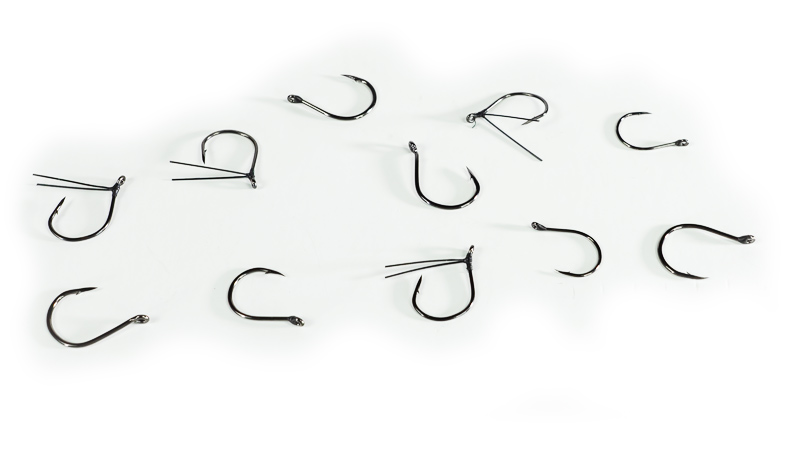
A collection of VMC, Berkley and Trokar wacky hooks.
I typically take what I use here in Illinois where a heavy weed guard is required: Berkley Fusion19 Weedless Wacky Hooks have a thick fluorocarbon weed guard. VMC Weedless Wacky Hooks are even more rigid and come with a very stiff wire weed guard.
However, this year I realized that both of these were too heavy. The Trokar Weedless Wacky Hooks gave us better hookups, due to their light wire and softer fiber weed guard, and still came through the cabbage effortlessly. By the end of the trip we were using these exclusively, because they also allowed us to lighten up our line – a huge advantage in clear Wisconsin water.
My wife with a stocky 18″ smallmouth that slammed a Neko Rig with a 4″ Dinger on a Trokar Weedless Wacky Hook. Neko Rigs are great because they will catch all sorts of gamefish, like this quality largemouth bass.
My main “worm hooks” include a simple variety of Mustad and Trokar offerings.
Stick to 2/0 or smaller if you’re targeting smallmouth bass in clear Wisconsin water. Maybe grab a few 3/0 hooks if you like to use bulkier plastics: tubes or creatures for example… I’ve had some luck on these baits, but not enough that I plan to put away the leeches or smaller plastics… well, most of the time…
Nice fat Wisconsin smallmouth on a Z-Man EZ Tube in the middle of the day.
OH! Before I forget…
What plastics catch bass in Minocqua?
We talked about all of the tackle and hard baits, but what else will we need aside from live bait? There are a lot of plastics that will work… but here are the ones I’ll be taking next year, after testing many, many, many different baits:
Z-Man TRDs: Great for Ned Rigs around sparse cover.
Z-Man Hula Sticks: Great on Snakebite Rigs & Deep-Vee jigs in and around thicker cover.
3″ Yum Dingers: Great for trailing bobbers when you’re out of leeches.
Any color will work as long as it’s green pumpkin.
😉
99% of the time I’m fishing natural colors. Green pumpkins, natural baitfish colors, some white and gray and maybe a touch of purple or red flake. A few ElaZtechs in coppertreuse for overcast days. Don’t overcomplicate this – and try to mimic the local forage.
Your support directly funds the creation of weekly articles and videos that promote the development of better anglers and better men. Our country (and our kids) need both. Please share this site, and consider a monthly, weekly, or one-time donation. You are helping us make a difference!