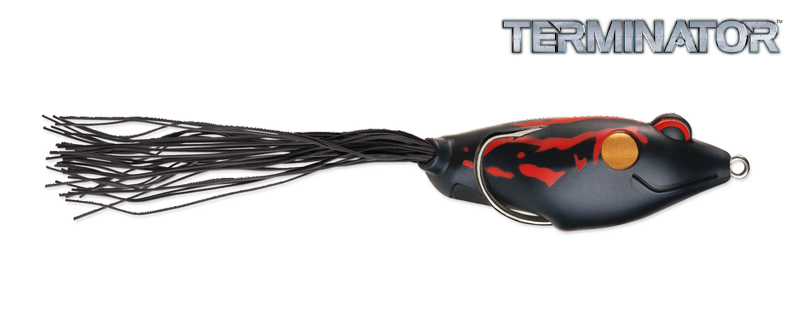
Notice the back has a killer design. Dang! That’s SWEET! And as you work it over the muck and the pads… the bass are going to see… the white belly (if anything)…
That’s not bad, but it’s something to be mindful of when you are selecting your topwater. And sure, bass that see the frog at an angle might notice part of the top. If it rolls (not ideal) on the retrieve, they might be able to catch a glimpse… but for the most part if you go with a bait like this you’re simply throwing a white frog.
This Terminator Frog has some accent colors on top, but the entire body is black. Hence, you’re throwing a black frog.
This means you can probably minimize your frog box and focus on quality, not quantity.
2. In mucky water, the bass don’t care what your topwater looks like.
Say again?
If bass are set up below thick mucky algae, they don’t care what your bait looks like, because they can’t see it anyway. This is true when the water below the algae is clear, and even more true if the water is stained, tannic, or straight up pea soup.
They are reacting to the commotion – the movement – the easy meal.
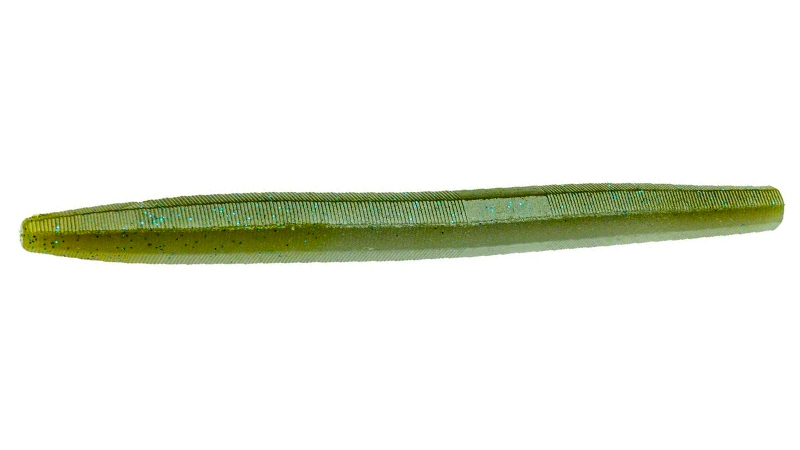
Because of this, one of my favorite ways to target these bass is with a 4″ or 5″ Yum Dinger rigged weedless and weightless on a 3/0 or 4/0 EWG.
New honey hole with muck near shore, pea soup for water, and healthy bass.
Here is the gear I use when I’m rigging a Dinger on an EWG, including my mainline (braid floats) and my leader material (fluorocarbon line gets snagged up less than braid and is abrasion resistant).
As you can see, this is different than the gear that comes into play for throwing straight wacky worms around weeds or sparse cover. When I’m not fishing around muck, I’ll completely skip a weed guard on the hook to stay as invisible as possible, crisscross 2 o-rings to rig perpendicular to the bait which increases hookups, and go with a thinner fluoro with less memory:
When you throw a Dinger topwater, it’s essentially a weightless Texas rig. Slow-sinking, yes, but not heavy enough to punch through the mats. However, when you reach the edge of the mat, pull it off and let it slowly sink for a second or two. Often times bass that are watching the movement above will gladly shoot out and smoke the slow-sinking stickbait as it drifts right in front of their face.
That is… if they haven’t already SMACKED it right through the thick of it!
Largemouth Bass Strikes a Topwater Stickbait thru Muck
Quick Trip: Topwater Dingers in the Muck
I keep a selection of both floating and sinking stickbaits in my Base Box for Fishing Muck, but it’s also important to remember as a Minimalist Fisherman our goal is to travel as light as possible. On kayak trips when we can only select a handful of baits, frogs take up a lot more room that stickbaits.
They’re also less versatile.
FACT.
You can hit every depth with a stickbait, provided you have a few sinker & hook options.
Your support directly funds the creation of weekly articles and videos that promote the development of better anglers and better men. Our country (and our kids) need both. Please share this site, and consider a monthly, weekly, or one-time donation. You are helping us make a difference!
Have you ever struggled to keep up with something?
I have, and to be honest – I’m having a rough go of it lately…
What do we do as fishermen when we get a free second?
We fish.
Fair enough.
I’ve been fishing as much as possible lately. That means I haven’t been writing or editing videos as much. That’s a bummer – but on the other hand, it helps me stay sane. Helps me stay away from bad habits…
This year has been a wild one – and it ain’t over yet.
So far I’ve managed to almost sink my kayak, had ticks on my unmentionables, I’ve busted rods and reels, lost big fish, and I just discovered some fun new leaks in my jon boat. To top it all off, I’m recovering from a very painful allergic reaction to the antibiotic I had to take to help kick my incredible, amazing, MASSIVE, nose infection.
That was genuinely scary. I posted a quick video hoping it might prevent other fisherman from suffering the same painful fate. To warn them. It seemed to resonate with a few different online creators, and one in particular reached out to to let me know he planned to share the video, and send along some well wishes.
That gentleman was Rick Vogelbacher. We struck up a few conversations, and I asked Rick if he would like to contribute to the site. He obliged, and much to my surprise – he wrote a piece that dealt with one of my favorite presentations: The Jerkbait.
The following is just a straightforward 5-minute read, but it covers jerkbait use at different times of the year… plus some additional info I was unaware of…
It’s The 5-Minute Jerkbait Guide for BIG BASS. Check it out, and let me know what you think!
The 5-Minute Jerkbait Guide for BIG BASS
By Rick Vogelbacher
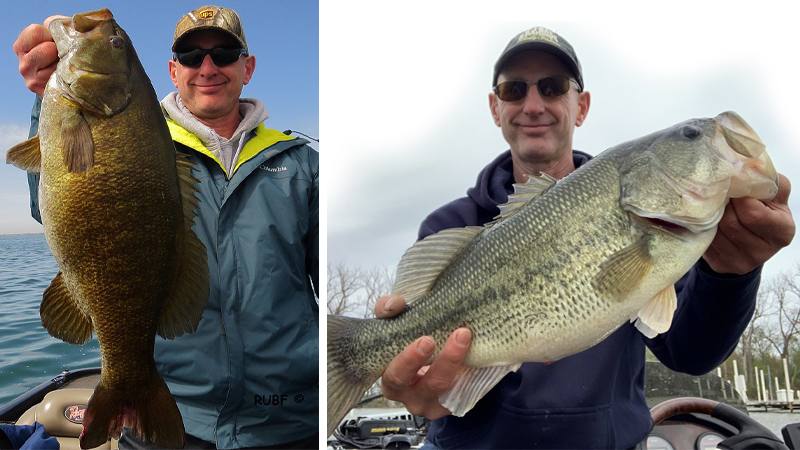
Author Rick Vogelbacher with a MONSTER 7 POUND SMALLMOUTH (and a beauty of a largemouth bass to boot)
Fishing jerkbaits for bass can be overwhelming with so many choices on the market. You have ones that float, sink, suspend, or dive to different depths. How do you know which ones to use? There are times when we make these choices a little more difficult than they need to be. It can be as simple as the time of year you’re fishing. It could be the body of water you’re on that helps you make the choice for the day.
Let’s go over some of the basic choices for the time of year you’re fishing.
Fishing Jerkbaits in Early Spring
Ahhh… spring time fishing. The water is cold and it’s the first warming trend since the winter months. I’ve caught them on jerkbaits with the surface temperatures ranging 40 to 60 degrees. The clear choice for jerkbaits during these cold-water days is a suspending jerkbait.
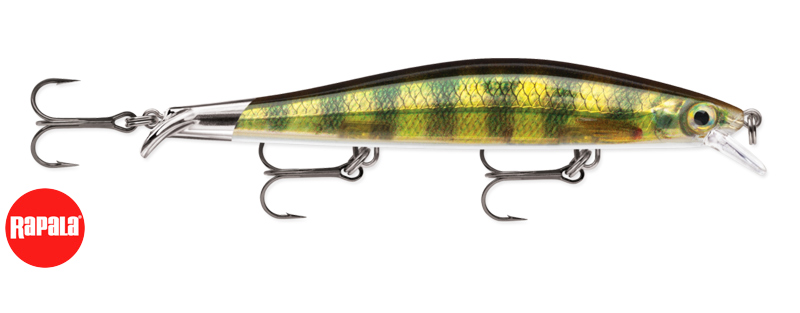
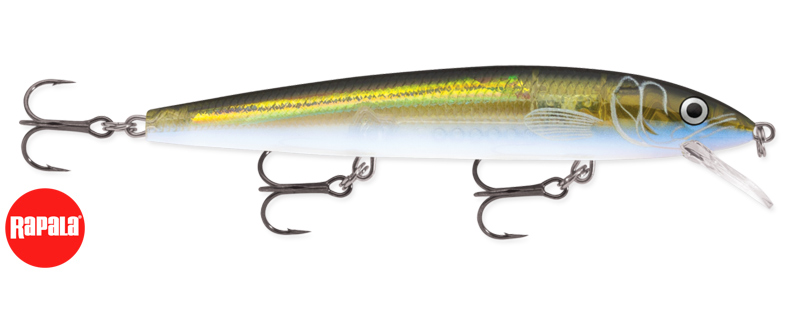
They come in deep diving variations, and mid-range models that dive just 3 to 6 feet. The package or product description should tell you if the model suspends, and how deep it dives.
Colors can vary and depend on the body of water you’re fishing. Generally, jerkbaits are a good choice when you are fishing clear water. They are a visual presentation, and therefore excel in clear water situations. Stained water can be productive at times, but you will want to use a much brighter color so the fish can zero in on the jerkbait. They won’t travel as far in stained water to chase a jerkbait as they do in clear water.
One of the biggest things fishing a suspending jerkbait in the spring is to focus on the cadence of the retrieve. I would venture to say more often than not you will want to do at least a 3 to 5 second pause in between jerks with the lure. Typically fluorocarbon lines are preferred by pro’s, but I’ve been doing just fine with mono for years.
The biggest difference is the monofilament line tends to float whereas the fluorocarbon line doesn’t. The most common line diameter to use is 8 lb. test, but strength and thickness can vary from brand to brand. Typically, I will use 10 lb. line. There are times I will go as heavy as 12 lb. line, but not very often. The thicker the line diameter the less action you will get out of your jerkbait. Translucent, silver, light greens or blue mixed in colors work well on clear lakes.
Fishing Jerkbaits in the Summer
Fishing jerkbaits during the summer is a whole different ball game. The surface water temperatures can run 80 to 90 degrees depending on the part of the country you’re in. There is no bigger emphasis on cadence on the jerks of the lure than during this period. It can vary day to day, but the majority of the time you are working the lure much faster than any other time of the year.
The bass metabolism is at its highest and they are keened in on chasing and eating baitfish. You will want to jerk your lure much quicker with much shorter pauses. Often pausing it briefly and either do two quick jerks or three in a row before the next pause. Colors for clear water will be the same, but you’ll notice that bass in stained water will be more active and likely to hit the jerkbait. The largemouth in this video below show just how effective a jerkbait can be during the summer months.
When the water starts to cool in the fall, the productivity of jerkbaits can really start to shine. You will use many of the same retrieves and colors mentioned in the early spring pattern, with one major difference – the bass will be less active some days as the water cools down. In the spring the water temperature is rising and the fish get more active with those rising temperatures. In the fall the opposite is happening. The water is cooling down and the fish are trying to get accustomed to the falling temperatures which can cause some inactivity. This is the main reason you will want to go back to those long pauses on the jerkbait to trigger the strikes.
The difference in getting bites and not getting bites can sometimes boil down to the size of the jerkbait you are throwing. Most jerkbaits are referenced by length in millimeters. For instance, anything with 110 in the name is going to be 110 millimeters long (4.33 inches). One that has 90 will be 90 millimeters long (3.54 inches). There have been days where we have only caught them on the smaller 90 and can’t get a bit on the 110.
Additionally, jerkbaits come in 120, 150, or really small in the 60 range. It’s something to be aware of when you’re trying to match the hatch of the bait fish they are feeding on.
For more tips on jerkbait fishing and to see underwater footage of the jerkbait and baitfish they feed on. Check out the video below.
Big thanks to Rick for sharing his knowledge on the subject, and big thanks to you as well for checking this article out. There are many more coming down the pike, as this year has been very challenging – but also very rewarding. I’ve spent a lot of time these last 2 months in the jon boat. These next few weeks I’ll hit my pits as hard as possible, before everything slows to a crawl…
Fat bass caught skipping a Z-Man Trout Trick… although, the Z-Man FattyZ have been more productive…… and the jerkbait bitehas been good as well… for smallmouth and largemouth!
Get out & get some.
Tight Lines & Godspeed, Patriots.
Get Articles & Videos First
Catch More Fish Than Your Friends. Laugh At Their Tears.
Your support directly funds the creation of weekly articles and videos that promote the development of better anglers and better men. Our country (and our kids) need both. Please share this site, and consider a monthly, weekly, or one-time donation. You are helping us make a difference!
So, I have these hooks… and they are vicious looking little dudes… but, I haven’t been able to find a good use for them for years. Gear that sits like this, unused, needs to be tossed, round-filed – minimized.
However, while rolling them back and forth in my hands, lightning struck. On a recent bank-fishing trip to Snapping Turtle Pond I was able to fish stickbaits and wakebaits very effectively, but there was a major problem…
When I would get a bass up near the shore, the act of lifting the fish 10 feet high in the air, up and over the tall reeds & grass, resulted in several lost fish. They would either get stuck and fall back in the water, or my little wacky hook would simply pop free – releasing the fish before I had a chance to give ’em a smooch.
I needed a longer pole, heavier gear, and a hook that would stay put when lifting fish up and out. The CHT Double Wacky Hook paired with a stout spinning setup and heavy braid-to-fluoro fit the bill. Now the good news is that I have about 6 more of these, and they will last for a while – the bad news is that I’m not sure if they’re still making ’em… if anyone has any idea, please comment. Might be a good idea for me to send them an email right now just to check…
If you fish from the bank, check this out and go get some hawgs!
Lifting Fat Bass High Into the AirClick the banner to jump to Stars & Bars Fishing on YouTube.
The Lunkerhunt Battle Beetle is something that I will try again. However, it has two exposed trebles on the back. On this trip the slight amount of floating debris made this bait unusable.
The CHT Double Wacky Hook allowed me to lift big fish up and over the tall shoreline reeds & grass. This hook did not pop free as easily as a single wacky hook on previous trips.
The o-ring allows the maximum amount of hook to be exposed – just like using o-rings with a standard wacky hook. Cool feature.
Big fish will hide right up next to shore if there is adequate cover and they feel safe.
It all comes down to balance. When I’m fishing clear water, I go as light and natural as possible, but in a place like this increasing the size & strength of the entire rig is a must.
Your support directly funds the creation of weekly articles and videos that promote the development of better anglers and better men. Our country (and our kids) need both. Please share this site, and consider a monthly, weekly, or one-time donation. You are helping us make a difference!