Category: Learn to Identify the Black Basses

  • How to Identify Smallmouth Bass

    How to Identify Smallmouth Bass

    Smallmouth bass (Micropterus dolomieuMicropterus dolomieui is a common, somewhat accepted misspelling) and largemouth bass (Micropterus salmoides) are the two most widespread, popular – and important – of all of the black bass species.

    AJ Hauser with an Early Morning Football Smallmouth
    Early Morning “Football” Smallmouth Bass

    As their name suggests, the biggest differentiator between the two is the size of their mouth. The jaw of the largemouth extends past the eye (when the jaw is closed), while the jaw of the smallmouth ends before the eye.
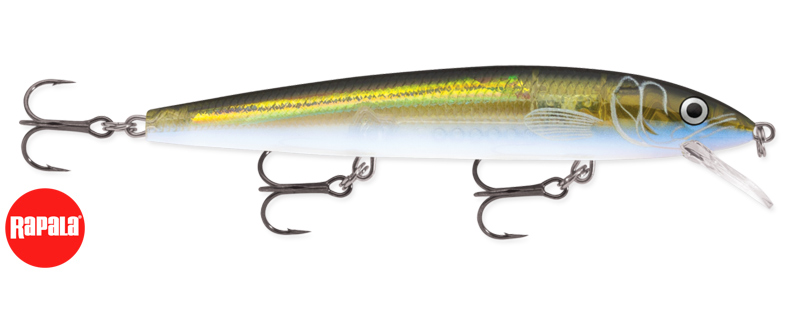
    Ad Rapala Husky Jerk Olive Ghost Banner
    The Rapala Husky Jerk

    The Northern Smallmouth Bass

    Largemouth bass usually have a dark horizontal stripe on their body – which explains the nickname “linesides“. Smallmouth bass typically showcase beautiful vertical bars on their bodies, and angled lines on their face & gills.

    The Northern Smallmouth Bass can have light or dark coloring – Micropterus dolomieui dolomieui

    The Neosho Smallmouth Bass

    The Neosho Smallmouth Bass is a stream loving strain. They can be found in Arkansas and Oklahoma waters – again, usually in streams. If you are targeting a true Neosho, look to 6 different counties in Oklahoma: Ottowa, Delaware, Adair, Cherokee, Mayes and Sequoyah. (Locals also claim that southeast Oklahoma is home to the genetically distinct Ouachita smallmouth bass.)

    On rare occasions, Neosho bass will be caught in Grand Lake, the dividing line between “true” and “contaminated” strains of smallmouth bass; a result of the state’s stocking programs. In years past, this subspecies was described primarily using slight differences in counts of the second dorsal fin rays, pigmentation patterns, and dentition on the tongue – however these are not flawless methods as the differences between the Neosho and the northern smallmouth are subtle.

    In the field, the fastest way to identify a Neosho is to look at the bottom lip. When the mouth is closed, it will protrude ever so slightly – more than a northern strain – as if the fish is enjoying a pinch of snuff.

    The Neosho Smallmouth Bass – Micropterus dolomieui velox

    A Freshwater Chameleon

    You may have noticed something while looking at the pictures above. One example of northern smallmouth was light, the other, dark. That’s because both largemouth and smallmouth bass will change color to blend in based on their surroundings. Largemouth can be deep, dark green in heavy cover, or light green, even somewhat golden – when taken from sandy bottom pits, as shown below:

    AJ Hauser with a Golden Pit Largemouth Bass
    Notice the golden color and light contrast on this pit bass that lives on a sandy bottom…
    AJ Hauser Illinois Largemouth Bass Fishing
    … compared to the deep coloring on this bass caught in the same state out of a pond with dark, thick green cover.

    Smallmouth bass are often a nice golden bronze or a dark brown. In our experience, smallmouth caught off weed edges seem to have more contrast and showcase their vertical bars. Sandy bottom smallmouth living by sunken logs and boulders usually exhibit less contrast, and a more uniform color overall.

    Scott Hauser Releases Smallmouth Bass
    Dad releasing a nice smallmouth bass with excellent contrast and coloring, caught on the deep weed edge.

    Largemouth and smallmouth bass are both omnivorous, opportunistic feeders, but smallmouth are better adapted at feeding on crayfish and smaller crustaceans in rock crevices. The mouth of a smallmouth is more pointed and better for feeding down than that of a largemouth. Smallmouth also have a more streamlined body better suited for rivers and current.

    Like the largemouth, the smallmouth bass has been widely transplanted outside their original, native range. From Northern Minnesota and the Canadian Shield Lakes, to New England and the mid-Atlantic states. Introductions have also taken place in rivers and reservoirs throughout the western United States.

    Indeed, many bodies of water that once held no smallmouth now offer world-class smallmouth fishing.

    Known Range of Smallmouth Bass in The United States
    Known Range of Smallmouth Bass in The United States – Visit USGS.gov for current information

    In certain locations, largemouth and smallmouth can be found in the exact same areas, even though these fish have evolved in different habitats. Smallmouth typically thrive in cool, clear lakes and rivers with gravel bottoms and moderate flow.

    We discussed this in our series on Learning to Fish Rivers & Streams. The headwaters of a stream or river are clear and cool, the flow is faster. This is ideal trout water. The middle section slows and becomes warmer as the water runs through shallow riffles and watersheds. This section will hold more walleye and smallmouth. Still further down, the stream widens out, more tributaries enter, and the pool-run-riffle pattern repeats again and again, warming the water even more and ultimately providing excellent largemouth bass cover in the backwaters and oxbows that form.

    The different fish are perfectly matched to these different conditions.

    Smallmouth and spotted bass (another subspecies we’ll talk about in the next section) thrive in highland reservoirs, while largemouth bass do best in flatland or lowland reservoirs. Some reservoirs are diverse enough to provide habitat for all three of these bass types:

    Spotted bass may prefer the deep midsection of a reservoir, largemouth will opt for the shallow arms in the upper third, and smallmouth may set up in the lower third.

    Tiny SMallmouth Bass in Wisconsin

    No matter where they are located, smallmouth bass have distinct features and advantages in certain environments – and they fight hard, making them extremely fun to catch – no matter what size!

    Tight lines!
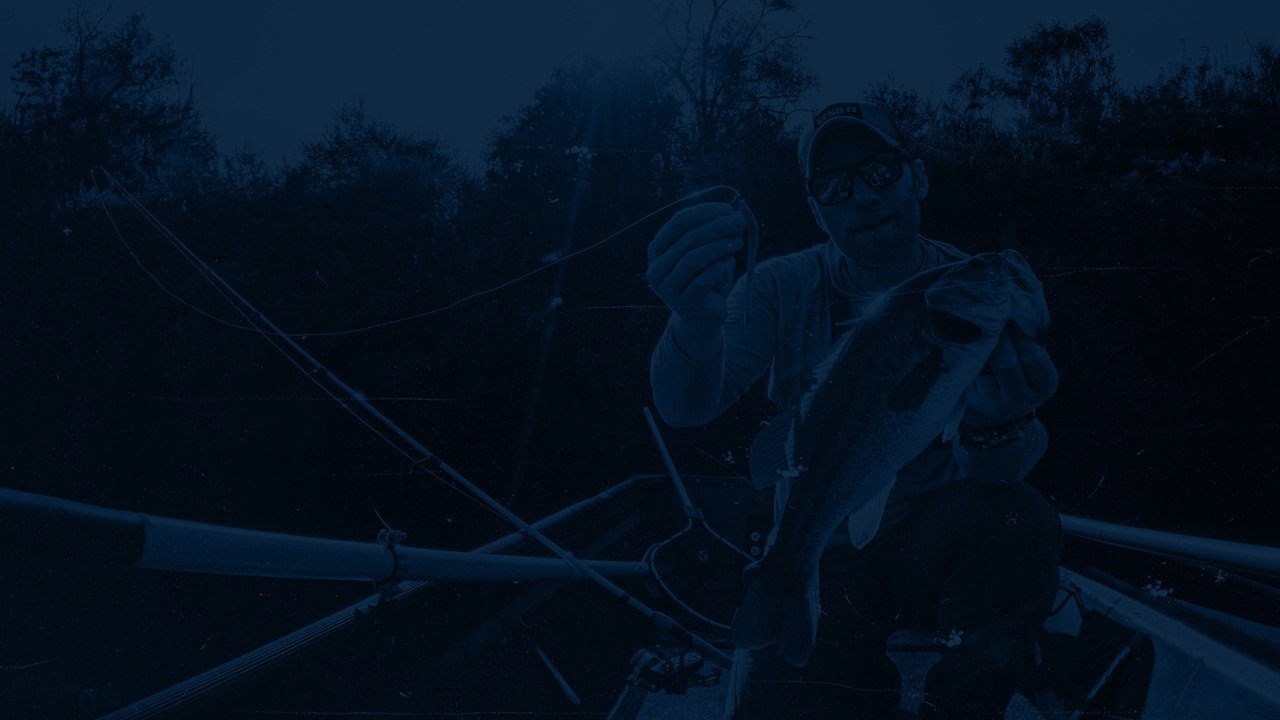
    Callout Section The Minimalist Fisherman Midwest Bass Fishing Blue Banner Background Migration
    The Minimalist Fisherman Father Son Bonding Better Anglers Better Men

    Thank You For Your Support

    Your support directly funds the creation of weekly articles and videos that promote the development of better anglers and better men. Our country (and our kids) need both. Please share this site, and consider a monthly, weekly, or one-time donation. You are helping us make a difference!

    TMF Small White Logo
  • All About Black Bass: Part 1

    All About Black Bass: Part 1

    *zzzzziiiiiinnnnggggg* screams the drag as line is violently ripped from your spinning reel.

    Whaddya got on there buddy, a big ‘ol bronzeback?!

    A what!?“, you holler back to Grandpa as he drops his Zebco and scampers over sticks and brush, moving quickly towards your current location.

    A bronzeback! Big ‘ol hawg. Lookin’ like a dang football!

    You look around scanning the shoreline, expecting to find a handful of empty beer cans. “You said you had coffee in that thermos not hooch! Why the heck are you speaking in tongues?!

    A smallmouth bass kid! But I guess probably not in a pond… Oh waitwaitwaitWAIT I see some green – you got a spot? Meanmouth? Kentucky? Or did you hook into a nice bucketmouth?! Black bass?! They’re all black bass… WAIT – I see ‘er – ‘ol linesides!!! Looka’ thar looka’ thar whatta TOAD!!

    *ker-SPLOOSH!!*

    Grandpa… are you off your meds?

    JUST LOOK AT THAT DONKEY!!!

    The monster bass makes another acrobatic leap out of the water, then returns to the algae-covered pond with a massive sideways splash that further disrupts everyone still inside their tents at the campground. The once silent morning has been completely shattered by what sounds like a crazy person. The two of you make eye contact for a brief second, and the look on Grandpa’s face lets you know he is not joking.

    Campground Morning Fishing

    *zzzzziiiiiinnnnggggg*

    The green behemoth pulls you back to reality, making another extremely powerful run.

    We gotta land that fatty! He’s a giant! A gorilla! A REAL WHOPPER! What a BRUISER! STUD MUFFIN! A BEEFY CHUNK BOX!!

    Grandpa seriously…

    SHAMOOOOOOO!!!!!“, he screams as he angles his head back and releases a primal howl. It’s as if this fish has awoken something deep inside – something that has been dormant all winter, begging to be released.

    You bend down to the edge of the mucky water, slowly pulling the bass towards your outstretched hand.

    Just a bit closer darlin’… a bit closer… lemme get a lip on ya…“, you mumble to yourself… pulling a bit too hard on the line…

    *pop*

    The hook flies out of the mouth of the fish just two feet from the shoreline.

    Your heart stops.

    You look down down in disbelief at your hand – the hand you were unable to place within the maw of the fish.

    No… no… no no no… nononono…”

    SHAMOOOOOOO!!!!!” Grandpa screams again as he lunges past you, flinging himself head first into the water, tearing the thick green mat covering the pond in two. He seems crazed. Unwilling to accept defeat. This is not the one that got away!

    Giant Splash Grandpa Jumps After Fish

    You take a step back, wiping the splatter from your own face and notice he’s managed to place a hand on the beast. Then another. He lifts the fish then drops it. It flops left. He goes left. It flops right. He goes right. Reflexes are on high alert. Adrenaline coursing through his veins. It’s like watching someone wrestle a greased pig; the fish is bucking like a crazed bronco – but this ain’t Grandpa’s first rodeo…

    GAHHHHHHHGetOverHereYaBigFatCowIGOTCHAAAA!!!

    He thrusts his arm towards the sky… along with a beautiful 6 pound largemouth bass. Not a blemish on her. Truly a giant for this campground pond. His knuckles are white aside from the blood, and his grasp on the lower mandible resembles something closer to a vise-grip than a human hand.

    The sun, now peeking over the trees provides a soft warm glow behind the mighty warrior. One might describe the scene as angelic… if the victor wasn’t completely covered in foul green sludge.

    Here’s your mondo,” he says with a pleasant Grandfatherly smile, extending his arms and the fish towards you.

    No Grandpa, you earned it. It’s your fish.

    OUR fish then“, he smiles again, covered in stinky green pond scum, “let’s see if anyone is awake and ask them to snap a picture.

    He looks right at you as the blood immediately drains from your face…

    I forgot the camera.

    Silence.

    A cardinal sounds off.

    Ha! That’s ok… I don’t think we’ll forget this one…

    The two of you take one more gander at the magnificent specimen and gingerly place her back in the shallow water, holding her by the belly and gently working water through her gills. Then after just a few seconds, you watch as she slowly saunters off. No doubt she’ll live to fight another day.

    The calm morning sounds have returned to the campground, and as the two of you watch the ripples slowly fade, you share the exact same thought:

    What a perfect morning.

    All About The Black Bass

    Largemouth bass are often called black bass, which can be confusing – mainly because they aren’t “bass” at all. What about all those other fish we call bass, you ask? Well, they’re not really related to largemouth… because the largemouth is a sunfish.

    I know, I know… mind blown.

    The largemouth bass is the world’s largest sunfish.

    Known Range of Largemouth Bass in The United States
    Known Range of Largemouth Bass in The United States – Visit USGS.gov for current information

    The sunfish family, Centrachidae, includes 33 species that live in warm or cool water. Their flat bodies offer plenty of fin area, useful for short bursts of speed and maneuvering in tight places. Sunfish have spiny dorsal fins – in fact, the name “bass” is derived from the Old English word baers, meaning “bristly like a wild boar“. These spines give sunfish limited immunity to attack, as preyfish will often opt for soft-rayed morsels over spiny sunfish.

    If they don’t… this can happen:

    Largemouth Bass Eating a Largemouth Bass
    Such a waste. During our last walk around the lake during the cold water period we came across this bass whose eyes were definitely bigger than his stomach…

    Sunfish are shallow-water nest builders. The male is tasked with protecting the eggs and the young (with the single exception of the Sacramento perch… which is a sunfush, not a perch… to help add to the confusion).

    However, the largemouth differs from their sunfish cousins in many ways. If you’ve ever caught a sunfish you may have noticed their small mouths are perfect for feeding on insects, zooplankton and small crustaceans. By contrast, the largemouth has a gigantic maw and a much heavier frame. In certain bodies of water, they are the dominant predator. This means they can use the water and cover in any way they see fit – they can be at any depth at any time.

    AJ Hauser with a Beautiful 5 Pound Largemouth Bass
    You’re a… you’re a SUNFISH?!

    These characteristics must be advantageous for predator fish, as other fish unrelated to bass have evolved into similar shapes over time. White, yellow, peacock, striped and sea basses are not related to largemouth bass. However, they are called bass because of their body forms. The word bass has been applied to many fish with spiny dorsal fins, big mouths and chunky body types.

    #triggered

    Maybe we should stop being so offensive?! Maybe stop fat-shaming and ask the bass how it identifies?? Maybe it’s non-binary?? BIGENDER?!?! GENDERFLUID?!?! HMMMmmmmm????????

    </end sarcasm>

    Yeah… maybe.

    Maybe not.

    I’m most interested in what she wants to eat.

    Come ‘ere you fat pig… (he said with love)…

    The Black Basses

    Within this family of sunfish, the largest members are indeed called the black bass. Again, even this name is confusing – since they aren’t even black! Darker yes, but not black. These black basses include: largemouth, smallmouth, spotted, redeye, shoal, Suwanee, and Guadalupe.

    Depending on who you talk to, you’ll come across different “lumps” or “splits” in these species & sub-species, as bass have been continuously recategorized, but no matter what you call them (donkey, toad, football, spot, hawg…) or where you find them – one thing is for sure…

    Bass are fun to catch!

    So let’s take a look at some of the differences between the most common species that you are likey to find on the other end of your line – all the fish that we lump together into the confusing category of BLACK BASS.

    Tight lines!

    Callout Section The Minimalist Fisherman Midwest Bass Fishing Blue Banner Background Migration
    The Minimalist Fisherman Father Son Bonding Better Anglers Better Men

    Thank You For Your Support

    Your support directly funds the creation of weekly articles and videos that promote the development of better anglers and better men. Our country (and our kids) need both. Please share this site, and consider a monthly, weekly, or one-time donation. You are helping us make a difference!

    TMF Small White Logo