Tag: Catch Big Bass

  • Rowboat Bass Fishing for Big Fat Hidden Largemouth

    Rowboat Bass Fishing for Big Fat Hidden Largemouth

    Good morning brothers.

    I’ve been gone for a bit – traveling (and fishing) with family, writing for a few new outlets, and just being blessed overall with some awesome new opportunities… but very busy. It’s time to get back into reviewing notes and fishing techniques that have worked well this year, and here’s an awesome little realization I’d like to share with you…

    I’ve recently discovered there’s something different about a rowboat. Not just in how it moves – but in how it makes YOU move. How it slows you down. How it connects you to the water by removing things like electric trolling motors & sonar screens.

    It’s different.

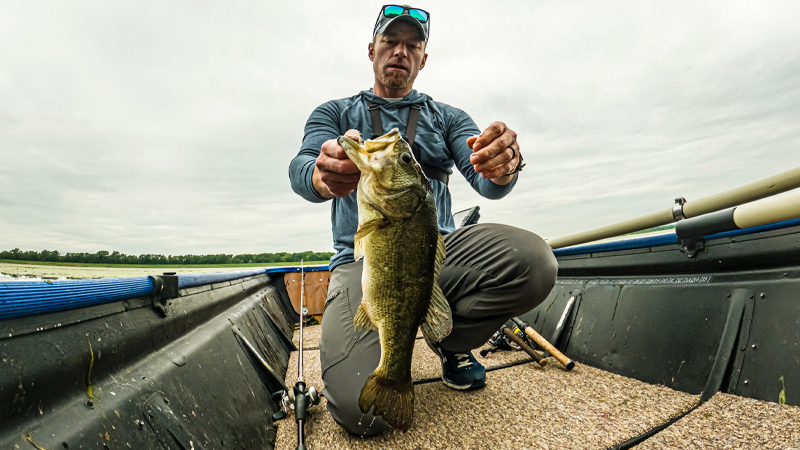
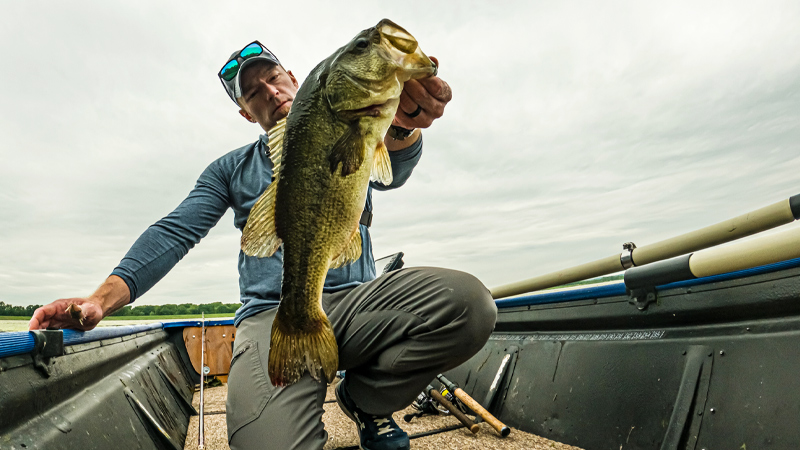
    It’s also one of the BEST ways to gain access to big, hidden largemouth bass in the thick – and I mean THICK – stuff. Rowboat fishing is a physical activity and it will challenge your body in a good way, and after fishing everything from kayaks to charters to modern bass fishing boats that cost more than a house… there’s something special about stripping it all back. Drifting quietly with nothing but the rhythm of your own hands. Pulling big, fat bass into the boat from areas that NOBODY else is fishing, because their trolling motor would get eaten alive… yeah man, never thought I’d say it but… I love rowboat fishin’!

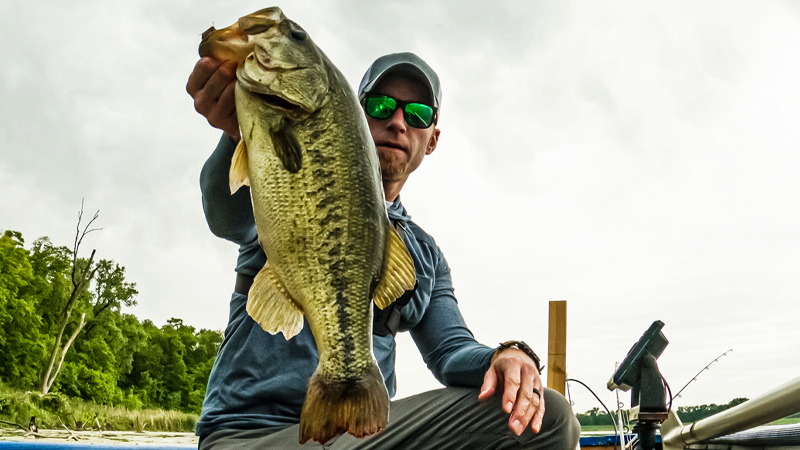
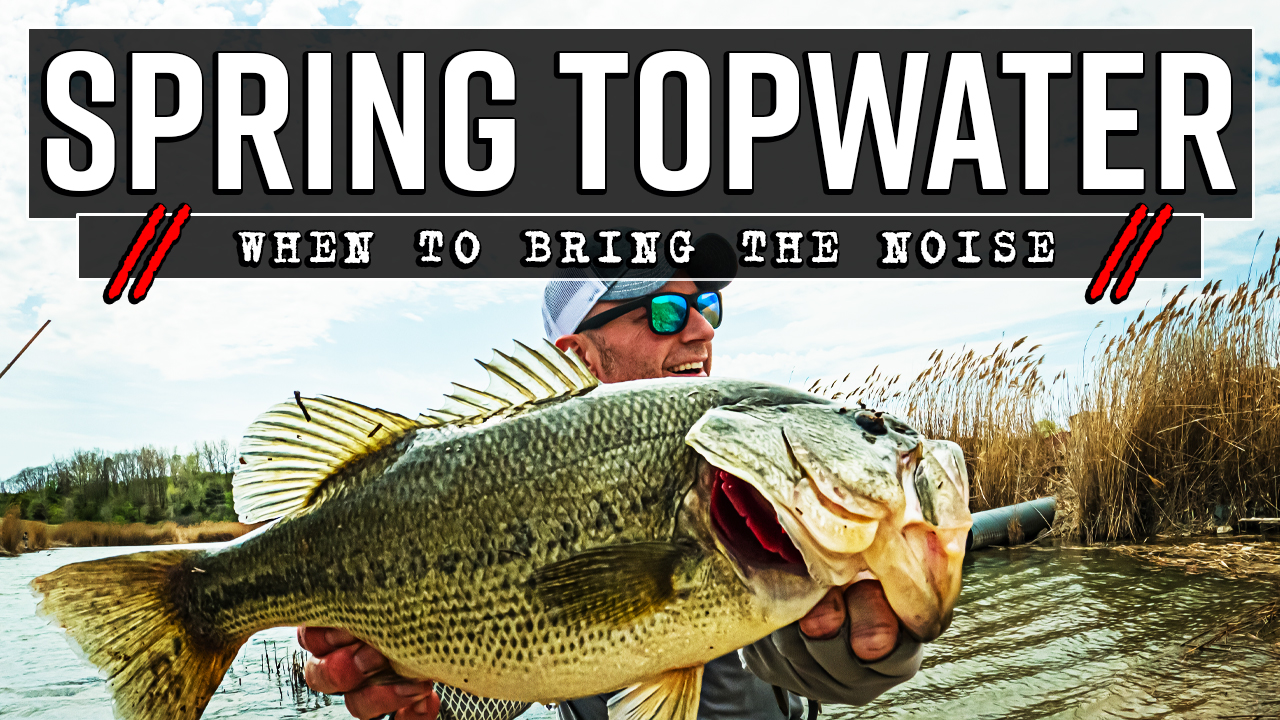
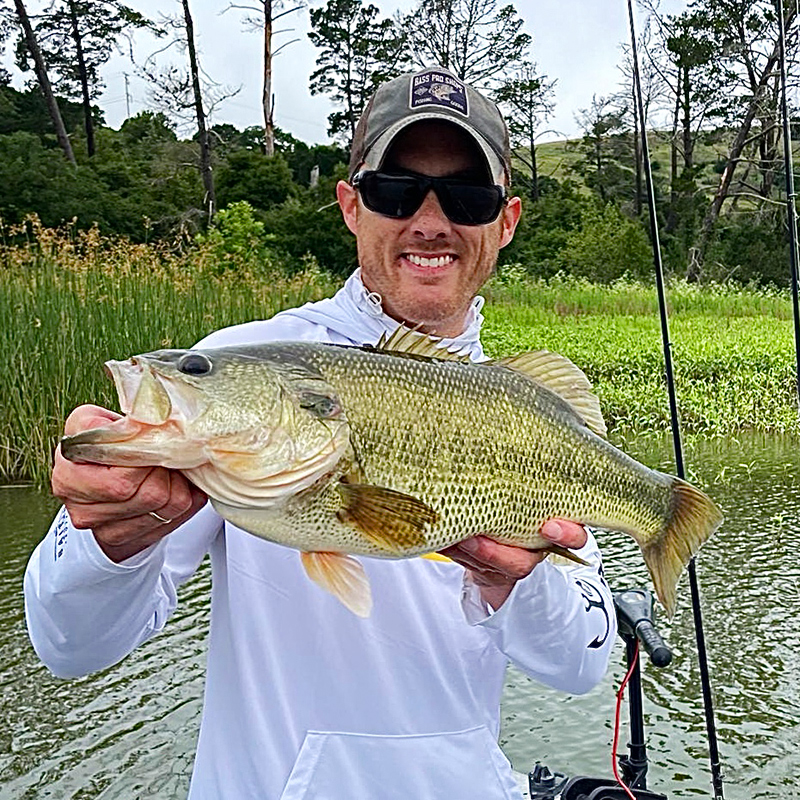
    Big Fat Hidden Largemouth Bass Taken While Rowboat Fishing

    One presentation you absolutely for fishing thick stuff is The Crowbar Rig.

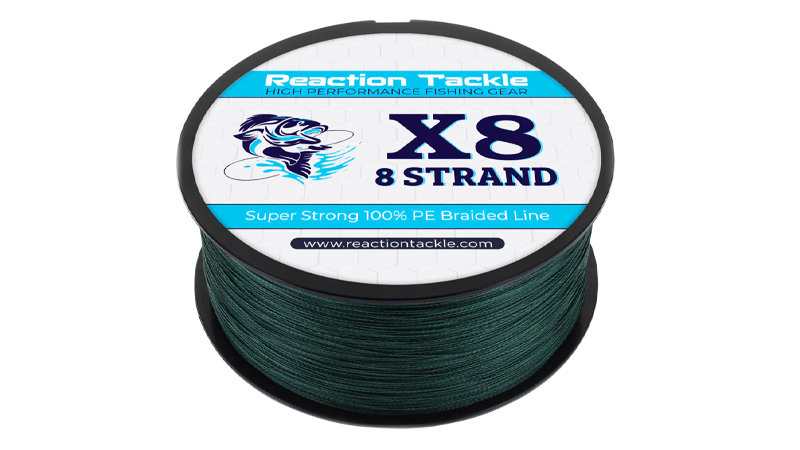
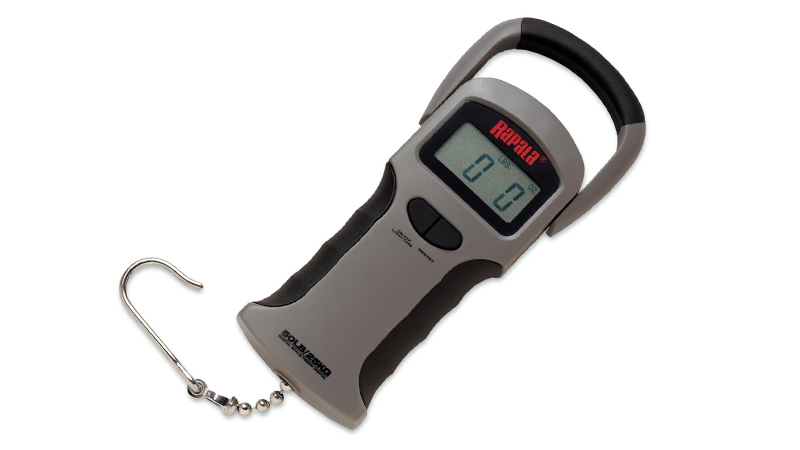
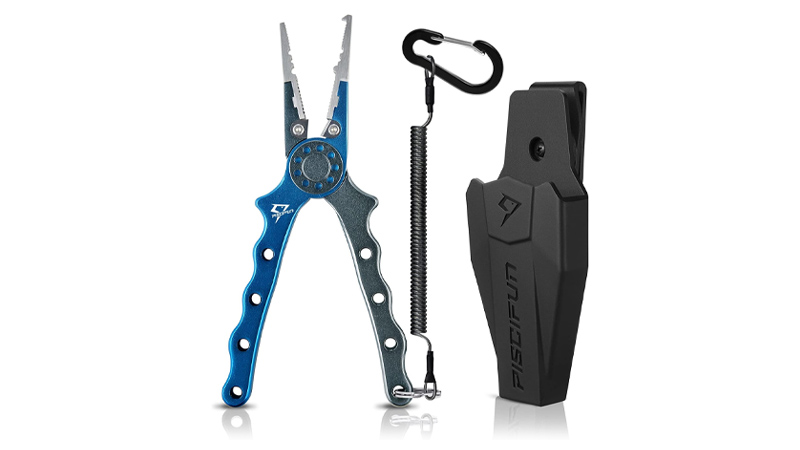
    Gear for Making The Crowbar Rig:

    When to Bass Fish from a Rowboat

    First, when it’s too dang thick to get around any other way! (I considered testing out a push-pole in here, but it was just too clunky and surprisingly expensive.)
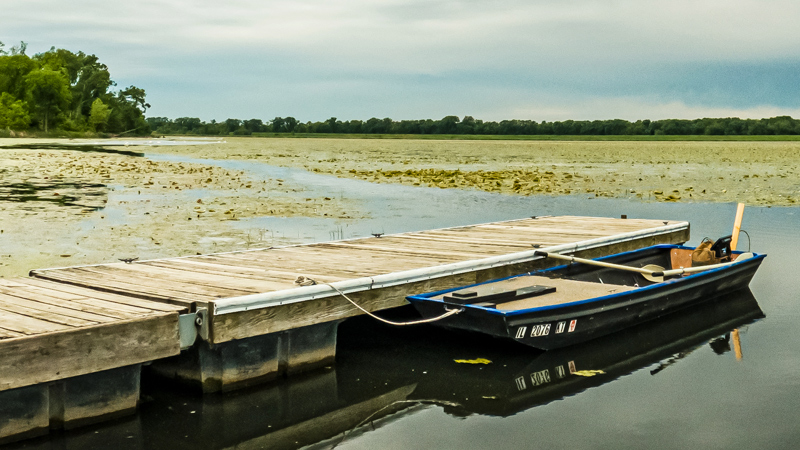
    Jon Boat / Row Boat Rowboat Bass Fishing Lake
    That’s lookin’ a little… thicc

    Rowboat bass fishing shines on small to mid-sized lakes, but you could also use it to your advantage on bigger lakes with large, choked-out bays. It’s also great if you simply want to enjoy a more peaceful approach. You’ll see things you would’ve missed. Bass cruising the edge of a sunken log. A pike darting around the cabbage. Panfish suspending beneath the reflection of an overhanging tree.

    Thick-cover water like this rewards patience, stealth, and presence – and this method of fishing forces you to pay attention to what’s in front of you.

    Additional Rowboat Fishing Gear To Have On-Hand:
    Jon Boat / Row Boat Rowboat Bass Fishing Lake Largemouth Hopper Crowbar
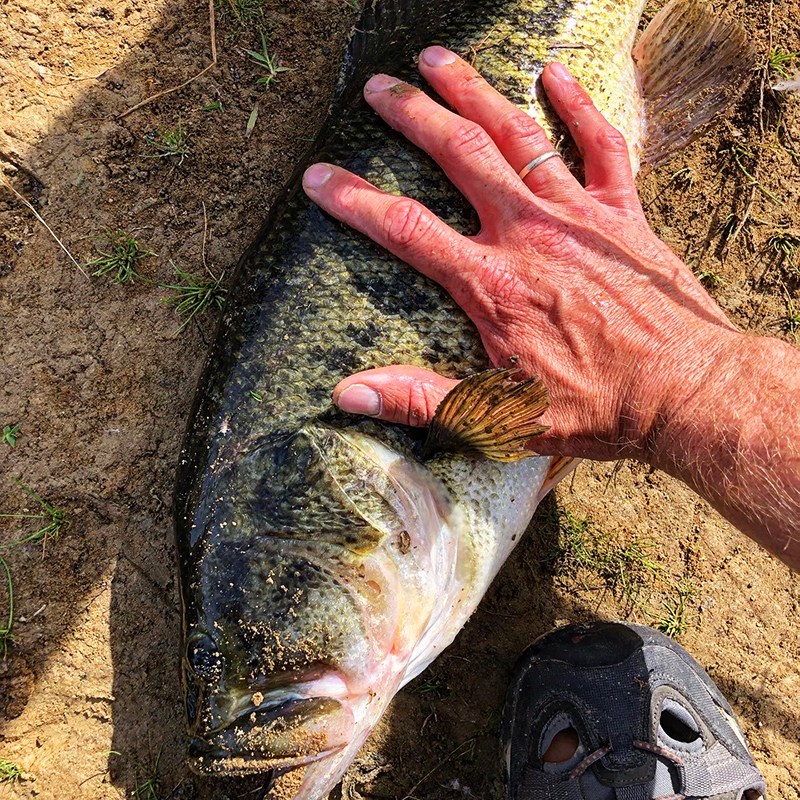
    Rowboat Fatty – never woulda caught her without my little dingy!
    Jon Boat / Row Boat Rowboat Bass Fishing Lake Largemouth Hopper Crowbar Skinniest Skinny Sick Deformed
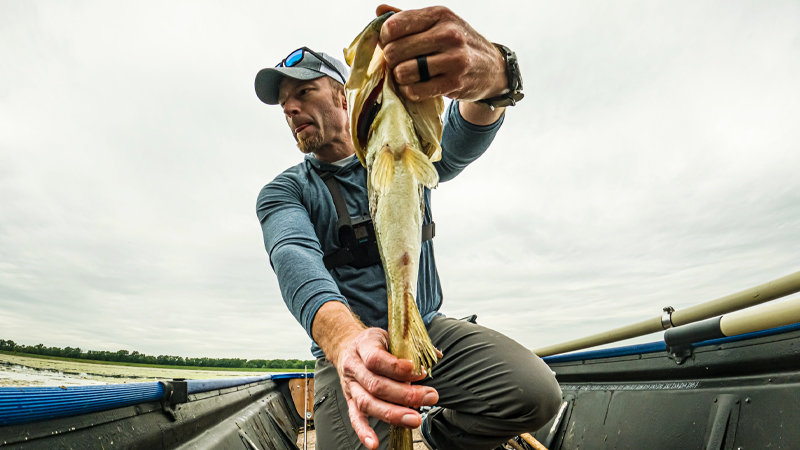
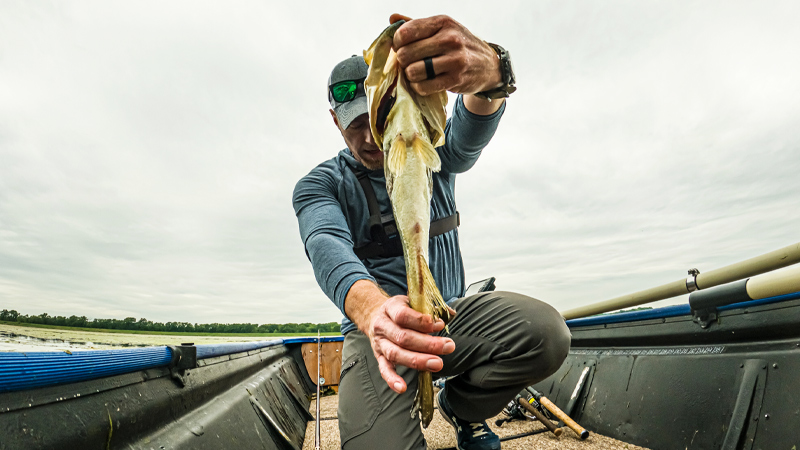
    Another rowboat bass with some sort of deformity or sickness. 18″ long and way under 2 pounds – something was wrong with this one… not sure what…
    Jon Boat / Row Boat Rowboat Bass Fishing Lake Largemouth Hopper Crowbar Skinniest Skinny Sick Deformed
    Eat
    Jon Boat / Row Boat Rowboat Bass Fishing Lake Largemouth Hopper Crowbar Skinniest Skinny Sick Deformed
    – A –
    Jon Boat / Row Boat Rowboat Bass Fishing Lake Largemouth Hopper Crowbar Skinniest Skinny Sick Deformed
    Sammich

    I’m not saying dump your electronics forever – but consider shoving off with nothing but a rod or two, a couple of oars and a small box of confidence baits. Fish slower. Enjoy the environment you’re in, get into the areas other guys aren’t exploring – and soak it up. It’s a different way to fish, and a different way to experience the water… and it’s GOOD.

    Tight Lines & Godspeed, Patriots.
    Callout Section The Minimalist Fisherman Midwest Bass Fishing Blue Banner Background Migration
    The Minimalist Fisherman Father Son Bonding Better Anglers Better Men

    Thank You For Your Support

    Your support directly funds the creation of weekly articles and videos that promote the development of better anglers and better men. Our country (and our kids) need both. Please share this site, and consider a monthly, weekly, or one-time donation. You are helping us make a difference!

    TMF Small White Logo

  • Be a FLEXIBLE Fisherman… It Pays Off! (Bass Fishing After a Storm)

    Be a FLEXIBLE Fisherman… It Pays Off! (Bass Fishing After a Storm)

    It wasn’t supposed to be like this.

    The jon boat was finally ready, loaded, and trailing behind me as I sped toward my favorite canal. It was the fourth week of April, and even though it was a little brisk at 65°, it was comfortable. The only thing that made me uncomfortable… was the clouds up ahead.

    But winter had finally released its grip on spring, and with the slight increase in warmth, life had to be stirring beneath the surface of the water. Clouds or not, I had to check. Within 55 minutes, the ramp came into view. I slammed the truck in park and walked over to the water to see how things looked…

    Then the sky tore open.

    Not a rumble. Not a flash. Not a drop of rain. Just a brutal, bone-deep crack of thunder following a streak of lightning so clearly visible it made the hair on the back of my neck stand straight up.

    I didn’t launch the boat.

    Instead, I cussed, got back in the truck, and drove all the way home. “What a flippin’ waste of two hours,” I mumbled… but about halfway through the drive, something changed. I went from sulking to planning. When you’re a father of five running two businesses, there aren’t many days you get to fish. So, my options were to be sad – or be flexible.

    I opted for the latter. Dropped the boat, grabbed a different Base Box, a backpack, rigged two simple rods, and drove to a nearby group of small lakes with shoreline access. If I hadn’t… I never would have caught her…

    Sometimes the best days begin with a little flexibility.

    19″ of Pure Largemouth Attitude Exploding Topwater on a Crowbar.

    Fishing Flexibility

    In a nutshell, fishing flexibility means this: don’t force it.

    The scenario above is true – you’ve experienced it yourself. We make plans to fish a certain lake, a certain way, for certain results. God laughs. Heartily. Then tells us otherwise. If we can pay attention to these signs – to our surroundings – we can usually make better decisions. Decisions that will make us safer, make us look smarter, and, in truth, help us catch more fish.

    Rain? I’ll fish it. Clouds and even a bit of distant thunder? I’ll fish it. Lightning?

    I’m out.

    Don’t put yourself in a position where you are the tallest, most attractive thing on the lake – unless you’ve always dreamed of transitioning into a lightning rod.

    “My pronouns are cooked / goose.”

    Flexible Fishing Techniques

    Leaving the canal was hard – not only because it meant I’d have to wait to explore an area I know holds big fish, but because I had to adjust how I would approach the fish at the next location. I had to pick somewhere I could take cover quickly, which meant staying on foot. This limited the rods I could carry, and so two bank fishing techniques got the early-spring nod:

    1. Fling-a-Ding

    I love throwing YUM Dingers around, but the problem with Flingin’ a Ding is that they have very little weight. They’re durable, cheap, and they catch fish – all good – but they look dead unless you impart some action into them. There are several ways to do this, but the easiest is to put your Dinger on a Reaction Tackle Weighted Wacky Jig.

    Even in clear water, it seems like bass focus on the bait, not the weight. They’ll inhale your Frankenstein’d hot dog like it’s a gourmet offering! I’ll still opt for internal weights and super-light wacky hooks in pits with 500-foot visibility… but in semi-clear water like this, I don’t feel like I’m missing fish because of the exposed weight. Plus, the hooks are nasty, and the weight adds a pulse to the Dingers that is otherwise nonexistent. Very important. Very effective.

    The color white (or in this case, a more subtle smoke / pearl laminate) is perfect for overcast days as it creates a soft glow in the water. At times, it’s the best thing you can throw.

    Fling-a-Ding on Reaction Tackle Weighted Wacky Jigs
    Reaction Tackle Weighted Wacky Rig Dinger Largemouth Bass Fishing Snapping Turtle Pond Bank
    Ding
    Reaction Tackle Weighted Wacky Rig Dinger Largemouth Bass Fishing Snapping Turtle Pond Bank
    – A –
    Reaction Tackle Weighted Wacky Rig Dinger Largemouth Bass Fishing Snapping Turtle Pond Bank
    Ling

    2. The Crowbar

    The Crowbar is a combination of the components listed above: a Z-Man Goat Toad, a Trokar Magworm EWG with a bait keeper, two internal rattles inserted with the Rattle Snaker tool, and a floating bullet in front of your uni-knot to keep things ultra-muckless on your 40-pound Seaguar Gold leader.

    This setup was developed to pry big, mean bass from thick, heavy sludge. It’s a battering ram with a fishing license – like calling in an airstrike to deal with a raccoon problem. Brutal, yes – but effective.

    The single hook delivers a much better hookup ratio than a frog hook – especially when you consider that the extra weight of the solid ElaZtech gets flung in the air less than a hollow-bodied frog. The legs give you the ability to buzz or pause. You can twitch, hop, skip, and everything in between. The fluoro is less visible and abrasion-resistant if you want to work around stumps and laydowns.

    I could go on, but the bottom line is this: The Crowbar is an extremely versatile topwater presentation that I will leave tied on from the time the water hits 55° until the end of my season. Period.

    It’s a flexible technique for the flexible fisherman.

    Clear water? No problem. Buzz. Pause. Twitch. Brace for impact.
    The Crowbar Rig Largemouth Bass Fishing Snapping Turtle Pond Bank
    Crowbar Bass
    The Crowbar Rig Largemouth Bass Fishing Snapping Turtle Pond Bank
    Crowbar Bass

    So yes, it can be frustrating… but if you focus on improving your flexibility – becoming a flexible fisherman – you’ll make better decisions, safer decisions, and make hay.

    Tight Lines & Godspeed, Patriots.

    Callout Section The Minimalist Fisherman Midwest Bass Fishing Blue Banner Background Migration
    The Minimalist Fisherman Father Son Bonding Better Anglers Better Men

    Thank You For Your Support

    Your support directly funds the creation of weekly articles and videos that promote the development of better anglers and better men. Our country (and our kids) need both. Please share this site, and consider a monthly, weekly, or one-time donation. You are helping us make a difference!

    TMF Small White Logo

  • The 2 Best Seasons for Big Bass (and How To Catch Them)

    The 2 Best Seasons for Big Bass (and How To Catch Them)

    Good evening brothers.

    The following article was sent to me by my friend Jason Kaefer over at Wild Outdoor. We’ve been talking for a while about sharing experiences and articles back and forth, which is a great idea. After all, a rising tide lifts all boats. If you would like to discuss contributing to TheMinimalistFisherman.com feel free to get in touch! -AJ

    The 2 Best Seasons For Big Bass And How To Catch Them

    Jason Kaefer where to catch big bass 2 best seasons
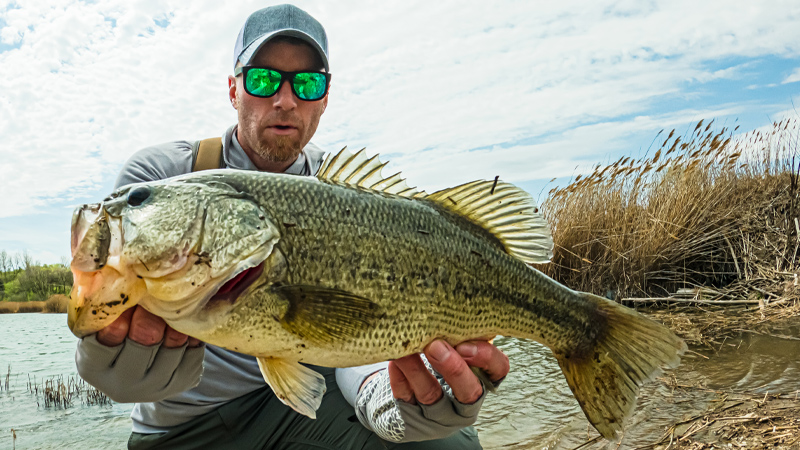
    Jason Kaefer and his big, fat bass.

    Are you ready to catch the biggest bass of your life but don’t know where to start? Learning the many techniques and variety of fishing gear necessary to become a good bass angler can be difficult. But targeting giants is basic. It only comes down to a handful of lures and techniques and two seasons to focus on. Don’t get me wrong, you can find and catch big bass all year, but there are two periods when your chances are highest – when giants are easiest to catch.

    Understanding Bass Behavior

    When it comes to fooling the biggest fish on the lake, you better have a good presentation. Bass see countless lures and presentations, roaring boat engines and disruptive wakes, loud banging of boat hatches, and other fish being caught. They may even experience being caught a few times themselves. This learning process gradually develops into cautious behavior. They learn the movements of a jig or swim bait, knowing at some point as it reaches that dark shadow on the surface that it gradually pulls up and disappears.

    Other bass learn to spot heavy lines or an out-of-place food source. Suppose they survive starvation over time and disease, larger predatory fish, stress-related illness, cold winters, drought, lampreys, river otters, osprey, eagles, hook-related injuries leading to infection, or end up on an angler’s wall. In that case, they become too smart to catch. But not impossible. The odds of surviving beyond incubation are stacked against them, much less growing to 15 lbs. So the ones who make it through nature’s filter system are unique.

    Spring Pre-Spawn

    Spring marks the beginning of bass migration from deep water to shallow water, which often occurs when water temperatures reach 60 degrees. Big bass will follow migration routes and “stage” on areas like main lake points. The purpose of this is to allow smaller males (bucks) to search for potential bedding sites for females. This is when bass fishing is at its best.

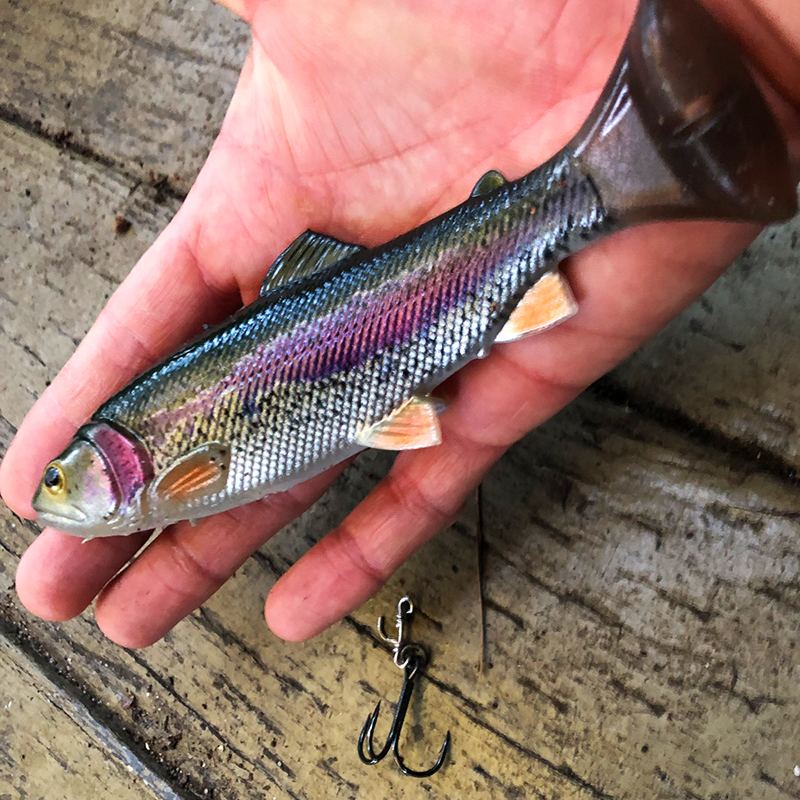
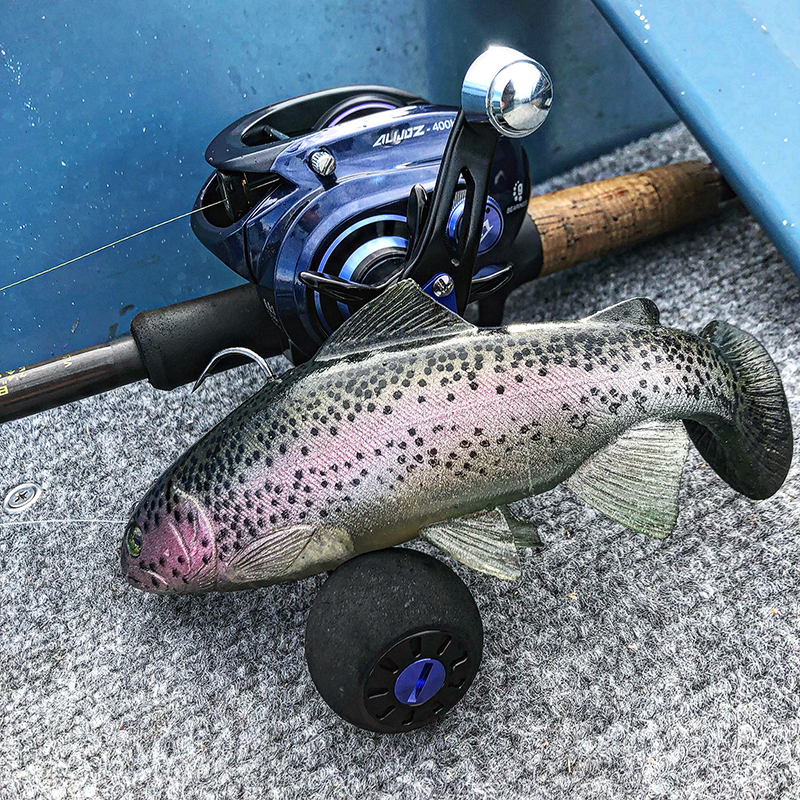
    Big females are full of eggs, moody, and much easier to trick. It’s believed that their eyesight adjusts slowly as they rise closer to the surface. Anglers use a variety of lures this time of year including crankbaits and chatterbaits in red as this color pops out. It’s also the best time for double digits you only hear of during dock talk. One way to target these giants is to use big swim baits like the Huddleston Rainbow Trout and Savage Gear Line-thru rainbow trout.

    Jason Kaefer where to catch big bass 2 best seasons
    Savage Gear Line-thru Rainbow Trout

    Big swim baits and glide baits are good presentations for targeting giant fish. The best time to use them is typically when water temperatures reach 60 degrees. Target rocky points on the outside of inlets and backbays. Fish along rock walls and shorelines that lead to marinas. You can speed up your retrieve this time of year so that your swim bait follows the mid-water column. Giant largemouth will stage in these areas before heading to spawn, relating to wood, metal, and rock. Riff raff is a good place to find bass that are moving up shallow because they often hold crawdads and heat.

    Gear to Use

    When throwing big swimbaits, it’s all about good flexibility, strength, and stretch. An 8 ft Medium-heavy or Heavy power rod with a long, solid handle and good bend is best for 2-5 ounce swim baits. 20-30lb fluorocarbon will provide a better stretch and all of this combined when casting will allow you to fling your bait out without snapping your line or backlashing.

    Jason Kaefer where to catch big bass 2 best seasons
    Heavy gear is a must.

    Winter

    Winter is the second best time to target the biggest fish on the lake. Many anglers put bass fishing on hold until spring, focusing on deer season and family. Others hate the cold weather. This leaves the lake empty – no boat traffic, loud music, or water skiers. You have the whole lake to yourself. It also gives the bass time to reset. The environment has gone silent after a year of the same lures whizzing past them and the noise of boats blasting above. It’s a perfect time to bass fish, as long as you can tolerate the cold weather! However, you need to understand bass behavior and where they go during this time.

    Where Do Bass Go In Winter?

    During winter, bass head for deeper water and sit on rocky bottoms. They may suspend or rise to shallower water on warm days. It’s useful to have a decent sonar to locate their position. Follow bait balls (if possible ) on your sonar. You can also look for pelicans and other diving birds along the shorelines, which is usually a good indicator. Big bass will hang along the sides of bait fish or below. Bigger bass often take the best locations during winter like steep slopes that create ambush points, drop-offs, and ledges. This makes it predictable when trying to locate them. You won’t get many bites in winter and it’s a grind. But that thump that follows a long day of no action will be well worth it.

    How To Catch Big Bass In Winter

    The key is to slow down in winter. Whether you’re fishing giant swimbaits, glide baits, or dragging a jig, fish as slowly as possible. Bass will slowly rise to the occasion by the allure of a slow twitch jerkbait or a swimbait crawled along the bottom. But only if it moves slowly enough.

    Fish have an internal sense of calorie gains and depletion. They lose calories chasing down prey and may spend it all for nothing if that prey item gets away. Cold water bass also lack the motivation to move quickly as their bodies shut down in response to a slowing metabolism. Thus they don’t move, and they eat very little. This is why winter is such a good time to fish giant baits. It presents a meal packed with calories and moves slowly enough for a giant bass to catch it.

    You can use the Huddleston 8″ trout swim bait and slowly swim it along the bottom. Maintaining contact with the bottom is key during this time – if you can feel the bottom, you’re in the strike zone. Remind yourself to slow down and even dead-stick it at times. A lethargic 8″ trout barely moving provides a perfect feeding opportunity for the largest fish and is worth the energy spent moving over to it.

    Final Thoughts

    Spring and winter are the two best seasons for bass fishing. You can easily put high numbers in the boat or target the biggest bass of your life. You can target them with giant swim baits and glide baits. But other notable lures include big jigs and spinner baits. Remember to fish slow and deep in winter and speed up in spring while targeting secondary points and shallow water cover and structure.

    Jason Kaefer where to catch big bass 2 best seasons
    The author with yet another chunky specimen. Tight lines!