Category: Bonus Content

  • Fly Fishing: A Powerful Tool for Environmental Education and Digital Detox for Young People

    Fly Fishing: A Powerful Tool for Environmental Education and Digital Detox for Young People

    Disconnecting from electronics. It’s more valuable today then every before. As a child, I heard “you’re rotting your brain with that TV!” more than once. Just imagine the horror parents would have felt if we’d been able to go back in time and warn them about what was on the horizon.

    I’m always looking for ways to stay busy while staying off screens. Obviously that’s a big part of what we do here. Develop real skills. Share them with the next generation. Fly fishing? That’s been on the to-do list, especially with the upcoming more to Arkansas & The White River region. So when Adrian Satué Paúles contacted me about a week ago to discuss his Fly Fishing Summer Camps, I was intrigued. Check out what he thinks below, and take a moment to check out: https://flyfishingcamps.com/

    A Path Toward Mindfulness and Connection with Nature

    Fly fishing is much more than a sport — it’s an experience that encourages calm, focus, and a deep connection with the natural world. Today’s young people, especially in the United States, grow up surrounded by screens, constant notifications, and a fast-paced lifestyle. Fly fishing offers the exact opposite: silence, presence, and mental clarity.
    Fly Fishing Summer Camps

    Watching the current, choosing the right fly, planning the perfect cast… each moment requires patience, analysis, and sustained attention. On the river, distractions disappear, and what remains is personal growth, resilience, and the satisfaction that comes from dedication and effort.

    Environmental Values and Conservation Education

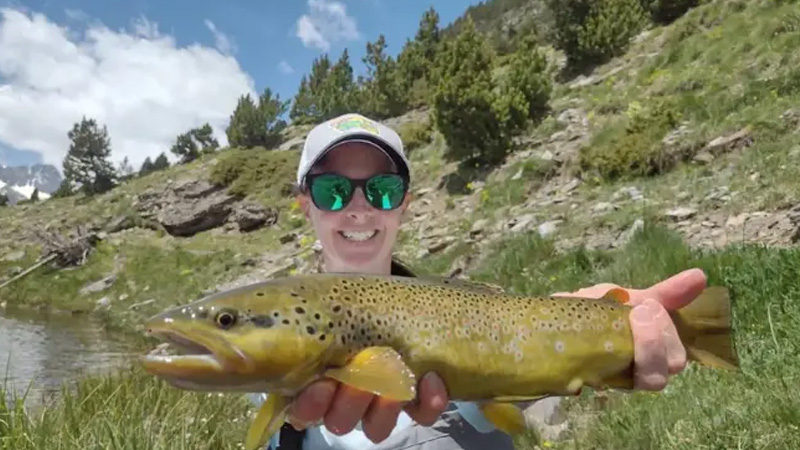
    Fly fishing naturally teaches young people to understand and respect the environment. They learn to identify insects, observe trout behavior, recognize water cycles, and appreciate the importance of healthy rivers.

    Along the way, they adopt essential environmental values such as catch-and-release practices, proper fish handling, river cleanups, and mindful observation of the ecosystem. These lessons help shape environmentally conscious young adults, something highly valued by American families seeking meaningful, character-building experiences for their children.

    Shared days on the river also build genuine friendships and strong bonds that often last a lifetime.

    The Origin of FlyFishingCamps

    Understanding the educational power of this sport, we created FlyFishingCamps to offer international summer fly fishing camps and expeditions for young people. Our mission was clear: allow them to enjoy their passion for fly fishing and give them the opportunity to learn Spanish, a language of growing importance in the United States academically, socially, and professionally.
    Fly Fishing Summer Camps

    The response from the American market has grown rapidly. Over the past two years, FlyFishingCamps has evolved into an international program, welcoming more and more participants from the U.S. who seek a safe, meaningful, and transformative experience abroad.

    Camps in a Truly Unique Setting

    As a fishing guide, I always dreamed of a project that went beyond teaching a technique — something that could instill values, inspire conservation, and help build a more environmentally aware generation. Over time, I realized that summer camps were the perfect tool: an experience that positively shapes young people, sparks passion for the outdoors, and gives us, as educators, profound fulfillment.

    This project is now in its sixth year, and in the last two years it has become especially popular among American families who appreciate Spain’s safety, cultural richness, and outstanding fly fishing opportunities.

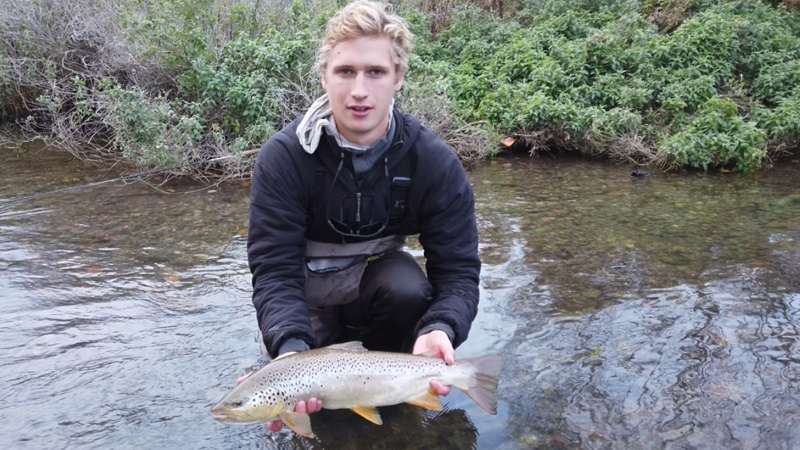
    Our programs take place in the Spanish Pyrenees, a stunning mountain region with crystal-clear rivers, breathtaking valleys, and the legendary zebra trout, one of the oldest trout populations in Europe. We offer two programs, each with separate age-based groups to ensure safety, appropriate dynamics, and an effective educational approach.

    Summer Fly Fishing Camps (Ages 10–17)

    With age-specific sessions

    These 1-, 2-, or 3-week summer camps combine fly fishing, Spanish language learning, and multicultural living — a combination that has become especially appealing for American families.

    Participants fly fish for trout in mountain rivers and lakes, live with both Spanish-speaking and English-speaking students (50/50), take Spanish lessons adapted to their level, participate in conservation projects, and are supervised by one guide for every four students. Private airport transfers from Barcelona-El Prat Airport (BCN) are included.

    This is a safe, engaging, and enriching experience designed for personal, cultural, and outdoor growth.

    Fly Fishing Expedition (Ages 14–21)

    With age-based groups

    This 11-day expedition explores the most remote and pristine corners of the Pyrenees. It is a favorite among American teens and young adults who seek adventure, connection with nature, and personal development.

    Participants fish in low-pressure, high-quality waters, discover untouched rivers and lakes in national parks such as Ordesa and Aigüestortes, and develop teamwork, resilience, and independence. They face real outdoor challenges under the guidance of expert instructors.

    This is a powerful and transformative experience that stays with them for life.

    Growing Popularity Among American Families

    Every year, more families from the United States choose FlyFishingCamps because of our unique combination of high-quality fly fishing, strong educational values, safety and supervision, cultural and linguistic immersion, and a commitment to conservation.

    The American market has become one of our strongest and most enthusiastic communities, with teens returning year after year and families recommending the program for its life-changing impact.

    More Information

    For full details, visit:
    https://flyfishingcamps.com/

    We are always happy to assist American families looking for a safe, unique, and deeply enriching summer experience abroad.

    – Adrian
    Fly Fishing Summer Camps
    Callout Section The Minimalist Fisherman Midwest Bass Fishing Blue Banner Background Migration
    The Minimalist Fisherman Father Son Bonding Better Anglers Better Men

    Thank You For Your Support

    Your support directly funds the creation of weekly articles and videos that promote the development of better anglers and better men. Our country (and our kids) need both. Please share this site, and consider a monthly, weekly, or one-time donation. You are helping us make a difference!

    TMF Small White Logo
  • Big Swimbaits. Big Bass.

    Big Swimbaits. Big Bass.

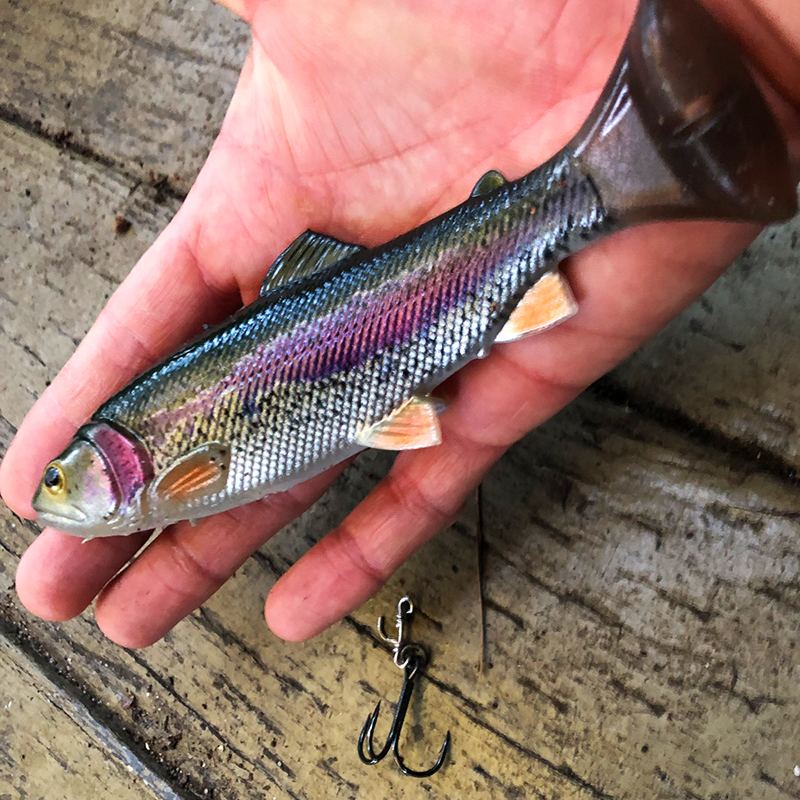
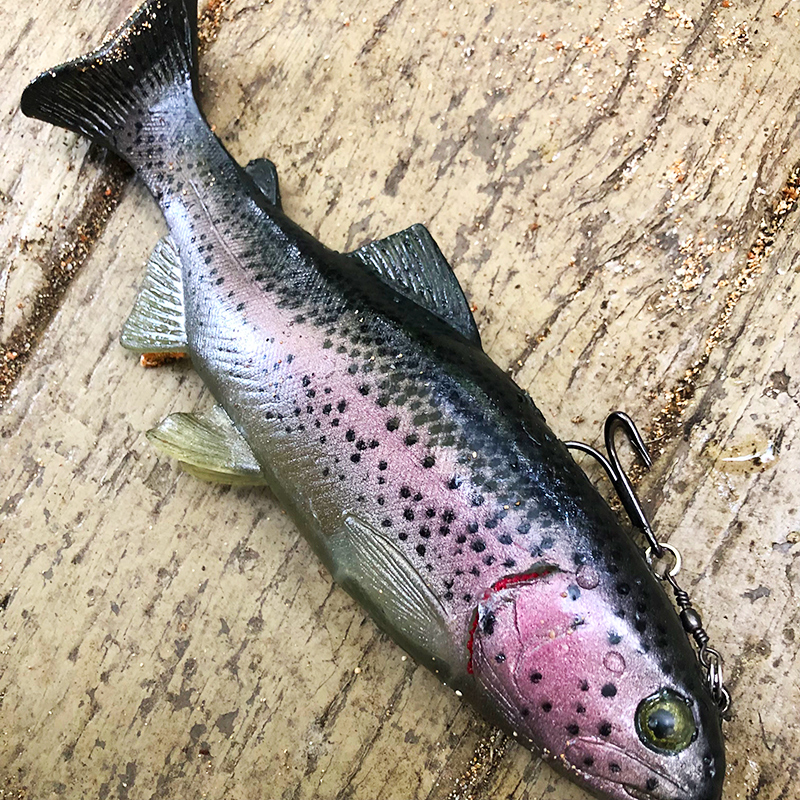
    Are you looking to up-size your swimbait artillery? The Huddleston Deluxe 8″ Rainbow Trout is a big bait that calls out the heaviest bruisers to play. It’s the most realistic trout imitator on the market (that is affordable).  I couldn’t take my eyes off the immaculate detail when I first began fishing it. Each bait is hand painted and has a wedge-style tail that gives the bait a natural movement in the water. The color schemes range from “hold over trout” to “Ghost Trout.” Of course, there are colors that imitate other species. But Western fishing has a way of outdoing itself every time. We target the heavy hitters, those freaks of nature, the trout-killing, dock monsters.

    Huddleston Deluxe 8 Inch Rainbow Trout Big Swimbait
    The Huddleston is a truly attractive swimbait

    However, the Huddleston can be used across the country, even in regions that claim not to have huge bass. The Huddelston is a fantastic bait to isolate the big boys below. But aside from action and detail, does it catch fish? Is it worth buying heavy gear to fish baits like the Huddleston? In this post I’ll dive into the history of this bait as well as its applications and how to fish it. Big swimbaits are a great method for bass anglers to have ready to go when other baits (even finesse lures) won’t get the bite.

    The Huddleston Deluxe Trout History

    It is said that the Huddleston Deluxe has more double-digit fish to its name than any lure in history. Legendary trophy angler Butch Brown is living proof of this. Brown became widely known for his proclivity for hauling in giant southern trout eaters on SoCal lakes after popularizing the Huddelston for its effectiveness in drawing in larger specimens. Brown has fished all over California from Clearlake, Berryessa, and the California Delta to the southern regions such as lakes like Casitas in Southern California. The Huddleston deluxe, for a long while, was his weapon of choice, which changed the course of west coast swimbait fishing.

    Huddleston Deluxe Action & Versatility

    Designed for slower action, the Huddleston deluxe is built with a wedge-style tail that thumps along presenting fish with a life-like, subtle action. When the Huddleston was released, there weren’t many lures that had the same level of life-like detail nor the versatile and range of weight options. The 8″ Hud is a perfect profile of a trout that entices big fish. One advantage it has is its ability to slow crawl the bottom like a jig. This makes it a perfect cold-water lure for offshore bass. With a top hook, you can drag the Huddleston over rocks and gravel as the wedge tail thumps from side to side, giving a double-digit bass a large enough meal.

    Huddleston Deluxe 8 Inch Rainbow Trout Big Swimbait
    A big meaty tail means a big meaty thump – even at the slowest of speeds

    How to Fish the Huddleston

    The Huddleston excels on lakes that stock trout. Heavier models like the ROF 12 and ROF 16 are designed to reach the bottom faster allowing you to creep along rocks. This technique is best used in cold water when bass are found closer to the bottom. Find rocky points, drop- offs, and flats with deep water access and drag the bait slowly along the bottom. Big bass will feed in these areas and slide back to deeper water during most of the day.

    Each time the lure’s head rolls over a small rock, the tail will pulsate, providing just enough action for a lethargic, trophy fish to strike. You might wonder why a bass would eat a bait so large. The truth is that bass calculate the risk of chasing down prey in winter as they slow their metabolisms. If a prey item is too healthy or fast, a larger bass is unlikely to chase it. Most fish, especially largemouth bass, conserve energy and will refuse a meal, even if it wanders too close. They conserve calories by doing this. The bigger and slower the bait, the better chance that trophy fish will bite.

    Huddleston Deluxe 8 Inch Rainbow Trout Big Swimbait
    It’s a big bait for specific kinds under specific conditions

    Fishing The Huddleston in Spring

    Spring is a perfect time for big swimbait fishing. The Huddleston 68 Special is a six-inch model designed with the same tail found on the eight-inch model. This gives the lure more action and is perfect for fishing close to the surface, almost like a wake bait. The 68 is optimal around launch ramps and laydowns and anywhere rainbow trout are stocked. It’s a great lure for targeting average size bass. You’ll receive a number of bites from all different sizes. The lighter weight allows you to fish it fast while targeting bass in shallower water. Like the 8″, the 68 swims with a realistic action along the surface and fits perfectly into environments where rainbow trout are stocked. 

    Huddleston Deluxe 8 Inch Rainbow Trout Big Swimbait
    The Huddleston Deluxe 8″ (top) vs. the Huddleston 68 (bottom) – a 6″ offering

    Best Rod and Reel Setup

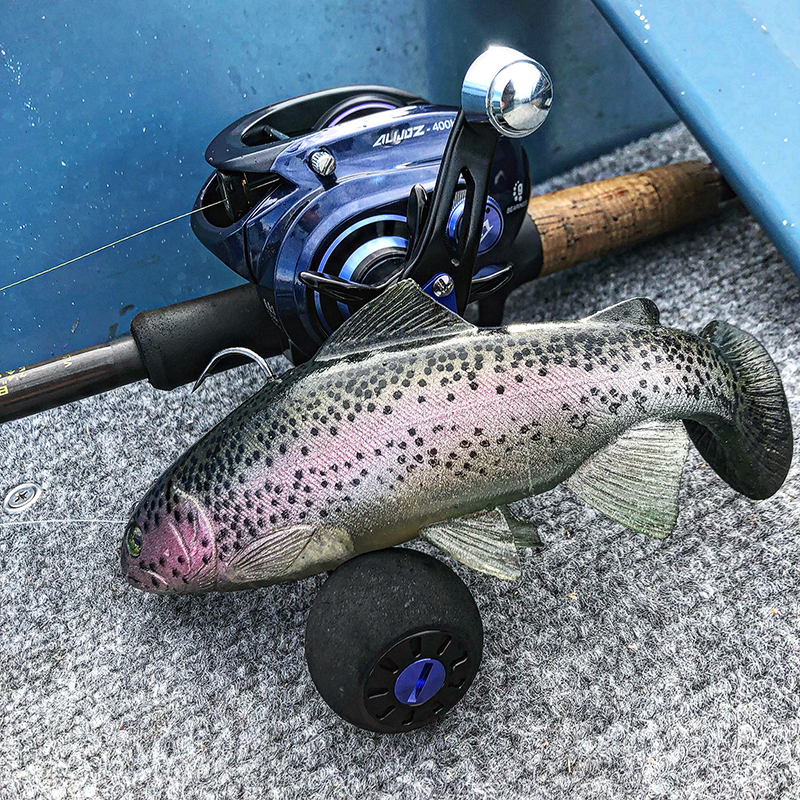
    The Dobyns Fury Swimbait Rod is a good rod if you’re shopping on a budget. They come in a 7’9″ medium heavy for smaller swimbaits and an 8’0″ model heavy power for heavy artillery. The Piscifun Alijoz 300 and 400 series casting reels are amazing budget reels that are comparable to the Shimano Tranx. If you’re thinking of leveling up, the Megabass Leviathan Alpha Extra Heavy Swimbait rod is a go-to. The 20-24lb fluorocarbon line pairs well with the 8″ Huddleston deluxe ROF 12 and up. Some guys use braided line as their main line. This is fine, but you’ll need to fine-tune the adjustments on your reel to avoid backlash, as braided line has no stretch, and throwing a large bait can backlash easily.

    How To Set the Hook on a Giant

    When it comes to swimbait fishing, your hook set can mean the difference between a 10lb bass in the net or swimming off after shaking free. Many new anglers expect that with a giant bait comes a giant bite but that’s not always the case. Some bites come as a subtle thump. Others may feel like nothing at all such as your line going slack as you lose track of the weight of the lure. The latter bite means a bass hit the bait swimming toward you. In this case you need to reel in fast and swing back hard to get a good hook set. When slowly rolling the bait along the bottom, a bite may come in the form of a small thump. Your line may even jump with no feeling in the rod at all. Always remember to swing back hard with much of your body weight. The Hud has a large profile and a relatively small top hook which means your hook set is everything.

    Huddleston Deluxe 8 Inch Rainbow Trout Big Swimbait
    Just look at that big nasty

    Final Thoughts

    The Huddleston Rainbow Trout is a big bait for big bass. It has the most realistic appearance and tends to call out the biggest fish on the lake. You can swim the bait on the bottom, swim in around docks and boat launches and expect bites from trophy fish. Remember that this lure requires heavy gear to fish including a heavy power rod with a 300-400 series reel. If you live in a region where larger bass aren’t as abundant, the Hudd may be a good option as the double-digit monsters that are there likely haven’t seen a Hudd. Whereas in California, our trophy fish have seen countless big swim bait and glide bait presentations. If you’re new to swimbaits or thinking of getting into it, the Hud is a great place to start.

    Note: This article was contributed by my friend Jason Kaefer over at Wild Outdoor. We’ve been talking for a while about sharing experiences and articles back and forth, which is a great idea. After all, a rising tide lifts all boats. If you would like to discuss contributing to The Minimalist Fisherman, feel free to get in touch! -AJ

    Callout Section The Minimalist Fisherman Midwest Bass Fishing Blue Banner Background Migration
    The Minimalist Fisherman Father Son Bonding Better Anglers Better Men

    Thank You For Your Support

    Your support directly funds the creation of weekly articles and videos that promote the development of better anglers and better men. Our country (and our kids) need both. Please share this site, and consider a monthly, weekly, or one-time donation. You are helping us make a difference!
    TMF Small White Logo
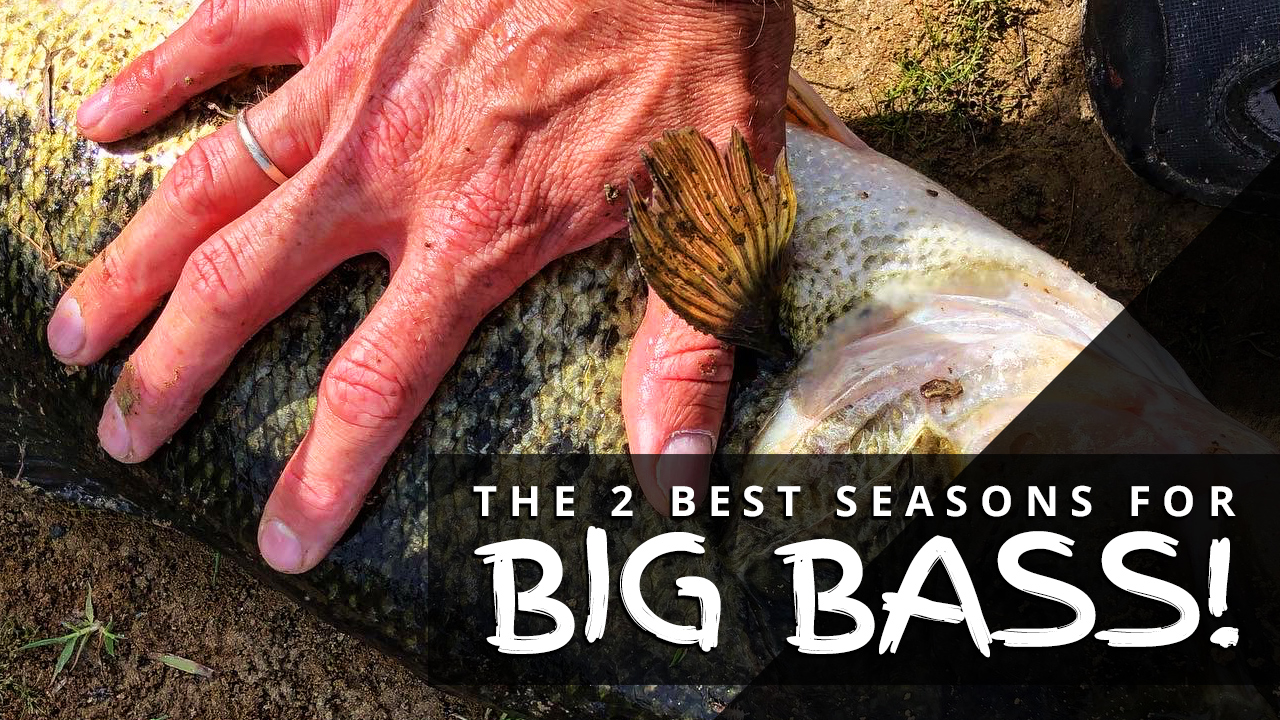
  • The 2 Best Seasons for Big Bass (and How To Catch Them)

    The 2 Best Seasons for Big Bass (and How To Catch Them)

    Good evening brothers.

    The following article was sent to me by my friend Jason Kaefer over at Wild Outdoor. We’ve been talking for a while about sharing experiences and articles back and forth, which is a great idea. After all, a rising tide lifts all boats. If you would like to discuss contributing to TheMinimalistFisherman.com feel free to get in touch! -AJ

    The 2 Best Seasons For Big Bass And How To Catch Them

    Jason Kaefer where to catch big bass 2 best seasons
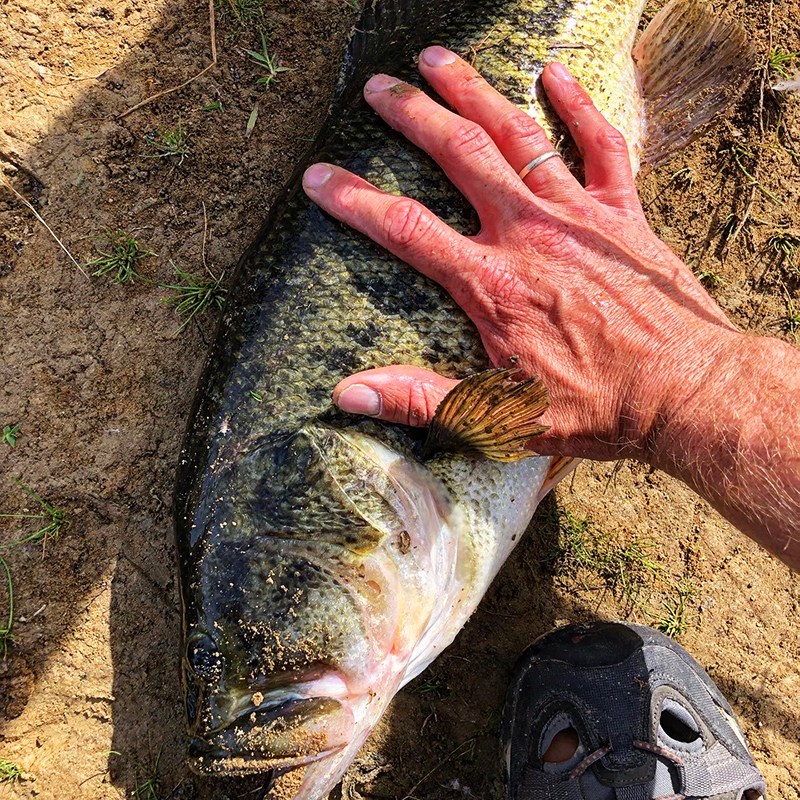
    Jason Kaefer and his big, fat bass.

    Are you ready to catch the biggest bass of your life but don’t know where to start? Learning the many techniques and variety of fishing gear necessary to become a good bass angler can be difficult. But targeting giants is basic. It only comes down to a handful of lures and techniques and two seasons to focus on. Don’t get me wrong, you can find and catch big bass all year, but there are two periods when your chances are highest – when giants are easiest to catch.

    Understanding Bass Behavior

    When it comes to fooling the biggest fish on the lake, you better have a good presentation. Bass see countless lures and presentations, roaring boat engines and disruptive wakes, loud banging of boat hatches, and other fish being caught. They may even experience being caught a few times themselves. This learning process gradually develops into cautious behavior. They learn the movements of a jig or swim bait, knowing at some point as it reaches that dark shadow on the surface that it gradually pulls up and disappears.

    Other bass learn to spot heavy lines or an out-of-place food source. Suppose they survive starvation over time and disease, larger predatory fish, stress-related illness, cold winters, drought, lampreys, river otters, osprey, eagles, hook-related injuries leading to infection, or end up on an angler’s wall. In that case, they become too smart to catch. But not impossible. The odds of surviving beyond incubation are stacked against them, much less growing to 15 lbs. So the ones who make it through nature’s filter system are unique.

    Spring Pre-Spawn

    Spring marks the beginning of bass migration from deep water to shallow water, which often occurs when water temperatures reach 60 degrees. Big bass will follow migration routes and “stage” on areas like main lake points. The purpose of this is to allow smaller males (bucks) to search for potential bedding sites for females. This is when bass fishing is at its best.

    Big females are full of eggs, moody, and much easier to trick. It’s believed that their eyesight adjusts slowly as they rise closer to the surface. Anglers use a variety of lures this time of year including crankbaits and chatterbaits in red as this color pops out. It’s also the best time for double digits you only hear of during dock talk. One way to target these giants is to use big swim baits like the Huddleston Rainbow Trout and Savage Gear Line-thru rainbow trout.

    Jason Kaefer where to catch big bass 2 best seasons
    Savage Gear Line-thru Rainbow Trout

    Big swim baits and glide baits are good presentations for targeting giant fish. The best time to use them is typically when water temperatures reach 60 degrees. Target rocky points on the outside of inlets and backbays. Fish along rock walls and shorelines that lead to marinas. You can speed up your retrieve this time of year so that your swim bait follows the mid-water column. Giant largemouth will stage in these areas before heading to spawn, relating to wood, metal, and rock. Riff raff is a good place to find bass that are moving up shallow because they often hold crawdads and heat.

    Gear to Use

    When throwing big swimbaits, it’s all about good flexibility, strength, and stretch. An 8 ft Medium-heavy or Heavy power rod with a long, solid handle and good bend is best for 2-5 ounce swim baits. 20-30lb fluorocarbon will provide a better stretch and all of this combined when casting will allow you to fling your bait out without snapping your line or backlashing.

    Jason Kaefer where to catch big bass 2 best seasons
    Heavy gear is a must.

    Winter

    Winter is the second best time to target the biggest fish on the lake. Many anglers put bass fishing on hold until spring, focusing on deer season and family. Others hate the cold weather. This leaves the lake empty – no boat traffic, loud music, or water skiers. You have the whole lake to yourself. It also gives the bass time to reset. The environment has gone silent after a year of the same lures whizzing past them and the noise of boats blasting above. It’s a perfect time to bass fish, as long as you can tolerate the cold weather! However, you need to understand bass behavior and where they go during this time.

    Where Do Bass Go In Winter?

    During winter, bass head for deeper water and sit on rocky bottoms. They may suspend or rise to shallower water on warm days. It’s useful to have a decent sonar to locate their position. Follow bait balls (if possible ) on your sonar. You can also look for pelicans and other diving birds along the shorelines, which is usually a good indicator. Big bass will hang along the sides of bait fish or below. Bigger bass often take the best locations during winter like steep slopes that create ambush points, drop-offs, and ledges. This makes it predictable when trying to locate them. You won’t get many bites in winter and it’s a grind. But that thump that follows a long day of no action will be well worth it.

    How To Catch Big Bass In Winter

    The key is to slow down in winter. Whether you’re fishing giant swimbaits, glide baits, or dragging a jig, fish as slowly as possible. Bass will slowly rise to the occasion by the allure of a slow twitch jerkbait or a swimbait crawled along the bottom. But only if it moves slowly enough.

    Fish have an internal sense of calorie gains and depletion. They lose calories chasing down prey and may spend it all for nothing if that prey item gets away. Cold water bass also lack the motivation to move quickly as their bodies shut down in response to a slowing metabolism. Thus they don’t move, and they eat very little. This is why winter is such a good time to fish giant baits. It presents a meal packed with calories and moves slowly enough for a giant bass to catch it.

    You can use the Huddleston 8″ trout swim bait and slowly swim it along the bottom. Maintaining contact with the bottom is key during this time – if you can feel the bottom, you’re in the strike zone. Remind yourself to slow down and even dead-stick it at times. A lethargic 8″ trout barely moving provides a perfect feeding opportunity for the largest fish and is worth the energy spent moving over to it.

    Final Thoughts

    Spring and winter are the two best seasons for bass fishing. You can easily put high numbers in the boat or target the biggest bass of your life. You can target them with giant swim baits and glide baits. But other notable lures include big jigs and spinner baits. Remember to fish slow and deep in winter and speed up in spring while targeting secondary points and shallow water cover and structure.

    Jason Kaefer where to catch big bass 2 best seasons
    The author with yet another chunky specimen. Tight lines!